
Thomas Aquinas Commentary Romans 5
Thomas Aquinas Commentary
Romans 5
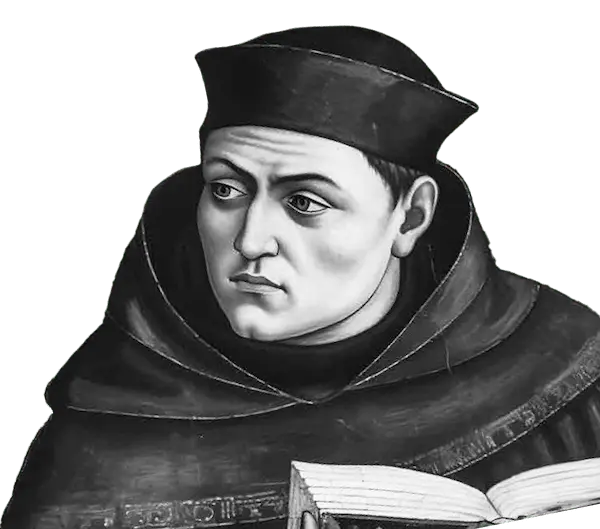
Thomas Aquinas Commentary
Romans 5
"Being therefore justified by faith, we have peace with God through our Lord Jesus Christ; through whom also we have had our access by faith into this grace wherein we stand; and we rejoice in hope of the glory of God. And not only so, but we also rejoice in our tribulations: knowing that tribulation worketh stedfastness; and stedfastness, approvedness; and approvedness, hope: and hope putteth not to shame; because the love of God hath been shed abroad in our hearts through the Holy Spirit which was given unto us." — Romans 5:1-5 (ASV)
After showing the need for Christ’s grace—because without it, neither knowledge of the truth benefited the Gentiles, nor did circumcision and the law benefit the Jews for salvation—the Apostle now begins to praise the power of grace (C. 3, L. 3–C. 4, L. 3).
In this regard, he does two things:
- First, he shows what benefits we obtain through grace.
- Second, he shows from what evils we are freed by it, which he begins at wherefore as by one man (Romans 5:12).
Concerning the first point, he again does two things:
- First, he indicates the way we reach or come to grace.
- Second, he shows the good things we obtain through grace, starting at and glory in the hope of the glory.
Regarding this first point, he does two more things:
- First, he exhorts us to the proper use of grace.
- Second, he shows us the entrance to grace, at by whom also we have access.
First, therefore, he says that it has been stated that faith will be counted as righteousness to all who believe in Christ’s resurrection, which is the cause of our justification. Being justified therefore by faith, since through faith in the resurrection we participate in its effect, let us have peace with God. This means submitting ourselves to and obeying Him: agree with God and be at peace (Job 22:21); who has hardened himself against him and been at peace? (Job 9:4).
And this peace comes through our Lord Jesus Christ, who has brought us to it: he is our peace (Ephesians 2:14).
He continues, by whom—that is, Christ—we have access as through a mediator: one mediator between God and man, the man Christ Jesus (1 Timothy 2:5); through him we both have access in one Spirit to the Father (Ephesians 2:18).
We have access, I say, into this grace, that is, to the state of grace: grace and truth came through Jesus Christ (John 1:17). Wherein, that is, through which grace, we have not only risen from sin but we stand firm and upright in the heavens through love: our feet have been standing within your gates, O Jerusalem (Psalms 122:2); we have risen and stand upright (Psalms 20:8). And this is through faith, by which we obtain grace. This is not because faith precedes grace, but rather because faith itself comes through grace: by grace you have been saved through faith (Ephesians 2:8). In other words, the first effect of grace in us is faith.
Then, when he says, and glory in the hope of the glory, he indicates the blessings that have come to us through grace.
First, he says that through grace we have the glory of hope.
Second, that through grace we have the glory of God, at and not only so.
Concerning the first point, he does three things:
- First, he shows the greatness of the hope in which we glory.
- Second, its intensity, at and not only so.
- Third, its firmness, at and hope does not confound.
The greatness of our hope is measured by the greatness of the things we hope for. The Apostle sets this out when he says, and glory in the hope of the glory of the sons of God, that is, we glory in the fact that we hope to obtain the glory of the sons of God.
For through Christ’s grace, we have received the spirit of adoption of sons (Romans 8:15); behold how they have been numbered among the sons of God . But the father’s inheritance is due to his sons: if sons, heirs also (Romans 8:17). This inheritance is the very glory that God possesses in Himself: have you an arm like God, and can you thunder with a voice like his? (Job 40:9).
Our hope for this glory has been given to us by Christ: we have been born anew to a living hope through the resurrection of Jesus Christ from the dead and to an inheritance which is incorruptible (1 Peter 1:3). This glory, which will be completed in us in the future, is in the meantime begun in us through hope: for we are saved by hope (Romans 8:24); all those who love your name will glory in you (Psalms 5:11).
Then, when he says, and not only so, he shows the intensity of this hope.
For anyone who intensely hopes for something endures difficult and bitter things for it, just as a sick person who strongly desires health gladly drinks a bitter medicine to be healed by it. Therefore, the sign of the intense hope we have for Christ is that we glory not only in our hope of future glory but also in the evils we suffer for it. He says, and not only so, that is, we not only glory in the hope of glory, but we glory also in tribulation, through which we arrive at glory: through many tribulations we must enter the kingdom of God (Acts 14:22); count it all joy when you meet various trials (James 1:2).
Then he shows the cause when he says, knowing that.
Here he mentions four things in order. The first is tribulation, about which he says, tribulation works patience. This is not in the sense that tribulation is the cause that creates patience, but because suffering is the material and occasion for exercising the act of patience: be patient in tribulation (Romans 12:12).
Second, he mentions the effect of patience when he says, and patience trial: for gold is tested in the fire and acceptable men in the furnace of humiliation .
It is clear that we easily accept the loss of one thing for the sake of something else we love more. Therefore, if a person patiently endures the loss of physical and temporal goods to obtain eternal benefits, this is sufficient proof that such a person loves eternal blessings more than temporal ones.
However, James seems to say the opposite: the trial of your faith produces patience (James 1:3).
The answer is that the word “trial” can be understood in two ways. First, as the experience of the one being tested; in this sense, the trial is the suffering itself through which a person is tested. Thus, to say that tribulation produces patience is the same as saying that tribulation tests patience. Second, “trial” can be understood as the proven character that results from being tested. This is how it is used here, because a person who patiently endures sufferings has been proven by the trial.
Third, he mentions the third effect, saying, and trial hope. This means that trial brings about hope, because after a person has been proven, he and others can have hope that he will be admitted to God’s inheritance: God tested them and found them worthy of himself .
Therefore, from the first point to the last, it is clear that suffering paves the way to hope. It follows that if a person rejoices strongly in hope, he will also glory in his sufferings.
Then, when he says, and hope does not confound, he shows the firmness of such hope.
First, he asserts it, saying that the hope by which we hope for the glory of the sons of God does not confound, that is, it does not fail or disappoint, unless the person fails it. For a person is said to be confounded in his hope when he falls away from the thing he hoped for: in you, O Lord, have I hoped; let me never be disappointed (Psalms 31:1); no one has hoped in the Lord and been disappointed .
Second, at because the love of God, he presents two arguments for the certainty of hope.
- The first is based on a gift of the Holy Spirit.
- The second is based on the death of Christ, at for why did Christ (Romans 5:6).
First, therefore, he says we can be certain that our hope does not disappoint, because the love of God is poured out in our hearts, by the Holy Spirit who is given to us.
The phrase “the love of God” can be understood in two ways. It can mean the love with which God loves us: he loved you with an everlasting love (Jeremiah 31:3). Or, it can mean the love with which we love God: I am sure that neither death, nor life . . . shall be able to separate us from the love of God (Romans 8:38–39). Both of these aspects of God’s love are poured into our hearts by the Holy Spirit who has been given to us.
For the Holy Spirit, who is the love of the Father and the Son, to be given to us means that we are brought to participate in that very love who is the Holy Spirit. Through this participation, we are made lovers of God. The fact that we love Him is a sign that He loves us: I love those who love me (Proverbs 8:17); not that we first loved God but that he first loved us (1 John 4:10).
The love with which He loves us is said to be “poured into our hearts” because it is clearly demonstrated within us by the gift of the Holy Spirit sealed in our hearts: by this we know that he abides in us, by the Spirit he has given us (1 John 3:24).
And the love with which we love God is said to be “poured into our hearts” because it extends to the perfecting of all the soul’s moral virtues and actions. As it is stated in 1 Corinthians: love is patient and kind; love is not jealous or boastful (1 Corinthians 13:4).
Both interpretations of these words lead to the conclusion that hope does not confound. For if they are taken to mean the love of God by which He loves us, it is clear that God does not deny Himself to those whom He loves: he loved his people; all the holy ones were in his hand (Deuteronomy 33:3). Similarly, if they are taken as referring to the love by which we love God, it is clear that He has prepared eternal blessings for those who love Him: he who loves me will be loved by my Father and I will love him and manifest myself to him (John 14:21).
"For while we were yet weak, in due season Christ died for the ungodly. For scarcely for a righteous man will one die: for peradventure for the good man some one would even dare to die. But God commendeth his own love toward us, in that, while we were yet sinners, Christ died for us. Much more then, being now justified by his blood, shall we be saved from the wrath [of God] through him. For if, while we were enemies, we were reconciled to God through the death of his Son, much more, being reconciled, shall we be saved by his life; and not only so, but we also rejoice in God through our Lord Jesus Christ, through whom we have now received the reconciliation." — Romans 5:6-11 (ASV)
1. After disclosing that our hope is firm because it is a gift of the Holy Spirit, the Apostle now traces its firmness to the death of Christ.
- First, he asks a question.
- Second, a difficulty arises in answering it, at for scarcely for a righteous man will one die.
- Third, he answers the question, at but God demonstrates His love.
2. First, therefore, he says that it has been stated that hope does not disappoint. This is clear to anyone who considers the question: Why did Christ, while we were still weak—that is, languishing in sin—die for the ungodly? As the Psalm says, Be gracious to me, O Lord, for I am languishing (Psalms 6:2).
For just as bodily sickness destroys the proper balance of physical health, so sin removes the correct order of our affections. Therefore, when we were still helpless, Christ... died for the ungodly. As the Apostle Peter writes, Christ also suffered once for sins, the righteous for the unrighteous (1 Peter 3:18).
And this happened at the right time; that is, He was to remain dead for a definite time and then rise on the third day: For as Jonah was three days and three nights in the belly of the great fish, so will the Son of Man be three days and three nights in the heart of the earth (Matthew 12:40).
Therefore, this is marvelous if we consider who died, and also if we consider for whom He died. But it would not have been so marvelous if no fruit were to be gained from it: What profit is there in my death, if I go down to the pit? (Psalms 30:9). There would be none, if the salvation of the human race did not follow.
3. Then when he says, for scarcely, he raises a difficulty concerning those for whom Christ died—that is, the ungodly—saying, for scarcely... will one—that is, anyone—die for the release of a righteous man. Instead, the righteous man perishes, and no one lays it to heart (Isaiah 57:1). That is why I say that scarcely... will one die, yet perhaps for a good man someone would dare to die, on account of his zeal for virtue.
This is rare because it is such a great act, for greater love has no one than this, that someone lay down his life for his friends (John 15:13). Yet what Christ did is something that is never done: to die for the ungodly and the unjust. That is why there is reason to wonder why Christ did this.
4. This passage can be interpreted in another way, so that a "righteous man" is one trained in virtue, and a "good man" is one who is innocent. And although according to this the righteous man would be more excellent than the good man, yet scarcely anyone dies for the righteous man. The reason is that an innocent person, understood here as "good," seems more worthy of pity on account of his youth or something similar. But the righteous person, because he is perfect, lacks any defect that would elicit pity. Therefore, if anyone were to die for an innocent person, it might be out of pity; but to die for a righteous man requires a zeal for virtue, which is found in fewer people than the emotion of pity.
5. Then when he says, but God demonstrates, he answers the preceding question.
- First, he presents his answer.
- Second, he argues from this point toward his main conclusion, at much more.
- Third, he shows why this conclusion necessarily follows, at for if, when we were enemies.
6. First, therefore, he says: the question was asked why Christ died for the ungodly. The answer is that, through this act, God demonstrates His love toward us. That is, through this He shows that He loves us to the highest degree, because while we were still sinners... Christ died for us, and this at the right time, as was explained above.
The very death of Christ shows God’s love for us, because He gave His own Son to die in making satisfaction for us: For God so loved the world, that he gave his only Son (John 3:16). And so, just as the love of God the Father for us is shown by the fact that He gives His Spirit to us, as was said before, so also it is shown by the fact that He gave His Son, as is said here.
By using the word demonstrates, he indicates the immensity of the divine love. This is shown both by God's own deed, because He gave His Son, and by our condition, because He was not moved to do this by our merits, since we were still sinners: But God, being rich in mercy, because of the great love with which he loved us, even when we were dead in our trespasses, made us alive together with Christ (Ephesians 2:4–5).
7. Then when he says, much more, therefore, he draws his intended conclusion from the preceding argument, saying: if Christ died for us while we were still sinners, much more then, having now been justified by His blood, as was said above—He whom God put forward as a propitiation by his blood, to be received by faith (Romans 3:25)—we shall be saved by him from the wrath of God. This "wrath" is the vengeance of eternal condemnation, which people incur by their sins: You brood of vipers! Who warned you to flee from the wrath to come? (Matthew 3:7).
8. Then when he says, for if, when we were enemies, he shows the necessity of his conclusion, which proceeds by arguing from the lesser to the greater. One should observe here two comparisons from lesser to greater: one on our part and one on Christ's part. On our part, he compares being enemies to being reconciled, for it is a far greater thing to reconcile an enemy than it is to save one who is already reconciled. On Christ's part, he compares death to life. For His life is more powerful than His death because, as is said in 2 Corinthians: For he was crucified in weakness, but lives by the power of God (2 Corinthians 13:4).
This is why he says he rightly concluded that much more, being brought to life, shall we be saved through Him. For if, when we were enemies, we were reconciled to God, and this by the death of His Son, much more, now that we are reconciled, shall we be saved by His life.
9. Now, one should note that a person is said to be an enemy of God in two ways.
- First, because he practices hostility toward God when he resists His commands: He runs stubbornly against Him with a thick-bossed shield (Job 15:26).
- Second, a person is said to be an enemy of God because God hates what is evil in people—not, indeed, the people He created, for in this regard it is said, For you love all things that exist, and have loathed nothing that you have made ; but rather in regard to the sin that the enemy of humanity, the devil, has worked in them. As it is written, the ungodly and his ungodliness are both alike hateful to God , and the Most High hates sinners .
10. Once the cause of enmity—namely, sin—has been removed by Christ, reconciliation through Him follows: that is, in Christ God was reconciling the world to himself (2 Corinthians 5:19). For our sin was removed through the death of His Son. In this regard, it should be noted that Christ’s death can be considered in three ways.
- First, simply as a death. In this sense, it is said that God did not make death in human nature, but it was brought on by sin. Accordingly, Christ’s death, considered simply as death, was not in itself what reconciled us to God, because God does not delight in the death of the living .
- Second, Christ’s death can be considered with an emphasis on the action of His killers, which greatly displeased God. Hence, St. Peter says against them: you denied the Holy and Righteous One... and you killed the Author of life (Acts 3:14). From this perspective, Christ’s death could not be the cause of reconciliation but rather of indignation.
- Third, it can be considered as it proceeded from the will of the suffering Christ—a will shaped by obedience to the Father to endure death, for he became obedient to the point of death (Philippians 2:8), and by love for humanity, for Christ loved us and gave himself up for us (Ephesians 5:2). From this perspective, Christ’s death was meritorious and satisfied for our sins. It was accepted by God as sufficient for reconciling all people, even those who killed Christ, some of whom were saved at His prayer: Father, forgive them, for they know not what they do (Luke 23:34).
11. Then when he says, not only that, he shows what benefits we obtain even now through grace, saying, not only that—that is, not only do we rejoice in the hope of the glory we expect in the future—but we also rejoice in God. This means we rejoice in being united to God even now by faith and love: Let the one who boasts, boast in the Lord (1 Corinthians 1:31 and 2 Corinthians 10:17). And this is through our Lord Jesus Christ, through whom we have now received reconciliation, so that we have been changed from enemies to friends: and through him to reconcile to himself all things (Colossians 1:20).
12. The verse, not only that, can be connected with the preceding one, so that the sense would be: we shall be saved by His life from sin and punishment. And not only shall we be saved from evils, but we shall rejoice in God—that is, in the fact that we will be one with Him in the future: that they may be one, even as we are one (John 17:22).
"Therefore, as through one man sin entered into the world, and death through sin; and so death passed unto all men, for that all sinned:--" — Romans 5:12 (ASV)
After indicating the benefits we obtained through Christ’s grace, the Apostle now indicates the evils from which we were set free. Concerning this, he does three things:
- First, he shows that through Christ’s grace we have been freed from the slavery of sin.
- Second, he shows that through His grace we have been freed from the slavery of the law, where he says, or know you not, brethren (Romans 7:1).
- Third, he shows that through His grace we have been freed from condemnation, where he says, there is now therefore no condemnation (Romans 8:1).
In regard to the first point, he does two things:
- First, he shows that by Christ’s grace we are set free from original sin.
- Second, that we are shielded against future sins, where he says, what shall we say then (Romans 6:1).
In regard to the first of these, he does two things:
- First, he deals with the history of sin.
- Second, he deals with grace destroying sin, where he says, but not as the offense (Romans 5:15).
In regard to the first of these, he does two things:
- First, he sets forth the origin of sin.
- Second, he shows its effects, where he says, for until the law (Romans 5:13).
Concerning the first of these, he does two things:
- First, he sets forth the origin of sin.
- Second, he shows its universality, where he says, and so death passed.
First, therefore, he says that we have been reconciled through Christ. For just as sin came into the world through one man, Adam, so reconciliation came into the world from Christ. As the Apostle says, as by one man sin entered into this world, and elsewhere, as in Adam all die, so in Christ shall all be made alive (1 Corinthians 15:22).
Here it should be noted that the Pelagian heretics, who denied the existence of original sin in infants, claim that these words of the Apostle must be understood as referring to actual sin. According to them, sin entered this world through Adam because all sinners imitate Adam's sin: but like Adam they transgressed the covenant (Hosea 6:7).
But, as Augustine argues against them, if the Apostle were speaking of the entrance of actual sin through imitation, he would have attributed its entrance not to a man but rather to the devil, whom sinners imitate: through the devil’s envy death entered the world .
Therefore, the correct interpretation is that sin entered this world through Adam not only by imitation but also by propagation—that is, by a corrupted origin of the flesh. This is in accordance with Ephesians, we were by nature children of wrath (Ephesians 2:3), and the Psalm, behold, I was brought forth in iniquity (Psalms 51:5).
But it seems impossible for sin to be passed from one person to another through carnal origin. For sin exists in the rational soul, which is not passed on by carnal origin. This is true for two reasons. First, the intellect is not the act of any physical body and so cannot be caused by the power of bodily seed, as the Philosopher says in On the Generation of Animals. Second, the rational soul is a subsistent reality, since it can perform certain acts without using the body and is not destroyed when the body is destroyed. Therefore, unlike other forms that cannot subsist on their own, the soul is not produced merely by the body’s production but is caused directly by God. It seems to follow, then, that sin, which is an accident of the soul, cannot be passed on by carnal origin.
The reasonable answer seems to be this: although the soul is not in the seed, the seed nevertheless contains a power that disposes the body to receive the soul. When the soul is infused into the body, it is adapted to that body, because everything received by something exists in it according to the mode of the recipient. This is why children resemble their parents not only in bodily defects (for example, a leper fathers a leprous child, and a person with gout a gouty child) but also in defects of the soul (for example, an irritable parent produces irritable children, and mentally unstable parents produce mentally unstable offspring). For although the foot subject to gout or the soul subject to anger and instability are not in the seed, the seed nevertheless contains a power that forms the bodily members and disposes them for the soul.
Yet a difficulty remains, because defects traced to a corrupted source do not involve guilt. They are not deserving of punishment but rather of pity, as the Philosopher says of one born blind or with any other defect. The reason is that guilt, by its nature, must be voluntary and within the power of the one to whom it is imputed. Consequently, if any defect in us arose from our origin in the first parent, it seems to have the nature of a punishment, not of guilt.
Therefore, it must be admitted that just as actual sin is a person’s sin because it is committed through the will of the person sinning, so original sin is the sin of the nature, committed through the will of the source of human nature.
We must remember that just as the various members of the body are parts of one human person, so all people are parts and, as it were, members of one human nature. Thus, Porphyry says that by sharing in the same species, many men are one man.
Furthermore, a sinful act performed by a member of the body—for example, the hand or the foot—does not derive its guilt from the will of the hand or foot, but from the will of the whole person. It is from the person's will, as from a source, that the impulse to sin is passed to the individual members. Similarly, the total disorder of human nature derives its character of guilt from the will of Adam, who was the source of that nature. This guilt is carried in all who receive that nature, precisely because they are susceptible to it.
Just as an actual sin, which is a sin of the person, is transmitted to the individual members by an act of the person, so original sin is transmitted to each individual by an act of the nature—namely, generation. Accordingly, just as human nature is obtained through generation, so too is the defect it acquired from the first parent’s sin passed on through generation.
This defect is the lack of original justice. This justice was divinely conferred on the first parent not only in his role as an individual person but also as the source of all human nature, and it was meant to be passed along with human nature to his descendants. Consequently, the loss of this original justice through sin was passed on to his descendants. It is this loss that takes on the character of guilt in his descendants, for the reason already given. That is why it is said that in the progression of original sin, a person infected the nature (that is, Adam, by sinning, corrupted human nature). Later, in others, the corrupted nature affects the person, in the sense that this corrupted state of nature is imputed as guilt to the offspring on account of the first parent’s will, as explained above.
From this it is clear that although the first parent's first sin is passed on to his descendants by generation, his other sins—or even the sins of other people—are not passed on to their children. This is because it was only through the first sin that the good of nature, which was originally intended to be passed on by generation, was lost. Through all later sins, the good of personal grace is lost, which is not passed on to one’s descendants.
This also explains why, although Adam’s sin was removed by his repentance—she delivered him from his transgression ()—his repentance could not remove the sin of his descendants. His repentance was a personal act, which did not extend beyond him personally.
Consequently, there is only one original sin, because the defect resulting from the first sin is the only one passed on to descendants. Therefore, the Apostle is careful to say that by one man sin entered into this world, and not sins, which he would have said if he were speaking of actual sin. But sometimes it is said in the plural, as in and in sins did my mother conceive me (Psalms 51:7), because original sin virtually contains many sins, insofar as the corruption of the fomes, or concupiscence, inclines one to many sins.
It seems, however, that original sin entered this world not through one man, Adam, but through one woman, Eve, who was the first to sin: from a woman sin had its beginning and because of her we all die .
A Gloss answers this in two ways. First, it is the custom of Scripture to present genealogies through the men, not the women. Hence, the Apostle, in giving what is effectively the genealogy of sin, mentions only the man and not the woman. Second, because the woman was taken from the man, what is true of the woman is consequently attributed to the man.
But this can be explained in another, better way. Since original sin is passed on along with the nature, as has been said, it is passed on in the same manner as nature itself: by the active power of the man, while the woman furnishes the matter. Hence, if Adam had not sinned, but only Eve, sin would not have been passed on to their descendants. For Christ did not contract original sin, because He took His flesh from the woman alone, without male seed.
Augustine uses these words from the apostle Paul to respond to the heretic Julian, who asked: the one who is born does not sin, the one who begot him does not sin, the one who bore him does not sin; through what crack, therefore, in such a garrison of innocence do you suppose sin has entered? But Augustine responds: why do you seek a crack when you have a wide open gate? For according to the Apostle, sin entered into this world through one man.
Next, he touches on the entry of death into this world when he says, and by sin death entered this world. As it is written, ungodliness purchases death . However, it seems that death arises not from sin but from nature, due to the presence of matter. The human body is composed of contrary elements and is therefore corruptible by its very nature.
The answer is that human nature can be considered in two ways. First, according to its structural principles, death is natural. Hence, Seneca says that for man, death is natural, not a penalty. Second, human nature can be considered in light of what divine providence supplied it through original justice. This justice was a state in which the human mind was under God, the lower powers of the soul were under the mind, the body was under the soul, and all external things were under humanity. As a result, as long as the human mind remained under God, the lower powers would remain subject to reason, the body would receive life from the soul without interruption, and external things would serve humanity, which would never experience any harm from them.
Divine providence planned this for humanity on account of the worth of the rational soul, which, being incorruptible, deserved an incorruptible body. But because the body is composed of contrary elements and serves as an instrument for the senses, it could not by its own nature be incorruptible. Therefore, divine power supplied what was lacking to human nature by giving the soul the power to maintain the body in an incorruptible state, just as a metalsmith might give the iron from which he makes a sword the power never to become rusty.
Thus, after the human mind turned from God through sin, it lost the strength to control the lower powers, the body, and external things. Consequently, humanity became subject to death from internal causes and to violence from external forces.
Then, with the words and so death passed, he shows the universality of this process for both death and sin, but in reverse order. Previously, he first treated the entry of sin, which is the cause of death’s entry. Now, he first deals with the universality of death, as it is more obvious. Hence he says that death passed upon all because people, on account of their corrupted origin, merit the necessity of dying: we must all die (2 Samuel 14:14); what man can live and never see death? (Psalms 89:48).
Then he touches on the universality of sin when he says, in whom all have sinned. According to Augustine, this can be understood in two ways. It can mean in whom—that is, in the first man—or in which—that is, in that sin. For while he was sinning, all people in a sense sinned, since all were in him as in their first origin.
But since Christ derived His origin from Adam (Luke 3:23 and following), it seems that even He sinned in Adam’s sin. Augustine’s answer in On Genesis is that Christ was not in Adam as completely as we were. We were in Adam according to both bodily substance and seminal power, but Christ was in him only in the first way.
Some who interpreted these words incorrectly supposed that the entire substance of all human bodies required for a true human nature was actually present in Adam. They believed that, by a multiplication traced to God’s power, something taken from Adam was increased to form such a large quantity of bodies. But this is unfitting, because it explains the works of nature by a miracle. Indeed, it is obvious that the human body, though required for the integrity of human nature, still corrupts and becomes a corpse.
Hence, it is better to say that because everything generable is corruptible and vice versa, the matter that was present under some other form before a person is conceived then receives the form proper to human flesh. Accordingly, not everything in our bodies that belongs to the integrity of human nature was actually in Adam. It was there only according to origin, in the way that an effect is present in its active principle.
According to this, therefore, human generation involves both the bodily material, which the woman provides, and an active force, which is in the male’s seed. Both are derived originally from Adam as their first principle. Hence, we are said to have been in him according to seminal power and bodily substance, since both came forth from him. But in Christ’s generation, there was the bodily substance which He obtained from the virgin, while in place of the male seed there was the active power of the Holy Spirit, which is not derived from Adam. Consequently, Christ was not in Adam according to seminal power, but only according to bodily substance.
Thus, we not only receive and contract sin from Adam, but we also derive human nature from him as from an active principle, which amounts to being in him according to seminal power. But as has been stated, this is not true of Christ.
Finally, it seems that original sin is not passed on to all, because the baptized are cleansed of it. Hence, it seems they cannot transmit to their descendants something they do not have. The answer is that through baptism a person is freed from original sin with respect to the mind, but the infection of sin remains with respect to the flesh. Hence the Apostle says later, I serve the law of God with the mind, but with the flesh, the law of sin (Romans 7:25). But a person does not father children with the mind but with the flesh; consequently, he transmits not the new life of Christ but the old life of Adam.
"for until the law sin was in the world; but sin is not imputed when there is no law. Nevertheless death reigned from Adam until Moses, even over them that had not sinned after the likeness of Adam`s transgression, who is a figure of him that was to come." — Romans 5:13-14 (ASV)
-
After tracing the origin of sin and death and their entry into the world, the Apostle now clarifies what he has said.
- He explains his statement.
- He clarifies the comparison he suggested when he said, wherefore as by one man (Romans 5:12).
- He explains it with the phrase, who is a figure of him who was to come.
He had stated that sin and death passed on to all men. Here, following Augustine’s exposition, he intends to explain this by the fact that sin remained even under the law, which implies that the law was unable to expel it.
In regard to this, he does two things:
- He explains his statement regarding sin.
- He explains his statement regarding death, with the phrase, but death reigned.
Regarding the first point, he does two things:
- He shows that sin existed under the law.
- He shows what the law did in regard to sin, with the phrase, but sin was not imputed.
-
First, therefore, he says it has been stated that all have sinned in Adam, because even the law did not take away sin. Until the law—that is, even under the law, as "until" is taken inclusively—sin was in the world. This can be understood in relation to the natural law and the law of Moses, and similarly, in relation to actual sin and original sin.
For original sin was in a child "until the law of nature"—that is, until he reached the use of reason through which a person becomes aware of these laws: in sins did my mother conceive me (Psalms 51:5). Nor does this sin pass away with the coming of the natural law in a person; rather, it grows through the addition of actual sin, because, as stated in Ecclesiastes, there is not a just man on earth who does good and never sins (Ecclesiastes 7:20).
But if we understand it in relation to the law of Moses, then the statement that sin was in the world until the law can be understood not only of original sin but also of actual sin, because both continued in the world before the law and under the law: who can say: I have made my heart clean? (Proverbs 20:9).
-
But although the law did not remove sin, it produced knowledge of sin, which previously was not recognized.
Hence he continues, but sin was not imputed. This is obvious if it is understood in relation to the natural law. For although original sin is in a child before the natural law and is counted against him by God, it was not imputed to him by other people.
But if it is understood in relation to the law of Moses, it is clear that some actual sins were not imputed before the law, such as those specifically forbidden by the law, which people did not regard as sins—for example, you shall not covet (Exodus 20:17). However, certain sins were imputed, since they were against the law of nature. For this reason, Joseph is sent to prison on the charge of adultery (Genesis 39:11 and following).
-
Then he deals with death. He says that although sins were not imputed before the law, yet death reigned. This refers to spiritual death—that is, sin or eternal damnation, of which it is written, the death of the wicked is very evil (Psalms 34:21). "Reigned" means it exercised its power over people by bringing them to damnation. This reign extended from Adam, through whom sin entered the world, unto Moses, under whom the law was given, as it says, the law was given through Moses (John 1:17). Death reigned not only over those who sinned by their own actions, but even over them also who have not sinned, after the similitude of the transgression of Adam, who did sin by his own action. As it is written, but like Adam they transgressed the covenant; there they dealt faithlessly with me (Hosea 6:7). This is because even children incurred damnation.
-
Under this interpretation, it is also possible to understand bodily death, which shows the presence of sin even when it was not imputed. It is as if he says: sin indeed was not imputed before the law, but we know that it existed, because death reigned. This refers to bodily death, first by bringing suffering—such as hunger, thirst, and sickness—and finally by destroying life. This death reigned even over them who have not sinned, after the similitude of the transgression of Adam—that is, even over children who committed no actual sins, because they too suffered bodily death before and after the law: what man can live and never see death? (Psalms 89:48).
-
Ambrose explained these words in another way, referring them only to actual sin and the Mosaic law. According to him, these words were written to explain that sin entered this world through the first parent and passed on to everyone.
For until the law—that is, before the law of Moses—sin was in the world, namely, actual sin, for people sinned against the law of nature in many ways. Hence, it is said, the men of Sodom were the wickedest (Genesis 13:13). But sin was not imputed, when the law was not. This does not mean it was not considered something to be punished by men, since there are records of men being punished for sin before the time of the law (Genesis 39–40). Rather, it was not considered as something to be punished by God. At that time, people did not believe that God would punish or reward human actions: he walks about the poles of heaven and does not consider our things (Job 22:14). But after the law was given by God, it was recognized that sins are imputed by God for punishment and not only by men. Consequently, because people did not believe they would be punished by God for their sins, they sinned freely and without restraint whenever they did not fear human judgment.
Hence he adds: But death—that is, sin—reigned, meaning it exercised its power in every way, from Adam unto Moses (exclusive of Moses). For when the law was given through Moses, it began to weaken the reign of sin by instilling fear of divine judgment: oh, that they had such a mind as this always, to fear me and keep my commandments (Deuteronomy 5:28). Sin reigned, I say, until Moses, not over all, but over them who have sinned after the similitude of the transgression of Adam.
For Ambrose says that the word not is not found in the ancient manuscripts; therefore, he believes it was added by corrupting scribes. Adam, indeed, believed the devil’s promise more than God’s threat, as is clear in Genesis 3; in a way, then, he preferred the devil to God. Therefore, idolaters sin in the likeness of Adam’s sin, because they abandon the worship of God to worship the devil. Over such people, therefore, death—that is, sin—reigned completely, because it possessed them entirely. But there were true worshippers of God before the law. Even if they sinned, sin did not reign over them, because it did not separate them totally from God. Rather, they sinned "under God"—that is, under faith in the one God, if they sinned mortally, or under the charity of God, if they sinned venially.
-
From both these interpretations, a third can be obtained which seems more in accord with the Apostle’s intention.
For he had said that by one man sin entered into this world (Romans 5:12). But because sin is a transgression of the divine law, it might seem that this would not be true during the time before the law, especially since he had stated, for where there is no law, neither is there transgression (Romans 4:15). Consequently, one might suppose that sin entered the world not through a man but through the law. To exclude this, he says, until the law—referring to the time before the law—sin was in the world, both original and actual. But it was not recognized as something to be punished by God. And this is what he adds: but sin was not imputed, namely, as an offense against God, when the law—that is, the divinely given law—was not.
-
For there were certain persons, as the Philosopher (Aristotle) says (Ethics 5.10), who believed that nothing is just or unjust by nature, but only by human law. According to this view, a sin was not imputed as being contrary to God, especially original sin, since it was not known.
But the error of this opinion is shown by its effect, because bodily death reigned from Adam, through whom original sin entered the world, until Moses, under whom the law was given. Consequently, since death is the effect of sin (especially original sin), it is clear that original sin existed in the world before the law.
But lest anyone suppose that they died on account of actual sins, he excludes this when he says that death reigned even over them who have not sinned by their own act—namely, children and the just who did not sin mortally, but did sin in the first man, as has been stated. Therefore, he adds, after the similitude of the transgression of Adam, since they contracted the likeness of that sin through their origin along with the likeness of nature. It is as if he says: The fact that they died without personal sin shows that the likeness of Adam’s sin had been spread to them by virtue of their origin. And this is what the Apostle intends to convey: that original sin entered the world through Adam.
-
Then when he says, who is a figure of him, he explains the comparison that was implied in the adverb as (Romans 5:12). Hence he says, who—namely, Adam—was a figure of the one who was to come, that is, of Christ, although in an opposite way.
For just as sin and death entered the world through Adam, so justice and life entered through Christ: the first man was from the earth, a man of dust; the second man is from heaven (1 Corinthians 15:47).
There are other likenesses between Christ and Adam. Just as Adam’s body was formed without intercourse, so was Christ’s body from the Virgin. Again, just as the woman was taken from the side of the sleeping Adam, so from the side of the sleeping Christ flowed blood and water (John 19:34), which signify the sacraments by which the Church was formed.
"But not as the trespass, so also [is] the free gift. For if by the trespass of the one the many died, much more did the grace of God, and the gift by the grace of the one man, Jesus Christ, abound unto the many. And not as through one that sinned, [so] is the gift: for the judgment [came] of one unto condemnation, but the free gift [came] of many trespasses unto justification. For if, by the trespass of the one, death reigned through the one; much more shall they that receive the abundance of grace and of the gift of righteousness reign in life through the one, [even] Jesus Christ. So then as through one trespass [the judgment came] unto all men to condemnation; even so through one act of righteousness [the free gift came] unto all men to justification of life. For as through the one man`s disobedience the many were made sinners, even so through the obedience of the one shall the many be made righteous." — Romans 5:15-19 (ASV)
-
After discussing the entry of sin into this world, the Apostle addresses the history of grace, which abolishes sin.
Concerning this, he does two things:
- First, he shows how the grace of Christ removed the sin that entered the world through one man.
- Second, he shows how it removed the sin that abounded all the more with the coming of the law, beginning with the words, now the law entered in (Romans 5:20).
In showing how Christ’s grace removed the sin introduced into the world by Adam, he compares Christ’s grace to Adam’s sin, stating that Christ’s grace can accomplish more good than Adam’s sin accomplishes evil.
Concerning this, he does two things:
- First, he compares the causes, namely, Christ’s grace with Adam’s sin.
- Second, he compares their effects, beginning with the words, and not as it was by one sin.
In regard to the first, he does two things:
- First, he gives the comparison.
- Second, he clarifies it, beginning with the words, for if by the offense of one.
-
First, therefore, he says that it has been stated that Adam is the type of the one who was to come, but not as the offense, so also the gift. This is as if to say: the effectiveness of Adam’s offense must not be considered equal to Christ’s gift.
The reason is that sin came from the weakness of the human will, but grace comes from the immense nature of divine goodness, which excels the human will, especially in its weakness. Therefore, the power of grace exceeds every sin. Consequently, David said, have mercy on me, O God, according to your abundant mercy (Psalms 51:1). For this reason, Cain’s attitude is justly rebuked: my sin is too great to merit pardon (Genesis 4:13).
-
Then, when he says for if by the offense of one, he explains his previous statement that the gift of grace exceeds Adam’s offense. He says, for if by the offense of one, namely of Adam, many died—that is, if sin and death passed to many others from Adam's offense, because all sinned in him—much more the grace of God and the gift... has abounded unto many. The phrase “and the gift” is explanatory, referring to the free gift of God. Or, “the grace of God” can refer to the forgiveness of sin, as in the earlier passage: being justified freely by his grace (Romans 3:24). The “gift,” however, refers to the good that is added on top of the forgiveness of sins, as a psalm says in another version, the Lord gave gifts to men (Psalms 68:18).
The more powerful something is, the more it can extend to a greater number. But the effect of death, which came from Adam’s sin, extended to many. Hence, he significantly says that by the offense of one, many have died. For death is the evidence of original sin, as stated before, for God said to Adam: in the day that you eat of it, you shall die (Genesis 2:17). God’s grace, which is stronger, extends much more abundantly to many: who brings many sons to glory (Hebrews 2:10).
-
It should be noted that he says, abounded, because God’s grace reached many not only to remove the sin incurred from Adam but also to remove actual sins and to bestow many other blessings: God is able to provide you with every blessing in abundance (2 Corinthians 9:8).
For just as sin abounded from one man to many through the first suggestion of the devil, so God’s grace abounded to many through one man. Hence, he says, by the grace... of one man, Jesus Christ. For grace is poured out by God upon many so that we might receive it through Christ, in whom every fullness of grace is found: from his fullness have we all received, grace upon grace (John 1:16).
-
This is how the text should be read according to Augustine’s interpretation, so that the word “many” is taken absolutely, not comparatively. According to Augustine, the comparison means that if the sin of the one man Adam spread to many, much more will the grace of the one man Christ spread to many.
p>According to Ambrose, however, the word “many” should be taken comparatively. The meaning would be that by the offense, that is, the actual sin, of one, namely Adam, many (not all) died by the death of sin, namely by imitating Adam's sin through idolatry, as was explained above. It is said of idolaters: they are unhappy, and their hope is among the dead . And much more the grace of God... has abounded unto many—that is, to more than just the idolaters who sinned in the likeness of Adam. For by the grace of Christ, not only are their sins taken away, but also the sins of those who persevered in the faith of the one God: he will put away our iniquities: and he will cast all our sins into the bottom of the sea (Micah 7:19).
-
Then, when he says, and not as it was, he compares Christ’s grace to Adam’s sin regarding the effect, because not only does each affect many, but Christ’s grace had a greater effect than Adam’s sin.
Concerning this, he does three things:
- First, he states his proposition.
- Second, he clarifies it, beginning with the words, for judgment indeed.
- Third, he proves it, beginning with the words, for if by one man’s offense.
-
First, therefore, he says that not only does Christ’s grace abound more for many than Adam’s sin, but it also produces a greater effect in them. This is what he means by: and not as it was by one sin, so also is the gift. This is as if to say: the effect that comes to many through Adam's one sin is not as great as the effect that comes to them through the gift of Christ's grace. For the effect of a stronger cause is stronger. Hence, since it has been established that grace is stronger than Adam’s sin, it follows that it produces a greater effect.
-
Then, when he says, for judgment, he clarifies what he has said: for judgment, that is, God’s punishment, indeed was by one, that is, by the sin of the first parent, unto condemnation on all people, because they sinned in his sin, as stated above: death passed upon all men, in whom all have sinned (Romans 5:12). But the grace of God, which is given through Christ, is of many offences, that is, it follows not only that one original sin but also many actual sins, leading unto justification, that is, complete cleansing: and such were some of you. But you were washed, you were sanctified, you were justified (1 Corinthians 6:11).
-
Then, when he says, for if by one man’s offense, he proves what he has said, namely, that Christ’s grace proceeds from many sins to justice.
- First, he proves this by arguing from the effect.
- Second, he proves it by arguing from the cause, beginning with the words, for as by the disobedience.
-
In regard to the first point, it should be noted that in the preceding comparison, the Apostle does not present corresponding elements, that is, things of the same class. For on the side of sin, he presents condemnation, which relates to punishment, while on the side of grace, he presents justification, which does not relate to reward but to the state of meriting reward.
Consequently, in stating that sin brings condemnation, the Apostle intends to show that grace brings justification. He uses this argument: As the condemnation of death proceeds from the first parent’s sin, so the kingdom of life proceeds from Christ’s grace.
-
For these two correspond uniformly, but no one can attain the kingdom of life except through justice. Therefore, people are justified by Christ’s grace.
He does two things:
- First, he lays down the premises.
- Second, he draws the conclusion, beginning with the words, therefore, as by the offense.
-
He states the first premise when he says, for if by one man’s offense death reigned through one, because it was stated above: as by one man sin entered into this world and by sin death (Romans 5:12), much more will people reign in life, namely, eternal life, through one, Jesus Christ, who says: I came that they may have life, and have it abundantly (John 10:10). This is achieved by sharing in eternal life, with the abundance being indicated here by the word “reigning.” Hence, it is stated in Revelation that they will reign with Christ a thousand years, that is, eternally (Revelation 20:4).
The minor premise is presented in the words, they who receive abundance of grace and of the gift and of justice. This is as if to say: people cannot attain the kingdom of life except by receiving this. Here, Christ’s grace is referred to the forgiveness of sin, which no merits can precede and, therefore, is due entirely to grace: if it is from works, it is no longer by grace (Romans 11:6).
“Gift” refers to the gifts of grace by which people are advanced in blessings: he gave gifts with royal liberality (Esther 2:18).
“Justice” refers to upright actions: whom God made our justice (1 Corinthians 1:30).
-
Then, when he says, therefore as by the offense, he draws the intended conclusion, which states the same thing as stated earlier: that as by the offense of one man, Adam, the divine judgment led all men born of him according to the flesh to the condemnation of death, so also by the justice of one, namely, Christ, divine grace passed unto all men, to justification of life, that is, the grace that leads to life.
-
But this seems false, since not all people are justified by Christ, although all people die through Adam.
To answer this, it must be noted that just as all people born according to the flesh from Adam incur condemnation through his sin, so all people who are reborn spiritually through Christ obtain the justification of life, because, as stated in John: unless one is born of water and the Holy Spirit, he cannot enter the kingdom of God (John 3:5).
It can also be said that Christ’s justification passes on to justify all people in the sense that it is capable of doing so, but in fact, it passes only to believers. Hence, it is said: he is the savior of all men, especially of those who believe (1 Timothy 4:10).
-
From what is said here, we should gather that as no one dies except through Adam’s sin, so no one is justified except through Christ’s justice. This is brought about through faith in him: the justice of God, by faith of Jesus Christ, unto all that believe in him (Romans 3:22).
But the people who believe in him are not only those who lived after his Incarnation but even those who lived before. For as we believe in him as one who was born and suffered, so they believed in him as one who would be born and suffer. Hence, our faith and theirs is the same: having the same spirit of faith... we too believe and so we speak (2 Corinthians 4:13).
Thus it is that the grace of Christ results in the justification of many by arguing from the effect, namely, the reign of life.
-
Then, when he says, for as by the disobedience, the Apostle proves the same thing by arguing from the cause.
For causes are similar to their effects. But the disobedience of the first parent, which has the nature of injustice, made people sinners and unrighteous. Therefore, the obedience of Christ, which has the nature of justice, made them righteous.
And this is what he stated previously, namely, that grace proceeds forth into all people to justification.
-
But there seems to be a problem with the statement that by the disobedience of one man, many were made sinners, that is, all who are born from his seed. For his first sin seems to have been pride rather than disobedience, as Sirach states: the beginning of every sin is pride .
In answer, it must be noted that the same writer says in Sirach, the beginning of pride makes men separate themselves from God , because the first step of pride consists in a person’s unwillingness to be subject to God’s commands, which relates to disobedience. Hence, man’s first sin seems to have been disobedience, not in the outward action, but in the inner movement of pride, by which he willed to go against the divine command. Therefore, the Lord rebukes his disobedience: because you have listened to the voice of your wife and have eaten of the tree of which I commanded you, ‘you shall not eat of it,’ cursed is the ground (Genesis 3:17). On the other hand, Christ’s obedience consisted in accepting death for our salvation in accordance with the Father’s command: he became obedient unto death (Philippians 2:8).
This, of course, does not contradict the statement that Christ died out of love for us (Ephesians 5:2), because his obedience proceeded from the love he had for the Father and for us.
-
One should note that by using obedience and disobedience, he proves that through one man we were made sinners and through one man we were justified. This is because legal justice, which is the sum of all virtues, is seen in observing the precepts of the law, which relates to the concept of obedience. But legal injustice, which is the sum of all wickedness, is seen in transgressing the precepts of the law, which relates to the concept of disobedience.
Consequently, it is fittingly stated that by obedience people were made just and by disobedience sinners.
Jump to: