
Thomas Aquinas Commentary Titus 1
Thomas Aquinas Commentary
Titus 1
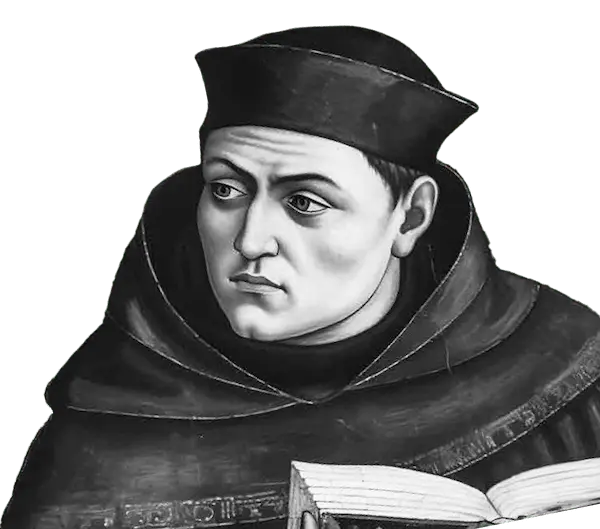
Thomas Aquinas Commentary
Titus 1
"Paul, a servant of God, and an apostle of Jesus Christ, according to the faith of God`s elect, and the knowledge of the truth which is according to godliness, in hope of eternal life, which God, who cannot lie, promised before times eternal; but in his own seasons manifested his word in the message, wherewith I was intrusted according to the commandment of God our Saviour; to Titus, my true child after a common faith: Grace and peace from God the Father and Christ Jesus our Saviour." — Titus 1:1-4 (ASV)
This letter is divided into a greeting and a message, which begins with the words, for this cause I left you in Crete (Titus 1:5).
In the greeting, the person who sends the greeting is mentioned first, and he is identified by certain marks. First, by his name; therefore, he says, Paul, which signifies humility: I am the least of the apostles (1 Corinthians 15:9).
Second, by his state, when he says, a servant of God: O Lord, I am your servant (Psalms 116:16).
But this seems contrary to John: no longer do I call you servants (John 15:15). I answer that the saints are sometimes servants and sometimes not, but friends. For there are two kinds of servitude: one is from fear, which is not suitable for a son of God but is contrasted with sonship: for you did not receive the spirit of slavery to fall back into fear, but you have received the Spirit of sonship (Romans 8:15). The other is from love, which follows from sonship. The reason for this distinction is that a free man is one who exists for his own sake, for he does what he wills; but a servant exists for the sake of someone else.
There are three causes that serve as the beginning of a work: the final cause, the formal cause, and the efficient cause. If we consider the final cause of one’s actions, then all the saints are servants of God, because they do all things for God’s sake: so, whether you eat or drink, or whatever you do, do all to the glory of God (1 Corinthians 10:31). This springs from love, by which we do all for God. If we consider the efficient cause, which is extrinsic and compels one to act, one is a servant under fear, and such servitude belongs to wicked men. But if we consider the formal cause of actions, which is a habit causing an inclination, then some are servants of sin and others servants of justice, because a habit inclines a person either to good or to evil.
Third, he is identified by his authority when he says, and an apostle: he chose from them twelve, whom he named apostles (Luke 6:13); and his gifts were that some should be apostles (Ephesians 4:11).
His apostleship is described in terms of its author, when he says, of Jesus Christ, because he was chosen by him: not from men nor through man, but through Jesus Christ (Galatians 1:1). Or, of Jesus Christ, because he preaches only Christ: for what we preach is not ourselves, but Jesus Christ as Lord, with ourselves as your servants for Jesus’s sake (2 Corinthians 4:5). Or it is because he is Christ’s representative, whose authority he enjoys: so we are ambassadors for Christ (2 Corinthians 5:20); for which I am an ambassador in chains (Ephesians 6:20); what I have forgiven, if I have forgiven anything, has been for your sake in the presence of Christ (2 Corinthians 2:10).
He is also identified by his specific role, for an apostle is one who preaches: make disciples of all nations (Matthew 28:19).
But a teacher should have a firm foundation in knowledge and be perfect. The first can belong to anyone, but the second is expected of preachers and teachers. Just as in the other sciences there are principles, so in the preacher’s knowledge there are principles—namely, the articles of faith, which are known to every believer by virtue of an infused light. These articles are the foundation of faith, which is the substance of things to be hoped for, the conviction of things not seen (Hebrews 11:1). Therefore he says, according to the faith of the elect of God.
Furthermore, the preacher should be perfect in doctrine; therefore he says, and the acknowledging of the truth. For knowledge of the truth can be possessed in two ways: perfectly in heaven, when we shall see face to face; and imperfectly by faith, which the saints have: you will know the truth, and the truth will make you free (John 8:32).
But what sort of truth? In the acknowledging of the truth, which is according to godliness. Now religion and godliness, according to Cicero, are parts of justice, but they differ, because religion is the worship of God. But since God is not only the Creator but also a Father, we owe him worship not only as Creator but also love and worship as a Father. Accordingly, godliness is sometimes taken for the worship of God: behold godliness itself is wisdom (Job 28:28); according to another text: lo, the fear of the Lord is wisdom.
He then describes apostleship by its objective. The objective is mentioned first, followed by its dignity, which is introduced with the phrase which God, who does not lie.
The objective is hope of life everlasting, because even though Moses can be called an apostle, insofar as he was sent by the Lord, it was not in the hope of life everlasting, but of the land of the Hivite and Amorite. Paul, however, is an apostle in the hope of life everlasting: for this is the will of my Father, that every one who sees the Son and believes in him should have eternal life; and I will raise him up at the last day (John 6:40); by his great mercy we have been born anew to a living hope (1 Peter 1:3); we rejoice in our hope of sharing the glory of God (Romans 5:2).
This promise is firm for two reasons. First, because of the one who promises; therefore he says, God, who does not lie. For God is truth, the opposite of which is a lie: God is not a man, that he should lie (Numbers 23:19).
Second, because of God’s intention to give; therefore he says, has promised before the times of the world. For an age, according to the Philosopher, is the measure of a thing’s duration. The ages of the world, therefore, are times which are distinguished according to the successions of things. It is as if to say: before time began its march. And because this time began when the world began, God’s intention existed before the beginning of the world.
Another version has times eternal, i.e., ancient times, for that is the meaning of the word ‘eternal,’ namely, old. Or eternal, not literally, but in the imagination. And so, even before that, he promised this. But to promise is to declare one’s intention to give, and from all eternity God uttered his Word, in which was contained the promise that the saints would possess eternal life: he chose us in him before the foundation of the world (Ephesians 1:4).
This hope is confirmed by the manifestation of the promise; therefore he says, but has in due times manifested his word. He describes this manifestation in three ways.
First, from the time; he manifested his Word when it became incarnate. Therefore, he says, in due times, that is, when man became convinced of his pride, through which he sinned. For a physician, first of all, convinces his patient of their illness in order to heal them more easily. Man took pride in his knowledge, but he became convinced of his ignorance before the time of the law, when he fell into idolatry and vices against nature. He also took pride in his strength, but became convinced of his weakness during the time of the law: but when the time had fully come, God sent his Son, born of woman, born under the law, to redeem those who were under the law (Galatians 4:4).
Second, this manifestation is described by its manner, because it occurred through public preaching: go into all the world and preach the Gospel to the whole creation (Mark 16:15). Therefore he says, in preaching: a dispensation is committed to me (1 Corinthians 9:17).
Third, from its author; therefore he says, according to the commandment of God our Savior: he will save his people from their sins (Matthew 1:21); he is a chosen instrument of mine to carry my name before the gentiles and kings and the sons of Israel (Acts 9:15).
The person greeted is mentioned when he says, to Titus, whom he describes with three marks: first, by his name; second, by his love; third, by his sonship.
He is a son or child through love and the faith, which should be common, so that all say the same thing. Therefore he says, according to the common faith, which is also called Catholic, that is, universal. Hence, it is said: one Lord, one faith, one baptism (Ephesians 4:5).
The blessing he wishes for him is grace and peace. These usually go together, because grace is the beginning of all spiritual gifts, and peace is the end: he makes peace in your borders (Psalms 147:14). From God the Father and from Christ Jesus our Savior.
"For this cause left I thee in Crete, that thou shouldest set in order the things that were wanting, and appoint elders in every city, as I gave thee charge; if any man is blameless, the husband of one wife, having children that believe, who are not accused of riot or unruly. For the bishop must be blameless, as God`s steward; not self-willed, not soon angry, no brawler, no striker, not greedy of filthy lucre; but given to hospitality, as lover of good, sober-minded, just, holy, self-controlled;" — Titus 1:5-8 (ASV)
He now comes to the message and, as was mentioned, aims to defend the Church against heretics. The Apostle's argument proceeds in two parts:
- First, he admonishes Titus to instruct others to resist heretics.
- Second, he teaches how they are to be resisted, beginning at but speak the things (Titus 2:1).
Regarding the first part, he does two things:
- First, he advises Titus to ordain bishops to resist the heretics.
- Second, he explains why this is necessary, beginning at for there are also many (Titus 1:10).
Regarding the ordination of bishops, he does three things:
- First, he entrusts Titus with the task of appointing them.
- Second, he describes the qualifications bishops ought to have, beginning at if anyone is without crime.
- Third, he applies what he said, beginning at for a bishop must be.
Because the Apostle had been commissioned to the Church of the Gentiles and was unable to do everything by himself, he says, for this cause I left you in Crete. This means he left Titus on the island of Crete to take his place as bishop of the church there. As Scripture says, a brother helped is like a strong city (Proverbs 18:19).
One might object that instead of saying, that you should set in order the things that are wanting, he should have said, you should supply them.
I answer that a gloss amplifies this statement, explaining that Titus should correct everything that is evil and supply whatever is lacking in what is good, as in that we may supply what is lacking in your faith (1 Thessalonians 3:10). Alternatively, one might answer that there are sins of omission and sins of transgression, and both need correction. But among the saints and the perfect, such as Titus, transgressions did not abound. Therefore, the Apostle does not say, you should correct transgressions, but rather the things that are wanting, which refers to sins of omission.
The text says, And should ordain elders, which means bishops; therefore, later he says, a bishop must be without crime. He uses the names ‘elder’ and ‘bishop’ interchangeably. A certain heretic took advantage of this and campaigned for the bishopric; but when he failed, he separated from the Church and taught many false doctrines, including the teaching that there is no difference between bishops and priests. This is contrary to Dionysius. The Apostle uses the same name for both to identify the two offices, although the name ‘elder’ suggests seniority. It is also the duty of superiors to appoint bishops, even though the canons may elect them.
He says to ordain them not in the villages, but in every city. For just as in a republic, kings live only in the cities, so in the spiritual kingdom, bishops live in the cities, for the people are a royal priesthood (1 Peter 2:9). Furthermore, they should be elders in maturity: woe to you, O land, when your king is a child (Ecclesiastes 10:16).
By elders, we should understand those who are mature not only in years but also in morals: gather for me seventy men of the elders of Israel, whom you know to be the elders of the people and officers over them (Numbers 11:16). Second, they should be ordained according to the form of the Church; therefore, he says, as I also appointed you. As it is written, my son, keep sound wisdom and discretion; let them not escape from your sight (Proverbs 3:21).
Then, when he says, if anyone is without crime, he describes the qualifications in three ways:
- First, regarding the man himself.
- Second, regarding his wife.
- Third, regarding his children.
Regarding the man himself, he says he must be without crime. But is there such a person? For it is said: if we say we have no sin, we deceive ourselves, and the truth is not in us (1 John 1:8). I answer that a crime is one thing and a sin another. A sin is an evil that might be great or small, open or secret; but a crime is a great and public sin. As the Psalm asks, O Lord, who shall sojourn in your tent? Who shall dwell on your holy hill? (Psalms 15:1). And the answer is given: he who walks blamelessly, and does what is right. This does not mean that a person who has sinned after baptism cannot be chosen, but that the one chosen must not be disreputable.
Regarding the second qualification, he says, the husband of one wife. The Eastern commentators explain this to mean that a bishop may not have two wives simultaneously, a custom some followed. But if this were so, the Apostle would have had no reason to write this, since according to the laws of the Romans to whom he was writing, it was not legal to have more than one wife. Furthermore, in 1 Timothy he says, let a widow be enrolled, having been the wife of one husband (1 Timothy 5:9), and yet it was never legal for a woman to have more than one husband at a time. And so, he desired the same of widows: that they have never had more than one husband.
Jerome says that the requirement was that the man had only one wife after baptism, and it does not apply if he had other wives before baptism. Nevertheless, Augustine and Ambrose say that while baptism washes away all crimes, it does not wash away the state of matrimony. Therefore, according to them, it is more correct to say that he may not have had more than one wife either before or after baptism.
Others suggest the reason for this law was that having more than one wife was a sign of incontinence. But this is not true, because it would not be held against him if he had concubines, which would be a greater sign of incontinence. There is a deeper reason: because a bishop administers the sacraments, no sacramental defect should be present in him. The sacrament of matrimony signifies Christ’s union with the Church. Therefore, for the sign to correspond to what it signifies, just as Christ is one and the Church is one, so also the bishop must have had only one wife. This signification would be lacking if the bishop had more than one wife. Under the Old Testament law, however, the Patriarchs signified this union not as something already joined to Christ, but as something to be joined in the future. Because the future Church was to be composed of Jews and Gentiles, the Patriarchs took not one but several wives. Consequently, that multitude of wives signified this future gathering.
Regarding the third qualification, which concerns his children, he says they must be having faithful children, not open to the charge of being profligate or insubordinate. For a bishop is ordained to oversee, and one appointed to such a task ought to be skilled in it; otherwise, he will be unable to govern prudently. But it is presumed that he is skilled if he has governed others well.
A bishop is expected to do three things besides govern:
- First, to teach the faith, as in make disciples of all nations (Matthew 28:19); therefore he says his children must be faithful.
- Second, to instruct the people in virtue: do you have children? Discipline them, and make them obedient from their youth . But sins of lust destroy virtue—a braggart and fool goes beyond the right moment ()—therefore he says they must be not open to the charge of being profligate. In 1 Samuel, Eli is punished for failing to correct his sons on this point (1 Samuel 3:13).
- Third, it is required that he correct the unruly; therefore he says they must not be insubordinate, that is, not obedient: a horse that is untamed turns out to be stubborn, and a son unrestrained turns out to be willful .
Then when he says, a bishop must be without crime, he expands on what he has said, addressing:
- First, the requirement of being without crime.
- Second, the vices he must be without, beginning at not proud.
The reason for the first requirement is that he must administer divine things: like the magistrate of the people, so are his officials ; he who walks in the way that is blameless shall minister to me (Psalms 101:6).
Then when he says, not proud, he shows the vices from which a bishop should be immune and the virtues he should possess.
- First, the vices from which he should be immune.
- Second, the virtues he should have, beginning at but given to hospitality.
Now, some sins are carnal and some are spiritual. The Apostle makes no mention of the first, because it is taken for granted that a bishop is free of them: but immorality and all impurity or covetousness must not even be named among you, as is fitting among saints (Ephesians 5:3). But he does mention spiritual sins. Of the five spiritual sins, two have no place among church leaders: envy, which is a childish sin (envy slays the little one (Job 5:2)), for a leader should be above envy; and spiritual sloth, because for a leader, all things seem to succeed according to his wishes. But pride is mentioned because it tempts those in authority, as are anger and covetousness, which relate to the temporal things he administers.
Regarding the first of these three, he says a bishop must be not proud: the man of haughty looks and arrogant heart I will not endure (Psalms 101:5); if they make you master of the feast, do not exalt yourself; be among them as one of them .
Regarding the second, he warns against anger when he says, not subject to anger. He then mentions its catalyst, which is wine, saying, nor given to wine: who has redness of eyes? Those who tarry long over wine (Proverbs 23:29). Then, he addresses the result of anger, which is striking others; therefore he says, not violent, that is, not cruel: I gave my back to the smiter and my cheeks to those who pulled out the beard (Isaiah 50:6). Alternatively, not violent can mean not offending the consciences of others with a corrupt character, thereby wounding their conscience (1 Corinthians 8:12).
Regarding the third, he says a bishop must be not greedy of filthy gain: but they considered our existence an idle game, and life a festival held for profit, for he says one must get money however one can, even by base means .
Then he mentions the virtues they should have:
- First, those that pertain to right living.
- Second, those that pertain to true doctrine, at embracing that faithful word (Titus 1:9).
All of these are self-evident and need no comment.
"holding to the faithful word which is according to the teaching, that he may be able to exhort in the sound doctrine, and to convict the gainsayers. For there are many unruly men, vain talkers and deceivers, specially they of the circumcision, whose mouths must be stopped; men who overthrow whole houses, teaching things which they ought not, for filthy lucre`s sake. One of themselves, a prophet of their own, said, Cretans are always liars, evil beasts, idle gluttons. This testimony is true. For which cause reprove them sharply, that they may be sound in the faith," — Titus 1:9-13 (ASV)
1. Previously, he described what a bishop’s conduct should be; here he shows how he should be equipped with doctrine. He explains:
- First, that a bishop should apply himself diligently to study.
- Second, what he should study.
- Third, the usefulness of that study.
2. Regarding the first point, he says, embracing that faithful word. When someone embraces something, they hold it firmly, embracing it, as it were, with love. In the same way, a bishop must hold knowledge in his embrace, clinging to it firmly with his mind and heart. As Scripture says, she hastens to make herself known to those who desire her , and, prize her highly, and she will exalt you; she will honor you if you embrace her (Proverbs 4:8).
3. The subjects he studies must not be fables or worldly matters, but that faithful word—that is, what is true. For the Lord is faithful in all his words and gracious in all his deeds (Psalms 145:13). Alternatively, that faithful word refers to the faith itself, in which a bishop should be well instructed.
Some people study merely to learn things and apply them to their own lives. But this is not enough for a bishop, for he must instruct others. Therefore, the Apostle says, which is according to doctrine. Let no one despise your youth, but set the believers an example in speech and conduct (1 Timothy 4:12).
4. Its usefulness lies in making it easier for him to fulfill his office. A bishop’s duties are similar to those of a shepherd: feed my sheep (John 21:17). A shepherd has two duties: first, to feed the flock—feed the flock of God that is your charge (1 Peter 5:2)—and second, to fend off the wolf. Likewise, a bishop should feed his flock with true doctrine: I will give you shepherds after my own heart, who will feed you with knowledge and understanding (Jeremiah 3:15).
This is why he says, that he may be able to exhort in sound doctrine. He does not say, that he may exhort, but that he may be able to exhort, which means that he must have exhortations ready to hand for when it is necessary to give them. This is prefigured in Exodus by the poles on the ark, which enabled it to be carried. He must be mighty in deed and word (Luke 24:19). And he says, sound, that is, without any mixture of falsehood: but speak the things that become sound doctrine (Titus 2:1); for our appeal does not spring from error or uncleanness, nor is it made with guile (1 Thessalonians 2:3).
Second, he must guard the flock against heretics. This is why he says, and to convince those who contradict it. This is accomplished through the study of Sacred Scripture: all Scripture is inspired by God and profitable for teaching, for reproof, for correction (2 Timothy 3:16); I have not denied the words of the Holy One (Job 6:10).
According to the Philosopher, these two things are the work of a wise man: first, not to lie about what he knows, and second, to be able to expose liars.
5. So when he says, for there are also many, he establishes the necessity of this teaching. In this regard, he first describes the false teachers, and second, the perverse things they study, which he addresses at the words, one of them.
Concerning the false teachers, he first describes their condition, and second, the perversity of their learning, at the words who subvert whole houses.
He then shows their condition and prescribes a remedy, at the words who must be reproved.
6. He describes their condition in four ways:
- First, by their number, when he says, many: the number of fools is infinite (Ecclesiastes 1:15).
- Second, by the vice of disobedience, when he says, disobedient—both to God and to their superiors: disobedient to parents (Romans 1:30); stubbornness is as iniquity and idolatry (1 Samuel 15:23).
- Third, by their speech, when he says, vain talkers, which relates to themselves: the Lord knows the thoughts of men, that they are in vain (Psalms 94:11). For all men who were ignorant of God were foolish by nature , and false teachers especially are foolish. Then he continues with seducers, which relates to their inferiors: evil men and deceivers will go on from bad to worse (2 Timothy 3:13).
- Fourth, by their origin, when he says, especially they who are of the circumcision, who compelled people to observe Jewish practices: look out for the dogs, look out for the evil-workers, look out for those who mutilate the flesh (Philippians 3:2).
7. He proposes a remedy against these false teachers. They must not be tolerated, because the people would become corrupt, and the shepherd would be blamed: you have not gone up into the breaches, or built up a wall for the house of Israel, that it might stand in battle in the day of the Lord (Ezekiel 13:5). As Paul says elsewhere, convince, rebuke, and exhort, be unfailing in patience and in teaching (2 Timothy 4:2). Therefore, he says, who must be reproved.
8. Then, when he says, who subvert whole houses, he shows their motivation. He explains it by the harm they inflict, the false doctrine they teach, and the gain they desire.
The harm they cause is that they subvert whole houses. Catholic doctrine is preached openly in the Church, but heretics teach in secret. This is why they seek hidden places: stolen water is sweet, and bread eaten in secret is pleasant (Proverbs 9:17). Therefore, they go from house to house to seduce women in particular: for among them are those who make their way into households and capture weak women, burdened with sins (2 Timothy 3:6).
They are Teaching things which they ought not—that is, vain and useless things—not seeking spiritual gain but worldly gain. This is why he adds, for the sake of filthy gain, or for their own worldly glory: they considered our existence an idle game, and life a festival held for profit, for he says one must get money however one can, even by base means .
9. Next, he describes their audience, the Cretans, to whom he applies this work. First, he describes their condition, and second, he prescribes a remedy, at the words wherefore, rebuke them.
Regarding their condition, he first describes it using witnesses, and second, he confirms it.
10. He says, therefore, that such are the teachers, but their listeners are just as easily seduced, according to the testimony of one of their own poets, Epimenides, whom Paul calls one of their prophets.
It should be noted here that a prophet is one whose intellect is enlightened by God to know things that transcend common knowledge: if there is a prophet among you, I the Lord make myself known to him in a vision, I speak with him in a dream (Numbers 12:6).
A prophet can also be one who explains prophecies in the same spirit and method as they were delivered, or one who simply utters prophetic words. Thus, something prophetic might be uttered from an inner instinct without the speaker understanding it. For example, Caiaphas being high priest that year prophesied (John 11:51). For Caiaphas had no intention of prophesying when he said it was expedient for one man to die to prevent him from seducing the people. Nevertheless, he was moved by the Spirit to say this. This type of prophesying can also apply to those who take someone's words as an omen, which might actually originate from demons.
And he says, a prophet of their own, because such a person is familiar with their character.
11. Then, when he says, Cretans, he provides the testimony. He describes them with three characteristics:
First, the corruption of their reason, when he says they are always liars: you destroy those who speak lies (Psalms 5:6).
Second, the corruption of their irascible nature, when he says they are evil beasts—that is, cruel. They are called beasts, as if they were laying waste to things, because they are cruel: like a roaring lion or a charging bear is a wicked ruler over a poor people (Proverbs 28:15).
He says, evil, because according to the Philosopher in the Politics, when a man acts according to reason, he is the best of animals; but when he stoops to wickedness, he is the worst. For if he falls away because of cruelty, no beast is as cruel. Therefore, he says that an evil man is ten thousand times worse than an evil beast.
Third, the corruption of their desires, when he says they are slothful bellies, meaning they have sloth in their bellies. For they were gluttons, and such people seek only rest: soul, you have ample goods laid up for many years; take your ease, eat, drink, be merry (Luke 12:19).
12. Then he confirms this testimony when he says, this testimony is true. A Gloss says this helps us understand that a teacher of Sacred Scripture should take the testimony of truth wherever he finds it. The Apostle frequently cites the sayings of gentiles, as in 1 Corinthians: bad company ruins good morals (1 Corinthians 15:33), and in Acts: we are indeed his offspring (Acts 17:28).
This does not mean that their entire doctrine has been approved. Only what is good is chosen, because all truth, no matter by whom it is spoken, comes from the Holy Spirit, and what is evil is rejected. This is why it is said: when you see among the captives a beautiful woman, and you have desire for her and would take her for yourself as wife, then you shall bring her home to your house, and she shall shave her head and pare her nails (Deuteronomy 21:11–12), that is, remove all that is superfluous.
"This testimony is true. For which cause reprove them sharply, that they may be sound in the faith, not giving heed to Jewish fables, and commandments of men who turn away from the truth. To the pure all things are pure: but to them that are defiled and unbelieving nothing is pure; but both their mind and their conscience are defiled. They profess that they know God; but by their works they deny him, being abominable, and disobedient, and unto every good work reprobate." — Titus 1:13-16 (ASV)
Having described the character of the Cretan people, the Apostle now prescribes the remedy. He presents this in two parts:
- The remedy of rebuke.
- The reason for this remedy: all things are clean to the clean.
Regarding the first part, he does three things:
- He advises Titus to rebuke them.
- He explains the purpose of the rebuke: that they may be sound.
- He shows the correct method for achieving this purpose: not giving heed.
He says, therefore, that the Cretans are evil beasts who should be whipped and flogged. For this reason, rebuke them sharply. As Scripture says, the reproofs of discipline are the way of life (Proverbs 6:23), and, rebuke the beasts that dwell among the marshes (Psalms 68:30).
This advice, however, seems to contradict what is given in Timothy: rebuke, unfailing in patience (2 Timothy 4:2).
I answer that there are two reasons for this difference. The first concerns those being rebuked. The Cretans are difficult and obstinate; consequently, they deserve to be rebuked sharply. This was not the case for the Ephesians, whose archbishop was Timothy. The second reason concerns those who rebuke. Titus was meek and mild, so he is urged to act contrary to his nature. Timothy, on the other hand, was strict, and therefore he was urged to be patient.
When he says, that they may be sound in the faith, he touches on the purpose of the rebuke. A person is sound when there is no decay in them, and they are sound in faith when no article of faith is incorrectly understood. The Cretans’ faith, however, was corrupted by heresy. As the Apostle writes elsewhere, but I am afraid that as the serpent deceived Eve by his cunning, your thoughts will be led astray from a sincere and pure devotion to Christ (2 Corinthians 11:3). And also, if any one teaches otherwise and does not agree with the sound words of our Lord Jesus Christ and the teaching which accords with godliness, he is puffed up with conceit (1 Timothy 6:3).
The path to this soundness is to avoid the errors of the Jews; hence, he says, not giving heed to Jewish fables. In the Law, there are two types of articles: those dealing with beliefs and those dealing with precepts of religion, which were to be observed in divine worship. The first he calls fables, and the second commandments of men, not of God.
In saying this, he seems to be condemning the Old Law, as the Manicheans do. But the word fables could refer to their legends—matters above and beyond the doctrines of the Law—which are myths, as in the Talmud. For example, Paul warns Timothy not to occupy themselves with fables and endless genealogies (1 Timothy 1:4). Alternatively, it might refer to doctrine that was formerly true but is now a fable as they understand it. Thus, behold, a virgin shall conceive and bear a son (Isaiah 7:14) was true, but now, because they say it still remains to be fulfilled, it is a fable. Likewise, commandments of men can mean those not found in the Law of Moses but in the tradition of their fathers: for the sake of your tradition, you have made void the word of God (Matthew 15:6).
But does that mean that commandments of men are to be ignored?
I answer that they are not, so long as they do not turn one from God’s truth. That is why he continues, who turn themselves away from the truth. As Paul writes, for the time is coming when people will not endure sound teaching but will turn away from listening to the truth and wander into myths (2 Timothy 4:4). The same idea is found in Matthew: in vain do they worship me, teaching doctrines and precepts of men (Matthew 15:9).
Alternatively, it could be said that the commandments in God’s Law have been changed into commands of men. When they are interpreted as signs of a truth to come, they are commandments of God. But when they are observed after our bodies are dead to the Law, they become commands of men.
When he says, all things are clean to the clean, he specifies the reason behind his statements. He explains how they turn from the truth and repeat fables and commands of men, which are chiefly concerned with distinguishing between foods according to the Law—a practice some false prophets said must be observed. Consequently, he shows two things:
- How these foods relate to those who are good.
- How they relate to those who are wicked, at but to them that are defiled.
He says, therefore, not giving heed to Jewish fables about food, because all things are clean to the clean.
Does this mean that adultery is clean to the clean?
I answer: no, because by the very fact that it is adultery, it is unclean. Rather, those things that are clean to the clean are things that do not defile a person in and of themselves. In this matter, Matthew says, whatever enters into the mouth does not defile a man (Matthew 15:11). Therefore, whatever enters the mouth is clean.
Against this, there are two objections. One is found in Leviticus: and the rock badger, because it chews the cud but does not part the hoof is unclean to you (Leviticus 11:7).
I answer according to Augustine in Against Faustus: a thing is unclean either according to its nature or according to what it signifies. For example, if the word "fool" is taken merely as a sound, it is not unclean but good. But if it is taken according to its signification, it implies uncleanness because it signifies a lack of wisdom. The acts of that people were prophetic acts. Hence, a pig as such is not unclean, but only inasmuch as it signifies a person given to pleasure. But now that the reality has come, these significations cease, and people may use foods according to their nature.
Another objection is that in Acts, the apostles commanded believers to abstain from blood and from things strangled (Acts 15:29). Consequently, it does not seem lawful to partake of such things, and so, not all things are clean to the clean.
I answer that some believe this commandment should be interpreted literally but in a mystical sense, so that "blood" is understood as homicide and "strangling" as the oppression of the poor. This is a good interpretation, but it is not the whole truth.
Therefore, I say that it is literally a commandment, but we are not obliged to follow it. Some things are forbidden because they are evil, and these must simply be avoided. Other things are not evil in themselves but were forbidden for a time, and these must be observed only as long as the reason for them exists. The apostles forbade these things not because they were evil in themselves—for the Lord says the opposite in Matthew (Matthew 15:17)—but for another reason.
The reason was that some had been converted from Judaism and some from paganism. For one people to be formed, it was necessary that one group condescend to the other. In this matter, the Jews were to be condescended to, because it was abominable to them to eat blood and anything suffocated. Therefore, to maintain peace, the apostles declared that this law was to be observed for that time.
When he says, but to them that are defiled, he shows how these foods are regarded by wicked people. Concerning this, he does three things:
- He states the principle.
- He assigns the reason for it, at but both their mind.
- He demonstrates this with a sign, at they profess that they know.
He says, therefore, that these foods are clean to the clean, but unclean to the defiled—that is, to those whose consciences are defiled. As it is written, whoever touches pitch will be defiled . They are also unclean to unbelievers—that is, to those whose faith is corrupt: he who is an unbeliever, acts unfaithfully (Isaiah 21:2).
Does the unbelieving sinner make an act of charity unclean? The Apostle does not use an affirmative but a negative word. He does not say "all"; he says that nothing is clean to them. This is true because nothing is perfectly clean to them, since no act is clean unless it is directed to its proper end, whereas their acts are outside that end.
But is anything clean to them? It seems so, although it is also true that whatever does not proceed from faith is sin (Romans 14:23).
I answer that evil never corrupts the good altogether, for it is impossible that there not be some good in every sinner, even in devils. Therefore, when a sinner does something precisely as a sinner and unbeliever, the entire act is a sin in its root. But if he does something that springs from some good in him, such as from unformed faith or from his nature, it is not unclean. This is signified when he says, but to them that are defiled and to unbelievers—that is, insofar as they are such. For they ate contrary to conscience and erred in faith; consequently, what was clean in its very nature they made unclean, as far as they were concerned.
The reason for this is that the cause of their acts is unclean, namely, their depraved intellect and will. Hence he says, but both their mind and their conscience are defiled: their mind by unbelief, and their conscience by sin. As it is written, why is it, O Israel, why is it that you are in the land of your enemies, that you are growing old in a foreign country? .
When he says, they profess that they know God, he explains their faith with a sign. For if a person claims that their words are true and that they believe in and confess one God, this must be rejected as impossible if their actions prove otherwise.
First, he shows the good that was in them: they profess outwardly with their lips that they know God. As the prophet says, this people draw near with their mouth and honor me with their lips, while their hearts are far from me (Isaiah 29:13), and, you are near in their mouth and far from their heart (Jeremiah 12:2).
Second, he shows their inward failing, first regarding things present, and second regarding things to come, with the word incredulous. Regarding the present, in their works they deny him. One who sins actually denies God by his actions, because a person cannot confess God without admitting His power—namely, that He should be obeyed. Hence, if they sin, they disobey and deny by their works the very things they profess with their lips.
But you might say: whoever denies God is an unbeliever, but sinners deny God in their works; therefore, sinners are unbelievers.
I answer that just as a person with general knowledge can err in particular cases, so a person with a general knowledge of the faith can fail in a particular action because his love is corrupted. As Paul says, he has disowned the faith and is worse than an unbeliever (1 Timothy 5:8).
But can they fail as far as the future is concerned? They can, because they not only deny God but are not inclined to return to Him.
For there are three things that incline a person to return to God:
- God’s grace: justified by his grace as a gift (Romans 3:24).
- Faith: he cleansed their hearts by faith (Acts 15:9).
- The performance of a good work: the doers of the law will be justified (Romans 2:13).
But these three ways are not open to them. The way of grace is closed because they are abominable, that is, not disposed to grace. The way of faith is closed because they are incredulous, that is, not suited for believing; as it is written, you are among believers and destroyers (Ezekiel 2:6). And third, the way of good works is closed because they are reprobate to every good work. As Jeremiah says, refuse silver they are called (Jeremiah 6:30).
Jump to: