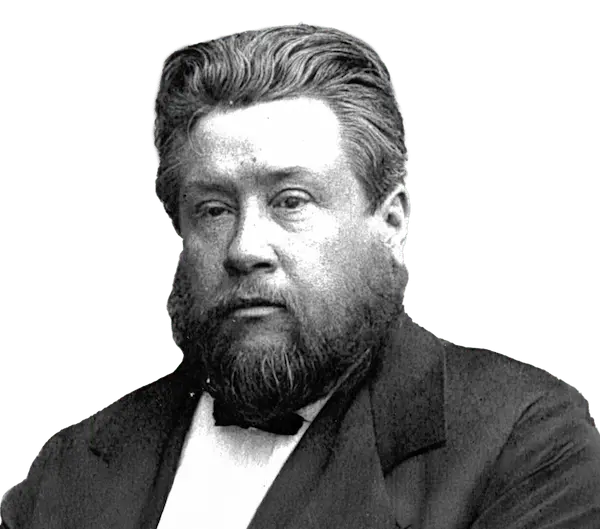
Charles Spurgeon • Jan 11, 1857
THE children of Israel were led out of Egypt with a strong hand and an outstretched arm. They were conducted into the vast howling wilderness where there were few, if any, permanent abodes of men. For some time they pursued their march in solitude, discovering…
Charles Spurgeon • Mar 15, 1857
BEHOLD then, how great an interest God the Father takes in the work of salvation. It is called, “his business,” and though Jesus Christ came to accomplish our redemption, came to set us a perfect example, and to establish a way of salvation, yet He came not up…
Charles Spurgeon • Aug 19, 1883
LAST Sabbath morning, I tried to show that the substance and essence of the true Gospel is the doctrine of God’s grace, [A Gospel Worth Dying For No. 1734, Volume 29] that, in fact, if you take away the grace of God from the Gospel you have extracted from it i…
Charles Spurgeon • Oct 25, 1863
HEREIN lay the special security of the chosen land. The Edomites saw the whole country of Israel and Judah left desolate; Babylonians and Chaldeans had carried away the people, and ravaged the land, therefore the proud inhabitants of the city in the rock said—…
Charles Spurgeon • Apr 29, 1855
BEHOLD! What a change divine grace will work in a man and in how short a time! That same Peter, who so lately followed his Master afar off , and with oaths and curses denied that he knew His name, is now to be found side by side with the loving John, boldly de…
Charles Spurgeon • Nov 28, 1858
THE governor of the feast said more than he intended to say, or rather, there is more truth in what he said than he himself imagined. This is the established rule all the world over, “The good wine first, and when men have well drunk, then that which is worse.…
Charles Spurgeon • Jul 5, 1863
FOR the last few months I have been led to blow the silver trumpet, sounding forth the love and mercy of our God in Christ. Many times in your hearing I have preached a full Christ for empty sinners, and have set forth the freeness and graciousness of the divi…
Charles Spurgeon • Jul 31, 1859
THE single sentence which I have selected for my text consists of these words—“I am meek and lowly in heart.” These words might be taken to have three distinct bearings upon the context. They may be regarded as being the lesson to be taught, “ Learn of me; for…
Charles Spurgeon • Aug 31, 1856
I SHALL not, tonight, consider the connection of these words or what was particularly intended by Job. I shall use them in, perhaps, another sense from that which he intended. No doubt Job meant to say, that if God would allow him to argue his case before Him,…
Charles Spurgeon • Aug 23, 1857
I HAVE heard it sometimes said by wicked men, when they would arraign the justice of the Most High, that it is unjust that God should condemn men for the use of the powers which He Himself has given them. This most subtle evil has often grieved the hearts of t…
Charles Spurgeon • Feb 22, 1863
AFTER our Lord had been betrayed by the false-hearted Judas, He was bound by the officers who had come to take Him. No doubt the cords were drawn as tight and twisted as mercilessly as possible. If we believe the traditions of the fathers, these cords cut thro…
Charles Spurgeon • Aug 19, 1855
IT is possible for a man to read too many books. We will not despise learning, we will not undervalue erudition, such acquisitions are very desirable. And when his talents are sanctified to God, the man of learning frequently becomes in the hands of the Spirit…
Charles Spurgeon • Nov 18, 1855
THIS generation has gradually, and almost imperceptibly, become to a great extent a godless generation. One of the diseases of the present generation of mankind is their secret but deep-seated godlessness, by which they have so far departed from the knowledge…
Charles Spurgeon • Mar 11, 1860
HE who preaches the whole truth as it is in Jesus will labor under continual disadvantages, albeit that the grand advantage of having the presence and blessing of God will more than compensate the greatest loss. It has been my earnest endeavor ever since I hav…
Charles Spurgeon • Feb 6, 1859
THIS age is full of shams. Pretence never stood in so eminent a position as it does at the present hour. There be few, I fear, who love the naked truth, we can scarcely endure it in our houses, you would scarcely trade with a man who absolutely stated it. If y…
Charles Spurgeon • Jul 6, 1856
AT the Lord’s table we wish to have no subject for contemplation but our blessed Lord Jesus Christ, and we have generally been wont to consider Him as the crucified One, “the man of sorrows and acquainted with grief,” while we have had before us the emblems of…
Charles Spurgeon • Jun 15, 1856
THERE are more eyes fixed on man then he knows of. He sees not as he is seen. He thinks himself obscure and unobserved, but let him remember that a cloud of witnesses hold him in full survey.
Charles Spurgeon • Jul 29, 1860
THESE verses occur in Job’s answer to Zophar the Naamathite. Job had his failings, but certainly he appears less faulty in this dialog than those three men who sought to reprove him and convict him of error. Zophar the Naamathite had the very highest opinion o…
Charles Spurgeon • Oct 11, 1857
PERFECT stability has ceased from the world since the day when Adam fell. He was stable enough when in the garden. He was obedient to his Master’s will, but when he ate of the forbidden fruit he did not only slide himself, but he shook the standing places of a…
Charles Spurgeon • Aug 5, 1860
IT is with no view to controversy that I have selected this text, but for a far higher and more practical purpose, namely, that by this truth, many of us may search ourselves, and that we may be able to discover whether we have any of the marks of the vessels…
Charles Spurgeon • Oct 6, 1861
IT will be interesting to the members of this church to know that it was under a sermon delivered by Mr. William Wallin from this very text, that my honored and venerable predecessor, Dr. Gill, was converted to a knowledge of the truth as it is in Jesus. I loo…
Charles Spurgeon • May 28, 1914
THIS is very plain. There is no mistaking the sense. We are saved by grace, and not by our own doings. A reason is assigned. If we were saved by our own doings, it would be natural and certain that we should boast. It is well that the apostle is so very explic…
Charles Spurgeon • Mar 18, 1866
THE fall of man was most disastrous in its results to our entire being. “In the day that thou eatest thereof thou shalt surely die,” was no idle threat, for Adam did die the moment that he transgressed the command—he died the great spiritual death by which all…
Charles Spurgeon • Jan 2, 1887
THE possession of a God, or the non-possession of a God, makes the greatest possible difference between man and man. Esau is a princely being, but he is “a profane person.” Jacob is a weak, fallible, frail creature, but he has a God . Have you not heard of “th…