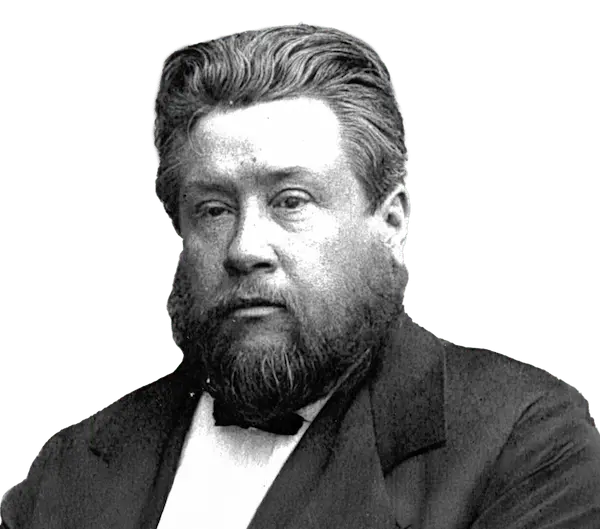
Charles Spurgeon • Dec 8, 1910
[Other sermons by Mr. Spurgeon concerning the man sick of the palsy are as follows, #2337, The Physician Pardons His Palsied Patient, #2417, First Forgiveness, Then Healing, and #3016, Good Cheer From Forgiven Sin.] OUR LORD JESUS CHRIST did not say to the pal…
Charles Spurgeon • Jul 1, 1888
DAVID had been soaring up on eagle’s wings. Perhaps never in his life before had he so enjoyed the public worship of God. He had forgotten everything in the delight of bringing the ark of the Lord home to his own city, where he had prepared a tabernacle for it…
Charles Spurgeon • Jan 20, 1895
OUR subject this morning [Sermon #1946, Volume 33— Eternal Life within Present Grasp— Read/download entire serlittle more, tonight, about eternal life. Many people, when they hear or read that expression, suppose that it means heaven. It does mean that, but it…
Charles Spurgeon • Dec 6, 1896
EVERY man, sooner or later, has some kind of infirmity to bear. It may be that his constitution from the very first will be inclined to certain diseases and pains, or possibly he may, in passing through life, suffer from accident or decline of health. He may n…
Charles Spurgeon • Jul 16, 1893
IT does not need a strong imagination to picture Mary, probably at that time the widowed mother of our Lord. She is full of love and of a naturally kind, sympathetic disposition. She is at a marriage and she is very pleased that her Son is there, with the firs…
Charles Spurgeon • Sep 28, 1916
GRATITUDE is never failing in Christians. When they have received a benefit, they are sure to acknowledge it. When Paul was at Rome, Onesiphorus found him out very diligently, and was not ashamed of his chains, but ministered to his necessities, and therefore,…
Charles Spurgeon • Jul 3, 1898
THE main thing for every one of us is life. What would it profit a man, if he should gain the whole world and lose his own life? Of what avail would riches be if life were gone? What is the value of broad acres to a dead man or the applause of nations to one w…
Charles Spurgeon • Jan 24, 1892
HERE are two very wonderful challenges thrown out by the Apostle Paul. First, he boldly defies anyone to charge the chosen of God with sin, “Who shall lay any thing to the charge of God’s elect?” and then, even if any charges should be brought against them, he…
Charles Spurgeon • Dec 4, 1892
I THINK Paul might have used these words as his motto. We had once a Saxon king called Ethelred the Unready, here we have an apostle who might be called Paul the Ready. The Lord Jesus no sooner called to him out of heaven, “Saul, Saul, why persecutest thou me?…
Charles Spurgeon • May 10, 1896
YOU must all have noticed that David lived in very evil times. When he wrote this psalm, the days were dark, and his cry was “Help, LORD; for the godly man ceaseth; for the faithful fail from among the children of men,” from which I gather that, bad as the tim…
Charles Spurgeon • Apr 20, 1911
[Another Sermon by Mr. Spurgeon upon verses 17 and 18 is #2609, Our Thoughts About God’s Thoughts] IT is very comforting to us to believe in a personal God and to be able to confide in One who condescends to think lovingly of us, and to consider our needs, and…
Charles Spurgeon • Feb 11, 1904
WHEN he spoke of “the law of the Lord,” David did not merely mean the law as it was given in the ten commandments, although that also is perfect, and is used, to some extent, in the conversion of souls.
Charles Spurgeon • Jul 17, 1887
WHEN man disobeyed his God he died spiritually, and that death consisted in the separation of his soul from God. From that moment man began to think that God was far away, and this has since been his religion in all ages. Either he has said, “There is no God,”…
Charles Spurgeon • Mar 20, 1870
VERY often we address the Gospel to the chief of sinners. We believe it to be our duty to do this with the greatest frequency, for did not our Lord, when bidding His disciples to preach the good news in every place, use the words, “beginning at Jerusalem”? Whe…
Charles Spurgeon • Jul 19, 1903
I MIGHT have taken as my text several other verses in the same chapter, for they all express the same idea as the words I have just read to you. For the sake of emphasis, let me ask you to look at the fourth verse. When a priest had committed sin, and brought…
Charles Spurgeon • Sep 10, 1908
I FIND, on reference to Luther’s Commentary on the epistle to the Galatians, and to Calvin’s Commentary on this passage, that both those learned expositors consider that this refers to the treatment of ministers by their people in the matter of their pecuniary…
Charles Spurgeon • Mar 25, 1877
THE only blessing the law can give, it bestows on those who do no iniquity, and walk perfectly in God’s ways—the Gospel alone has a blessing for the guilty. On them upon their believing in Jesus, it pronounces the benediction, “Blessed is he whose transgressio…
Charles Spurgeon • Apr 19, 1874
THESE two texts make up a very beautiful sketch of the plan of salvation. Put before your mind’s eye the sinner, empty of all holiness, and of all hope, despairing, and ready to die. Put also before your mind God full of mercy, willing to come and fill the sin…
Charles Spurgeon • Mar 9, 1905
BRETHREN, we may forget the past, but God does not. He says, “I remember thee, the kindness of thy youth.” God’s mercies come to us in such a constant stream—they are so many and so varied that we are very apt to have a feeble memory towards them. But the Lord…
Charles Spurgeon • Jun 8, 1884
THESE two texts will serve to show the different estimate which God has of unbelief and of faith.
Charles Spurgeon • May 16, 1869
NOTWITHSTANDING his bonds, Paul is to be envied that he had an opportunity of addressing himself to kings and rulers, and that once at least in his life he stood before the great master of the Roman world, the Emperor himself. To reach the ignorant who sit on…
Charles Spurgeon
THE most prominent doctrine in Paul’s teaching was that of justification by faith. He taught it so very plainly, so very boldly—I almost said so very baldly—that it seemed necessary to the Holy Spirit that James should bear testimony to the necessity of holine…
Charles Spurgeon • Apr 1, 1883
THE apostle is intensely personal in his address. This verse is not spoken to us all in the mass, but to some one in particular. The apostle fixes his eyes upon a single person, and speaks to him as “You.” “Despise you the riches of His goodness and forbearanc…
Charles Spurgeon • Oct 17, 1869
THE doctrine of the resurrection of the dead is peculiarly a Christian belief. With natural reason, assisted by some little light lingering in tradition or borrowed from the Jews, a few philosophers spelled out the immortality of the soul. But that the body sh…