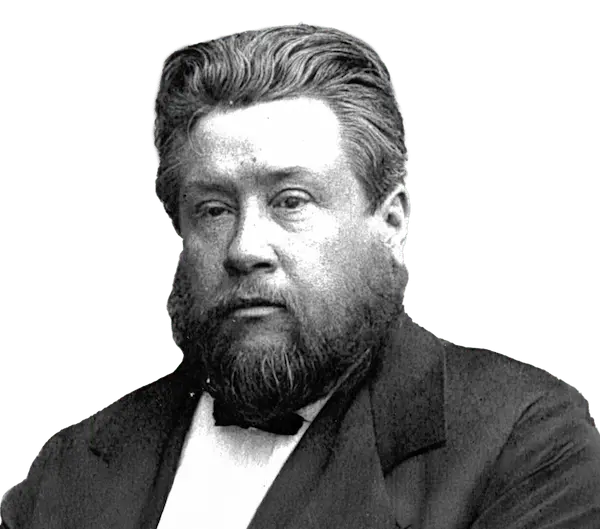
Charles Spurgeon
THE soul of the believer is the garden of the Lord. Within it are rare plants, such as yield “spices” and “pleasant fruits.” Once it was a wilderness, overgrown with thorns and briars, but now it is “a garden enclosed,” an “orchard of pomegranates.” At times w…
Charles Spurgeon • Jan 2, 1913
MOSES in this chapter is speaking concerning Israel in the wilderness. When the great host came out of Egypt, they were, through the debasing influences of slavery—which are not easily or quickly shaken off—not much better than a mere mob. They were not at all…
Charles Spurgeon • Feb 10, 1916
ELIJAH was a man of like passions with ourselves. We all know that when we have passed through any great excitement of high joy there almost always comes following, a corresponding reaction and depression. Elijah had gone to the top of Carmel and had pleaded h…
Charles Spurgeon • Jan 6, 1878
THE Corinthian church was exceedingly gifted. Perhaps no other church of the period had in it so many persons of education and talent. The apostle says of them, “In everything you are enriched, in all utterance and in all knowledge, so that you come behind in…
Charles Spurgeon • Aug 29, 1869
THE whole verse runs thus, “Afterward shall the children of Israel return, and seek the LORD their God, and David their king; and shall fear the LORD and his goodness in the latter days.” A brief word may suffice upon the prophecy.
Charles Spurgeon • Dec 12, 1897
AS I read the Scripture in your hearing, a few minutes ago, I was greatly startled by one word in the first part of the chapter—“Except ye repent, you shall all likewise perish.” How did those Galileans perish? I am solemnly afraid that some of you will perish…
Charles Spurgeon • May 31, 1903
THIS confession, suitable in the lips of Paul, is equally appropriate in the mouth of each one of us who have known and proved the grace of God. We must consider Paul, according to his own account of himself, as being “not meet to be called an apostle”—though…
Charles Spurgeon
I DO not think that it has ever been clearly ascertained to what particular historical event Asaph here refers, but I do not find that any of the commentators mention a very obscure passage in the First Book of Chronicles, which I venture to suggest may give u…
Charles Spurgeon • Mar 15, 1896
YOU, dear friends who belong to the Tabernacle, are well acquainted with our venerable friend, George Rogers. It was a great joy to me to find him alive when I came home from the Continent, he said that he must keep on living till he had seen me once more, and…
Charles Spurgeon • Jul 6, 1890
DEAR friends, I must begin by reminding you that we are not in this place dealing with unconverted men in their sins but with God’s people Israel in their holy things. I say this because we must never forget that “without shedding of blood there is no remissio…
Charles Spurgeon • Jun 5, 1887
WHAT an honorable title! Moses is distinguished as “the servant of Jehovah.” He was this of choice, for he willed to be the servant of God rather than to be great in the land of the Pharaohs. Such he was most perseveringly throughout the whole of his life. Suc…
Charles Spurgeon • Nov 20, 1898
OUR text tells us of a case of real distress, and it shows us how a woman prayed when in agony. It is a good thing when young people begin to write, especially if they think of writing for the press, if they will, before they send away their manuscript, take t…
Charles Spurgeon • Feb 7, 1869
OUR Lord was here certainly alluding to the opposition and persecution which the Gospel would excite. This is clear from the context, in which He declares that He is not come to send peace on the earth, but a sword, and from the parallel passages in the other…
Charles Spurgeon • Mar 29, 1896
THAT was a very strange question to ask a blind man. Everybody could see that he was blind, they could tell by the way he struggled through the crowd that he was blind. His very voice, which had long been used in begging, would show that he was a blind mendica…
Charles Spurgeon • Jun 4, 1914
THE young lions are very strong, they are as yet in the freshness of their youth, and yet their strength does not always suffice to keep them supplied. The young lions are very crafty, they understand how to waylay their game and leap upon them with a sudden s…
Charles Spurgeon • Mar 3, 1881
IN this part of the world, we can hardly understand how much the Easterns thought of perfumes.
Charles Spurgeon • Nov 8, 1874
ALL things that are of earth are unsatisfactory. Our spirit craves for something more than time and sense can yield it. Nothing which comes of earth, even if it should yield a transient satisfaction, can long maintain its excellence. Pointing to the water in J…
Charles Spurgeon • Oct 19, 1911
IT is a wonderful proof of our Savior ’s deep attachment to His people that, having made their salvation sure, He is also anxious concerning their present state of mind. He wishes that His people should be, not only safe, but happy—that they should be not mere…
Charles Spurgeon • Aug 6, 1899
THIS was the last sight the disciples had upon the mountain and it seems to me to have been the best. They saw “Jesus only.” Jesus was often with His people. He was usually with His disciples, but they did not often notice Him as “Jesus only.” They probably di…
Charles Spurgeon • Jun 2, 1867
JESUS had spent several years in retirement in the house of His reputed father at Nazareth. He must have been well-known—the excellency of His character and conduct must have attracted notice. In due time He left Nazareth, was baptized by John in the Jordan, a…
Charles Spurgeon • Mar 22, 1917
NO mischief that ever befalls our Christian communities is more lamentable than that which comes from the defection of the members. The heaviest sorrow that can wring a pastor’s heart is such as comes from the perfidy of his most familiar friend. The direst ca…
Charles Spurgeon • Dec 5, 1886
THIS is a chapter singularly full of certainties, and remarkably studded with “ifs.” Concerning most of the great things in it there never can be an “if,” and yet “if” comes up, I think, no less than seven times in the chapter, and “if,” too, not about trifles…
Charles Spurgeon • Aug 25, 1889
THE teaching of this verse is much the same as that in preceding verses—but the apostle does not hesitate to dwell again and again upon the important matters of quickening and forgiveness. These lie in the foundation. Ministers of Christ cannot too often go ov…
Charles Spurgeon • Mar 8, 1868
WE greatly esteem the dying words of good men, but what must be the value of their departing thoughts! If we could pass beyond the gate of speech, and see the secret things which are transacted in the silent chambers of their souls at the moment of departure,…