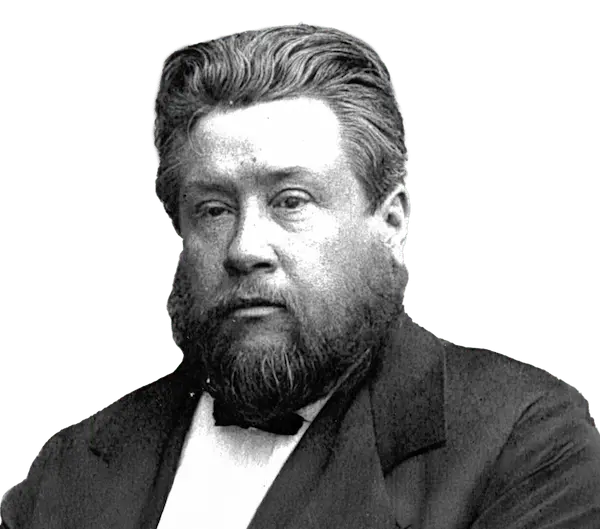
Charles Spurgeon • Aug 29, 1875
WE shall, this morning, leave all discussion as to the creation of the world to those learned divines who have paid their special attention to that subject, and to those geologists who know, or at any rate think they know, a very great deal about it. It is a v…
Charles Spurgeon • Jan 27, 1895
THIS, of course, is a prophecy of what the Messiah would do. The Lord Jesus Christ, when He came among the sons of men, was to open the prison doors and to say to the prisoners, “Go forth,” and to those who, in addition to being in prison, were in a dark cell,…
Charles Spurgeon • Sep 27, 1868
THESE words are a poetical description of great moral changes which the Gospel works wherever it comes. It transforms human nature and makes society to become as though a desert suddenly blossomed into a cultivated field. At the same time, the words of the tex…
Charles Spurgeon • Jul 26, 1874
No Scripture ever wears out. The epistle to the church of Laodicea is not an old letter which may be put into the waste basket and be forgotten, upon its page still glow the words, “He that has an ear, let him hear what the Spirit says unto the churches.” This…
Charles Spurgeon • Sep 13, 1874
TO many persons this discourse will have but little reference because they do not pray. I fear also there are some others whose prayers are so worthless that if they were hindered it would be of no very material consequence. It is even possible that their bein…
Charles Spurgeon • Oct 20, 1872
YOU see here a man talking to himself, a soul with all his soul talking to his soul. Every speaker should learn to soliloquize. His own soul is the first audience a good man ought to think of preaching to.
Charles Spurgeon • Apr 22, 1915
CAN there be a person here present to whom God has never sent a message? Possibly the question may startle you. The very thought of the great invisible God sending such a message seems to you strange and unlikely. To me it is far more surprising that anyone sh…
Charles Spurgeon • Jan 12, 1868
EVEN as Lot lingered in Sodom, awakened sinners are apt to tarry long in their sin and unbelief.
Charles Spurgeon • Oct 24, 1869
OUR Lord was at that moment enduring the first pains of crucifixion. The executioners had just then driven the nails through His hands and feet. He must have been, moreover, greatly depressed and brought into a condition of extreme weakness by the agony of the…
Charles Spurgeon • Jun 22, 1884
JACOB’S character was far from faultless, but equally removed from despicable. He possessed great strength of character and force of judgment, and this became somewhat of a snare to him, so that he did not always move through life with the childlike repose of…
Charles Spurgeon • Feb 19, 1914
THIS was not the first time that question had been asked, or asked concerning the same person.
Charles Spurgeon • Aug 4, 1910
THE very high value that the apostle Paul set upon the Savior is most palpable when he speaks of winning Him. This shows that the Savior held the same place in Paul’s esteem as the crown did in the esteem of the runner at the Olympic games. To gain that crown,…
Charles Spurgeon • Oct 14, 1877
THESE are the last sentences of our Lord’s most wonderful prayer. May they not be regarded as the flower and crown of the whole intercession? Minds usually burn and glow and reach their highest fervor as they proceed, and it will not be wrong to conceive of th…
Charles Spurgeon • Feb 12, 1899
This Psalm dilates upon the omniscience of God. In the most forcible manner, it shows that God’s eye has always rested upon us and is resting upon us now. We are here made to see that God knew all about us before we were born, that He now reads our most secret…
Charles Spurgeon • Sep 24, 1871
THIS is a part of a discourse by John the Baptist. We have not many sermons by that mighty preacher, but we have just sufficient to prove that he knew how to lay the axe at the root of the tree by preaching the law of God most unflinchingly. And also that he k…
Charles Spurgeon • Aug 15, 1869
THE harmony of Scripture is admirable. Everything is proportionate and balanced. He who weighed the mountains in scales has had a clear eye to the adjustment of truth in His Word. Within these pages you find a sufficiency of doctrine, for it is the basis of pr…
Charles Spurgeon • Dec 8, 1889
OUR Lord Jesus here speaks of Himself in His complex personality as God and Man, the Mediator between God and men. As such, He comes to us first at Bethlehem, “wrapped in swaddling clothes, and lying in a manger.” We behold Him a babe, a child, a man, a worker…
Charles Spurgeon • Dec 1, 1867
JACOB did not yield up the ghost until he had delivered the last sentence of admonition and benediction to his twelve sons. He was immortal till his work was done. So long as God had another sentence to speak by him, death could not paralyze his tongue. Yet, a…
Charles Spurgeon • Apr 3, 1881
THIS text affords many openings for controversy. It can be made to bristle with difficulties. For instance—there might be a long discussion as to the manner in which the fall of Adam can justly be made to affect the condition of his posterity. When this is set…
Charles Spurgeon
OUR Lord’s mission upon earth was a very gracious one. It had a narrow side to it, for He came only as a minister—not as a Savior, mark you, but as minister—to “the lost sheep of the house of Israel.” He was, as the apostle Paul reminds us, “a minister of the…
Charles Spurgeon
BELOVED, all Scripture is the Word of God, but some Scripture is expressly so. Much of its teaching comes through inspired men, but some of it was spoken by God’s own mouth, directly and without instrumentality, such are the words now before us which were of o…
Charles Spurgeon • Feb 18, 1909
[Other sermons by Mr. Spurgeon upon this question are as follows: sermons #1088, The Essence of Simplicity; #2141, The Question of Questions; #2667, A pressed Man Yielding to Christ; and #3008, An All-Important Question] THIS blind man, whose eyes Christ had o…
Charles Spurgeon • Aug 4, 1878
CHRYSOSTOM tells us that among the primitive Christians it was decreed and ordained that no day should pass without the public singing of this psalm, and certainly, if we do not follow the ancient custom and actually sing the words every day, it is not because…
Charles Spurgeon • May 2, 1875
ISRAEL was a type of the church of God. The apostle, in the epistle to the Romans, clearly shows that Abraham was the father, not of the circumcision only, but of all those who walk in the steps of the faith of Abraham, and that the promise that he should be h…