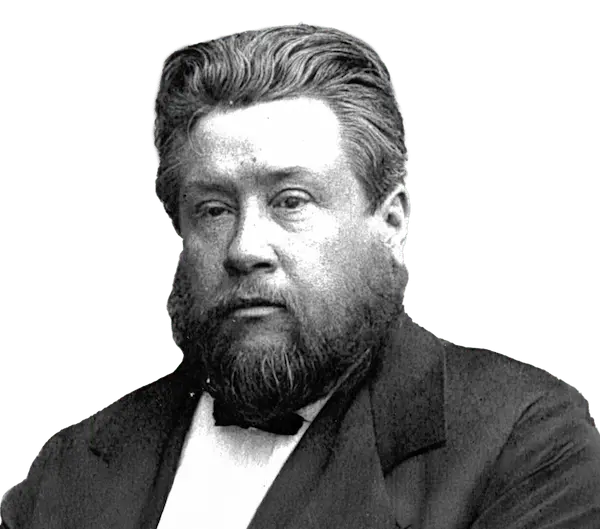
Charles Spurgeon
REMEMBER that Jerusalem had been totally destroyed by Nebuchadnezzar, and what destruction by the Babylonians meant may be inferred from the vast heaps of the dust of powdered bricks and charred wood which have been discovered upon the sites of cities which we…
Charles Spurgeon
I AM not going to confine myself to the connection of these words, nor to use them strictly after the manner in which they were first spoken. I may, perhaps, explain the parable very briefly at the close, but I take leave to withdraw these words from their imm…
Charles Spurgeon • Oct 2, 1887
THE apostle warns us against saying more than we have made our own by experience. He hints at the solemn difference between empty profession and gracious reality. To have fellowship with God is a great matter, but merely to say that we have fellowship with Him…
Charles Spurgeon • Jun 5, 1913
It is implied in this verse that you do hear. A man cannot take heed how he hears if he does not hear at all. Hence, how great is the sin of a vast proportion of the inhabitants of this city who utterly forsake the ministry of the Gospel, who never hear it, or…
Charles Spurgeon • May 23, 1875
WE see before us small beginnings and grand endings. One man is called by the voice of Jesus, and then another. The house wherein they dwell is consecrated by the Lord’s presence, and by and by the whole city is stirred from end to end with the name and fame o…
Charles Spurgeon • Nov 24, 1867
THE matter will turn, this morning, upon those few words, “If thou knewest the gift of God.” The woman of Samaria, who was met by our Lord at the well, was an object of electing love, but she was not yet regenerated. One difficulty alone lay in the way—she was…
Charles Spurgeon • Apr 6, 1862
THE whole life of Christ was a sermon. He was a prophet mighty in word and deed, and by His deeds as well as His words He taught the people. It is perfectly true that the miracles of Christ attest His mission. To those who saw them they must have been evident…
Charles Spurgeon • Jan 26, 1905
AT the very announcement of the text, some will be ready to say, “Why preach upon so profound a doctrine as election?” I answer, because it is in God’s Word, and whatever is in the Word of God is to be preached. “But some truths ought to be kept back from the…
Charles Spurgeon • Aug 13, 1893
THIS morning [Sermon #2095, The Lamb in glory] we had a picture of our Lord Jesus Christ appearing in heaven in His sacrificial character, being adored in that character, looking like a Lamb that had been slain, and being worshipped under that aspect in the ve…
Charles Spurgeon • May 23, 1897
SOME of you, dear friends, have seen those small pictures by famous Dutch artists where, with many little touches—very lifelike, very suggestive, very homely—they depict an interior. Now Mark is that kind of painter. He delights to give us interiors. He is bes…
Charles Spurgeon • Nov 30, 1862
GREAT princes in the East are in the habit of traveling in splendid palanquins, which are at the same time chariots and beds. The person reclines within, screened by curtains from public view. A bodyguard protects the equipage from robbers, and blazing torches…
Charles Spurgeon • Jun 9, 1881
WE find the Jews speaking of Paul, and they say, “We have found this man a pestilent fellow, and a mover of sedition among all the Jews throughout the world, and a ringleader of the sect of the Nazarenes”—Acts 24:5. Thus it appears that our Lord and Master is…
Charles Spurgeon • Apr 21, 1910
[Another sermon by Mr. Spurgeon upon the same text is #1050, A Bright Light in Deep Shades.] THESE words were addressed to those who were already the people of God. No others could be thus exhorted to look unto the rock whence they were hewn, since they have n…
Charles Spurgeon • Nov 20, 1892
I NEED not read the text again, for I shall not go far away from it, but again and again shall we come back to these precious words about our Lord’s one great sacrifice for sin.
Charles Spurgeon • Jun 23, 1881
OBSERVE, dear friends, how careful the Holy Spirit is that we should not make a mistake about our Lord Jesus Christ. He knew that men are liable to think too little of the ever-blessed Son of God and that some, who call themselves Christians, nevertheless deny…
Charles Spurgeon • Sep 17, 1882
THESE Midianites were wandering Bedouins from Arabia, and from the east country round about the Holy Land. Like those who represent them in the present day, they were masters of the art of plundering, and knew no bowels of compassion. They generally lived a ha…
Charles Spurgeon • Jan 3, 1892
HOW very differently we view things at different times and in differing states of mind! Faith takes a bright and cheerful view of matters, and speaks very confidently, “I shall not die, but live.” When we are slack as to our trust in God, and give way to misgi…
Charles Spurgeon • May 25, 1911
[Another Sermon by Mr. Spurgeon upon the same text is #1233, Healing Leaves] YOU will remember that in the first paradise, there was a tree of life in the midst of the garden.
Charles Spurgeon • Jun 15, 1902
WHO were these people who declared to the Lord that they had thought of His lovingkindness in the midst of His temple? According to the title of the Psalm, they were the sons of Korah. And who were the sons of Korah? They were the singers in the house of the L…
Charles Spurgeon • Sep 24, 1876
OUR curiosity inquires into the condition of those who have newly entered heaven; like fresh stars they have lit up the celestial firmament with an added splendor; new voices are heard in the choir of the redeemed. In what condition are they at the moment of t…
Charles Spurgeon • Feb 25, 1866
THE Savior was “a man of sorrows,” but every thoughtful mind has discovered the fact that down deep in His innermost soul He must have carried an inexhaustible treasury of refined and heavenly joy. I suppose that of all the human race there was never a man who…
Charles Spurgeon • May 25, 1902
MESECH was the son of Japheth, from whom, according to history, were descended the men who inhabited that most barbarous of all regions, according to the opinion of the ancients, the northern parts of Muscovy or Moscow, and Russia. The inhabitants of the tents…
Charles Spurgeon • Feb 11, 1883
A GREAT delusion is upon the heart of man as to his salvation. His ways are perverse. He does not love the law of God, no, his mind is opposed to it and yet he sets up to be its advocate. When heunderstands the spirituality and severity of the law, he reckons…
Charles Spurgeon • Jan 5, 1902
I THINK that you must have been struck with the deeply religious tone of the communications which passed between Solomon and Huram. I am inclined to think that Huram must have been a proselyte to the faith of Israel. At any rate, the dispatches between these t…