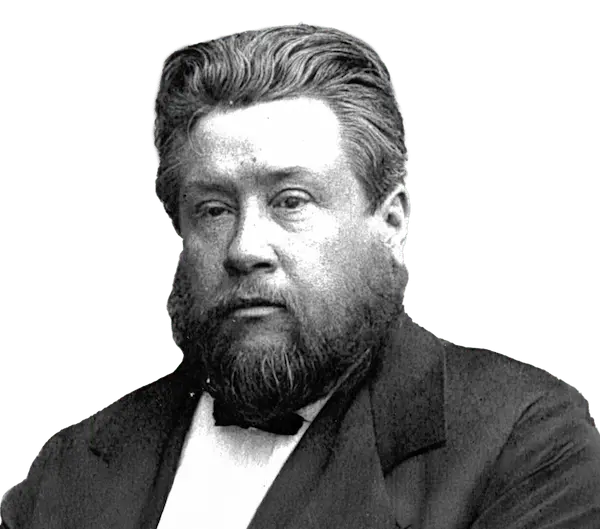
Charles Spurgeon • Nov 23, 1873
IN times of distress it is somewhat a difficulty to have a choice of helpers, because while we are making our selection, the danger may have overtaken us. While the fox was considering which way to run, the hounds had seized him. While the sick man was selecti…
Charles Spurgeon • Oct 12, 1890
I THINK there can be very little doubt that Peter is here quoting from Psalm 34:8: “O taste and see that the LORD is good.” As I read you the chapter just now, I could not help observing the constant traces of Old Testament language. It endears Peter to us whe…
Charles Spurgeon
WE do not usually sleep towards the things of this world. We rise up early, and sit up late, and eat the bread of carefulness, for Mammon’s sake. In this age of competition, most men are wide enough awake for their temporal interests. But so is it, partly thro…
Charles Spurgeon • Jan 6, 1867
THE Israelites had sojourned for a while in Egypt, a land which only produces food for its inhabitants by the laborious process of irrigating its fields. They had mingled with the sons of Ham as they watched with anxious eyes the swelling of the river Nile. An…
Charles Spurgeon • Apr 26, 1917
From the connection it is clear that this passage primarily refers to God’s ancient people, the natural descendants of Abraham. He chose them from of old and separated them from the nations of the world.
Charles Spurgeon • Jan 9, 1908
[Other sermons by Mr. Spurgeon upon the same text are # 634, Christians Kept in Time and Glorified in Eternity, and #2296, Saints Guarded from Stumbling.] WE may derive much evil or much good from the falls of others. We may derive much evil from their falls i…
Charles Spurgeon • Apr 9, 1908
IT is a great mercy that God never leaves His church. He has not made a church as a watchmaker constructs a watch, which, after being wound up, is left to depend upon the strength and fitness of the machinery, but He has made a church which, though fitted with…
Charles Spurgeon • Oct 8, 1876
THIS is a very meaty verse, and the form of it greatly assists the memory; it is worthy to be called a Christian proverb. I would recommend every Christian to learn it by heart, and have it ready for use, for there are a great many proverbs which convey a very…
Charles Spurgeon • Apr 11, 1886
WHEN two Christians met together who were sitting under a very lean and starving ministry, one of them comforted his fellow concerning the miserable discourse by saying, “Never mind, my friend, there is not much in the sermon, but the text is a feast by itself…
Charles Spurgeon • Jan 31, 1897
WHEREVER, in the Old Testament, you see the word “LORD” in capital letters, it ought to be read “JEHOVAH,” so our text really is, “JEHOVAH will give grace and glory.” Who else could give either grace or glory? But God is full of grace—His very name is love—it…
Charles Spurgeon • Nov 29, 1896
THIS is a little bit of autobiography. Matthew wrote this verse about himself. I can fancy him, with his pen in his hand, writing all the rest of this Gospel, but I can imagine that when he came to this very personal passage, he laid the pen down a minute, and…
Charles Spurgeon
I THOUGHT I would hardly preach a set discourse from this familiar text, but just give you some odds and ends of thought upon these words. You know that there are many people who are in such a low state of mind—and who have such a humble opinion of themselves…
Charles Spurgeon • Mar 21, 1907
IN this epistle, Paul deals with many matters of conscience and explains them for the benefit of the troubled ones in the church at Corinth. In the chapter out of which our text is taken, he writes wisely concerning the important question of marriage and he re…
Charles Spurgeon • Dec 28, 1873
THIS sweetest of the Psalms sings of many mercies which the happy soul of the believer receives, and it traces all those benefits to one source—namely to the Good Shepherd Himself. “I shall not want.” Why? Because the Lord is my Shepherd. I lie down in delicio…
Charles Spurgeon • Jul 31, 1913
SOMETIMES God’s people are unhappy when they ought to be happy. God observes this. Therefore He tells them when they possess the materials of happiness, and gives them a description of the peace and prosperity of those who are truly happy men. Recollecting thu…
Charles Spurgeon • Sep 30, 1909
THE bright side of David’s character was generally seen either when he was actively engaged or when he was greatly suffering. He was the man for action. When he ran to meet Goliath, and returned with the giant’s head in his hand, or when it was needful that he…
Charles Spurgeon • May 25, 1916
WE have once more, you see, the old subject. We still have to tell the story of the love of God towards man in the person of His only begotten Son, Jesus Christ. When you come to your table you find a variety there. Sometimes there is one dish upon it, and som…
Charles Spurgeon • Dec 25, 1913
THE true minister of Christ is not satisfied to be long away from his main theme. There are many things which it is very proper for him to speak upon in your hearing. We dare not forget the doctrines of the Word, or the precepts, or the experiences of God’s pe…
Charles Spurgeon • Aug 20, 1871
THE apostle was arguing for holiness. He was earnestly contending against sin and for the maintenance of Christian graces, but he did not, as some do, who would like to be thought preachers of the Gospel, resort to reasons inconsistent with the Gospel of free…
Charles Spurgeon
IN a spiritual religion, everything must be understood. That which is not spiritual, but ritualistic, contents itself with the outward form. Under the Jewish dispensation, there was a very strong tendency in that direction, but it was kept to some extent. Unde…
Charles Spurgeon
WE know very little about Jabez, except that he was more honorable than his brethren, and that he was called Jabez because his mother bare him with sorrow. It will sometimes happen that where there is the most sorrow in the antecedents, there will be the most…
Charles Spurgeon • Jun 12, 1892
OFTEN as we have read this psalm, we can never fail to be struck with the connection in which this verse stands, especially its connection with the verse that follows. Read the two together, “He healeth the broken in heart, and bindeth up their wounds. He tell…
Charles Spurgeon • Dec 21, 1873
JOHN speaks of himself as though he were a father, and therefore, we concede to parents the right to use the language of the text. Sure am I that many of you here present, both mothers and fathers, can truly say, “We have no greater joy than to hear that our c…
Charles Spurgeon • Feb 22, 1874
THIS passage is peculiar to Luke, and he tells us that at the time when our Lord uttered it great multitudes followed Him. It is observable that when our Lord was forsaken by the crowd He was not depressed, and when His ministry became popular He was not elate…