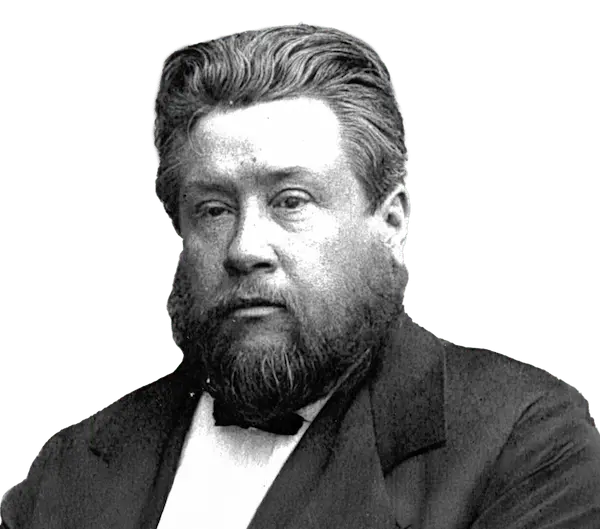
Charles Spurgeon • May 10, 1903
THOSE of you who were here last Thursday evening, will recollect that the sermon was concerning those sons of Gershon who were burden-bearers in connection with the tabernacle in the wilderness [Sermon #2829, Lowly Service]. They were not appointed to preach,…
Charles Spurgeon • Apr 3, 1892
IT is very beautiful, in reading the story of Hezekiah, to see how the people always went with him.
Charles Spurgeon • Apr 10, 1913
THE list of comforts which the Anointed has here prepared for His mourners is apparently inexhaustible. He seems as if He delighted to give “according to the multitude of his tender mercies” a very cloud of blessings. This is the third of His sacred exchanges—…
Charles Spurgeon • May 16, 1912
[Other sermons by Mr. Spurgeon upon verses twenty-seven to thirty are #1355, Our Lord’s Question to the Blind Men and #1560, The Plain Man’s Pathway to Peace] I WANT to lay special emphasis on the word “this” in the text, “Believe ye that I am able to do this?…
Charles Spurgeon • Aug 3, 1873
MEN have frequently inferred liberty to sin from the apparent absence of God from the world.
Charles Spurgeon
MEN have, all of them, their own ideals of blessedness. Those ideals are often altogether contrary to the sayings which our Savior uttered in His Sermon on the Mount. They count those to be blessed who are strong in health, who are abundant in riches, who are…
Charles Spurgeon
WHEN men are perishing all around you it would be cruel to waste time in attempting to interest their minds or to amuse their fancies. We must do something more practical and give earnest heed to their pressing necessities. Is it famine which slays them? Let u…
Charles Spurgeon • May 17, 1887
THOSE who are fond of a labyrinth of exposition will find a maze perplexing to the last degree if they will read the various commentators and expositors upon this verse. This is the question: By the Word of God, are we here to understand the Incarnate Word, th…
Charles Spurgeon
IN Jephthah’s case there were good reasons for going back. He had made a rash vow, and such things are much better broken than kept. If a man makes a vow to commit a crime, his vow to do so is in itself a sin, and the carrying out of his vow will be doubly sin…
Charles Spurgeon • Mar 16, 1902
THERE appear to have been four stages in Christ’s dealing with this woman. I know not what had preceded the narrative as we have it recorded in this chapter, I need not enter into that question now.
Charles Spurgeon • Jul 9, 1871
THE passage in Isaiah which I have just read in your hearing may be used as a very eloquent description of our mortality, and if a sermon should be preached from it upon the frailty of human nature, the brevity of life, and the certainty of death, no one could…
Charles Spurgeon • Apr 4, 1897
OUR text occurs in the passage where the Israelites are told to personally instruct their children concerning the testimonies and statutes and judgments of the Lord. When they asked the meaning of the various ordinances of God’s house, their parents were to te…
Charles Spurgeon • Aug 9, 1903
THIS parable is recorded by Matthew, and Mark, and Luke. It is a very important one, and therefore, it is very carefully preserved for us. Matthew puts it, “When he sowed, some seeds fell by the way side, and the fowls came, and devoured them up.” Notice that…
Charles Spurgeon • Apr 15, 1888
WE have earlier gathered spoil for ourselves out of David’s behavior in the hour of his sorrow at Ziklag, and we will now turn to the other side of this leaf in his history, and receive instruction from the time of his victory. But we must not do this till we…
Charles Spurgeon • Sep 20, 1906
I CANNOT say anything that is new upon this text. I have not even the desire to do so, but if I can remind you of old and precious truths, and also put you in remembrance of sweet experiences which are past, this will not be an unprofitable topic for our medit…
Charles Spurgeon • Nov 21, 1880
THE Savior said to Martha, “I am the resurrection and the life: he that believes in me, though he were dead, yet shall he live: and whosoever lives and believes in me shall never die. BELIEVE YOU THIS?” When believers are sorrowful they may be assured that a c…
Charles Spurgeon
IT was very solemn work this morning to lay bare the sin of unbelief. [Sermon #1207, Volume 20, A Solemn Impeachment of Unbelievers .] It was the burden of the Lord to him who had to speak, and it could have been but very small pleasure to those who had to lis…
Charles Spurgeon • Jan 17, 1869
THE text is a gate of pearl leading up to the excellent glory. Happy are the men to whom it is given to enter thereby. It turns upon hinges of diamond. Those two phrases, “in Christ Jesus,” “by the blood of Christ”—these are the two pivots of the precious doct…
Charles Spurgeon • Jan 24, 1897
IN our two texts there are three “alls” rising one out of the other—the first leading to the second and the second conducting to the third. You will notice at once that the first two are in the present tense.
Charles Spurgeon • Apr 1, 1915
OUR Lord always told His disciples that He would rise. They were astonished to hear that He would die at all—they could not think it possible that He could die by the terrible death which He often hinted at. Had they understood and really believed that He woul…
Charles Spurgeon • Dec 29, 1889
OUR Savior did not hesitate to preach the deeper doctrines of the Gospel to the most miscellaneous assembly. When He began to preach where He was brought up, they all gathered with admiration about Him, until He preached the doctrine of election, and then, str…
Charles Spurgeon • 1870
THE first sentence has reference to a net in which birds or beasts are taken. The ungodly man first of all finds sin to be a bait, and charmed by its apparent pleasantness he indulges in it, and then he becomes entangled in its meshes so that he cannot escape.…
Charles Spurgeon • Aug 22, 1880
ATTACKS have often been made upon the central doctrine of the gospel, namely, the doctrine of redemption or atonement, for it is well-known to be the crux of the gospel. These onslaughts have in many instances been very craftily made. They have professed to be…
Charles Spurgeon • May 28, 1882
IT is essential, dear friends, that we should worship the living and true God. It will be ill for us if it can be said, “You worship you know not what.” “You shall worship the Lord your God and Him only shall you serve.” The heathens err from this command by m…