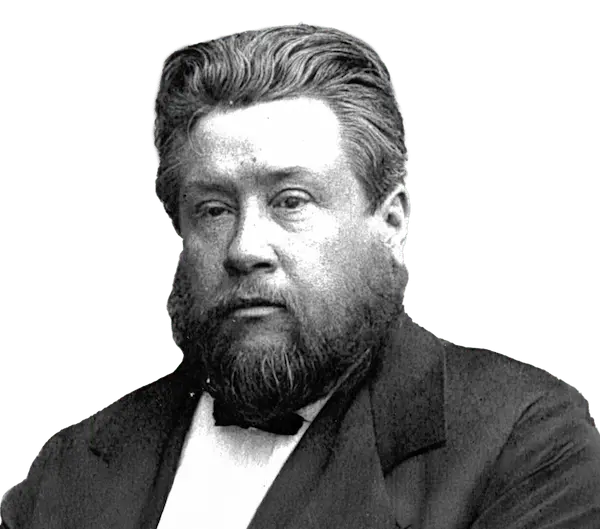
Charles Spurgeon
THE prophet Jeremiah was, as we saw upon a former occasion—(See #980, Volume 17—HIDDEN MANNA)—a man of exquisitely sensitive character—not a prophet of iron, like Elijah, but nearer akin to Him who was a man of sorrows and acquainted with grief.
Charles Spurgeon • Jul 9, 1876
MULTIPLICATION is a very ancient form of blessing. The first benediction pronounced upon man was of this sort, for we read in the first chapter of Genesis, “And God blessed them, and God said unto them: Be fruitful and multiply and replenish the earth.” That s…
Charles Spurgeon • Jan 12, 1868
CERTAIN things preceded this prosperity—the counterpart of which I verily believe we have experienced among ourselves. There had been a little trouble in the church, some had thought one thing, some had thought another. There appeared to have been a just cause…
Charles Spurgeon • Feb 24, 1867
WE commenced our special services with a sermon of encouragement, by which we were reminded of the rapid answer which Daniel received to his prayer, and were led to hope that the Lord intended, at the very commencement of our supplications, to send forth a com…
Charles Spurgeon
YOU will remember that our Savior had been speaking to the woman of Samaria concerning living water. He had endeavored to catch her attention by using a metaphor to her work and her position. Water was uppermost in her thoughts, and Jesus sanctified the elemen…
Charles Spurgeon • Jun 17, 1888
FOR the moment, Paul in spirit is coasting the purple shores of the celestial country. With hisThessalonian friends he is making a joyful voyage within hail of Immanuel’s land. The sail is bright with the sunlight, and the keel is marking a silver track behind…
Charles Spurgeon • Aug 25, 1872
THIS morning we preached concerning the resurrection of the dead, and it seems consistent with order to carry forward our thoughts this evening, to that which follows immediately after the resurrection, namely: the general judgment, for the dead rise on purpos…
Charles Spurgeon • Jul 7, 1889
“THE king commanded”—that is the beginning of all. Holy zeal waits for the king’s orders. But as soon as the command was given there was neither pause nor hesitation—“the king commanded and they brought.” Oh, that it were always so in the church of God. That t…
Charles Spurgeon • Oct 29, 1893
IT seems to us that it must have been a very difficult thing to supply food for the hundreds of thousands, I shall not be incorrect if I say the millions who were in the wilderness. But difficult as that was, the commissariat was not so difficult as the educat…
Charles Spurgeon • May 19, 1910
THESE two texts will furnish me with two familiar but most important themes— what Christians were, and what they are . There are great and vital differences between what they once were and what they now are, and these are implied or indicated by the two expres…
Charles Spurgeon • Jun 21, 1903
YOU remember this is the conclusion of the parable of the importunate widow. Her husband was dead, he had left her perhaps a little property, and some adversary, very probably a lawyer, seized hold of it, and took from her all that she had. What was she to do?…
Charles Spurgeon • Sep 29, 1904
WE are told, before this fact is mentioned, that the Lord sent out a great wind into the sea to overtake the bark in which Jonah was sailing for Tarshish. The great wheels of providence are continually revolving in fulfillment of God’s purposes concerning His…
Charles Spurgeon • May 10, 1868
WE shall consider these words first in their evident relation to the apostles, and those who were the companions of Jesus during His sojourn on earth, and afterwards we shall take them in their broader significance as relating to all the Lord’s own whom He lov…
Charles Spurgeon • Dec 21, 1902
OUR Lord Jesus Christ had preached a sermon to the multitude while He was sitting down in Peter’s boat, and after the people had gone, He had a private message for Simon. He said to him, “Launch out into the deep, and let down your nets for a draught.” Christ’…
Charles Spurgeon
SUCH is our impertinent curiosity that we would fain peer between the folded leaves of the divine purposes. The eager thirst of man to discover secrets, to solve mysteries, to draw aside the folded curtains, and to ascertain that which is past finding out, tem…
Charles Spurgeon
TO what a shameful pitch of presumptuous impudence had Cain arrived when he could thus insult the Lord God. If it had not been on record in the pages of inspiration, we might almost have doubted whether a man could speak so impudently when actually conscious t…
Charles Spurgeon • May 11, 1905
THERE is a sentence, which has crept among our common proverbs, so that it is repeated as if it were altogether true—“Man was made to mourn.” There is a truth in that sentence, but there is also a falsehood in it. Man was not originally made to mourn—he was ma…
Charles Spurgeon • May 22, 1887
LAST Lord’s-Day morning our music was pitched upon a high key. We sought after great faith in the Master’s name [Sermon #1963, Volume 33— The Search for Faith. ]. It struck me that I might, perhaps, have discouraged some of the feebler sort, and that, therefor…
Charles Spurgeon • Aug 16, 1874
IT was not an unlikely thing that his father would answer Jonathan roughly; Saul had taken great offense against David, while Jonathan, his eldest son, on the contrary, loved David as his own soul. Jonathan could hardly think that his father really meant harm…
Charles Spurgeon • Oct 30, 1887
HOLY Scripture is wonderfully full and abiding in its inner sense. It is a springing well, where you may draw and draw again, for as you draw, it springs up forever new and fresh. It is a well of water springing up everlastingly. The fulfillment of a divine pr…
Charles Spurgeon • Nov 9, 1905
THIS chapter—the 8 th of Romans—is, like the garden of Eden, full of all manner of delights. Here you have all necessary doctrines to feed upon and luxurious truths with which to satisfy your soul. One might well have been willing to be shut up as a prisoner i…
Charles Spurgeon • May 31, 1906
YOU will notice that the margin reads, “I will not leave you orphans: I will come to you.” In the absence of our Lord Jesus Christ, the disciples were like children deprived of their parents. During the three years in which He had been with them, He had solved…
Charles Spurgeon • Apr 28, 1881
I DESIRE to thank God for having had the privilege of preaching in Exeter Hall, yesterday, to a large congregation from the whole of the second verse of the 51 st of Isaiah—“Look unto Abraham your father, and unto Sarah that bore you: for I called him alone, a…
Charles Spurgeon • Sep 28, 1890
In their time of trouble the children of God return to their Father . It is according to their newborn nature to seek Him from whom it came. The believing heart is like the needle in the compass; you may turn it round with your finger east and west; but when y…