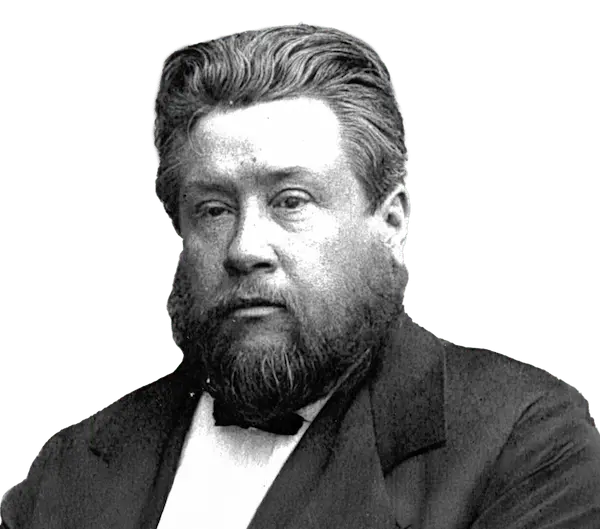
Charles Spurgeon
MANY rivers, and especially the Nile, have on their banks deep deposits of black mud, and when any person seeks to leap on shore, if he should ignorantly or through misfortune spring upon this soft mud he would, unless speedily pulled out, be sucked under unti…
Charles Spurgeon
IT IS a notion of the Rabbis that this Psalm was sung by Adam in Paradise. There are no reasons why we should believe it was so, and there are a great many why we should be sure it was not. For it is not possible that Adam could have sung concerning brutish me…
Charles Spurgeon • Aug 22, 1875
YOU remember that last Sabbath morning we spoke upon the witness within the child of God. We tried to show that believers did not need any man to assure them that they are forgiven, that they could get on exceedingly well without absolution from a priest, and…
Charles Spurgeon
IDOLATRY was the great sin of the ten tribes represented by Ephraim. Indeed, it is the sin of the entire human race. When we speak of idolatry we need not think of blocks of wood and stone, and black men bowing down before them, for our native land swarms with…
Charles Spurgeon • May 5, 1872
THIS is a very difficult passage in the original, and it is hard to fix its meaning with absolute certainty. However, it is no business of mine, at this present, to go into the various interpretations which have been given, for I am aiming at something else. I…
Charles Spurgeon • Nov 17, 1904
I AM no prophet, nor the son of a prophet, neither do I profess to be able to explain all the prophecies in this blessed Book. I believe that many of them will only be explained as the events occur which they foretell. Yet there are some things which are plain…
Charles Spurgeon • May 3, 1868
THE most depraved and despised classes of society formed an inner ring of hearers around our Lord.
Charles Spurgeon
OUR Savior was addressing Himself to Pharisees, who would not receive Him, and who, no doubt, pleaded that they could not believe on Him. They had just seen a very notable miracle wrought by Him—a man who had been many years sick had been suddenly restored, an…
Charles Spurgeon • Jul 23, 1871
WHEN the old Puritan minister had delivered his discourse, and dwelt upon firstly, and secondly, and thirdly, and perhaps upon twenty-fifthly, before he sat down he usually gave a comprehensive summary of all that he had spoken. Everyone who carefully noted th…
Charles Spurgeon • May 13, 1883
THE gospel is the grand secret, the mystery of mysteries. It was hidden from ages and from generations, but is now made manifest to the saints. To the mass of mankind it was utterly unknown, and the chosen people, who saw something of it, only perceived it dim…
Charles Spurgeon
THE connection of the passage assists us in feeling its force. John had sent his disciples to ask the Master whether He was, indeed, the Messiah. The Savior, after giving abundant proof that He was the sent one who had long been promised, then adds, “And bless…
Charles Spurgeon • Oct 16, 1898
YOU see, dear friends, that this notable miracle was wrought by means of the name of Jesus. Twice is it mentioned, “His name through faith in his name hath made this man strong.” It will be well for us to look back to see what name it was which Peter had used…
Charles Spurgeon • Oct 31, 1869
READING the Old Testament we observe that the Lord in the olden time condescendingly gave signs to His servants, when He saw that it would be for their good. Moses, when he was called to undertake the great work of bringing the chosen people up out of Egypt an…
Charles Spurgeon • Feb 27, 1913
THIS prophecy may have some reference to David, but we feel persuaded that the true design of the Holy Spirit is to set forth an emblem of our Lord Jesus Christ. All nature, above as well as around us, is laid under contribution to set forth our Lord. All the…
Charles Spurgeon • Jun 10, 1883
WE shall read the text as it should more properly be translated, “Be you therefore imitators of God, as beloved children.” Upon the word “imitate” our discourse will hinge.
Charles Spurgeon
IT was the usual custom of the Romans, when a man was put to death by crucifixion, to affix to the cross, somewhere where it might be read, an account of his crime. His name and title would be given, and the accusation that had been brought against him, so tha…
Charles Spurgeon • Mar 27, 1887
IT is the garden of Gethsemane. Here stands our Lord, and yonder is the betrayer. He is foremost of the multitude. You know his face, the face of that son of perdition, even Judas Iscariot. He comes forward, leaving the men with the staves, and the swords, and…
Charles Spurgeon • Jul 22, 1909
[Other sermons by Mr. Spurgeon upon the same verse, are as follows: Sermons #1714, Earnest Expostulation and #2857, God’s Goodness Leading to Repentance] IT is a great sign of love on God’s part that He condescends to reason with men. When they had offended ag…
Charles Spurgeon • Aug 26, 1888
THIS is one of the earliest places in the New Testament in which we find any mention of the church.
Charles Spurgeon • Oct 11, 1885
THIS narrative illustrates the rise and progress of faith in the soul. While I try to speak of it, I pray that we may experientially follow the track, desiring that such faith may have a rise in our hearts, may make progress in our spirits, and may become even…
Charles Spurgeon • Jan 12, 1905
THE Christian church ought to be an assembly of holy men. Its members should all of them be eminently peaceable, honest, upright, gracious, and Christlike. In the main and in spite of all our failures, I trust these characteristics may be seen in the churches…
Charles Spurgeon • Dec 28, 1905
YOU notice, in this chapter, the remarkable change of subject which commences at the forth verse.
Charles Spurgeon • Dec 9, 1894
LET us go to this grave, but not to weep there, nay, not to shed so much as a single tear. The stone is rolled away, our Lord’s precious body is not there, for Christ has risen from the dead. It may be that, like Mary at the sepulcher, we shall see a vision of…
Charles Spurgeon • Dec 29, 1867
THERE have been many very famous king’s gardens, such as those “hanging gardens” in Nineveh, wherein Sardanapalus delighted himself, and that remarkable garden of Cyrus, in which he took such great interest, because, as he said, every tree and every plant in i…