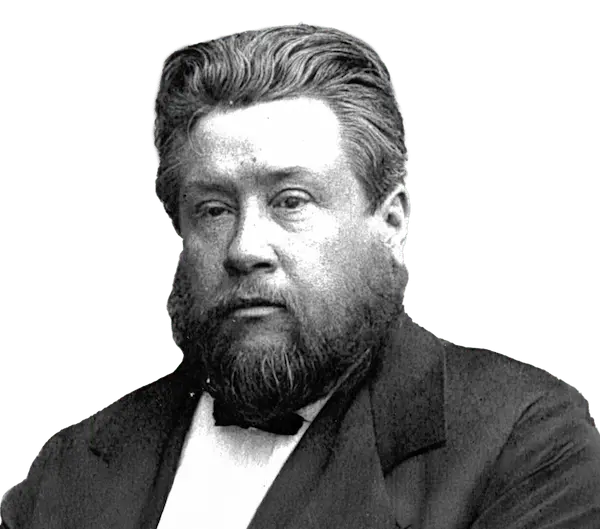
Charles Spurgeon • Sep 25, 1892
THE Gospel, attended by the Spirit of God, is always victorious, but it is very pleasant to make notes of its victories. The Gospel came to Lydia, a devout woman, who was one given to prayer, and who worshipped God, although she did not know the Lord Jesus Chr…
Charles Spurgeon
IS it not deeply humiliating, beloved friends, that the best of Christians should need to be cautioned against the worst of sins? May the consecrated become covetous? Is it possible that the regenerate may drivel into misers? Alas, what perils surround us, wha…
Charles Spurgeon • Jul 15, 1877
ABRAHAM is the father of the faithful. When children have a noble father, it is a good thing for them to be fully conversant with his character, and therefore we shall do well to consider the life of the great patriarch, especially marking that grand excellenc…
Charles Spurgeon • Jul 16, 1876
IN the preceding verses we read, “The lines are fallen unto Me in pleasant places; yes, I have a goodly heritage.” The speaker, therefore, is a very contented and happy man. It is not the most usual thing in the world to find persons extolling their lot and ma…
Charles Spurgeon • Apr 11, 1907
I am going to take these words out of their context and use them, as I believe they may very properly be used, as a description of those whom God is about to save. This is one of the signs and tokens of a coming salvation, “They shall ask the way to Zion with…
Charles Spurgeon • Mar 22, 1903
IT sometimes puzzles the unenlightened believer to find that the Psalms often relate both to David and to David’s Lord. Many a young believer has found himself quite bewildered when reading a psalm, and he has scarcely been able to make out how a passage shoul…
Charles Spurgeon • Nov 2, 1905
THE whole narrative connected with the text is worthy of your careful reading. There were ten men, lepers who, according to the old proverb that “birds of a feather flock together,” had made a company, and seemed to have lived in greater amity through kinship…
Charles Spurgeon • Jan 16, 1908
SAUL went out to seek his father’s asses, he failed in the search, but he found a crown. He met with the prophet Samuel, who anointed him king over God’s people, Israel, and this was far better than finding the obstinate colts. Let us consider this singular in…
Charles Spurgeon • Aug 6, 1908
[Another sermon by Mr. Spurgeon upon this text is #1604, Heart Disease Curable] THESE are some of the words of the Lord Jesus, the Christ of God, the Messiah, which He read in the synagogue at Nazareth, and then said, “This day is this Scripture fulfilled in y…
Charles Spurgeon • Dec 3, 1865
THERE are two great powers in conflict in this world. One is the power of good, of which God is the King, and the other is the power of evil, which is represented by the prince of the power of the air, even Satan. The first principle is set forth by John under…
Charles Spurgeon • Jan 12, 1890
THERE are different ways of replying to the invitation of the gospel when you mean to refuse it.
Charles Spurgeon • Nov 27, 1913
THERE can be no doubt but what the prophet here spoke of the Messiah—of our Lord Jesus Christ.
Charles Spurgeon • Feb 20, 1887
IT was the fault of the Pharisee that, though he went up into the temple to pray, he did not pray; there is no prayer in all that he said. It is one excellence of the publican that he went up to the temple to pray and he did pray; there is nothing but prayer i…
Charles Spurgeon • May 4, 1916
WHEN man was first made, there was no fear of his forgetting God, for it was his highest privilege and delight to have communion with his Maker. “The LORD God walked in the garden in the cool of the day,” and Adam was privileged to hold fellowship with God, cl…
Charles Spurgeon • Oct 31, 1886
THE Holy Spirit in this chapter reminds us that two things were necessary in a high priest; first, he must be suitable for the men for whom he stood, and next, he must be acceptable with God. “Every high priest taken from among men is ordained for men in thing…
Charles Spurgeon • Jul 30, 1871
WE select the words, “ your own salvation ,” as our text this morning, not out of any singularity or from the slightest wish that the brevity of the text should surprise you. But because our subject will be the more clearly before you if only these three words…
Charles Spurgeon • Jan 15, 1871
THIS chapter is full of grace and truth. Its three consecutive parables have been thought to be merely a repetition of the same doctrine under different metaphors, and if that were so, the truth which it teaches is so important that it could not be rehearsed t…
Charles Spurgeon • Jun 3, 1915
IT seems that Martha had heard of Christ’s coming and Mary had not. Hence Martha rose up hastily and went to meet the Master, while Mary sat still in the house. From this we gather that genuine believers may, through some unexplained cause, be at the same time…
Charles Spurgeon • Jun 28, 1906
PAUL’S writings abound in doxologies. You will find them in different forms scattered throughout all his epistles. But he is not the only apostle who thus pauses to magnify the name of God. Here is “Judas, not Iscariot,” but the true-hearted Jude, who has been…
Charles Spurgeon • Sep 19, 1897
THIS was one of David’s sayings, “I said.” It was a saying that was worth saying and it is worthresaying, “I said, LORD, be merciful unto me.” How often he said it, we do not know. The more often, the better. There is no day too bright for saying it and there…
Charles Spurgeon • Sep 9, 1877
AS we have already seen in the reading of the Scripture, Nehemiah had made inquiry as to the state of the city of Jerusalem, and the tidings he heard caused him bitter grief. “Why should not my countenance be sad,” he said, “when the city, the place of my fath…
Charles Spurgeon • May 8, 1887
ABRAHAM was called the Friend of God because he was so. The title only declares a fact. The Father of the faithful was beyond all men “the Friend of God,” and the head of that chosen race of believers whom Jesus calls His friends. The name is rightly given. We…
Charles Spurgeon • May 24, 1874
IT is of the greatest service to us all to be reminded that our life is but a vapor, which appeareth for a little while and then vanisheth away. Through forgetfulness of this, worldlings live at ease and Christians walk carelessly. Unless we watch for the Lord…
Charles Spurgeon • Mar 10, 1872
THE position of our text is very suggestive. Observe what it follows. It comes immediately after the precept, “Rejoice evermore,” as if that command had somewhat staggered the reader and made him ask, “How can I always rejoice?” and therefore, the apostle appe…