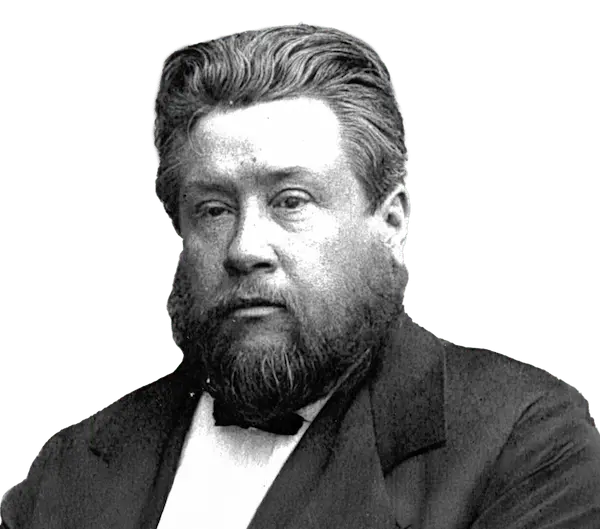
Charles Spurgeon • Jun 2, 1889
PAUL warns us of certain characters which will appear in the last times. It is a very terrible list. The like have appeared in other days but we are led by his warning to apprehend that they will appear in greater numbers in the last days than in any previous…
Charles Spurgeon • Jun 30, 1910
MANY of you, dear friends, are coming to the Lord’s table at the close of this service. Our blessed Redeemer instituted that simple but sublime ordinance so that we might be kept in constant remembrance of Him. The bread is nothing but bread, yet it is the ver…
Charles Spurgeon • Apr 23, 1908
[Other sermons by Mr. Spurgeon upon the same text are as follows, #184, The Glorious Gospel, #1345, For Whom is The Gospel Meant? #1416, The Faithful Saying, #1837, A Great Gospel for Great Sinners, and #2300, The Whole Gospel in a Single Verse.] YOU will obse…
Charles Spurgeon • Apr 15, 1866
JEHU was raised up by God to be a great reformer in the kingdom of Israel. No sooner did he receive his commission than he was at his work with a daring and a perseverance never excelled. He was commanded to cut off the whole house of Ahab, and the task was a…
Charles Spurgeon
THERE are critical times in most families. Times when much decision of character will be needed on the part of the father, to guide things aright. They say there is a skeleton in every closet and if so, I would add that occasionally the unquiet spirit takes to…
Charles Spurgeon • Jan 25, 1891
TO me it is a pitiful sight to see Paul defending himself as an apostle, and doing this, not against the gainsaying world, but against cold-hearted members of the church. They said that he was not truly an apostle, for he had not seen the Lord, and they uttere…
Charles Spurgeon • Mar 8, 1903
IT was not just anybody who went after the sheep that was lost, it was the person to whom the lost sheep belonged. Our Savior said, “What man of you, having a hundred sheep, if he lose one of them, doth not leave the ninety and nine in the wilderness, and go a…
Charles Spurgeon • Jul 1, 1866
A VERY formidable difficulty frequently besets earnest but uninstructed minds who are seeking the Savior. They do not find it difficult to believe that Jesus is the Son of God, that He is a Savior, that He is mighty to save, but their difficulty lies in gettin…
Charles Spurgeon • Jan 24, 1886
THE apostle warns us against a tendency very natural to our race. “Let your conversation be without covetousness.” I am afraid that the precept is even more needed now than in the days of the apostle. We are still more sharp and keen in competition, and men in…
Charles Spurgeon • Nov 18, 1909
[Another sermon by Mr. Spurgeon, upon verses 12 and 13, is #1668, The Still Small Voice] THERE may be a great deal more teaching in what Elijah saw and heard in the cave than I shall be able to bring out this evening. Indeed, I shall not attempt to exhaust the…
Charles Spurgeon • Jun 6, 1907
THE Amorites had indulged in the most degrading sin. God had observed this, but He did not at once execute vengeance upon them. He had determined that, as a nation, they should be destroyed and rooted out from under heaven, and that their land should be given…
Charles Spurgeon • Nov 11, 1866
LUKE, the writer of this Gospel, was a physician, and therefore had a quick eye for cases of disease and instances of cure. You can trace throughout the whole of his Gospel the hand of one who was skilled in surgery and medicine. From which I gather that whate…
Charles Spurgeon • Aug 7, 1898
THIS song of Mary is full of sweet Gospel teaching. She was evidently a woman well instructed in divine truth, and though but young in years, she must have been deeply experienced in the things of God. Notice how she casts truth into the form of song, and ther…
Charles Spurgeon • Jul 28, 1872
LAST Sabbath day we spoke upon the faith of Rahab [Metropolitan Tabernacle Pulpit, #1061, “RAHAB”].
Charles Spurgeon • May 9, 1907
WHEN our Lord Jesus Christ is represented as a King, we delight to think of Him as the Prince of Peace, whose dominion shall put an end to all war and make it unnecessary for the nations of the earth to learn the arts of war any longer. Meanwhile, however, in…
Charles Spurgeon • Mar 5, 1893
I AM afraid that we have not always noticed the fullness of this promise. Usually the text is preached from as an invitation to the unconverted to come to Christ, and very properly so—“Come unto me, all ye that labour and are heavy laden, and I will give you r…
Charles Spurgeon
OF COURSE you will understand that our text relates to the Passover. This is its first meaning. The Israelites were enjoined never to forget that they were once slaves in Egypt, and that God with a strong hand brought them forth. To help their memories an ordi…
Charles Spurgeon • Nov 27, 1870
THE book of Psalms ends in a sacred tumult of joyous praise. There is praise in it all through, though sometimes it is but a still small voice, but when you reach the concluding psalms you hear thunders of praise. There God is praised with the sound of the tru…
Charles Spurgeon • Nov 23, 1905
YOU know that the whole verse says, “Yet it pleased the LORD to bruise him; he hath put him to grief: when thou shalt make his soul an offering for sin, he shall see his seed, he shall prolong his days, and the pleasure of the LORD shall prosper in his hand.”…
Charles Spurgeon • Oct 27, 1895
I DO not know whether it has ever struck you what a grand man Jeremiah was. If you were to read the book of his prophecy through from beginning to end, and make yourself familiar with the circumstances under which the prophet spoke and wrote, I think you would…
Charles Spurgeon
SAUL had been commanded to utterly slay all the Amalekites and their cattle. Instead of doing so, he spared the king, and allowed his people to take the best of the oxen and of the sheep. When called to account for this, he declared that he did it with a view…
Charles Spurgeon • May 1, 1913
PERHAPS no verse in the whole of Scripture has been handled in the pulpit more frequently than this, and yet it has not been exhausted and never can it be. It is a great soul-saving text. There are some words of Scripture which seem to be like special stars in…
Charles Spurgeon • Mar 4, 1888
THE first sentence will serve as a preface. The second sentence will be the actual text.
Charles Spurgeon • Jan 5, 1890
BEFORE our friend who leads us in singing begins, we sometimes hear his tuning fork. He is getting the keynote into his ear. When he comes forward, he often sounds out that keynote before he begins to sing. This is what David does in this wonderful psalm. He s…