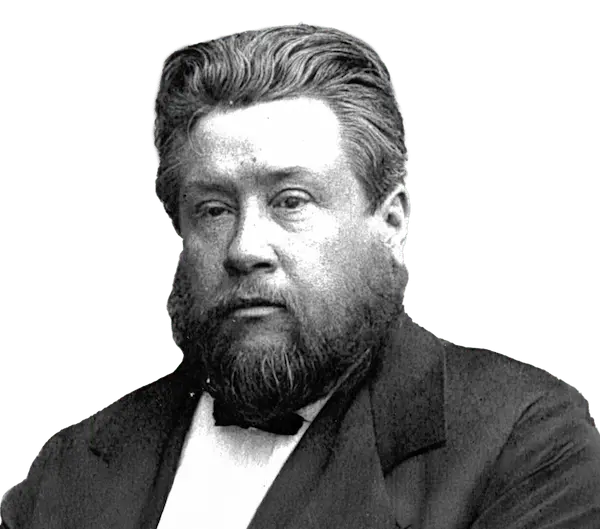
Charles Spurgeon • May 1, 1892
NEHEMIAH and the Jews with him were rebuilding the walls of Jerusalem. Sanballat and others were angry with them, and tried to stop the work. They determined to pounce upon the people on a sudden and slay them, and so put an end to what they were doing. Our te…
Charles Spurgeon • Aug 18, 1878
MY sermon last Sabbath morning [#1428, The True Position of the Witness Within ] was upon the trueposition of the witness within, and I then tried to show that the guarantee and ground of our believing in Christ unto eternal life is the witness which God Himse…
Charles Spurgeon • Oct 13, 1889
IN this parable, our Lord Jesus Christ is the light. Some saw His brightness, and were even dazzled by it, as was that woman who cried, “Blessed is the womb that bare thee, and the paps which thou hast sucked.” The malicious saw not His light, but even dared t…
Charles Spurgeon • Sep 8, 1867
MUCH of the sweetness of music lies in the ear to which it is addressed. There are mysterious sweetnesses and unknown harmonies which lurk amid the notes, and are detected only by the ear attuned to melody. The most enchanting strain to one ear may be discord…
Charles Spurgeon • Feb 27, 1870
THESE were the closing words of our Savior’s most famous sermon upon the mount. Some preachers concentrate all their powers upon an effort to conclude with a fine thing called a peroration, which, being interpreted means a blaze of rhetorical fireworks, in the…
Charles Spurgeon
NOTICE the connection or you will miss the meaning of the words, for at first sight it looks as if our Savior taught us that it is the work of God for us to believe on Him. Now, that would be quite true and it is very plainly taught in other parts of Scripture…
Charles Spurgeon • Jul 21, 1901
I WILL make a preface out of the verse preceding our text, “Some of them”—that is, some of those who saw Lazarus raised from the dead, “went their ways to the Pharisees, and told them what things Jesus had done. Then gathered the chief priests and the Pharisee…
Charles Spurgeon • Feb 4, 1894
THESE are solemn words. Sometimes we have a more joyful theme than this, but I believe that spiritually, as well as naturally, it is better to go to the house of mourning than to the house of feasting.
Charles Spurgeon • Sep 3, 1908
THE maxim that happiness lies between two extremes is, I believe, the dictate of prudence, and has the sanction of God’s Word. The ancients always spoke of this as being the most happy state of life.
Charles Spurgeon • Mar 21, 1869
BACKSLIDING is a most common evil, far more common than some of us suppose. We may ourselves be guilty of it and yet may delude our hearts with the idea that we are making progress in divine life. As the cunning hunter always makes the passage into his pits mo…
Charles Spurgeon
ALTHOUGH we cannot take everything that Eliphaz the Temanite happened to say as being of divine authority, the immediate inspiration of the Holy Spirit. Yet in this case he evidently gives utterance to such a great and important truth that we may regard these…
Charles Spurgeon • Apr 13, 1879
THIS is called “David’s Psalm of Praise” and you will see that all through it he is inflamed by a strong desire that God may be greatly magnified. Hence he uses a variety of expressions and repeats himself in his holy vehemence. Run your eyes down the psalm an…
Charles Spurgeon
THE dying patriarch was speaking of his own son Judah, but while speaking of Judah he had a special eye to our Lord, who sprang from the tribe of Judah. Everything therefore which he says of Judah, the type, he means with regard to our greater Judah, the antit…
Charles Spurgeon • Sep 5, 1897
THE apostle has told us that there will come, in the last days, scoffers. We, therefore, know this is to be the case, for we have been informed concerning it. Forewarned is forearmed, and now that we see the scoffers, and cannot help seeing them, we perceive a…
Charles Spurgeon • Oct 5, 1902
IF you will look at the connection of these words, you will see that they were spoken with the view of encouraging the church, “Fear not: for I am with thee: I will bring thy seed from the East, and gather thee from the West; I will say to the North, Give up;…
Charles Spurgeon • Dec 21, 1916
SO said Elihu. And verily many of us might make the same resolve. We have tasted that the Lord is gracious. When first we came to Him laden with guilt and full of woes, we found Him ready to pardon—a God with whom there is plenteous redemption.
Charles Spurgeon • Nov 26, 1899
THIS morning, [Sermon #1669, Teaching for the Outer and Inner Circles] I preached upon one of the privileges of the disciples of Christ, “When they were alone, he expounded all things to his disciples.” They formed the inner circle, and they had the privilege…
Charles Spurgeon • Feb 27, 1887
THIS psalm is a song for all Israel, for all who are truly the chosen of God, called to be His own people, should exhibit a fearless courage. The peace of God which passes all understanding should keep the hearts and minds of all who rest in God. If, indeed, t…
Charles Spurgeon • Jan 28, 1904
WHEN attempting to prepare for this service, I found it impossible to fix my mind upon any one subject. This afternoon, I had to take rather a long journey to visit a friend who is sick unto death, and at his bedside I trust I have learned some lessons of enco…
Charles Spurgeon
THIS passionate appeal for mercy was forced from the people by extreme misery. There was a famine in the land until men fell in the streets of the city exhausted with hunger. Drought had long prevailed, and dearth of water was terribly felt. Meanwhile invasion…
Charles Spurgeon • Jul 21, 1910
BLESSED be His name, there are some of us who count it our highest joy to answer to this question, “Yes.” Whatever may be entailed by the confession, we shall be glad to endure, but we could not do otherwise than say, “He owned us of old, and He is still not a…
Charles Spurgeon
THE disciples had been like lambs, carried in the warm bosom of a loving Shepherd. They were now about to be left by Him, and would hear the howlings of the wolves, and endure the terrors of the snowstorm. They had been like tender plants conserved in a hot-ho…
Charles Spurgeon • Aug 31, 1902
THE Hebrew word for “love” here is in the plural, “We will remember thy loves.” Think not, however, that the love of Jesus is divided, but know that it has different channels of manifestation. All the affections that Christ has, He bestows upon His church, and…
Charles Spurgeon • Mar 23, 1911
THE LORD had made an everlasting covenant with David, ordered in all things and sure, yet that covenant was not intended to preserve him from trouble. When this Psalm was written, he had been brought very low. His crown had been cast down to the ground, his en…