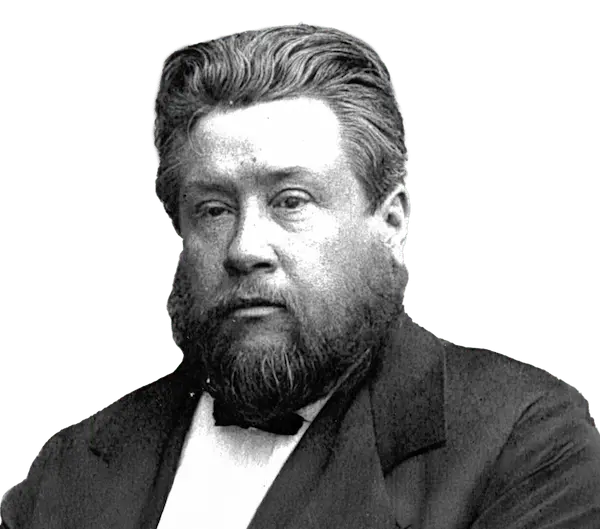
Charles Spurgeon • Nov 7, 1869
THERE is one thing about the usefulness of which all men are agreed, namely, friendship. But most men are soon aware that counterfeits of friendship are common as autumn leaves. Few men enjoy from others the highest and truest form of friendship. The friendshi…
Charles Spurgeon • Dec 2, 1915
I think, dear friends, some of you will be saying, “There is that same old doctrine again that we are so continually hearing,” and I am sure if you do say it I shall not be surprised. Nor, on the other hand, shall I make any sort of excuse. The doctrine of jus…
Charles Spurgeon • Sep 30, 1883
FOR the church that was at Colosse, Paul gave hearty thanks to God for many most importantblessings, especially for their faith, their love, and their hope. It would be a very useful exercise to our hearts if we would often give thanks to God for the gifts and…
Charles Spurgeon • Oct 22, 1893
TO begin with, I remark that our Lord Jesus pleads for His own people. When He puts on His priestly breastplate, it is for the tribes whose names are there. When He presents the atoning sacrifice, it is for Israel whom God has chosen, and He utters this great…
Charles Spurgeon • Apr 13, 1902
MANY books have been written concerning that surly old prophet Jonah, yet here is a man with a name somewhat similar—Jonathan—but scarcely anybody has had much to say about him. Yet there was more sweetness in the little finger of Jonathan than in the whole bo…
Charles Spurgeon
IN great tenderness God permitted the Passover to be kept a second time, that those who had unavoidably been defiled at the first observance might not be shut out from the memorable and symbolical rite. But although He altered the date of the Passover, He neve…
Charles Spurgeon • Jan 12, 1896
THE Lord, speaking of Himself as, “God, and not man,” mentions as the special point in which He is above and beyond man, that He has greater grace, greater long-suffering, and greater willingness to forgive, “I will not return to destroy Ephraim: for I am God,…
Charles Spurgeon • Nov 8, 1896
and 27-28 I HAVE for this evening’s discourse what some of you may consider to be rather a singular text, let me therefore begin by briefly stating the circumstances surrounding it. The tribe of Dan found its portion to be rather too small, so the people held…
Charles Spurgeon • May 7, 1882
THE people among whom Jeremiah dwelt had received a grievous hurt, and they felt it, for they were invaded by cruel enemies, their goods were plundered, their children were slain, and their cities burned. Jeremiah, with true love to his nation, warned them tha…
Charles Spurgeon • Aug 20, 1882
EGYPT occupies a very singular position towards Israel. It was often the shelter of the seed of Abraham. Abraham himself went there when there was a famine in the land of his sojourn. To Egypt, Joseph was taken that he might escape from the death intended for…
Charles Spurgeon
ONE of the worst mistakes we could make would be to judge our condition before God by our outward circumstances. Know you not that the ungodly have their portion in this life? They increase in riches, their eyes stand out with fatness, and they have more than…
Charles Spurgeon
, 12-14. THE prophet, as he tells us in the introduction to his vision, had to be awakened by the angel as one is awakened out of his sleep. His mind was dull and heavy, perhaps he was weary and worn. Do you not often feel a similar lethargy, from which you ne…
Charles Spurgeon • Oct 23, 1898
THE Revised Version is, in some places, though not in many, better than the Authorized Version.
Charles Spurgeon • Jul 1, 1915
IN these words we have God the Father speaking concerning His Son and declaring that, since He had endured a soul travail, He would guarantee to Him a satisfactory reward. How delightful it is to observe the co-working of the various persons of the sacred Trin…
Charles Spurgeon
GOD had a people in Egypt. They were His own, the people of His choice. Although they had been grievously oppressed, and had sunk into humiliating slavery, His interest in their welfare had in no degree lessened. The Lord’s purpose in sending Moses down into E…
Charles Spurgeon • Jul 16, 1871
“HE came to himself.” The word may be applied to one waking out of a deep swoon. He had been unconscious of his true condition and he had lost all power to deliver himself from it. But now he was coming round again, returning to consciousness and action. The v…
Charles Spurgeon • Jun 7, 1885
THE blindness of Israel concerning our Lord was sadly remarkable. It was a blindness of the eyes, for they saw His many miracles, and yet believed not. Their ears also seemed to be stopped, for they heard His words and did not understand them, and their hearts…
Charles Spurgeon • Aug 21, 1887
IT appears from the preceding verse that the predestinating purpose of God deals not only with salvation as a whole, but with the details of it; it includes faith as well as salvation, which comes of faith.
Charles Spurgeon • Apr 2, 1899
WE need but hint at the circumstances under which these words were uttered. Our Savior was in the Garden of Gethsemane with His disciples—a multitude came with the officers commissioned by the high priest to seize Him. He went boldly towards them and asked, “W…
Charles Spurgeon • Sep 19, 1886
YOU do not wonder that this enthusiastic woman lifted up her voice in admiration of our Lord. I sometimes wonder when the gospel is preached—whose message is so sweet, so charming, so enchanting—that we do not more often observe earnest persons breaking the co…
Charles Spurgeon • Dec 2, 1883
STRICTLY speaking, I suppose these words refer to the human nature of our Lord Jesus Christ, for it is as to His humanity that Christ was born of Mary. The context runs thus—“Behold, you shall conceive in your womb, and bring forth a son, and shall call His na…
Charles Spurgeon • Apr 9, 1914
THIS was, and is, the mark of the true believer, that he sees Jesus. When Jesus was here among men, the world saw Him in a certain sense, but yet in truth it did not see Him at all. The world’s eye saw the outside of Christ—the flesh of the man Christ, but the…
Charles Spurgeon • Feb 13, 1876
IT is the great joy of our heart that we do not labor in vain, nor spend our strength for naught. God is calling out from the congregations which gather here a people unto Himself, who shall show forth His praise. Our heart is filled with adoring joy while we…
Charles Spurgeon • Jan 23, 1887
IT is taken for granted that all true Israelites would bring many oblations and offerings of different kinds to God. And so they did who were truly devout and really grateful. I am sure that, if the Lord has set our hearts on fire with His own love, we also sh…