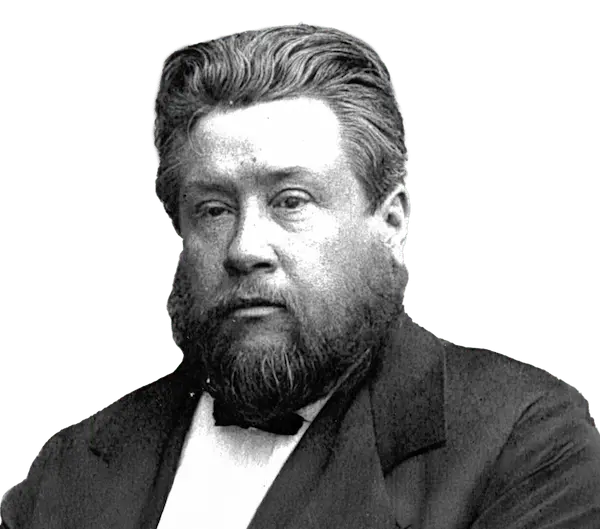
Charles Spurgeon • Apr 8, 1915
SOLOMON spoke from observation. He had seen certain persons of a vagrant kind and he perceived that they seldom or never prospered. Moreover, he spoke from inspiration, as well as from observation, hence the sagacity of the philosopher is in this case supporte…
Charles Spurgeon • Aug 28, 1898
OUR country cousins have been engaged recently in harvest occupations, and most of them understand what is meant by gleaning. Perhaps they are not all of them so wise as to understand the heavenly art of spiritual gleaning. That is the subject which I have cho…
Charles Spurgeon • Oct 25, 1906
[Other sermons by Mr. Spurgeon upon this text are #519, Believing with the heart, and #520, Confession with the Mouth] IN speaking of this important matter—confessing with the mouth what we have believed with the heart, I call your attention, first of all, to…
Charles Spurgeon • Sep 17, 1899
THE apostle was a much-tried man and he lived in an age when all believers were peculiarly tried.
Charles Spurgeon
PETER was to be sifted, so our Lord warned him, and Satan was to operate with the sieve. Satan had an intense desire to destroy Peter—indeed, he would like to destroy all the chosen of God—and therefore he desired to sift him as wheat, in the hope that he woul…
Charles Spurgeon • Jul 19, 1874
A FEW days ago I was preaching in Lancashire upon the putting away of sin by our Lord Jesus, and the consequent peace of conscience enjoyed by the believer. In the course of the sermon I related my own conversion, with the view of showing that the simple act o…
Charles Spurgeon • Jul 19, 1896
THIS passage is in very vivid contrast to what Ephraim had previously said, as it is recorded in the early part of Hosea’s prophecy. If you turn to the second chapter, and the fifth verse, you will find this same Ephraim saying, “I will go after my lovers, tha…
Charles Spurgeon • May 10, 1891
OUR fathers! From them we derive our nature. We inherit our fathers’ propensities, for that which is born of the flesh is flesh. As is the nature, such is the conduct. Hence the Psalmist writes in verse six, “We have sinned with our fathers, we have committed…
Charles Spurgeon • Dec 7, 1884
HOW different are our experiences from our fears! This man of God had said, “When I cry and shout He shuts out my prayer.” He had said again, “You have covered Yourself with a cloud, that our prayer should not pass through.” He had added even to that, “Surely…
Charles Spurgeon • Jun 16, 1895
I HAVE read to you the narrative of the healing of the man taken with the palsy, and many of you remember that, last Sabbath evening, I preached upon the Pharisees and the doctors of the law who were “sitting by” [Sermon #1991, “Sitting By”]. I tried to repres…
Charles Spurgeon • Oct 3, 1897
THE apostle James was always very practical. He never really differed from Paul, but whereas Paul dwelt more upon the doctrinal side of truth, James, who has given us but one epistle, dwelt more upon the practical. I should not have wondered, if Paul had taken…
Charles Spurgeon • Jan 31, 1892
THIS verse has been making music in my heart for several days, and at times, it has even claimed utterance from my tongue. I have caught myself singing a solo, with myself as the only hearer, and this has been the theme, “He brought them forth also with silver…
Charles Spurgeon • Apr 1, 1894
THERE is a quarrel between man and his Maker. It is a sad thing that the creature should have fallen out with his Creator, it is a pitiful business that those who are dependent upon the bounty of God should have rebelled against the hand that has fed them, yet…
Charles Spurgeon • Apr 7, 1872
OUR text begins with these words, “And not only so.” It is the second time in which they occur in the chapter, I might almost have said the third, for a similar expression is used in another verse. The apostle had been mentioning very great and amazing privile…
Charles Spurgeon
WE are told by the apostle in the fifth chapter that one special requisite in a high priest was that he could have compassion upon men. “For every high priest taken from among men is ordained for men in things pertaining to God, that he may offer both gifts an…
Charles Spurgeon • Jun 18, 1876
WE must commence by noticing the context so that we may arrive at the first meaning of the words.
Charles Spurgeon • Jul 1, 1894
IT was the desire of Asaph to obtain for his nation help from God. Israel was exposed to great danger, ten confederate nations had conspired, with desperate hate, to assail the chosen people. They were determined to root out the very name of Israel from among…
Charles Spurgeon • Sep 21, 1884
LET us think of this happiness, that we may be comforted in the prospect of it. All this is already enjoyed by tens of thousands of the redeemed. Some of those who were very dear to us on earth, whose faith we desire to follow, are now forever with the Lord, a…
Charles Spurgeon
BEFORE our Lord gave His disciples this commission, He addressed them in tones of serious rebuke. You will observe that appearing unto the eleven as they sat at meat, “ He upbraided them with their unbelief and hardness of heart because they believed not them…
Charles Spurgeon • Oct 14, 1900
NOTICE, dear friends, that this double promise to the poor and needy stands in connection with other great promises which guarantee the gift of wonderful strength and blessing to God’s people. These promises seem to me to be such as the mightiest servant of Go…
Charles Spurgeon • Sep 23, 1888
DEAR friends, last Sabbath morning I tried to stir you up to sacred activity. I heard from many that they felt thoroughly motivated, and I know of some who at once commenced to speak for Christ. I wish I could hope that our whole company kept step together in…
Charles Spurgeon • Apr 2, 1908
THE invitations of the Gospel are invitations to happiness. In delivering God’s message, we do not ask men to come to a funeral, but to a wedding feast. If our errand were one of sorrow, we might not marvel if men refused to listen to us, but it is one of glad…
Charles Spurgeon • Oct 25, 1896
THE love of Jesus—what a theme it is! The apostle said that it passeth knowledge, and if it passes knowledge, much more does it excel any description that can be given of it. The heart may feel it better than the tongue may speak it. If there is one subject mo…
Charles Spurgeon • May 30, 1907
CHRIST always taught by parables. Hence the popularity and the power of His teaching. The masses never were, and perhaps, never will be able to receive instruction in any other way than by parabolic illustrations. He who would be a successful minister must ope…