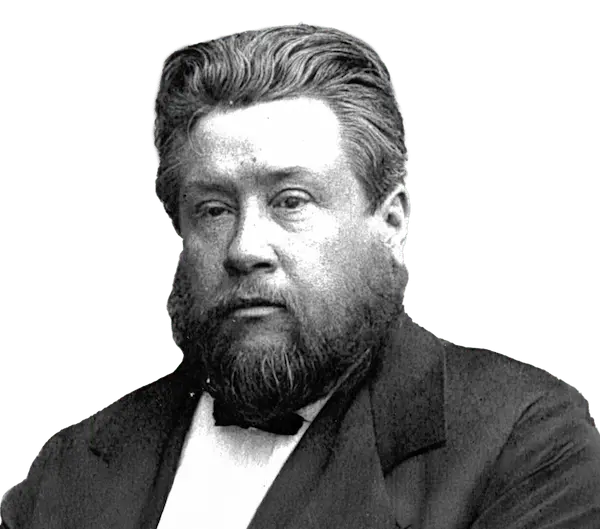
Charles Spurgeon • Mar 28, 1880
THE resurrection of our divine Lord from the dead is the cornerstone of Christian doctrine. Perhaps I might more accurately call it the keystone of the arch of Christianity, for if that fact could be disproved the whole fabric of the gospel would fall to the g…
Charles Spurgeon • Oct 17, 1880
THIS is a very mournful chapter, especially if we include in it, as we rightly should, the first verse of the ninth chapter: “O that my head were waters.” The passage is full of lamentation and woe, and yet it is somewhat amazing that the chief mourner is not…
Charles Spurgeon • Mar 18, 1888
“AS we have heard, so have we seen”; this is seldom true. In many places we see what we have not heard, and what we have heard we do not see. Time was when many simpletons believed that the streets of London were paved with gold. I am sure I do not know any pa…
Charles Spurgeon • Nov 23, 1902
“JESUS our Lord” is a somewhat unusual form of expression to be used in the Scriptures. We have many references to “Jesus Christ,” and to “our Lord Jesus Christ,” but there is only one other passage in which it occurs. Yet, to me, it seems to be inexpressibly…
Charles Spurgeon
WHENEVER we rebuke other people we should be prepared to clear ourselves of their offense. The apostle had been rebuking those who wished to glory in the flesh. In denouncing false teachers and upbraiding their weak-minded followers, he used sharp language whi…
Charles Spurgeon • Dec 21, 1905
THE psalmist, who spake these words in his song, told forth the experience of the godly in all generations. In the patriarchal age, when Abraham was called to leave his kindred and go forth from Ur of the Chaldees, constrained to sojourn as a stranger among a…
Charles Spurgeon
IF this Psalm were indeed written by David at the time when his son Absalom had raised the rebellion against him, we can readily understand the distinction which he draws between his “affliction,” and his “pain.” It is a great “affliction” to have a son become…
Charles Spurgeon • Oct 23, 1881
THIS is not the language of a man of ordinary mold. No saint, no prophet, no apostle would ever have addressed a company of faithful men and have said to them, “Without me you can do nothing.” Had Jesus Christ been, as some say, a good man and nothing more, su…
Charles Spurgeon • Apr 26, 1874
THE apostle speaks very broadly and talks about saving men. Some of our extremely orthodox brethren would say at once, “ You save men? How can man do that? The expression is inaccurate in the extreme. Is not salvation of the Lord from first to last? How can yo…
Charles Spurgeon • Dec 22, 1867
THE apostle had just reminded Timothy that the church of the living God is the pillar and ground of the truth, and he had pressed it upon him to behave himself aright in the midst of those faithful men to whom the Lord had committed the Gospel. And lest by any…
Charles Spurgeon • Nov 5, 1903
ONE who is really worthy to be called “a man” is a rare creature. There are great numbers of human beings who come under the generic name “men,” who do not possess those noble, manly characteristics which would entitle us truly to speak of any one of them as “…
Charles Spurgeon • May 12, 1867
WE are thrice happy in having a goodly number of young beginners in our midst. Our springtide is cheered and beautified with many blossoms of hopeful converts. They have just begun to go on pilgrimage, and would be as happy as the birds of the air were it not…
Charles Spurgeon • Mar 2, 1882
IN the former part of this psalm the Psalmist sang of God’s deeds of love, His gifts, His benefits, and His acts of kindness. But here he goes deeper into the divine motive, and therefore he finds sweeter incentives to devout gratitude. There is a fullness of…
Charles Spurgeon • Sep 26, 1907
GOD is the poor man’s Friend. The poor man, in his helplessness and despair, leaves his case in the hands of God and God undertakes to care for him. In the days of David—and I suppose, in this respect, the world has but little improved—the poor man was the vic…
Charles Spurgeon • Nov 20, 1864
EARLY in the morning Abraham sought that favored spot where but yesterday God had been pleased to manifest Himself, and where he had been favored with a season of extraordinary communion.
Charles Spurgeon • Jun 30, 1867
THIS verse occurs just after a long list of sins, which the apostle declares to be contrary to sound doctrine. From which we gather that one test of sound doctrine is its opposition to every form of sin.
Charles Spurgeon
THIS extraordinary passage is rendered the more remarkable from its connection, for it follows a description of the sins of God’s people, a description which mentions their sins of omission in that they had neglected the service of the Most High, and their sin…
Charles Spurgeon • Feb 5, 1893
I DO not think I can preach tonight. I feel so weary, and worn, and ill (It will be seen, by a reference to the end of the sermon, that the beloved preacher had to retire from the platform for a little while during the service. Readers of the sermon will rejoi…
Charles Spurgeon • Feb 10, 1867
PRAYER is useful in a thousand ways. It is spiritually what the old physicians sought after naturally, namely, a catholicon—a remedy of universal application. There is no case of need, distress, or dilemma, in which prayer will not be found to be a very presen…
Charles Spurgeon
CHRISTIANS are here compared to sheep. Not a very flattering comparison you may say, but then we do not wish to be flattered, nor would our Lord deem it good to flatter us. While far from flattering, it is, however, eminently consoling, for of all creatures th…
Charles Spurgeon • Jul 8, 1869
HUMAN nature anxiously desires to know something of the future. If we were told tonight that we could go to a certain spot where we might lift the veil of our own history and foresee the course of our own lives during the next few years, I am afraid very few o…
Charles Spurgeon • Jun 19, 1881
THIS text receives great luster from the fact that it was one of the passages which the Savior read when He entered into the synagogue at Nazareth and preached on the Sabbath. It is as fresh as ever and we may still say of it, “This day is this Scripture fulfi…
Charles Spurgeon • Jan 6, 1895
To find love, you have need send a lover; one whose soul is full of love is the most likely to discover it. John, with love in his heart, soars aloft, and using his eagle eyes, looks over all history and all space, and at last, he poises himself over one spot,…
Charles Spurgeon
IT is well-known that in ordinary cases grief which is kept within the bosom grows more and more intense. It is a very great relief to shed tears—it gives a vent to the heart. We sometimes pity those who weep, but there is a grief too deep for tears, which is…