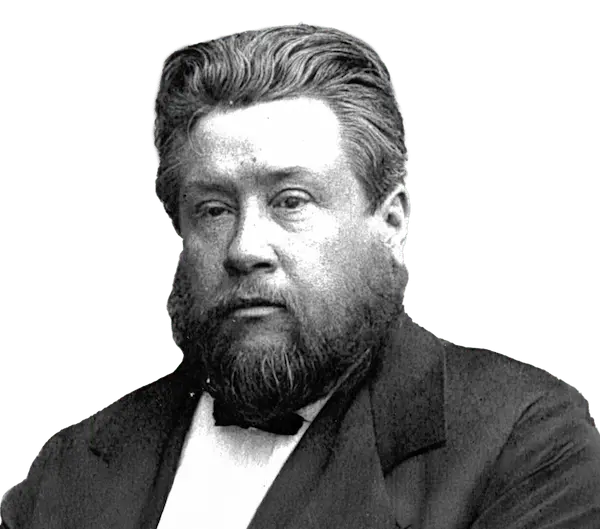
Charles Spurgeon • Nov 12, 1876
(NKJV) WHILE the Lord was yet on earth the days of the Son of man were but lightly esteemed. ThePharisees spoke of them with a sneer and demanded when the kingdom of God should come. As much as to say, “Is this the coming of your promised kingdom? Are these fi…
Charles Spurgeon • Jul 31, 1892
OUR translators, as you observe, have put in the words, “hath he quickened,” because Paul had thrown the sense a little farther on, and it was possible for the reader not to catch it. They have but anticipated the statement of the fourth and fifth verses, “God…
Charles Spurgeon • Feb 2, 1862
THIS is no unusual occurrence, in fact, it seems to be the general rule of the moral universe that those men prosper who do their work with all their hearts, while those are almost certain to fail who go to their labor leaving half their hearts behind them. Lo…
Charles Spurgeon • Aug 16, 1885
CAREFULLY observe that this text is spoken to the people of God. It speaks to those who are called “beloved.” These are the people who are especially loved of God and of His people. It is a very sweet and endearing title, but it evidently in this case belongs…
Charles Spurgeon • May 12, 1895
THOSE were troublous times in which Jude wrote this very forcible epistle. The first early days of Christianity, with all the springtime of the singing of birds and the blossoming of flowers, had passed away. There had come times of trial for everyone, but wor…
Charles Spurgeon • Sep 28, 1882
WE frequently use Canaan as a type of heaven, and the Jordan, through which Israel passed, as a symbol of death. Dr. Watts has taught us to sing—
Charles Spurgeon • Feb 12, 1871
IF God grant me strength I hope to go through this parable, but at the present we shall confine our thoughts to the opening scene of the royal festival. Before, however, we proceed further, it is most fitting that we give expression to our deep gratitude, that…
Charles Spurgeon • Nov 8, 1885
YOU know the story of Hagar. I am not going to deal with the allegorical meaning of it; that would be apart from our subject this morning. I shall speak of the incident simply as it stands, and even then I shall not use it strictly as a case of sure conversion…
Charles Spurgeon • Aug 10, 1916
THIS is a pointed question, which demands a personal answer and should, therefore, stir up full and frequent self-examination. “Lovest thou me?” It is a probing question that is likely to excite much grief when pressed home to the sensitive, tender-hearted dis…
Charles Spurgeon • Jul 2, 1876
IT is quite clear that the apostle did not consider his body to be himself. He speaks of it as being the frail tent or tabernacle in which he dwelt, and again as the garment with which for a while he was clothed. That tent or tabernacle he expected to see diss…
Charles Spurgeon • Nov 13, 1898
THE great object for our souls to seek after is our God. We love His house, the place where prayer is wont to be made is very dear to us, but the courts of the Lord’s house are dull and dreary if the Lord Himself be not there. Our question is not so much, “Whe…
Charles Spurgeon • Mar 21, 1880
THE opposition of the great ones of the earth did not, after all, hinder the cause of Christ. The Pharisees, who were the leaders of religious thought, combined with the Herodians, who were the court party, to destroy Jesus, but at the very moment when their w…
Charles Spurgeon • Nov 30, 1916
MOSES died blessing the people. This showed his meekness, for they had been his plague all his life, and yet his last word with them is full of blessing. He has a blessing for all the tribes, though all the tribes had in turn grieved his spirit. It is a gracef…
Charles Spurgeon • Dec 7, 1902
ONE of the best tests by which we may try many things is to ask, “How will they appear at the day of judgment?” Our Lord here says, “Many will say to me in that day.” He used no other word to describe that memorable period because that terse, brief expression…
Charles Spurgeon • Jul 1, 1883
IN this chapter John makes a sharp and clear division of mankind into two classes. He gives not even the slightest hint that there is, or ever was, or ever can be a third class. But he describes men as being the children of God or else the children of the devi…
Charles Spurgeon • Oct 14, 1894
IT is the chief office of the Holy Spirit to glorify Christ. He does many things, but this is what He aims at in all of them, to glorify Christ. Brethren, what the Holy Ghost does must be right for us to imitate, therefore let us endeavor to glorify Christ. To…
Charles Spurgeon • Jun 10, 1909
[Other Sermons by Mr. Spurgeon, on verses 18 to 21, are as follows:
Charles Spurgeon • May 7, 1865
WHAT a golden example Christ gives to His disciples! There are few masters who could venture to say, “If you would practice my teaching, imitate my life.” But the life of Jesus is the exact transcript of perfect virtue, and therefore He can point to Himself as…
Charles Spurgeon • Jun 30, 1895
THE French have a phrase which signifies in English assisting at a service. A person who has been present at some grand function of the church speaks of himself as having “assisted” at the service. I want that many of us should literally carry out that express…
Charles Spurgeon • Feb 18, 1894
DAVID’S life was a life of war. The Christian life wears other aspects, but still, in very deed and in truth, spiritually, it also is a life of war. Our Lord spoke the truth when He said, “Think not that I am come to send peace on earth: I came not to send pea…
Charles Spurgeon • Aug 3, 1905
EASTERN despots fleece their subjects to an enormous extent. Even at the present day, one would hardly wish to be subjected to the demands of an Oriental government. But in David’s time, a bad king was a continual pestilence, plague, and famine—a bane to the l…
Charles Spurgeon • Nov 14, 1912
IN the previous verses of this striking parable we see that the Great King had been ungraciously treated by his subjects, and had in his wrath swept the rebels away, but there was the feast still waiting for guests, and the time had arrived to celebrate the nu…
Charles Spurgeon • May 23, 1886
THIS is a sunny precept. When we read it we feel that the time of the singing of birds has come.
Charles Spurgeon • Aug 3, 1902
PETER had almost incidentally mentioned his Master’s name, and having done so, he felt that he must enlarge upon that theme, for the name of Christ was very dear to him. He seems to again hear that thrice repeated question ringing in his ears, “Simon, son of J…