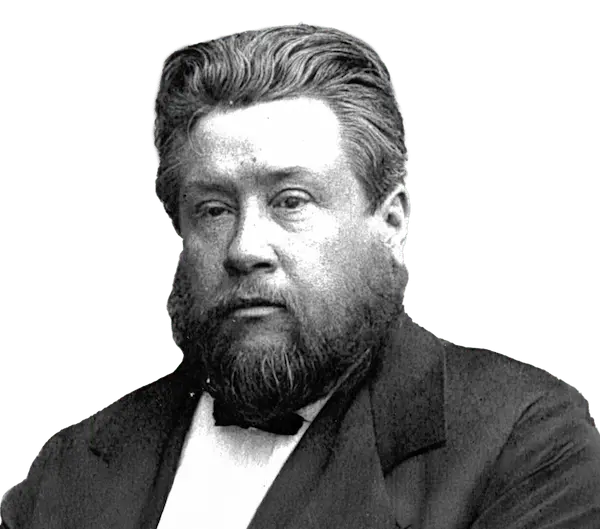
Charles Spurgeon • Mar 9, 1876
This promise is not made to every blind man, or to all sorts of blind people, for there are some blind people whom God does not lead. There is only a peculiar sort of blind people to whom this promise is given; that He will guide them and not forsake them. If…
Charles Spurgeon • Dec 17, 1903
IN this chapter Job is speaking of the hidden treasures that are to be found deep down in the bowels of the earth. The keen eyes of the vultures, though they see their prey afar off, have never seen the gold, and silver, and other precious metals which lie in…
Charles Spurgeon • Feb 18, 1866
THE text speaks of thoughts . It mentions the thoughts of man and the thoughts of God. The power of thought is one point in which man is made in the image of God. Other animated creatures which are put in subjection to the thinking, intelligent creature man, h…
Charles Spurgeon • Aug 26, 1909
[In the year 1873, Mr. Spurgeon delivered what he called “a series of sententious homilies” on the Beatitudes. After an introductory discourse upon the Sermon on the mount and the Beatitudes as a whole, he intended to preach upon each one separately, but eithe…
Charles Spurgeon
JOHN sought no honor among men. It was his delight to say concerning our Lord Jesus, “He must increase, but I must decrease.” Yet though John sought no honor of men, he had honor, for it is written, “Herod feared John.” Herod was a great monarch, John was but…
Charles Spurgeon • Sep 18, 1898
YOU all know how God did, for a time, cast off His ancient people. Both Israel and Judah, after long provocation of JEHOVAH, were carried away captive into the land of their enemies. God forsook His temple, and that glorious sanctuary was laid in ruins. The wh…
Charles Spurgeon • Nov 13, 1864
LET it be evermore remembered that the words of Jesus Christ are full of truth and grace, and that in each of these two sentences, whether we perceive the fact or not, there is the surest truth and the freest grace. There will be some, who from the peculiarity…
Charles Spurgeon • Jan 6, 1910
[Other sermons by Mr. Spurgeon, upon the same text, are sermons #1542, “Free Grace a Motive for Free Giving,” #2363, “Comfort and Constancy,” and #2991, “What We Have, and Are To Have”] ALL through his epistles, Paul is continually expressing his best wishes f…
Charles Spurgeon • Feb 28, 1869
THESE are not words spoken by John the Baptist, as a cursory reader might imagine, but they were written by John the Evangelist. The verse preceding is a paragraph cast into the midst of the Gospel, causing a temporary break. Omitting that verse, we read as fo…
Charles Spurgeon
IF a man in Palestine carefully watched his fig tree and kept it in proper condition, he was sure to be abundantly rewarded in due season, for it would yield him a large quantity of fruit of which he would enjoy the luscious taste. So, according to Solomon, go…
Charles Spurgeon
NO words can ever express the gratitude we owe to Him who loved us even when we were dead in trespasses and sins. The love of Jesus is unutterably precious and worthy of daily praise. No songs can ever fitly celebrate the triumphs of that salvation which He wo…
Charles Spurgeon • Oct 29, 1871
YOUNG painters were anxious, in the olden times, to study under the great masters. They concluded that they should more easily attain to excellence if they entered the schools of eminent men. At this present time, men will pay large premiums that their sons ma…
Charles Spurgeon • Jul 18, 1912
IT is with much fear and trembling that I usually stand upon this platform—not that I shrink before the face of the multitude, however large, but the weight of the subjects which I have continually to bring before your minds fills my own soul with awe. And yet…
Charles Spurgeon • Dec 11, 1870
“WHAT God hath joined together, let no man put asunder.” Evermore in Scripture the doctrines of grace are married to the precepts of holiness. Where faith leads the way, the virtues follow in a goodly train. The roots of holiness and happiness are the same, an…
Charles Spurgeon • Dec 27, 1896
YOU know the story from which our text is taken, how Joseph’s brethren, being envious of him, sold him for a slave, deceived his aged father concerning him, and then endeavored to forget the deed.
Charles Spurgeon • Jun 26, 1887
WHEREVER Paul is, he has but one errand, and whenever Paul preaches, he has but one subject.
Charles Spurgeon • Apr 17, 1870
IN matchless condescension our Lord had girt Himself as a servant, and was washing the feet of the disciples. Peter, struck with such a spectacle, would not allow his Lord to act as a menial, and flatly refused to have his feet washed by his Master. But he cha…
Charles Spurgeon • 1898
THE first part of this chapter is very dark, but the second part is clear daylight. As we read the first verses we tremble, for we seem to stand at the foot of Sinai when it is altogether on a smoke, but when we reach the second half of the chapter, we can say…
Charles Spurgeon • Feb 27, 1908
WHAT a never-ending theme there is in the name and person of our blessed Lord and Savior Jesus Christ! The poets of Scripture never mention His person but they fall into rhapsodies at once, they never sing of His name, or of His glories, but at once they seem…
Charles Spurgeon • Oct 22, 1871
IT is a very happy circumstance when the commandment of our father and the law of our mother are also the commandment of God and the law of the Lord. Happy are they who have a double force to draw them to the right—the bonds of nature and the cords of grace. T…
Charles Spurgeon • Aug 8, 1886
OUR apostle was in prison. If he was confined in the Mamertine, those of us who have shivered in that dark underground dungeon may well pity him, and if he was confined in the prison of the Praetorian Guards, he fared no better, for the near company of such ro…
Charles Spurgeon
THE one hundred and nineteenth Psalm is a very wonderful composition. Its expressions are many as the waves, but its testimony is one as the sea. It deals all along with the same subject, and it consists, as you observe, of a vast number of verses, some of whi…
Charles Spurgeon • Oct 8, 1893
YOU all know the old, old story. The world was lost. God must punish sin. He sent His Son to take our sin upon Him that He might honor the law of God and establish God’s government by being obedient to the law and yielding Himself up to the death penalty. He w…
Charles Spurgeon • Aug 12, 1909
[In the year 1873, Mr. Spurgeon delivered what he called “a series of sententious homilies” on the Beatitudes. After an introductory discourse upon the Sermon on the mount and the Beatitudes as a whole, he intended to preach upon each one separately, but eithe…