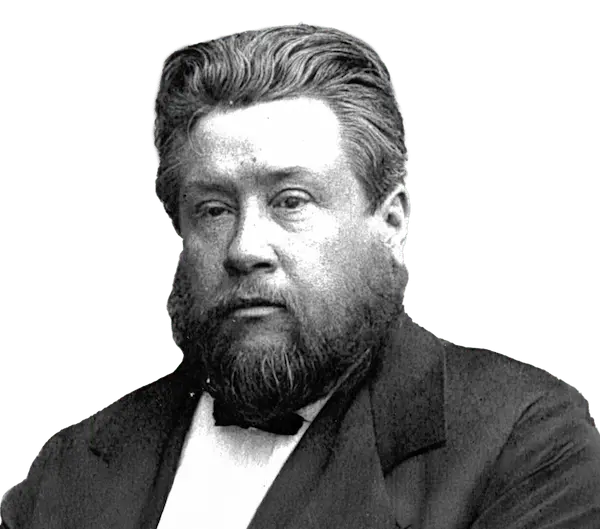
Charles Spurgeon • Sep 24, 1914
AS this text was originally written, it referred only to the length of life and the length of endurance which God promised to His obedient Israel. If they walked in His statutes, the kingdom was to abide from generation to generation, without end, “as the days…
Charles Spurgeon • Oct 8, 1908
I SUPPOSE the first sense of this passage would be just this. Israel had been carried away captive, and only the poorest of the people had been left in the land. Jerusalem was a heap, Zion had been ploughed with the plough of desolation, the whole country was,…
Charles Spurgeon • Oct 22, 1876
Our Lord had just been declaring the doctrine of election, thanking the heavenly Father that He had chosen babes, though He had passed by the wise and prudent. It is very instructive that, close upon the heels of that mysterious doctrine, should come the graci…
Charles Spurgeon • Nov 5, 1914
THE brook Kidron was an insignificant, but usually a most foul and filthy ditch, outside the walls of Jerusalem. If it was not, as some have called it, the open town sewer, yet there are reasons for believing that at least the filth of the temple ran into it.…
Charles Spurgeon • Feb 2, 1905
THE healing of natural sickness is not accomplished without the power of God. Vain were the skill of the most learned physician unless the God of nature cooperated with the medicine. If any of you have been restored of late from sickness, I charge you to prais…
Charles Spurgeon • Oct 7, 1883
We shall mainly dwell upon the first invitation of the text, “Put Me in remembrance.” If you will cast your eyes upon the Scripture itself you will be struck with its singular position. It makes a paradox of the most striking kind if you read it in connection…
Charles Spurgeon • May 7, 1884
THESE scribes and Pharisees always come in very conveniently as a sort of shadow to bring out the bright lights of the picture. One feels glad that they are not alive to worry us now, but somewhat glad that they were alive just then to put some of their queer…
Charles Spurgeon • Jul 12, 1896
GUIDED by our text in Matthew’s Gospel, let us first go in thought to the palace of Caiaphas, the high priest, and there let us, in deepest sorrow, realize the meaning of these terrible words, “Then did they spit in his face.” There is more of deep and awful t…
Charles Spurgeon • Sep 23, 1894
JACOB had reached an age in which natural vigor had gone out of him, he was getting very old, and was worn and weary, yet here he seems to lead the way in providing for his family. It was he who spoke to the younger men, his sons, and urged them to go down int…
Charles Spurgeon • Jun 24, 1888
WE generally picture Moses with beams of glory rising from his brow, and the two tables of the law in his hand; a stern man holding forth a sterner law. But we must correct our idea. Moses is as much an example of faith as he is a representative of law. What h…
Charles Spurgeon • May 16, 1880
THE people of God were in a very sad state when this chapter described them. Isaiah pictures them as brought into the lowest degree of fear and sorrow. He pleads with God to return to His chosen people and restore their former peace and prosperity. He makes us…
Charles Spurgeon • Sep 11, 1887
IN the love of Christ we find our best joy. The pastures of the Great Shepherd are wide, but the sweetest grasses grow close to His pierced feet. The love of Jesus is the center of salvation; it is as the sun in the midst of the heavens of grace. I trust that…
Charles Spurgeon • Jun 12, 1870
YOU remember that we commenced this morning’s sermon by observing that Jesus is not reported to have marveled either at the gigantic architecture of the temple, or at the wonderful discipline of the Roman army, or at the profound knowledge of the rabbis. He on…
Charles Spurgeon • Sep 4, 1870
NO one has ever numbered Nebuchadnezzar with the prophets, or believed his language to be inspired. We have before us simply a statement made by an uninspired man, after passing through the most extraordinary experience. He had been among the greatest and prou…
Charles Spurgeon
THE center of our holy religion is the cross. The central thought of the whole of Christianity is Christ and the great point in Christ’s history is His crucifixion. We preach Christ, but more—we preach Him crucified. Beloved, this, which is the keystone or the…
Charles Spurgeon • Aug 21, 1913
CONSIDER the word “judgment” in whatever light you please, this sentence is true. There is much of mystery connected with the terrible calamities which afflict the earth, devastate nations, destroy cities, and sweep away the relics of the past. There is much o…
Charles Spurgeon • Jan 19, 1902
IT was generally supposed by the Jews that no one, except the descendants of Abraham, Isaac, and Jacob, could be in covenant relationship with God. You remember however, how Paul says in writing to the Romans, “But Esaias is very bold,” and he is so in this in…
Charles Spurgeon • Dec 5, 1897
THIS is Eliphaz, the Temanite, who is speaking, and he is telling Job what he thinks would be the condition of a man who had been sincere. He says that, surely, God’s presence would be with him, the light would shine upon his ways, and then, when he was himsel…
Charles Spurgeon • Jul 28, 1895
THIS was the beginning of that interesting conversation which not only blessed this woman, but has been a means of grace to many others ever since, for this chapter and the previous one must be looked upon as among the most soul-winning parts of God’s Word. I…
Charles Spurgeon • Aug 2, 1896
IT is very delightful to read a history in which God is made prominent. How sadly deficient we are of such histories of our own English nation! Yet surely there is no story that is more full of God than the record of the doings of our British race. Cowper, in…
Charles Spurgeon • May 15, 1892
IT did not do Daniel any harm to know that he was greatly beloved of God, or else he would not have received that information from heaven. Some people are always afraid that if Christian people obtain full assurance, and receive a sweet sense of divine love, t…
Charles Spurgeon • Sep 3, 1899
WE have no respect whatever for the ordinances of men in religion. Anything that is only invented by churches, or councils, is nothing whatever to us. We know of two ordinances instituted by the Lord Jesus Christ—the baptism of believers and the Lord’s supper.…
Charles Spurgeon • Jun 20, 1869
CAREFUL readers will have noticed that in the verses which precede my text, the spouse had been particularly anxious that her communion with her Lord might not be disturbed. Her language is intensely earnest, “I charge you, O daughters of Jerusalem, that ye st…
Charles Spurgeon • Aug 12, 1883
OBSERVE, dear friends, how little disconcerted our Lord Jesus Christ was by the most violentopposition of His enemies. The Jews took up stones to stone Him, and He hid Himself from them. Butalmost the moment after, when He had passed, perhaps, through a single…