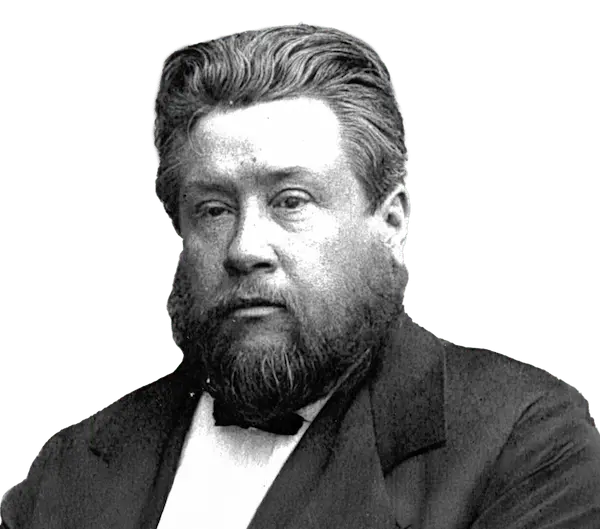
Charles Spurgeon
MANY a true word is spoken in jest, and many a tribute to virtue has been unwittingly paid by the sinister lips of malice. The enemies of our Lord Jesus Christ thought to brand Him with infamy, hold Him up to derision, and hand His name down to everlasting sco…
Charles Spurgeon • Mar 22, 1864
THAT deathbed scene speaks volumes for the power of holiness. Elisha was the prophet of God, a man of no honorable station, except that he is always honorable whom God calls to serve Him. Joash the king of Israel—who has often rejected Elisha’s admonitions, an…
Charles Spurgeon • Sep 9, 1855
WE do not believe all that Job’s friends said. They spoke very often as uninspired men, for we find them saying many things that are not true. And if we read the book of Job through, we might say with regard to them, “Miserable comforters are ye all,” for they…
Charles Spurgeon • Oct 21, 1855
THIS prayer of Christ is an ever precious portion to all true believers, from the fact that each of them has an inalienable interest in it. Every one of us, beloved, when we listen to the words of Christ should recollect that He is praying for us—that while it…
Charles Spurgeon • Dec 21, 1856
THE case of the man here referred to is a very extraordinary one—it occupies a place among the memorabilia of Christ’s life, perhaps as high as anything which is recorded by either of the evangelists.
Charles Spurgeon • Nov 11, 1860
CONSCIOUS of this truth in my own case, I would earnestly seek the help of God’s Spirit in preaching as in every other spiritual exercise, for, without Him I can do nothing. It is a remarkable fact that all the heresies which have arisen in the Christian churc…
Charles Spurgeon • Mar 20, 1859
IT is the duty of all men to be careful of the sons of sorrow. There be some who from their very birth are marked by melancholy as her own. The silent shades of sorrow are their congenial haunts, the glades of the forest of grief are the only places where thei…
Charles Spurgeon • Apr 25, 1858
THIS was no doubt a special vision sent of God for the direction of the apostle. For we are told in the next verse, that they assuredly gathered from this vision, that the Lord had called them to preach the Gospel in Macedonia. And yet the vision may be very r…
Charles Spurgeon • Aug 7, 1859
THIS poor man was beset with two great evils—blindness and poverty. It is sad enough to be blind, but if a man that is blind is in possession of riches, there are ten thousand comforts which may help to cheer the darkness of his eye and alleviate the sadness o…
Charles Spurgeon • Nov 18, 1860
THE former part of the sentence would be a piece of impudent daring without the latter part to interpret it. There have been some men who, puffed up with vanity, have in their hearts said, “I can do all things.” Their destruction has been sure, and near at han…
Charles Spurgeon • Dec 6, 1863
AS these words came from the lips of Zechariah, doubtless they referred to the seed of Abraham,including the two tribes of Judah and the ten tribes of Israel. They have already received a minorfulfillment, but their most glorious accomplishment is yet to come.…
Charles Spurgeon • Feb 28, 1864
THE text has a double significance. It may indicate the fruit upon which we feed, or the fruit which we are enabled to produce. If it shall mean the first, there is much of comfort in it. The Lord has compared Himself, in His condescending mercy, to a green fi…
Charles Spurgeon • Aug 2, 1863
IF we lived in the country, it would not be necessary for me to remind you that the time of harvest has again happily come upon us. I saw, one day last week, a fine sample of the new wheat, part of a considerable quantity which had just been sold. And in many…
Charles Spurgeon • Aug 5, 1855
THE greatest man of apostolic times was the apostle Paul. He was always great in everything. If you consider him as a sinner, he was exceeding sinful. If you regard him as a persecutor, he was exceeding mad against the Christians and persecuted them even unto…
Charles Spurgeon
THIS is the only proper way to calculate the results of our ministry. We just want the account book ruled with two columns. On one side we must put down the long list of the some that believe not, and on the brighter side we may enter what is too often, the fa…
Charles Spurgeon • May 29, 1864
MY text consists almost entirely of monosyllables, but it contains the loftiest of sublimities. Such a tremendous weight of meaning is concentrated here, that an archangel’s eloquence would fail to convey its teaching in all its glory to any finite minds, even…
Charles Spurgeon • Jul 10, 1864
THE prophet speaks experientially as of a matter which he had proved for himself in his own case.
Charles Spurgeon • Apr 10, 1859
THE gospel of John is peculiarly the history of Jesus, the Son of God. Matthew deals with Jesus as the Prince of the house of David. Mark treats of Him as the Servant of servants. And Luke views Him as the Son of Man; but John, with eagle eyes, looks beyond al…
Charles Spurgeon • Sep 6, 1863
LAST Sabbath morning, we tried to show you how the uncleanness of sin is removed. By the application of the blood of Christ the guilt of sin is cleansed. By the water which flowed with the blood from the side of Jesus defilement is taken away forever. Our work…
Charles Spurgeon • Jan 26, 1860
GOD’S promises are not exhausted when they are fulfilled, for when once performed, they stand just as good as they did before, and we may await a second accomplishment of them. Man’s promises even at the best are like a cistern which holds but a temporary supp…
Charles Spurgeon • May 13, 1855
IT is a singular fact, but nevertheless most certain, that the vices are the counterfeits of virtues.
Charles Spurgeon • Jan 31, 1864
THE objective of the apostle’s life—that for which he sacrificed everything—country, kindred, honor, comfort, liberty, and life itself, was that he might know Christ. Observe that this is not Paul’s prayer as an unconverted man, that he may know Christ, and so…
Charles Spurgeon • Jan 13, 1861
IT is not so much predestination which will occupy our attention this morning, as the fact that believers are predestinated to be conformed to the image of God’s dear Son .
Charles Spurgeon • May 9, 1858
THIS is just an old version of an oft-repeated story. When disturbances arise in a state, and rebellions and mutinies cause blood to be shed, it is still the custom to cry, “The Christians have done this.” In the days of Jesus we know that it was laid to the c…