
A Clear Conscience
Charles Spurgeon
ANY attempt to keep the law of God with the view of being saved thereby is sure to end in failure.
Charles Spurgeon Sermons
Sermons by Charles Spurgeon
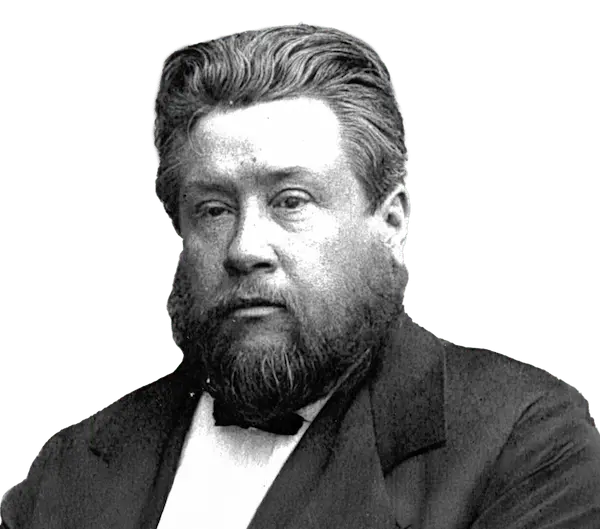
Charles Spurgeon Sermons
Sermons by Charles Spurgeon
Charles Spurgeon
ANY attempt to keep the law of God with the view of being saved thereby is sure to end in failure.
Charles Spurgeon • Oct 13, 1901
A VERY short time ago, I gave you, in print, [See The Sword and the Trowel, March, 1879, “Incidents of Travel Clustering Round a Text.”] a sermon upon this text which, I daresay, many of you well remember. I am not now going to pursue the same line of thought…
Charles Spurgeon • Jan 4, 1903
THE connection in which these words stand is very suggestive. The previous verse says, “Hast thou not known? Hast thou not heard, that the everlasting God, the LORD, the Creator of the ends of the earth, fainteth not, neither is weary? there is no searching of…
Charles Spurgeon • Dec 29, 1895
THE first part of this text applies to us all. The second part will apply to each one of us before long.
Charles Spurgeon • May 14, 1914
VERY closely does the apostle John resemble his Lord in the motive that prompted him to write this epistle! You remember how Christ said in His last discourse to His disciples on the eve of His passion, “These things have I spoken unto you that your joy may be…
Charles Spurgeon • Nov 2, 1862
BELIEVING that God foreknows all things, we cannot but come to the conclusion that He foreknew the fall, and that it was but an incident in the great method by which He would glorify Himself.
Charles Spurgeon • Mar 7, 1872
THOSE of you who were present last Thursday evening [Metropolitan Tabernacle Pulpit, #1042 “A Persuasive to Steadfastness”] will remember that I spoke then upon the necessity of “holding fast the beginning of our confidence steadfast unto the end,” and I showe…
Charles Spurgeon • Dec 4, 1887
THIS most delightful passage occurs at the close of the last of our Savior’s sermons before He went unto the Father. Let us treasure it as we lay up a man’s last words. Wonderfully full is that sermon. It is of a piece with His last prayer, and that rises abov…
Charles Spurgeon • Feb 2, 1890
JORDAN is a very narrow stream. It made a sort of boundary for Canaan, but it hardly sufficed to divide it from the rest of the world, since a part of the possessions of Israel was on the eastern side of it.
Charles Spurgeon • May 21, 1876
FAITH is the divinely-appointed way of receiving the blessings of grace. “He that believes shall be saved,” is one of the main declarations of the gospel. The wonders of creation, the discoveries of revelation, and the movements of providence are all intended…
Charles Spurgeon • Mar 15, 1891
THE two great links between earth and heaven are the two advents of our Lord, or, rather, He is the great bond of union, by these two appearings. When the world had revolted, and God had been defied by His own creatures, a great gulf was opened between God and…
Charles Spurgeon • Aug 8, 1880
OUR Lord Jesus Christ is beyond all comparison the best of friends, a friend in need, a friend indeed. “Friend!” said Socrates, “there is no friend!” But Socrates did not know our Lord Jesus or he would have added, “Except the Savior.” In the heart of our Lord…
Charles Spurgeon • Sep 27, 1874
IN our childhood we learned from Dr. Watts’ Catechism that Isaiah was that prophet who spoke more of Jesus Christ than all the rest. In the chapter before us Isaiah had been declaring in the name of the Lord the coming and the character of the Redeemer, speaki…
Charles Spurgeon • Sep 1, 1910
IT does one good to think that there are such things in the world as springs bubbling up in the shady nooks, places of sweet refreshment in this dusty earth. The mouth waters at the very thought of the palms of Elim and the wells thereof. If even to us fresh s…
Charles Spurgeon • Aug 12, 1915
THIS darkness was not occasioned by any of the natural causes which generally produce darkness. It was in the middle of the day, precisely at noon, that the darkness came. It could not have been caused by an eclipse, for, it being the time of the Passover, we…
Charles Spurgeon • Jun 18, 1899
TRUE friends are very scarce. We have a great many acquaintances, and sometimes we call them friends, and so misuse the noble word “friendship.” Peradventure, in some after day of adversity, when these so-called friends have looked out for their own interests…
Charles Spurgeon • Nov 11, 1888
IT is your Lord whom Herod set at nought! Once worshipped of angels and all the heavenly host, He is treated with contempt by a ribald regiment. In Himself “the brightness of His Father’s glory, and the express image of His person,” but now set at nought by me…
Charles Spurgeon • Mar 11, 1883
CERTAIN ceremonies under the law were only of annual celebration, while other matters were of daily observation. And by the daily repetition they were intended to be set forth as eminently constant and perpetual. These daily ordinances were to be regarded by t…
Charles Spurgeon • Feb 29, 1912
THIS Psalm exhorts us to sing joyfully unto God. Whether we contemplate the land or the sea, there will be found upon them both abundant reasons for adoring the great Creator. Some, I know, as they walk upon the land, can no more praise Him that if it were on…
Charles Spurgeon • Mar 11, 1866
NO single power or faculty of man escaped damage at the fall. While the affections were polluted, the will was made perverse, the judgment was shifted from its proper balance, and the memory lost much of its power and more of its integrity.
Charles Spurgeon
YOU all know the story of the apostle Paul. He had been a persecutor, and went armed with letters to Damascus to hail men and women and drag them to prison. On the road thither he saw a light exceeding bright above the brightness of the sun, and a voice spake…
Charles Spurgeon • Oct 13, 1867
THE death of our Lord Jesus Christ must have appeared to His apostles to be an unmitigated misfortune. No doubt they conceived that it would be the death of the cause, a heavy blow, and a deep discouragement. Smite the Shepherd, and the sheep will be scattered…
Charles Spurgeon • Mar 19, 1908
[Another sermon by Mr. Spurgeon on the same passage is #2833, Lessons on Divine Grace.] IF you will read the context of this passage, you will find that these words occur in one of Paul’s digressions, or parenthesis. He was a writer who very frequently went of…
Charles Spurgeon • Oct 22, 1876
CAN you picture the scene? Jesus is given up by Pilate to the Jews that they may do their will with Him, and led by a small band of soldiers He is conducted into the public street, bearing His cross upon His shoulders. Perhaps they judged Him to be weary with…