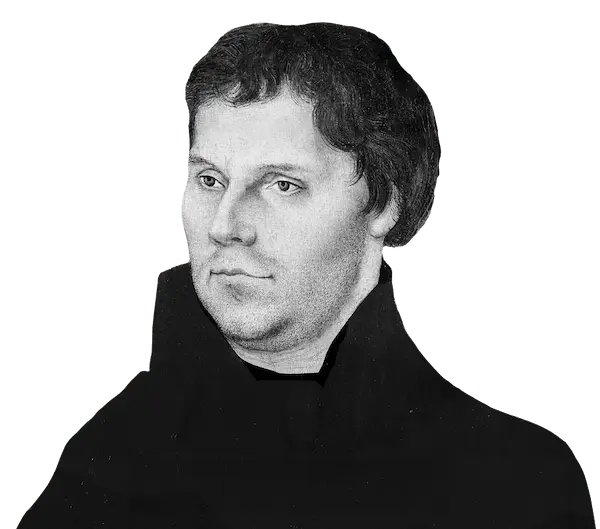
Martin Luther
1. This is the conclusion of Saint Peter’s epistle. It is an exhortation to good works, such as a Christian, or believer, should practice. It is evident that the doctrine of the Gospel is not such as is charged by some, forbidding good works, or not earnestly…
Martin Luther
1. This epistle selection illustrates the Gospel lesson for the first Sunday in Advent, wherein we learned the disciples did not themselves ride on the colt, but led it to Christ and set him thereon. That is what the apostle does here. The Corinthians had come…
Martin Luther • 1543
1. This Gospel we have fully and sufficiently explained on other occasions, when treating of the entire sermon of Christ, which Matthew the Evangelist records in three chapters; for today we will take a part of it, where Christ expounds and explains the fifth…
Martin Luther
1. This lesson begins in a way that would seem to call for a portion properly belonging to the epistle for the preceding Sunday, and terminates short of its full connection. Evidently it was arranged by some unlearned and thoughtless individual, with a view si…
Martin Luther • 1540
1. When God was about to lead the Israelites out of Egypt, he commanded, shortly before their departure, that they should eat the Passover the night they started; and as a perpetual memorial of their redemption, they were annually, on the recurrence of the sea…
Martin Luther • 1522
1. The first thing for us to understand is that although the signs preceding the judgment day are many and great, they will all be fulfilled, even though none or very few men take note of or esteem them as such. For two things must take place according to the…
Martin Luther • 1525
1. Christ our Lord preached this part of the Gospel in concluding his long sermon on the mount. After teaching his disciples all things necessary for them to know, he concludes by warning them against false prophets, as all good ministers are accustomed to do…
Martin Luther
1. This epistle lesson sounds altogether strange and wonderful to individuals unaccustomed to Scripture language, particularly to that of Paul. To the inexperienced ear and heart it is not intelligible. In popedom thus far it has remained quite unapprehended,…
Martin Luther
1. It is quite probable the individual who arranged this epistle text knew little about Paul. He includes in the selection more than pertains to the theme. The beginning – “Whatsoever things were written,” etc. – relates to what goes before. The text should ha…
Martin Luther
1. Here you have enumerated again a long list of eminently good works enjoined upon Christians who believe and have confessed their faith in the Gospel. By such fruits is faith to be manifest. Peter classifies these works according to the obligations of Christ…
Martin Luther
1. Today’s Gospel has been appointed, I think, for this Sunday because Christ announces in it that he will lay down his life for his sheep, that is, suffer and die; and yet he also shows, at the same time, that he will rise again, in that he says: “Other sheep…
Martin Luther
1. Christ our Lord preached this part of the Gospel in concluding his long sermon on the mount, When he had taught his disciples all they should know, he proceeds and warns them to be ever on their guard against false doctrine; as all good ministers try and sh…
Martin Luther
1. Since pastors are expected on this day to preach on the Holy Spirit, it would be well to begin the Gospel lesson with the verses preceding, which it has been customary to read Pentecost evening, where Christ says: “If ye love me, ye will keep my commandment…
Martin Luther
1. Up to this time Paul has been extolling the office of the ministry, which proclaims the Gospel of the New Testament. In lofty and impressive terms he introduces its purpose, power and wisdom — in a word, the great benefits the office effects, since God ther…
Martin Luther • 1523
1. Here in this Gospel lesson, as everywhere in the Scriptures, we are to be careful that we grasp, as well as we can, the true, simple meaning, as we have often heard, and establish our hearts and consciences in that meaning. For whoever will contend with sat…
Martin Luther
1. This portion of the Gospel teaches us to know the grace, work and power of God in the kingdom of Christ, our Lord, and to praise and thank him, as well as cheerfully to serve and obey him. For this miracle and act of mercy are related in order that we may r…
Martin Luther • 1523
1. The faith of neighbors brings the deaf mute in order that he might believe when the devil is driven out of him.
Martin Luther • 1523
1. Christ pictures to us in this Gospel what his kingdom is and what takes place in it, how it is governed and what it accomplishes. Here you learn that there is a kingdom upon the earth and that it is invisible, and that it cleaves to and rests upon the Word…
Martin Luther
1. This Gospel treats of the disciples and the fruits, which the Word of God develops in the world. It does not speak of the law nor of human institutions; but, as Christ himself says, of the Word of God, which he himself the sower preaches, for the law bears…
Martin Luther • 1522
1. Today’s Gospel pictures to us a remarkable example of faith, for St. John carefully notes at three different times that the nobleman believed, and we may indeed be greatly moved by the fact, and ask, what kind of faith must he have had, that the Evangelist…
Martin Luther
1. This sermon Peter preached to Cornelius, the Cesarean centurion, a gentile but a believer, and to the centurion’s assembled friends, Peter having been summoned by Cornelius and having responded to the call in obedience to a revelation and to the Holy Spirit…
Martin Luther • 1522
1. This Gospel offers us instruction on the authority called spiritual or church authority, about which some severe things have been taught and preached, especially in our times, in order that the church authorities might never be despised; and they wish to be…
Martin Luther • 1522
1. This parable does not teach us how one should cheat another; for Christ calls him an unrighteous steward, and numbers him among the children of this world, therefore his wisdom is praised, not his unrighteous dealings.
Martin Luther
1. Paul immeasurably extols the Philippians for having made a good beginning in the holy Gospel and for having acquitted themselves commendably, like men in earnest, as manifest by their fruits of faith. The reason he shows this sincere and strong concern for…