
Ask, Seek, Knock: The Blessings of Prayer and Almsgiving
Augustine of Hippo Sermon
Ask, Seek, Knock: The Blessings of Prayer and Almsgiving
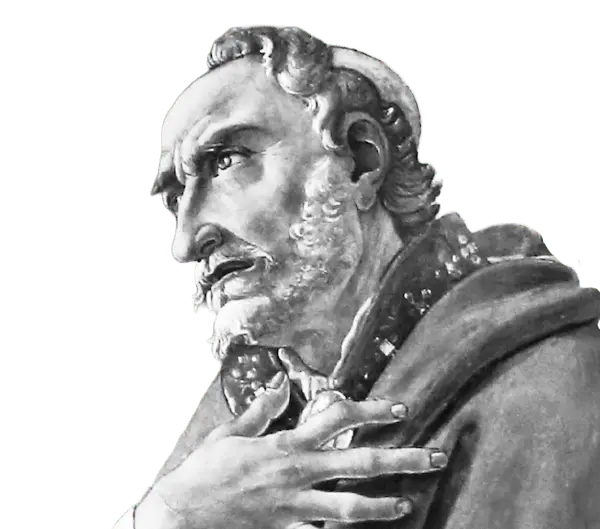
Augustine of Hippo Sermon
Ask, Seek, Knock: The Blessings of Prayer and Almsgiving
The Father's Goodness in Prayer
1. In the lesson from the Holy Gospel, the Lord has encouraged us to pray. "Ask," He says, "and it will be given to you; seek, and you will find; knock, and it will be opened to you. For everyone who asks receives, and he who seeks finds, and to him who knocks it will be opened. What man is there among you who, if his son asks for bread, will give him a stone? Or if he asks for a fish, will he give him a serpent? Or if he asks for an egg, will he offer him a scorpion? If you then, though you are evil, know how to give good gifts to your children, how much more will your Father in heaven give good things to those who ask Him!" (Matthew 7:7-11).
He says, "Though you are evil, you know how to give good gifts to your children." What a remarkable statement, brothers and sisters! We are evil, yet we have a good Father. What could be more clear? We have heard our proper name: "Though you are evil, you know how to give good gifts to your children." Now see what kind of Father He reveals to those whom He called evil. "How much more will your Father?" Father of whom? Undoubtedly of the evil. And what kind of Father? "None is good but God alone" (Luke 18:19).
2. For this reason we who are evil have a good Father—so that we need not always remain evil. No evil person can make another person good. If no evil person can make another good, how can an evil person make himself good? Only the One who is eternally good can transform an evil person into a good one. "Heal me, LORD, and I shall be healed; save me, and I shall be saved" (Jeremiah 17:14).
Why then do certain foolish people say to me with empty words, "You can save yourself if you want to"? "Heal me, LORD, and I shall be healed." We were created good by the Good One, for "God made mankind upright" (Ecclesiastes 7:29), but by our own free will, we became evil. We had the power to change from good to evil, and now, through grace, we have the power to change from evil to good. But it is the eternally Good One who transforms the evil into good, for we have no power to heal ourselves.
You don't look for a physician to wound yourself, but when you have wounded yourself, you look for one to heal you. Good things, then, after this present life—eternal good things—as well as the temporal good things that relate to the body and flesh, we do know how to give to our children, even though we are evil.
For even these are good things; who would doubt it? Fish, eggs, bread, fruit, wheat, the light we see, the air we breathe—all these are good. Even the riches that make people proud and reluctant to acknowledge others as their equals—these riches that make people more in love with fancy clothing than aware of our common human nature—even these riches are good. But all these goods I've mentioned can belong to both good and bad people alike. And although these things are good in themselves, they cannot make their owners good.
3. There is a good that makes us good, and there is a good by which we can do good. The Good that makes us good is God Himself. For no one can make a person good except the One who is eternally Good. Therefore, to become good, call upon God.
But there is another kind of good—the good things you possess. You have gold and silver. They are good, not in the sense that they can make you good, but in that you can use them to do good. You have gold and silver, and you want more gold and silver. You both have and yet crave more. You are simultaneously full and thirsty. This is a disease, not abundance.
It's like people with dropsy—they're full of water but are always thirsty. They're full of water, yet they thirst for more water. How then can you find pleasure in wealth when it creates this dropsical desire in you?
You have gold—it's good. Yet you don't have the means to make yourself good, but you do have the means to do good. Do you ask, "What good can I do with gold?" Haven't you heard in the Psalm, "He has distributed freely, he has given to the poor; his righteousness endures forever" (Psalm 112:9)? This is good—this is the good by which you are made good: righteousness.
If you have the good that makes you good, then do good with that good which cannot itself make you good. You have money—use it generously. By giving it generously, you increase righteousness. "He has distributed freely, has given to the poor; his righteousness endures forever." See what is diminished and what is increased: your money is diminished, but your righteousness increased. What is diminished is what you must soon have lost anyway, what you must soon have left behind. But what is increased is what you will possess forever.
The Wise Investment of Earthly Goods
4. I'm teaching you a secret formula for profitable trading. Learn how to trade wisely. You admire the merchant who sells lead and gets gold in return—won't you admire the merchant who gives money and receives righteousness?
But you might say, "I don't give away my money because I don't have righteousness." Let the one who has righteousness give away money; I don't have righteousness, so at least let me keep my money. So you don't want to give away your money because you lack righteousness? Give it away, then, so that you may gain righteousness! From where else will you get righteousness except from God, the Fountain of righteousness?
Therefore, if you want righteousness, be God's beggar—the same God who, just now in the Gospel, urged you to ask, seek, and knock. He knew His beggar, and now the Householder—the infinitely rich One, rich in spiritual and eternal treasures—encourages you, saying, "Ask, seek, knock. Everyone who asks receives, everyone who seeks finds, and to everyone who knocks, it will be opened." He urges you to ask—will He refuse what you ask for?
5. Consider a comparison drawn from a contrary case (like the unjust judge), which encourages us to pray. "There was in a city," says the Lord, "a judge who neither feared God nor respected man." A certain widow kept asking him daily, saying, "Give me justice." He refused for a long time, but she never stopped petitioning, and eventually he did through her persistence what he would not do of his own goodwill. Through this contrary example, the Lord has encouraged us to pray.
6. Again, He says, "Someone had a visitor arrive, and he went to his friend and began to knock and say, 'A guest has come to me; lend me three loaves.'" The friend answered, "I'm already in bed, and my servants are with me." But the person doesn't give up—he keeps pressing his case, knocking and begging as one friend to another.
And what does Jesus say? "I tell you, even if he will not get up and give him anything because he is his friend, yet because of his persistence, he will get up and give him as much as he needs" (Luke 11:8). Not because of their friendship, though they are friends, but "because of his persistence." What does "because of his persistence" mean? Because he didn't stop knocking—because even when his request was refused, he didn't give up and leave.
The one who was unwilling to give eventually gave what was asked because the other person didn't stop asking. How much more, then, will the Good One give who encourages us to ask, who is displeased if we don't ask?
But when at times He gives slowly, it's because He's showing us the value of His good things. Things long desired are obtained with greater pleasure, whereas things given quickly are often taken for granted. Ask, then; seek; be persistent. Through the very asking and seeking, you grow so as to receive more.
God is keeping in reserve for you what He chooses not to give quickly, so that you may learn to desire great things with great longing. Therefore "we ought always to pray and not lose heart" (Luke 18:1).
We Are All Beggars Before God
7. If, then, God has made us His beggars by instructing, encouraging, and commanding us to ask, seek, and knock, let us in turn pay attention to those who ask from us. We ask—but from whom do we ask? Who are we who ask? What do we ask for?
We ask from the Good God; we who ask are evil people; but we ask for righteousness, by which we may become good. We ask, then, for what we will have forever, with which, when we are filled, we will need nothing more. But to be filled, let us hunger and thirst; hungering and thirsting, let us ask, seek, and knock. "Blessed are those who hunger and thirst for righteousness" (Matthew 5:6).
Why are they blessed? They hunger and thirst, and they are blessed? Is need ever a blessing? They are not blessed because they hunger and thirst, but because "they will be filled." Blessedness will be found in the filling, not in the hunger. But hunger must precede the filling, so that the food will not be received with indifference.
8. We have said from whom we ask, who we are who ask, and what we ask for. But we are also asked of ourselves. For we are God's beggars; in order that He may recognize His beggars, let us recognize our own.
But in this case too, let's consider: who are those who ask from us? From whom do they ask? What do they ask for? Who are those who ask? People. From whom do they ask? From people. Who are those who ask? Mortals. From whom? From mortals. Who are those who ask? Frail beings. From whom? From frail beings. Who are those who ask? The wretched. From whom? From the wretched.
Except in the matter of wealth, those who ask from you are exactly like you. With what face can you ask before your Lord when you refuse to recognize your own equal? "I am not," the rich man will say, "like him"—God forbid that I should be like him! So speaks someone dressed in silk with inflated pride about a person wrapped in rags.
But I ask you about when you're both stripped naked. I'm not asking about how you appear now when clothed, but how you both were when first born. Both were naked, both weak, both beginning a life of misery, and therefore both beginning with cries.
9. Consider, then, O rich man, your beginnings. See whether you brought anything into this world. You've arrived and found such abundance, but tell me, please, what did you bring here? Tell me—or if you're ashamed to say, listen to the Apostle: "We brought nothing into this world" (1 Timothy 6:7). He says, "We brought nothing into this world."
But perhaps because you brought nothing, yet have found much here, you plan to take something away? This too, perhaps out of love for riches, you're afraid to admit. Hear this also, and let the Apostle, who will not flatter you, tell you: "We brought nothing into this world" —when we were born— "and we cannot take anything out of it" —when we depart from the world (1 Timothy 6:7).
You brought nothing in, and you will carry nothing out. Why, then, do you look down on the poor? When infants are born, let the parents, servants, attendants, and the crowds of fawning helpers step aside; then let the wealthy children with their cries be identified. Let the rich woman and the poor woman give birth together; let them not pay attention to their babies for a moment, then let them return and try to recognize them if they can.
You see, O rich man, "you brought nothing into this world; neither can you carry anything out." What I've said about people at birth, I could also say about them at death. If it were not so, when old tombs are occasionally broken open, could the bones of the rich be distinguished from others? Therefore, you rich person, listen to the Apostle: "We brought nothing into this world." Acknowledge it—it's true. "We cannot take anything out." Acknowledge this as well—it's also true.
10. What follows, then? "Having food and clothing, with these we shall be content. But those who desire to be rich fall into temptation and a snare, and into many foolish and harmful lusts which drown men in destruction and perdition. For the love of money is a root of all kinds of evil, which some, striving after, have strayed from the faith" (1 Timothy 6:8-10).
Now consider what they have abandoned. You may grieve that they have abandoned the faith, but see what they have become entangled in. Listen: "They have strayed from the faith and pierced themselves through with many sorrows." But who are these people? "Those who desire to be rich."
It's one thing to be rich, and another to want to become rich. A person is rich who is born of wealthy parents, and is rich not because they desired it, but because many left them their inheritances. I see their wealth, but I don't question the pleasure they take in it. In this passage of Scripture, what's condemned is greed, not gold or silver or riches themselves, but greed.
For those who don't wish to become rich, or don't care about it, who aren't consumed by covetous desires, and aren't inflamed by the fires of greed, but who nevertheless are rich—let them hear the Apostle (which was read today): "Command those who are rich in this present age" (1 Timothy 6:17). Command them what? First of all, "not to be haughty." For there's nothing that riches produce as much as pride. Every fruit, every grain, every tree has its own particular worm. The worm of apples is one kind, of pears another, of beans another, and of wheat another. The worm of riches is pride.
11. "Command therefore the rich of this world not to be haughty in their thinking" (1 Timothy 6:17). The Apostle has addressed the misuse of wealth; now let him teach its proper use. "Command them not to be haughty in their thinking." But what is the defense against pride? What follows: "nor to trust in uncertain riches" (1 Timothy 6:17).
Those who don't trust in the uncertainty of riches are not haughty in their thinking. If they're not haughty, let them fear. If they fear, they're not haughty. How many people were rich yesterday but are poor today? How many go to sleep wealthy, but because of robbers taking everything, wake up poor? Therefore, "command them not to trust in uncertain riches, but in the living God, who gives us richly all things to enjoy" (1 Timothy 6:17)—both temporal and eternal things. But eternal things more for enjoyment, temporal things more for use. Temporal things for travelers, eternal things for residents. Temporal things by which we may do good; eternal things by which we may be made good.
Therefore, let the rich do this: "Let them not be haughty in their thinking, nor trust in uncertain riches, but in the living God, who gives us all things richly to enjoy." Let them do this. But what can they do with what they have? Listen: "Let them be rich in good works, ready to give" (1 Timothy 6:18). For they have the means. Why, then, don't they do it? Poverty is a difficult condition. But they can give easily, for they have the resources. "Let them share, storing up for themselves a good foundation for the time to come" (1 Timothy 6:18-19).
For when I say, "Let them distribute freely, let them share," I have no wish to impoverish or strip them bare. It's a challenging lesson I teach; I'm showing them a place to put their goods: "Let them store up for themselves." I don't want them to remain in poverty. "Let them store up for themselves." I'm not telling them to lose their goods, but I'm showing them where to relocate them. "Let them store up for themselves a good foundation for the time to come, that they may lay hold on eternal life" (1 Timothy 6:19). The present life, then, is a false life; let them grasp the true life.
"For it is vanity of vanities, and all is vanity. What advantage does man have in all his labor in which he toils under the sun?" (Ecclesiastes 1:2-3). Therefore, the true life must be grasped; our riches must be transferred to the place of true life, so that we may find there what we give here. It is God who makes this exchange of our goods, who also transforms us.
The Practical Expression of Love
12. Give, then, my brothers and sisters, to the poor. "Having food and clothing, with these we shall be content" (1 Timothy 6:8). The rich person gets nothing from their wealth except what the poor person asks of them—food and clothing. What more do you get from all that you possess? Tell me. Certainly, all you have beyond this will be superfluous. Let your excess, then, be the poor person's necessities.
But you will say, "I enjoy expensive banquets; I eat costly foods." And what does the poor person eat? Cheap food. The poor person eats inexpensively, and I, you say, eat costly food. Well, I ask you, when you both are filled, the expensive food enters you, but once it has entered, what does it become? If we had mirrors inside ourselves, wouldn't we be ashamed of all the costly food we've consumed?
The poor person hungers, and so does the rich; the poor seeks to be satisfied, and so does the rich. The poor person is filled with inexpensive food, the rich with costly food. Both are filled alike—the goal they both wish to reach is the same. Only one reaches it by a direct path, the other by a roundabout way.
But you will say, "I enjoy my costly food more." True, and it's hard for you to be satisfied, picky as you are. You don't know the flavor that hunger provides. Not that I've said this to force the rich to eat the food and drink of the poor. Let the rich use what their weakness has accustomed them to, but let them be sorry they can't do otherwise. For it would be better for them if they could.
If, then, the poor person isn't puffed up about their poverty, why should you be about your weakness? Use your choice and costly meats because you're accustomed to them, because you can't do otherwise, because changing your habits would make you ill. I grant you this—use what is extra, but give to the poor what is necessary. Use costly foods, but give to the poor inexpensive food.
The poor person is looking to receive from you, and you are looking to receive from God. The poor person looks to a hand made just as they were made, and you look to the hand that made you—and not just you, but the poor person with you. God placed you both on the same journey—this present life. You have found yourselves companions on the same path; the poor person carries nothing, while you are excessively burdened. They carry nothing with them; you are carrying more than you need. You're overloaded—give them some of what you have. By doing so, you will both feed them and lighten your own load.
13. Give, then, to the poor. I beg, I advise, I charge, I command you. Give to the poor whatever you choose. For I will not hide from you, beloved, why I've felt it necessary to deliver this sermon to you. As I go to and from the church, the poor beg me to speak to you, so that they may receive something from you. They have urged me to speak to you, and when they see that they receive nothing from you, they assume that all my labor among you is in vain. They also expect something from me. I give them all I can, but do I have enough to meet all their needs?
Since I don't have sufficient means to supply all their needs, at the very least I can be their ambassador to you. You have heard and applauded; God be thanked. You have received the seed and given a response. But these commendations of yours weigh me down and put me at risk. I acknowledge them, but I do so with trembling.
Nevertheless, brothers and sisters, these commendations of yours are just the tree's leaves; it's the fruit I'm looking for.