
Christ: David's Son and David's Lord
Augustine of Hippo Sermon
Christ: David's Son and David's Lord
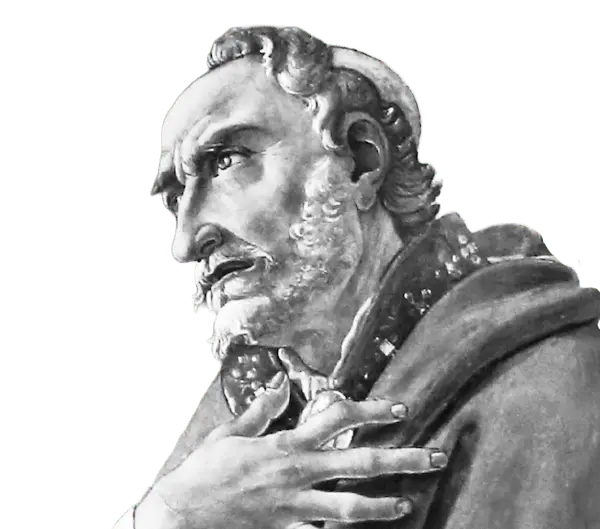
Augustine of Hippo Sermon
Christ: David's Son and David's Lord
The Paradox of Christ's Identity
1. The question that Jesus proposed to the Jews is one that Christians should be able to answer. For the Lord Jesus Christ, who proposed it to the Jews, did not solve it for them. For the Jews, I mean, He did not solve it—but for us, He has. Let me remind you, beloved, and you'll find that He has indeed solved it.
But first, consider the complexity of the question. Jesus asked the Jews "what they thought of the Christ, whose Son He was to be" (Matthew 22:42). They too were expecting the Christ. They read about Him in the prophets and anticipated His coming. Yet when He came, they killed Him. In the same prophetic texts where they read that Christ would come, they should have read that they would kill Christ. They hoped for His future coming as foretold by the prophets, but they did not foresee their future crime.
Jesus questioned them about the Christ, not as if He were unknown to them, or as if they had never heard His name, or as if they had never hoped for His coming. They are still in error because they continue to hope for Him even now. We also hope for Him—but we hope for Him as One who will come as Judge, not to be judged. The holy prophets foretold both: that He would first come to be judged unjustly, and that He would come afterward to judge with righteousness.
"What do you think about the Christ?" Jesus asked. "Whose Son is He? They answered Him, 'The Son of David.'" This was entirely in accordance with the Scriptures. But He continued, "How then does David in the Spirit call Him 'Lord,' saying, 'The LORD said to my Lord, "Sit at My right hand, till I make Your enemies Your footstool"'? If David then calls Him 'Lord,' how is He his Son?" (Matthew 22:42-45).
2. Here we need to be careful, lest we think Christ denied being the Son of David. He did not deny it—He was inquiring about how it could be. "You have said that Christ is the Son of David," He was saying. "I do not deny it. But David calls Him Lord. Tell me how He is David's son, yet also David's Lord. Tell me how." They did not tell Him but remained silent.
Let us answer through Christ's own explanation. Where do we find it? Through His Apostle. But first, how do we prove that Christ Himself has explained it? The Apostle says, "Do you seek a proof of Christ speaking in me?" (2 Corinthians 13:3). So Christ has answered this question through the Apostle.
First, what did Christ say through the Apostle to Timothy? "Remember that Jesus Christ, of the seed of David, was raised from the dead according to my gospel" (2 Timothy 2:8). Here we see that Christ is the Son of David. How is He also David's Lord? Tell us, O Apostle: "who, being in the form of God, did not consider it robbery to be equal with God" (Philippians 2:6).
Now you can recognize David's Lord—our Lord, the Lord of heaven and earth, the Lord of the angels, equal with God, in the form of God. But how is He David's Son? Note what follows. The Apostle shows you David's Lord by saying, "who, being in the form of God, did not consider it robbery to be equal with God." And how is He David's Son? "But He emptied Himself, taking the form of a servant, being made in the likeness of men; and being found in human form, He humbled Himself, becoming obedient to death, even death on a cross. Therefore God also has highly exalted Him" (Philippians 2:7-9).
Christ "of the seed of David," the Son of David, rose again because "He emptied Himself." How did He "empty Himself" ? By taking on what He was not, not by losing what He was. He "emptied Himself" ; He "humbled Himself." Though He was God, He appeared as man. He was despised as He walked on earth, He who made the heavens. He was despised as though a mere man, as though without power. Yes, not only despised, but killed.
He was that stone that lay on the ground, which the Jews stumbled against and were shaken. As He Himself says, "Whoever falls on this stone will be broken; but on whomever it falls, it will grind him to powder" (Matthew 21:44). First, He lay low, and they stumbled against Him; He will come from above, and He will "grind to powder" those who have been "broken."
3. You have now heard that Christ is both David's Son and David's Lord: David's Lord always, David's Son in time; David's Lord, born of the substance of His Father; David's Son, born of the Virgin Mary, conceived by the Holy Spirit. Let us hold fast to both truths. One will be our eternal home; the other is our deliverance from our present exile. For unless our Lord Jesus Christ had chosen to become human, humanity would have perished.
He became what He had made, so that what He had made would not perish. Truly human, truly God—God and human, the whole Christ. This is the Catholic faith. Whoever denies that Christ is God is a Photinian; whoever denies that Christ is human is a Manichean. Whoever confesses that Christ is God equal with the Father and truly human, that He truly suffered and truly shed His blood (for the Truth would not have set us free if He had given a false price for us)—whoever confesses both truths is Catholic.
Such a person has both the destination and the way. The destination: "In the beginning was the Word" (John 1:1); the destination: "being in the form of God, He did not consider it robbery to be equal with God" (Philippians 2:6). The way: "The Word became flesh" (John 1:14); the way: "He emptied Himself, taking the form of a servant" (Philippians 2:7).
He is the home we are traveling toward; He is the way by which we travel. Let us go to Him through Him, and we will not go astray.