
Christ's Humility at the Wedding Feast
Augustine of Hippo Sermon
Christ's Humility at the Wedding Feast
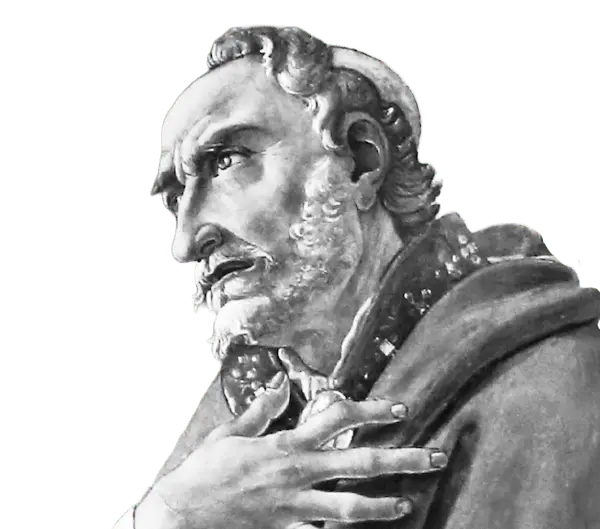
Augustine of Hippo Sermon
Christ's Humility at the Wedding Feast
The Humility of Christ
1. You know, brothers and sisters—for you have learned it as believers in Christ, and we continuously remind you through our ministry—that Christ's humility is the medicine for human pride. Humanity would not have perished had we not been swollen with pride. For as Scripture says, "Pride is the beginning of all sin" (Ecclesiasticus 10:13). Against the beginning of sin, the beginning of righteousness was necessary.
If pride is the beginning of all sin, how could the swelling of pride be cured if God had not humbled Himself? Let people be ashamed of their pride, seeing that God has humbled Himself. Yet when we tell someone to humble themselves, they often respond with disdain. When people are injured, it is pride that makes them seek revenge. Because they refuse to humble themselves, they desire vengeance—as if another person's punishment could benefit them. Someone who has been hurt and wronged wants revenge; they seek their own remedy in another's punishment and gain only greater torment for themselves.
The Lord Christ, therefore, chose to humble Himself in all things, showing us the way—if only we think it right to walk in it.
2. Among His other acts, look—the Virgin's Son comes to a wedding, though He, being with the Father, instituted marriage in the first place. As the first woman, through whom sin entered the world, was made from a man without a woman, so the Man by whom sin was removed was born of a woman without a man. Through the first, we fell; through the second, we rise.
What did He do at this wedding? He turned water into wine. What greater sign of power? He who had power to do such things didn't hesitate to be in need. He who made wine from water could also have made bread from stones. The power was the same, but when the devil tempted Him, Christ refused. You know that when the Lord Christ was tempted, the devil suggested this to Him. For He was hungry—this too He allowed Himself to be, for this too was part of His humiliation.
The Bread was hungry, the Way grew weary, saving Health was wounded, and Life died. When He was hungry, as you know, the tempter said to Him, "If You are the Son of God, command that these stones become bread" (Matthew 4:3). And He answered the tempter, teaching you how to answer temptation. For the general fights so that soldiers may learn. What answer did He give? "Man shall not live by bread alone, but by every word of God" (Matthew 4:4).
He didn't make bread from stones, though He could have done so as easily as He made wine from water. He chose not to, to show how to reject the tempter's will. The tempter can only be overcome by being despised. After Christ overcame the devil's temptation, "angels came and ministered to Him" (Matthew 4:11). Since He had such great power, why did He do one miracle but not the other? Read, or recall what you just heard—when He turned water into wine, what did the Evangelist add? "And His disciples believed in Him" (John 2:11). Would the devil have believed in Him in the other instance?
3. So He who could do such great things was hungry, thirsty, weary; He slept, was arrested, beaten, crucified, and killed. This is the way: walk by humility to reach eternity. Christ-God is the Country to which we go; Christ-Man is the Way by which we go. To Him we go, by Him we go; why should we fear getting lost?
He never departed from the Father, yet came to us. He nursed at His mother's breasts, yet sustained the world. He lay in a manger, yet fed the angels. He is both God and Man—the same God who is Man, the same Man who is God. Yet He is not God in that nature in which He is Man: He is God in that He is the Word; Man in that the Word became Flesh. He remains God while assuming human flesh, adding what He was not without losing what He was.
Therefore, having suffered in this humiliation, having died and been buried, He has now risen and ascended into heaven. There He is, sitting at the Father's right hand; and here He is, needy among His poor. Yesterday I explained this to you when discussing what He said to Nathanael: "You will see greater things than these... you will see heaven open, and the angels of God ascending and descending upon the Son of Man" (John 1:50-51). We explored the meaning of this at some length. Must we repeat it all today? Those who were present should remember. Yet I'll briefly review it.
4. He wouldn't say "ascending to the Son of Man" unless He were above; He wouldn't say "descending to the Son of Man" unless He were also below. He is both above and below: above in Himself, below in us; above with the Father, below in us. This explains the voice that spoke to Saul: "Saul, Saul, why are you persecuting Me?" (Acts 9:4). He wouldn't say "Saul, Saul" unless He were above. But Saul wasn't persecuting Him above. So He who was above wouldn't have said "Why are you persecuting Me?" unless He were also below.
Fear Christ above; recognize Him below. Have Christ above bestowing bounty; recognize Him here in need. Here He is poor; there He is rich. That Christ is poor here, He Himself tells us: "I was hungry, I was thirsty, I was naked, I was a stranger, I was in prison" (Matthew 25:35-36). To some He said, "You ministered to Me," and to others, "You did not minister to Me" (Matthew 25:40, 45).
So we've established that Christ is poor. That Christ is rich—who doesn't know that? Even here, wasn't it a display of His riches to turn water into wine? If someone who has wine is rich, how much richer is the one who makes wine? So Christ is both rich and poor: as God, rich; as Man, poor. Yet even as the true Man who has ascended to heaven and sits at the Father's right hand, He is still poor and hungry here, thirsty and naked.
5. What about you? Are you rich or poor? Many tell me, "I am poor," and they speak the truth. I recognize some poor people who have something and others who lack everything. But some have much gold and silver. If only they would acknowledge themselves as poor! They will recognize their poverty if they acknowledge the poor around them. But how is it? However much you possess, you rich person—whoever you are—you are still God's beggar.
The hour of prayer arrives, and there I'll prove it to you. You make your petition. How can you not be poor when you're making a petition? I'll say more: you ask for bread. Won't you have to say, "Give us this day our daily bread" (Matthew 6:11)? You, who ask for daily bread—are you poor or rich?
Yet Christ says to you, "Give Me from what I have given you. For what did you bring here when you came? You found here all the things I created; you brought nothing, and you will take nothing away. Why will you not give Me from what is Mine? For you are full, and the poor person is empty."
"Consider your origins; you were both born naked. You found great abundance here; did you bring anything with you? I ask for what is Mine; give, and I will repay. You have found Me a generous giver; now make Me your debtor. It's not enough to say, 'You have found Me a generous giver, now make Me your debtor.' Let Me consider you as lending with interest. You give Me little; I will repay more. You give Me earthly things; I will repay with heavenly things. You give Me temporal things; I will restore eternal things. I will restore you to yourself when I have restored you to Me."