
Christ's Relationship with the Father
Augustine of Hippo Sermon
Christ's Relationship with the Father
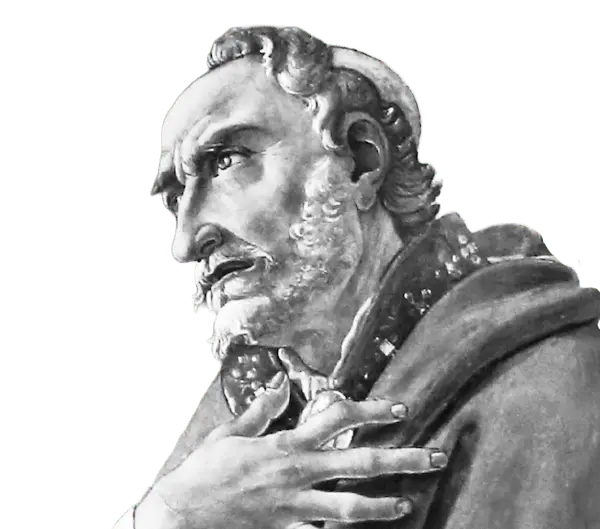
Augustine of Hippo Sermon
Christ's Relationship with the Father
The Son's Unity with the Father
1. What does it mean, brothers, when we hear the Lord saying, "He who believes in Me, believes not in Me but in Him who sent Me" (John 12:44)? It is good for us to believe in Christ, especially since He Himself has said what you just heard: that "He came as a light into the world, and whoever believes in Him should not abide in darkness, but have the light of life" (John 12:46, 8:12). It is good to believe in Christ; indeed, it's a great evil not to believe in Christ.
But since Christ the Son is whatever He is because of the Father, while the Father is not from the Son but is the Father of the Son, Christ commends faith in Himself to us while directing the honor to His Source.
2. Hold this as a firm and settled truth, if you want to remain Catholic: God the Father begot God the Son outside of time, and made Him of a Virgin in time. The first birth transcends time; the second birth illuminates time. Both births are marvelous—one without a mother, the other without a father.
When God begot the Son, He begot Him from Himself, not from a mother. When the mother gave birth to her Son, she did so as a Virgin, not through a man. The Son was born of the Father without beginning; He was born of a mother today at an appointed beginning. Born of the Father, He created us; born of a mother, He restored us. He was born of the Father so that we might exist; He was born of a mother so that we would not be lost.
But the Father begot Him equal to Himself, and everything that the Son is, He has from the Father. What God the Father is, however, He does not have from the Son. Accordingly, we say that the Father is God, not from anyone else; the Son is God from God. This is why all the Son's marvelous works and true teachings are attributed to the One from whom He comes. Yet He cannot be anything other than the One from whom He comes.
Adam was made a man and had the ability to become something different from what he was made. He was made righteous but could become unrighteous. But the Only-Begotten Son of God cannot change what He is. He cannot be changed into something else or diminished—He must remain what He is. He cannot be anything but equal to the Father.
Without doubt, the Father who gave everything to the Son through His birth, gave it to One who lacked nothing. The Father gave even this equality with Himself to the Son. How did the Father give it? Did He beget Him less and then add to Him to complete His form and make Him equal? If He had done that, He would have been giving to one in need.
But I've already told you what you should firmly hold: that everything the Son is, the Father gave Him—gave by birth, not to one who lacked anything. If He gave it through birth, not to one in need, then He both gave Him equality and, in giving equality, begot Him equal. And although one is one Person and the other is another Person, one is not one thing and the other another thing. What one is, that is what the other is. The one who is one is not the other; but what the one is, that is also what the other is.
3. "He who sent Me," Jesus says—you've heard it— "He gave Me a command what I should say and what I should speak, and I know that His command is everlasting life" (John 12:49-50). This is from John's Gospel—hold it fast. "He who sent Me gave Me a command what I should say and what I should speak, and I know that His command is everlasting life."
If only God would help me say what I wish! My poverty and His abundance constrain me. "He," Christ says, "gave Me a command what I should say and what I should speak, and I know that His command is everlasting life."
Look in the letter of this same John the Evangelist for what he said about Christ: "Let us believe in His true Son Jesus Christ. This is the true God and eternal life" (1 John 5:20). What does "the true God and eternal life" mean? The true Son of God is "the true God and eternal life."
Why did John say "His true Son" ? Because God has many sons, and therefore Christ needed to be distinguished by adding that He was the true Son. Not simply by saying He is the Son, but by adding, as I've said, that He is the true Son. He needed to be distinguished because God has many sons. We are sons through grace, but Christ is the Son by nature. We are made by the Father through Him; He Himself is what the Father is. Are we also what God is?
4. But someone might object, not understanding what he's saying: "This is why Jesus said, 'I and My Father are one' (John 10:30)—because they have agreement of will with each other, not because the Son's nature is the same as the Father's nature. For the Apostles too," he says (this is what he claims, not what I say), "the Apostles too are one with the Father and the Son."
What horrible blasphemy! "The Apostles," he says, "are one with the Father and the Son because they obey the will of the Father and the Son." Has he dared to say this? Then let Paul say, "I and God are one." Let Peter say it, let any of the prophets say, "I and God are one."
They do not say it—God forbid they should! They know they are of a different nature, a nature that needs to be saved. They know they are of a different nature, a nature that needs to be enlightened. No one says, "I and God are one." No matter what progress a person makes, no matter how much they may surpass others in holiness, no matter how greatly they may excel in virtue, they never say, "I and God are one." For if they have such excellence and therefore say it, by saying it they lose what they had.
5. Believe, then, that the Son is equal with the Father, but also that the Son is from the Father, and the Father is not from the Son. The source is with the Father, equality with the Son. For if the Son is not equal, He is not a true Son.
What are we saying, brothers? If the Son is not equal, He is less. If He is less, I ask the nature that needs salvation in its unbelief: "How is it that He was born less?" Answer me: Does one who is born less grow, or not? If He grows, then the Father grows old. But if the Son will always be what He was born, if He was born less, He will remain less. With this deficiency He will be perfect—born with this deficiency in the Father's form, He will never attain the Father's form.
This is how you who reject God attack the Son; this is how you heretics blaspheme the Son. What does the Catholic faith say? The Son is God, from God the Father. God the Father is not God from the Son. But God the Son is equal with the Father, born equal—not born less, not made equal, but born equal. What the Father is, that is also He who was born. Was the Father ever without the Son? God forbid! Remove your "ever" where there is no time. The Father always, the Son always. The Father without beginning of time, the Son without beginning of time. The Father never before the Son, the Father never without the Son.
But the Son is God from God the Father, and the Father is God but not from God the Son. We should not be displeased that the Son is honored in the Father. For the honoring of the Son gives honor to the Father; it does not diminish His divinity.
6. Regarding what I brought up, Jesus says, "And I know that His command is everlasting life" (John 12:50). Note, brothers, what I'm saying: "I know that His command is everlasting life." And we read in that same letter of John about Christ: "He is the true God and eternal life" (1 John 5:20). If the Father's command is "eternal life," and Christ the Son Himself is "eternal life," then the Son is Himself the Father's Command.
For how could the Son not be the Father's Command when He is the Father's Word? Or if you take the command given to the Son by the Father in a literal sense, as if the Father said to the Son, "I command You this, I want You to do that," with what words would He speak to the only Word? When He gave a command to the Word, did He look for words?
That the Father's Command is "eternal life," and that the Son Himself is "eternal life"—believe and receive this, believe and understand it, for the prophet says, "Unless you believe, you will not understand" (Isaiah 7:9). Do you not comprehend? Let your mind be enlarged. Hear the Apostle: "Be enlarged, do not be unequally yoked together with unbelievers" (2 Corinthians 6:13-14).
Those who refuse to believe this before they understand it are unbelievers. And because they've determined to be unbelievers, they will remain in their ignorance. Let them believe, therefore, so they may understand.
Most certainly, the Father's Command is "eternal life." Therefore, the Father's Command is the very Son who was born today—a Command not given in time but born. The Gospel of John exercises our minds, refines them, and frees them from carnal thinking, so that we may think of God not in a physical way but in a spiritual manner. Let this be enough for you, brothers, lest in a lengthy discussion the drowsiness of forgetfulness come over you.