
Christ the Good Shepherd and Church Unity
Augustine of Hippo Sermon
Christ the Good Shepherd and Church Unity
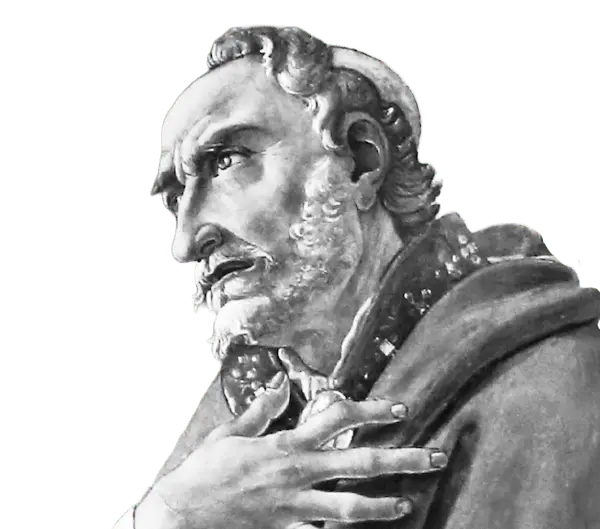
Augustine of Hippo Sermon
Christ the Good Shepherd and Church Unity
Christ: The One Good Shepherd
1. We have heard the Lord Jesus explaining to us the role of a good shepherd. In this, He has certainly given us to understand that there are good shepherds. Yet to prevent us from misunderstanding this multitude of shepherds, He says, "I am the good shepherd" (John 10:14). He then explains what makes Him the good shepherd: "The good shepherd," He says, "lays down his life for the sheep. But a hired hand, not being the shepherd, sees the wolf coming and flees, because he cares nothing for the sheep, since he is a hired hand" (John 10:11-13).
Christ, then, is the good shepherd. But what about Peter? Wasn't he also a good shepherd? Didn't he too lay down his life for the sheep? What about Paul? What about the rest of the apostles? What about the blessed bishops and martyrs who followed in their times? What about our holy Cyprian? Weren't they all good shepherds, not hired hands, of whom it is said, "Truly I say to you, they have received their reward" (Matthew 6:2)? All these were good shepherds, not merely because they shed their blood, but because they shed it for the sheep. They did this not out of pride but out of love.
2. Even among heretics, those who have suffered troubles for their wrongdoings and errors boast in the name of martyrdom. With this attractive disguise, they plunder more easily, for they are wolves. If you want to know how they should be regarded, hear that good shepherd, the Apostle Paul. Not all who surrender their bodies to the flames should be considered to have shed their blood for the sheep—some have done so against the sheep. "If I speak with the tongues of men and of angels," he says, "but have not love, I have become as sounding brass or a clanging cymbal. If I understand all mysteries and have all knowledge, and if I have all faith, so that I could remove mountains, but have not love, I am nothing" (1 Corinthians 13:1-2).
Faith that moves mountains is indeed a great thing. These are all great gifts, but, he says, if I have them without love, not they, but I am nothing. Up to this point, he hasn't touched on those who boast in their sufferings under the false name of martyrdom. Hear how he addresses them—or rather, pierces them to the heart: "If I distribute all my goods to the poor and deliver my body to be burned" (1 Corinthians 13:3). Now here they are. But note what follows: "but have not love, it profits me nothing."
Look—they've reached the point of suffering, even to shedding blood, even to having their bodies burned, yet it profits them nothing because love is lacking. Add love, and they all become profitable. Take love away, and everything else profits nothing.
3. What a great good is this love, brothers! What is more precious? What gives more light, strength, benefit, or security? God gives many gifts that even the wicked have, who will say, "Lord, we have prophesied in Your name, cast out demons in Your name, and done many mighty works in Your name" (Matthew 7:22). And He won't answer, "You haven't done these things." In the presence of such a great Judge, they won't dare to lie or boast about things they haven't done. But because they lacked love, He answers them all, "I don't know you" (Matthew 7:23).
How can anyone have even the smallest love who, even when confronted, doesn't love unity? It was to impress this unity on good shepherds that our Lord was unwilling to mention many shepherds. It's not that Peter wasn't a good shepherd, nor Paul, nor the rest of the apostles, nor the holy bishops after them, nor blessed Cyprian. All these were good shepherds. Yet despite speaking to good shepherds, He didn't commend good shepherds, but rather a good Shepherd. "I," He says, "am the good shepherd."
4. Let us question the Lord with what little understanding we have, and in the most humble conversation speak with so great a Master. What are You saying, O Lord, good Shepherd? For You are the good Shepherd who is also the good Lamb—at once Shepherd and Pasture, at once Lamb and Lion. What are You saying? Listen, and help us to understand.
"I," He says, "am the good shepherd." What about Peter? Is he not a shepherd, or is he a bad one? Let's see if he's not a shepherd. "Do you love Me?" You said to him, Lord. "Do you love Me?" And he answered, "I do love You." And You replied, "Feed My sheep" (John 21:15-17). You, Lord, by Your questioning, by the strong assurance of Your words, made a lover into a shepherd. He is a shepherd to whom You entrusted Your sheep to be fed. You Yourself entrusted them, so he is a shepherd.
Now let's see whether he's a good one. We find this from the very question and his answer. You asked whether he loved You, and he answered, "I do love You." You saw into his heart, that he spoke truth. Isn't he good, then, who loves such a great Good? Why was Peter, who had Your eyes in his heart as witnesses, sad because You asked him not once, but a second and third time? It was so that by a threefold confession of love, he might erase the threefold sin of denial.
Being sad at being asked repeatedly by Him who knew what He was asking and had given what He heard, why did Peter answer, "Lord, You know all things, You know that I love You" (John 21:17)? Would he lie in making such a confession, such a profession? In truth, he answered about his love for You, and from his inmost heart he gave expression to a lover's words. Now You have said, "A good man out of the good treasure of his heart brings forth good things" (Matthew 12:35). So he is both a shepherd and a good shepherd—nothing compared to the power and goodness of the Shepherd of shepherds, but nevertheless both a shepherd and a good one. All others like him are good shepherds too.
5. What does it mean, then, that to good shepherds You present one Shepherd only? It means that in one Shepherd, You teach unity. The Lord Himself explains this more clearly through me, reminding you, beloved, through this Gospel: "Hear what I have said: 'I am the good shepherd,' because all the rest, all the good shepherds, are My members." One Head, One Body, One Christ. So there is both the Shepherd of shepherds and the shepherds of the Shepherd, and the sheep with their shepherds under the Shepherd.
What is all this but what the Apostle says? "For as the body is one and has many members, and all the members of that one body, being many, are one body, so also is Christ" (1 Corinthians 12:12). If Christ is like this, with good reason does Christ, containing in Himself all good shepherds, present One, saying, "I am the good shepherd. I am, I alone am, all the rest with Me are one in unity. Anyone who feeds sheep apart from Me feeds them against Me. Anyone who doesn't gather with Me scatters" (Matthew 12:30).
Hear this unity expressed even more forcefully: "Other sheep I have which are not of this fold" (John 10:16). He was speaking to the first fold from the fleshly stock of Israel. But there were others of the stock of faith of this Israel who were still outside, among the Gentiles, predestined but not yet gathered in.
These He knew because He had predestined them. He knew them, who had come to redeem them with the shedding of His own Blood. He saw them who did not yet see Him; He knew them who did not yet believe in Him. "Other sheep I have," He says, "which are not of this fold," because they are not of the fleshly stock of Israel. But nevertheless, they will not remain outside this fold, "for them also I must bring, that there may be one flock and one shepherd" (John 10:16).
6. With good reason, then, to this Shepherd of shepherds, His Beloved, His Bride, His Beautiful One—made beautiful by Him, though formerly disfigured by sin, later made beautiful through pardon and grace—speaks in her love and longing for Him, saying, "Tell me where you feed your flock" (Song of Songs 1:7). Those who have tasted something of the sweetness of this love hear this properly, those who love Christ. For in them and about them the Church sings this in the Song of Songs—those who love Christ as He appeared without beauty, yet as the only truly Beautiful One.
"We saw Him," it is said, "and He had no form or comeliness" (Isaiah 53:2). This is how He appeared on the Cross, this is how He appeared crowned with thorns, disfigured, without beauty, as if He had lost His power, as if He were not the Son of God. This is how He seemed to the blind. Isaiah spoke this from the perspective of the Jews: "We saw Him, and He had no form or comeliness." When it was said, "If He is the Son of God, let Him come down from the cross. He saved others; Himself He cannot save" (Matthew 27:40, 42). And striking Him on the head with a reed, they said, "Prophesy to us, Christ! Who is the one who struck You?" (Matthew 26:68). This was because "He had no form or comeliness."
This is how you Jews saw Him. For "blindness in part has happened to Israel until the fullness of the Gentiles has come in" (Romans 11:25), until the other sheep arrive. Because blindness happened, you saw the Beautiful One as without beauty. "For had you known, you would not have crucified the Lord of glory" (1 Corinthians 2:8). But you did it because you did not know Him. And yet He, who seemed to be without beauty as He endured you, beautiful as He was, prayed for you: "Father," He says, "forgive them, for they do not know what they do" (Luke 23:34).
If He were without beauty, how could she love Him who says, "Tell me, O you whom my soul loves" (Song of Songs 1:7)? How could she love Him? How could she burn for Him? How could she fear so much to stray from Him? What pleasure would there be to love Him if He weren't beautiful? But how could she love Him so if He appeared to her as He did to those blind persecutors who didn't know what they were doing?
So what did she see that made her love Him? "You are fairer than the sons of men; grace is poured upon Your lips" (Psalm 45:2). So then from these lips of Yours, "Tell me, O you whom my soul loves. Tell me," she says, "O you whom" not my flesh but "my soul loves. Tell me where you feed your flock, where you rest at noon, lest I become like one who veils herself beside the flocks of your companions" (Song of Songs 1:7).
7. This passage seems obscure, and indeed it is, for it's a mystery of the sacred marriage chamber. She says, "The king has brought me into his chambers" (Song of Songs 1:4). This is a mystery of such a chamber. But you who are not kept outside this chamber as if profane, hear what you are, and say with her, if you love with her (and you do love with her if you are in her); say all together, yet let unity speak: "Tell me, O you whom my soul loves. For they had one heart and one soul directed toward God" (Acts 4:32). "Tell me where you feed your flock, where you rest at noon."
What does "noon" signify? "Great heat and great light." So then, "make known to me who are Your wise ones," fervent in spirit and brilliant in doctrine. "Make known to me those strong in Your right hand, learned in heart and wisdom." To them may I be joined in Your Body, with them united, with them enjoy You. Tell me then, "tell me, where you feed your flock, where you rest at noon," lest I fall upon those who say different things about You, who hold different views of You, who believe other things about You, who preach other things about You, and who have their own flocks and are Your companions only because they live from Your table and handle the sacraments of Your table.
Such companions are mentioned in the Psalm: "For if my enemy had reproached me, I could have borne it; if he who hated me had exalted himself against me, I could have hidden from him. But it was you, my companion, my guide, and my acquaintance; we took sweet counsel together, and walked to the house of God in company" (Psalm 55:12-14). Why then now against the house of the Lord in discord? Because "they went out from us, but they were not of us" (1 John 2:19).
Therefore, "O you whom my soul loves," that I may not fall upon such—not companions like Yours, but companions like Samson's, who did not keep faith with their friend but tried to corrupt his wife—therefore, that I may not fall upon such as these, "that I may not light upon them," that is, fall upon them, "as one who is veiled," that is, concealed and obscure, not established on the mountain. "Tell me" then, "O you whom my soul loves, where you feed your flock, where you rest at noon" —who are the wise and faithful in whom You especially rest, lest perhaps in blindness I fall upon flocks that are not Your flocks but the flocks of Your companions. For You didn't say to Peter, "Feed your sheep," but "Feed My sheep" (John 21:17).
8. Let then the "good Shepherd," the "One fairer than the sons of men," answer this beloved one. Let Him answer her whom He has made beautiful from among the children of men. Hear what He answers, understand, and be careful about what He warns against, love what He advises. What then does He answer? How free from soft caresses! Indeed, to her caresses He returns severity! He is severe that He may bind her closely, that He may keep her safe.
"If you do not know yourself," He says, "O fairest among women" (Song of Songs 1:8). For however fair others may be through the gifts of your Spouse, they are heresies—beautiful in outward appearance but not inwardly. They are outwardly beautiful and shine, they disguise themselves with the name of righteousness, "but all the beauty of the king's daughter is within" (Psalm 45:13).
"If you do not know yourself" —that you are one, that you are throughout all nations, that you are pure, that you should not corrupt yourself through disorderly contact with evil companions. "If you do not know yourself," that in uprightness "I have betrothed you to present you as a chaste virgin to Christ" (2 Corinthians 11:2), and that in uprightness you should present yourself to Me, lest through evil company, "as the serpent deceived Eve by his craftiness, so your minds may be corrupted from the simplicity that is in Christ" (2 Corinthians 11:3).
"If," I say, "you do not know yourself" to be such, "go your way" (Song of Songs 1:8). "Go your way." For to others I will say, "Enter into the joy of your lord" (Matthew 25:21). But to you I will not say "Enter," but "Go your way," that you may be among those who "went out from us" (1 John 2:19). "Go your way." That is, "if you do not know yourself," then "go your way." But if you know yourself, enter in.
"But if you do not know yourself, go your way by the tracks of the flocks, and feed your kids beside the shepherds' tents. Go your way by the tracks," not of "the flock" but "of the flocks," and feed not, like Peter, "My sheep," but "your kids beside the shepherds' tents" —not in the tent of the Shepherd, but in the tents of the shepherds, not in unity but in dissension, not established where there is one flock and one Shepherd. The beloved was strengthened, built up, made stronger, and prepared to die for her Spouse and to live with Him.
9. These words that I've quoted from the Holy Song of Songs, this kind of bridal song of the Bridegroom and the Bride (for it's a spiritual wedding, where we must live in great purity, since Christ has granted to the Church spiritually what His Mother had physically—to be at once a Mother and a Virgin)—these words, I say, the Donatists twist to their own perverted meaning. I won't hide from you what they say and how you can answer them. The Lord will help me briefly explain this.
When we begin to press them with the evidence of the Church's unity spread over the whole world, and ask them to show us any Scripture passage where God foretold that the Church would be in Africa, as if all other nations were lost, they typically quote this passage, saying, "Africa is under the midday sun. So when the Church asks the Lord where He feeds His flock, where He rests, He answers, 'Under the midday sun'"—as if the voice asking, "Tell me, O you whom my soul loves, where you feed your flock, where you rest," and the voice answering, "Under the midday sun," meant "in Africa."
If it's the Church that asks, and the Lord answers that He feeds in Africa because the Church is in Africa, then she who asks was not in Africa. "Tell me," she says, "O you whom my soul loves, where you feed your flock, where you rest," and He answers a Church from outside Africa, "Under the midday sun, in Africa I rest, in Africa I feed," as if to say, "I do not feed in you." I repeat, if she who asks is the Church, which no one disputes and which not even the Donatists deny, and she hears something about Africa, then she who asks is outside Africa. And since she is the Church, the Church is outside Africa.
10. But let me accept that Africa is under the midday sun, although Egypt is more directly under the meridian, the midday sun, than Africa. Those who know can acknowledge how this Shepherd is present in Egypt, and those who don't know should learn how large a flock He gathers there, how great a multitude of holy men and women who completely reject the world. That flock has so increased that it has driven superstitions away from there. To set aside how the growth of the Church has banished idolatry, which was firmly established there, I accept what you say, evil companions. I accept it completely. I agree that Africa is in the south, and Africa is indicated in the words, "Where do you feed your flock, where do you rest in the midday?"
But you too should note that up to this point, these are the words of the Bride, not yet the words of the Bridegroom. So far, it's the Bride who says, "Tell me, O you whom my soul loves, where you feed your flock, where you rest at noon, lest by chance I light, as one veiled." You deaf and blind ones, if in the word "midday" you see Africa, why in "one veiled" do you not see the Bride? "Tell me," she said, "O you whom my soul loves." Without doubt she's addressing her Spouse when she says "whom" [in the masculine] "my soul loves."
Just as if it were said, "Tell me, O you whom" [in the feminine] "my soul loves," we would understand that the Bridegroom was speaking these words to His Bride, so when you hear, "Tell me, O you whom" [in the masculine] "my soul loves, where you feed your flock, where you rest," add to this that the words that follow also belong to her: "in the midday." She is asking, "Where do you feed in the midday, lest by chance I light as one veiled upon the flocks of your companions."
I completely agree with your understanding of Africa being indicated by "the midday." But according to your interpretation, the Church of Christ beyond the sea is addressing her Spouse, fearful of falling into the African error. "O you whom my soul loves, tell me," teach me. For I hear that "in the midday," that is, in Africa, there are two factions, or rather many schisms. "Tell me," then, "where you feed your flock," which sheep belong to You, which fold You command me to love there, to which I should unite myself. "Lest by chance I light as one veiled." For they mock me as if I were concealed, they mock me as if I were destroyed, as if I existed nowhere else. "Lest," then, "as one veiled," as if hidden, "I light upon the flocks," that is, upon the congregations of heretics, your companions—the Donatists, Maximianists, Rogatists, and all the other plagues who gather apart and therefore scatter.
"Tell me," I pray, if I should seek my Shepherd there, that I may not fall into the error of rebaptizing. I exhort you, I plead with you by the holiness of such a marriage, love this Church, be in this holy Church, be this Church. Love the good Shepherd, the Spouse so beautiful, who deceives no one, who desires no one to perish. Pray also for the scattered sheep, that they too may come, that they too may acknowledge Him, that they too may love Him—that there may be one flock and one Shepherd.