
Denying Self and Following Christ
Augustine of Hippo Sermon
Denying Self and Following Christ
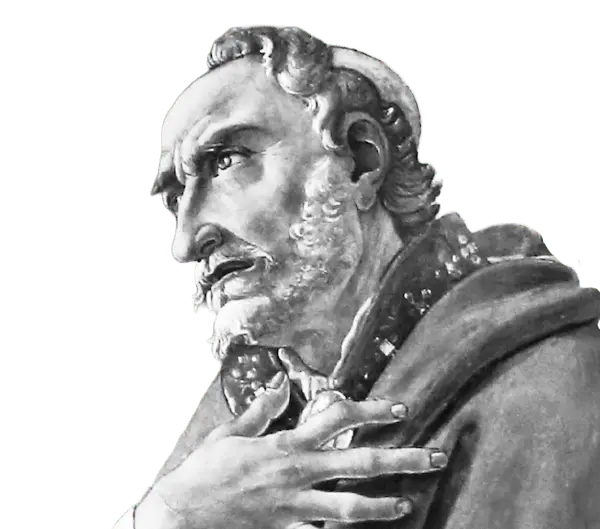
Augustine of Hippo Sermon
Denying Self and Following Christ
The Way of Self-Denial and the Two Worlds
1. What the Lord has commanded seems hard and burdensome when He says, "Whoever wants to come after Me must deny himself" (Mark 8:34). But what He commands is not hard or burdensome when He helps us to do what He commands. For both these statements are true: "Because of your words I have kept difficult paths" (Psalm 17:4), and also what He Himself said, "My yoke is easy and My burden is light" (Matthew 11:30). Whatever is hard in His commands, love makes easy.
We know what great things love itself can do. Very often this love is even objectionable and impure, yet consider what hardships people have endured, what indignities and intolerable things they have suffered to attain the object of their love! Whether it's a lover of money who is called greedy, or a lover of honor who is called ambitious, or a lover of beautiful women who is called sensual—who could list all types of love? Yet consider what labor all lovers undergo, and they're not even aware of their labors. Such a person feels the labor most when prevented from pursuing that labor.
Since most people are defined by what they love, and there should be no other concern for ordering our lives than choosing what we ought to love, why are you surprised if the person who loves Christ and wishes to follow Christ denies himself for love of Christ? For if by loving himself a person is lost, surely by denying himself he is found.
2. Humanity's first downfall was self-love. If people had not loved themselves, if they had preferred God to themselves, they would have been willing to remain subject to God. They wouldn't have turned away from His will to do their own. For this is what self-love means: to do one's own will. Instead, prefer God's will. Learn to love yourself by not loving yourself.
To understand that it's harmful to love oneself, hear what the Apostle says: "People will be lovers of themselves" (2 Timothy 3:2). Can someone who loves himself have any sure trust in himself? No, because he begins to love himself by forsaking God. He is driven away from himself to love things outside himself, to such a degree that when the Apostle had said, "People will be lovers of themselves," he immediately added, "lovers of money."
Now you see that you're looking outward. You began by loving yourself: stand in yourself if you can. Why do you go outside yourself? Have you, as a rich person, become a lover of money? You've begun to love what is outside you, and you've lost yourself. When a person's love goes away from himself to things outside, he begins to share in the emptiness of his vain desires. Like a spendthrift, he wastes his strength. He's scattered, exhausted, without resources or strength. He feeds swine, and wearied with this task of feeding swine, he at last remembers what he once was and says, "How many of my father's hired servants have more than enough bread, but I perish here with hunger!" (Luke 15:17).
But when the son in this parable says this—the one who had squandered all he had on prostitutes, who had wanted in his own control what was being well kept for him with his father, who wanted it at his own disposal and wasted it all and was reduced to poverty—what is said of him? "When he came to himself" (Luke 15:17). If "he came to himself," he had gone away from himself. Because he had fallen away from himself and gone away from himself, he first returns to himself so that he may return to the state from which he had fallen by falling away from himself. Just as by falling away from himself he still remained within himself, so by returning to himself he should not remain in himself, or he would go away from himself again.
Returning to himself so that he wouldn't remain in himself, what did he say? "I will arise and go to my father" (Luke 15:18). See from whom he had fallen away: he had fallen away from his father. He had fallen away from himself; he had gone away from himself to things that are outside. He returns to himself and goes to his father, where he can keep himself secure.
So if he had gone away from himself, then in returning to himself (from whom he had gone away) so that he may "go to his father," he must deny himself. What does "deny himself" mean? He should not trust in himself, he should recognize that he is human, and he should keep in mind the words of the prophet, "Cursed is the one who trusts in mankind" (Jeremiah 17:5). He should withdraw himself from himself, but not towards things beneath him. He should withdraw himself from himself so that he may cling to God.
Whatever good he has, let him commit to the One by whom he was made. Whatever evil he has, he has made it for himself. The evil in him God did not make—let him destroy what he himself has done, by which he has been undone. "Let him deny himself," Jesus says, "and take up his cross, and follow Me" (Mark 8:34).
3. To where must the Lord be followed? We know where He has gone—we celebrated the solemn memorial of it just a few days ago. He has risen again and ascended into heaven. That's where we must follow Him. We shouldn't despair of this, because He Himself has promised it, not because any human can accomplish it on their own.
Heaven was far away from us before our Head had gone into heaven. But now, why should we despair if we are members of that Head? Surely we should follow Him there. Who wouldn't want to follow Christ to such a place? Especially since we experience such great hardship on earth with fears and pains. Who wouldn't want to follow Christ there, where there is supreme happiness, supreme peace, and everlasting security?
It's good to follow Him there, but we must see by what path we are to follow. For the Lord Jesus didn't say these words after He had risen from the dead. He had not yet suffered; He still had to face the cross, humiliation, insults, scourging, thorns, wounds, mockery, and death. The path seems rough—it makes you hesitate; you don't want to follow. But follow anyway. The path that humanity has made for itself is rough, but what Christ has walked has been worn smooth.
Who wouldn't want to be exalted? Everyone finds elevation appealing, but humility is the step to it. Why do you overstep your bounds? You're likely to fall, not ascend. Begin with the step, and you have started ascending. The two disciples were reluctant to see this step of humility when they said, "Lord, grant that one of us may sit at your right and the other at your left in your kingdom" (Mark 10:37). They sought exaltation but didn't see the step. The Lord showed them the step. For what did He answer them? "You who seek the hill of exaltation, can you drink the cup of humiliation?" Therefore He doesn't simply say, "Let him deny himself and follow Me" in just any way, but He said more: "Let him take up his cross and follow Me."
4. What does "take up his cross" mean? Let him bear whatever trouble he has; that's how he should follow Me. For when he begins to follow Me by conforming to My life and teachings, he will have many who oppose him, many who hinder him, many who discourage him, and that even from among those who are, so to speak, Christ's companions. Those who tried to prevent the blind men from calling out were walking with Christ. So whether they're threats or flattery, or whatever hindrances there may be, if you wish to follow, turn them into your cross, bear it, carry it, don't collapse beneath it.
There seems to be an encouragement to martyrdom in these words of the Lord. If there's persecution, shouldn't all things be put aside for Christ's sake? The world is loved, but let Him be preferred by whom the world was made. Great is the world, but greater is He by whom the world was made. Beautiful is the world, but more beautiful is He by whom the world was made. Sweet is the world, but sweeter is He by whom the world was made. The world is evil, but good is He by whom the world was made.
How can I explain and untangle what I've said? May God help me! For what have I said? What have you applauded? See, it's just a question, and yet you've already applauded. How is the world evil if He by whom the world was made is good? Didn't God make all things, "and behold they were very good" (Genesis 1:31)? Doesn't Scripture at each stage of creation testify that God made it good by saying, "And God saw that it was good," and at the end summarize them all together by stating that God had made them, "and behold they were very good" ?
5. How then is the world evil, and He good by whom the world was made? How? "The world was made through Him, and the world did not know Him" (John 1:10). The world was made through Him—heaven and earth and all things in them. "The world did not know Him" —the lovers of the world, the lovers of the world and the despisers of God. That "world did not know Him." So the world is evil because those who prefer the world to God are evil. He is good who made the world—the heaven, earth, sea, and the people themselves who love the world.
This one thing alone—that they love the world and don't love God—He did not make in them. But the people themselves, everything that belongs to their nature, He made. What belongs to their guilt, He did not make. This is what I said a little while ago: "Let people erase what they have made, and then they will be pleasing to Him who made them."
6. For there is among people themselves a good world also, but one that has been made good from being evil. If by "world" you mean people (setting aside what we call the world—the heaven and earth and all things in them), if you take "world" to mean people, the whole world was made evil by the first person who sinned. The whole mass was corrupted at its root. God made people good; as Scripture says, "God made people upright, but they have sought out many schemes" (Ecclesiastes 7:29).
Turn from these "many" to One, gather up your scattered things into one. Flow together, fence yourself in, remain with the One; don't go to many things. There is blessedness. But we have flowed away and gone on to destruction. We were all born with sin, and to that sin with which we were born, we've added more by our evil living. The whole world became evil.
But Christ came, and He chose what He had made, not what He found. For He found all evil, and by His grace He made them good. And so a different "world" was created, and the "world" now persecutes the "world."
7. What is the "world" that persecutes? That of which we are told, "Do not love the world or the things in the world. If anyone loves the world, the love of the Father is not in him. For all that is in the world—the desire of the flesh, the desire of the eyes, and the pride in possessions—is not from the Father but is from the world. And the world and its desire are passing away, but whoever does the will of God lives forever" (1 John 2:15-17), just as God lives forever.
So I've spoken of two "worlds"—the "world" that persecutes and the one that is persecuted. What is the "world" that persecutes? "All that is in the world—the desire of the flesh, the desire of the eyes, and the pride in possessions, which is not from the Father but from the world; and the world is passing away." That's the "world" that persecutes. What is the "world" that is persecuted? "Whoever does the will of God lives forever," just as God lives forever.
8. But notice that the thing that persecutes is called the "world." Let's see whether what suffers persecution is also called the "world." Are you deaf to Christ's voice or rather to Holy Scripture, which testifies, "God was in Christ reconciling the world to Himself" (2 Corinthians 5:19)? "If the world hates you, know that it has hated Me before it hated you" (John 15:18). See, the "world" hates. What does it hate but the "world"? Which "world"? "God was in Christ reconciling the world to Himself."
The condemned "world" persecutes; the reconciled "world" suffers persecution. The condemned "world" is everything outside the Church; the reconciled "world" is the Church. For He says, "The Son of Man did not come to judge the world, but that the world might be saved through Him" (John 3:17).
9. Now in this holy, good, reconciled, and saved world—or rather, the world to be saved, already saved in hope, "for in hope we were saved" (Romans 8:24)—in this world, that is, in the Church, which fully follows Christ, He has said to everyone: "Whoever will follow Me, let him deny himself." This isn't just for virgins to hear while married women ignore it, or for widows to hear while women who still have husbands ignore it, or for monks to hear while married men ignore it, or for the clergy to hear while the laity ignore it. No, let the whole Church, the whole body, all the members, distinguished and distributed throughout their various roles, follow Christ.
Let the whole Church follow Him—that one Church, let the dove follow Him, let the bride follow Him, let her who has been redeemed and endowed with the Bridegroom's blood follow Him. There, virginal purity has its place; there, widowed faithfulness has its place; there, married fidelity has its place. But adultery has no place there, and no place has promiscuity—behavior that is unlawful and deserves punishment.
But let these various members which have their place there, in their kind and place and measure, "follow Christ." Let them "deny themselves," that is, let them not presume anything of themselves. Let them "take up their cross," that is, let them in the world endure for Christ's sake whatever the world may bring upon them. Let them love Him, who alone does not deceive, who alone is not deceived, who alone does not deceive. Let them love Him, for what He promises is true.
But because He doesn't give at once, faith wavers. Hold on, persevere, endure, bear the delay—in doing this, you have taken up the cross.
10. Don't let the virgin say, "I alone will be there." No, Mary will not be there alone, but the widow Anna will also be there. Don't let the woman who has a husband say, "The widow will be there, not I," for it's not that Anna will be there and Susanna will not. By all means, let those who would be there prove themselves by this test: that those who have a lower place here do not envy but love those in a better place.
For example, my brothers and sisters, so that you understand me: one person has chosen a married life, another a life of sexual abstinence. If the one who has chosen the married life has adulterous desires, that person has "looked back." They have desired what is unlawful. And the one who would want to abandon their commitment to sexual abstinence and return to married life has also "looked back." They have chosen what is in itself lawful, yet they have "looked back."
Is marriage then to be condemned? No. Marriage is not to be condemned, but consider where the person had been who chose it. They had already advanced beyond it. When they were living as a young person in self-indulgence, marriage was ahead of them; they were making their way toward it. But when they had chosen abstinence, marriage was behind them.
"Remember," says the Lord, "Lot's wife" (Luke 17:32). Lot's wife, by looking back, became a pillar of salt. So whatever point anyone has been able to reach, let them fear to "look back" from there. Let them walk in the way, let them "follow Christ." "Forgetting what lies behind and straining forward to what lies ahead, let them press on toward the goal for the prize of the heavenly call of God in Christ Jesus" (Philippians 3:13-14).
Let those who are married regard the unmarried as above themselves. Let them acknowledge that they are better. Let them love in others what they themselves do not have, and let them love Christ in them.