
Did Jesus Speak Falsely? The Truth Behind an Apparent Contradiction
Augustine of Hippo Sermon
Did Jesus Speak Falsely? The Truth Behind an Apparent Contradiction
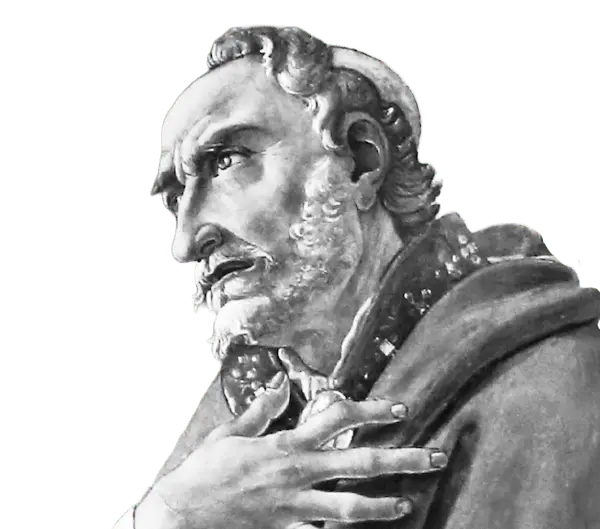
Augustine of Hippo Sermon
Did Jesus Speak Falsely? The Truth Behind an Apparent Contradiction
Resolving the Apparent Contradiction
1. With the Lord's help, I intend to address this section of the Gospel we've just heard. There's considerable difficulty here, lest truth be endangered and falsehood triumph. Not that truth can ever perish or falsehood ultimately prevail.
Listen first to the difficulty this passage presents. Once you understand the problem, pray that I may be adequate to its solution. "The Jewish Feast of Tabernacles was near" (John 7:2). These appear to be the days they observe even now, when they build temporary shelters. This celebration is named for these structures, since "tabernacle" means a temporary shelter, and the festival commemorates building such shelters.
The Jews observed these days as feast days. It was called one feast day, not because it lasted only one day, but because it was a continuous celebration—just like the Passover and the Feast of Unleavened Bread, which clearly extend over multiple days. This annual festival was approaching in Judea, while Jesus was in Galilee, where He had been raised and had relatives and family members whom Scripture calls "His brothers."
"His brothers, therefore," as we heard in the reading, "said to Him, 'Leave here and go to Judea, that Your disciples also may see Your works that You are doing. For no one does anything in secret when he seeks to be known openly. If You do these things, show Yourself to the world'" (John 7:3-4). Then the Evangelist adds, "For even His brothers did not believe in Him" (John 7:5). If they didn't believe in Him, their words came from envy.
"Jesus said to them, 'My time has not yet come, but your time is always ready. The world cannot hate you, but it hates Me because I testify of it that its works are evil. You go up to this feast. I am not going up to this feast, for My time has not yet fully come'" (John 7:6-8). The Evangelist continues, "When He had said these words, He remained in Galilee. But when His brothers had gone up, then He also went up to the feast, not openly, but as it were in secret" (John 7:9-10). That's the extent of the difficulty; the rest is clear.
2. What's the difficulty? What creates the confusion? What's at risk? The concern is that the Lord Himself—or to speak more directly, that Truth itself—might be thought to have lied. For if we accept that He lied, those who are weak will find justification for their own lying. Those who think Jesus lied say, "He stated He wouldn't go up to the feast, but then He went up."
First, let's examine whether someone who says something but doesn't do it is necessarily lying. For example, I tell a friend, "I'll see you tomorrow," but some greater necessity prevents me. Have I spoken falsely? When I made the promise, I meant what I said. But when something more important came up that prevented me from fulfilling my promise, I didn't intend to lie—I simply couldn't keep my promise.
I hope I don't need to work hard to convince you of this: someone who promises something and doesn't fulfill it isn't lying if something beyond their control prevents them from keeping their word.
3. But someone might object, "Can you say this about Christ—that He was either unable to do what He wanted or didn't know what would happen?" You raise a good point; share my concern about this question. Would we dare say Christ lies when we wouldn't even dare suggest He's weak in power?
In my judgment, as far as I can discern within my limitations, I would rather someone be deceived about something than lie about anything. Being deceived stems from weakness, but lying comes from wickedness. The Scripture says, "You hate all workers of iniquity" (Psalm 5:5). And immediately after, "You shall destroy those who speak falsehood" (Psalm 5:6). Either "iniquity" and "falsehood" are equivalent, or "You shall destroy" is more severe than "You hate." For someone who is hated isn't immediately punished with destruction.
We could debate whether there's ever a necessity to lie—but I'm not addressing that question now. It's a complex issue with many layers. I don't have time to unravel them fully, so let's defer that question to another time. Perhaps God's help will resolve it without any words from me.
Pay attention to the distinction between what I've deferred and what I want to address today. Whether one may ever lie in any circumstance—this difficult and obscure question I postpone. But whether Christ lied, whether Truth itself spoke falsely—this is what the Gospel reading has prompted me to discuss today.
4. Let me briefly explain the difference between being deceived and lying. Someone is deceived who thinks what they're saying is true and therefore says it because they believe it's true. If what this deceived person says were actually true, they wouldn't be deceived. If it were not only true, but they also knew it to be true, they wouldn't be lying.
A person is deceived when something is false but they think it's true. The error comes from human weakness, not from a corrupt conscience. But whoever believes something to be false yet asserts it as true—that person is lying.
See the distinction, my brothers—you who have been raised in the Church, instructed in the Scriptures, and aren't uninformed, simple, or ignorant. Some of you are learned and educated, well-versed in various kinds of literature. And those of you without what is called a liberal education have still been nourished by God's Word.
If I must work hard to explain my meaning, please help me with your attentive listening and thoughtful consideration. You cannot help unless you are helped, so let us pray for one another and look to our common Helper.
One who is deceived thinks something false is true; but one who lies thinks something is false and presents it as true, whether it's actually true or false. Notice what I added: "whether it's actually true or false." Someone who thinks something is false but presents it as true is lying; they intend to deceive.
What does it matter if what they say happens to be true? They think it's false, yet present it as true. What they say may be true in itself, but for them it's a lie. Their conscience doesn't hold what they're saying; in their mind they believe one thing to be true but declare something else as truth. Such a person has a double heart, not a single one. They don't express what they actually believe.
Scripture has long condemned the double heart: "With deceitful lips, in a heart and a heart, they have spoken evil things" (Psalm 12:2). The phrase "in a heart and a heart" refers to a double heart. What is deceit? When one thing is done, another is pretended. Deceitful lips don't come from a single heart; they come from a double heart—"in a heart and a heart" means the heart is duplicitous.
5. How, then, should we think about the Lord Jesus Christ? Did He lie? If being deceived is a lesser evil than lying, would we dare say He lies when we wouldn't even dare suggest He could be deceived? He is neither deceived nor does He lie. Scripture truly says (and this should be understood of Christ), "Nothing false is said to the King, and nothing false shall come from His mouth" (Proverbs 16:13).
If this referred to any human king, let's still prefer Christ the King to any earthly ruler. But the truer understanding is that it speaks of Christ. Nothing false is said to Him because He isn't deceived, and nothing false comes from His mouth because He doesn't lie.
Let's examine how we should understand this Gospel passage, and not create a trap of falsehood based on heavenly authority. It would be absurd to explain the truth while making room for a lie. What are you teaching me, I ask you who are explaining this text? What would you have me learn? I don't know if you would dare say, "Falsehood." If you would, I'll plug my ears with thorns and leave before hearing your explanation of the Gospel.
Tell me what you want to teach me. I'm here, my ears are open, my heart is ready. But what will you teach? I won't belabor this. What will you teach me? Whatever learning you bring forward, whatever strength you show in your argument, tell me just one thing: are you going to teach me truth or falsehood?
What will he answer, lest I leave? What will he promise but truth? I'm listening attentively, eagerly expecting. But look—the one who promised to teach me truth now suggests falsehood about Christ. How can he teach truth if he claims Christ is false? If Christ is false, can I hope you'll tell me the truth?
6. Consider again. What are you claiming? That Christ spoke falsely? Where, I ask you? "Where He says, 'I am not going up to this feast,' but then went up."
I'd like to thoroughly examine this passage, if possible, to show that Christ didn't speak falsely. Even better, since I have no doubt that Christ didn't speak falsely, I'll either understand this passage or, if I don't understand it, defer judgment. But I will never say Christ spoke falsely. If I don't understand, I'll acknowledge my ignorance. Better to be ignorant with reverence than to make rash judgments.
Nevertheless, let's try to examine this with the help of the Truth Himself. Perhaps we'll find something that isn't a lie in the Truth. If I find a lie in my search, I've found nothing, because a lie is nothing.
Let's look at where you claim Christ lied. He'll say, "When He said, 'I am not going up to this feast,' but then went up." How do you know He said this? What if I were to say—not I, but someone else—"Christ didn't say this"? How would you refute them? You'd open the book, find the passage, point it out, confidently showing them the Gospel: "Look, read it—it's the Gospel you're holding."
But why are you so harshly confronting this weak person? Don't be so eager; speak more calmly. I have the Gospel in my hands, and what does it say? He answers, "The Gospel says Christ said what you deny." And you believe Christ said this because the Gospel says so? "Yes, exactly," he says.
I'm astonished that you'd claim Christ lies while saying the Gospel doesn't. When I speak of the Gospel, don't think of just the physical book—the parchment and ink. The Greek word "Gospel" means "good news" or "good message." The messenger doesn't lie, but does the One who sent him lie?
This messenger, the Evangelist John who wrote this—did he lie about Christ or tell the truth? Choose either position; I'm ready to hear your answer. If you say he spoke falsely, you have no way to prove Christ spoke those words. If you say John told the truth, then truth cannot flow from a fountain of falsehood.
Who is the fountain? Christ. John is the stream. The stream comes to me, and you say, "Drink confidently." Yet you make me uneasy about the Fountain itself, telling me there's falsehood in the Fountain, while saying to me, "Drink confidently."
What am I drinking? Are you saying John claimed Christ spoke falsely? Where did John come from? From Christ. Can the one who came from Christ tell me truth if the One he came from lied?
I've read clearly in the Gospel, "John was leaning on the Lord's breast" (John 13:23). There he surely drank in truth. What did he see as he leaned on the Lord's breast? What did he drink in but what he later poured out? "In the beginning was the Word, and the Word was with God, and the Word was God. He was in the beginning with God. All things were made through Him, and without Him nothing was made that was made. In Him was life, and the life was the light of men. And the light shines in the darkness, and the darkness did not comprehend it" (John 1:1-5). Nevertheless, the light shines, and even if I have some lack of understanding and cannot fully comprehend it, it still shines.
"There was a man sent from God, whose name was John. He came for a witness, to bear witness of the Light, that all through him might believe. He was not the Light" (John 1:6-8). Who wasn't the Light? John the Baptist. For John the Evangelist says, "He was not the Light," though the Lord says of him, "He was the burning and shining lamp" (John 5:35). A lamp can be lit and extinguished.
So what's the difference? Where are you looking? The one to whom the lamp bore witness "was the true Light" (John 1:9). Where John added "true," you're looking for a lie?
Listen again to this same Evangelist John pouring out what he drank in: "And we beheld His glory" (John 1:14). What glory did he see? "The glory as of the only begotten of the Father, full of grace and truth" (John 1:14).
See then, we should restrain weak or rash disputes and not presume falsehood of the Truth. Let's give the Lord what is due to Him; let's give glory to the Fountain so we may drink securely. "God is true, but every man a liar" (Romans 3:4). What does this mean? God is full; every person is empty. If we want to be filled, we must come to the One who is full. "Come to Him and be enlightened" (Psalm 34:5).
Moreover, if a person is empty because they lie, and they want to be filled, they should eagerly run to the fountain. They want to be filled because they're empty. But you say, "Beware of the fountain; there's falsehood there." Isn't that like saying, "There's poison there"?
7. "You've already said enough," someone might say. "You've already checked and corrected me. But tell me how He didn't speak falsely when He said, 'I am not going up,' but then went up."
I will explain if I can. But it's no small matter that even if I haven't established you in the truth, I've at least held you back from rash judgment. Nevertheless, I'll tell you what I think you already know if you remember the words I've already discussed.
The words themselves solve the difficulty. This feast was celebrated over many days. On this particular day—the day they expected—He didn't go up. But He did go up when He Himself decided to. Notice what follows: "When He had said these words, He remained in Galilee" (John 7:9). So He didn't go up on that feast day. His brothers wanted Him to go up first; that's why they had said, "Leave here for Judea" (John 7:3).
They didn't say, "Let's go," as if they would accompany Him, or "Follow us to Judea," as if they would go first. They spoke as if sending Him ahead of themselves. He wanted them to go before Him. He avoided this trap, showing His humanity while concealing His divinity—just as when He fled to Egypt. This wasn't due to any lack of power but to demonstrate truth by giving an example of caution. He did this so none of His servants would say, "I don't flee because it would be disgraceful," when flight might be necessary.
He would later tell His disciples, "When they persecute you in this city, flee to another" (Matthew 10:23), giving them this example Himself. Jesus was arrested when He chose to be; He was born when He chose to be. So that they wouldn't anticipate Him, announce His coming, and prepare traps, He said, "I am not going up to this feast" (John 7:8).
He said "I am not going up" to remain hidden. He added "this" so He wouldn't lie. He expressed something, suppressed something, and held back something—yet said nothing false, for "nothing false comes from His mouth" (Proverbs 16:13).
Finally, after He said these things, "when His brothers had gone up," the Gospel declares (pay attention, read what you objected to me, see if the passage itself doesn't solve the difficulty, see if I had to look elsewhere for an answer): The Lord was waiting for His brothers to go up first, so they wouldn't announce His coming beforehand. "When His brothers had gone up, then He also went up to the feast, not openly, but as it were in secret" (John 7:10).
What does "as it were in secret" mean? He acted as if in secret. Was His secrecy real? He didn't truly try to conceal Himself, since He had the power to avoid arrest whenever He wished. But through this concealment, He gave His vulnerable disciples—who couldn't prevent being arrested when they didn't want to be—an example of guarding against enemies' traps.
Later He went up openly and taught in the temple. Some said, "Look, He is speaking openly, and they say nothing to Him. Do the rulers know indeed that this is truly the Christ?" (John 7:25-26).
8. Now, if we turn our attention to ourselves, if we think of His Body, how we are in fact Him—for if we weren't, "Inasmuch as you did it to one of the least of these My brethren, you did it to Me" (Matthew 25:40) wouldn't be true. If we weren't Him, "Saul, Saul, why are you persecuting Me?" (Acts 9:4) wouldn't be true.
So we are Him, in that we are His members, His Body, and He is our Head—the whole Christ is both Head and Body. Perhaps He foresaw that we wouldn't observe the Jewish feast days, and this is what He meant by "I am not going up to this feast" (John 7:8).
See how neither Christ nor the Evangelist lied. Of these two, if I had to choose one, I would ask the Evangelist's pardon, but I wouldn't put the messenger ahead of the One who sent him.
Thanks be to God, in my judgment, what was obscure has been made clear. Your devotion will support me before God. I've resolved the question about both Christ and the Evangelist as best I could. Hold fast to the truth with me as people who love it; embrace love without contention.