
Explaining the Lord's Prayer
Augustine of Hippo Sermon
Explaining the Lord's Prayer
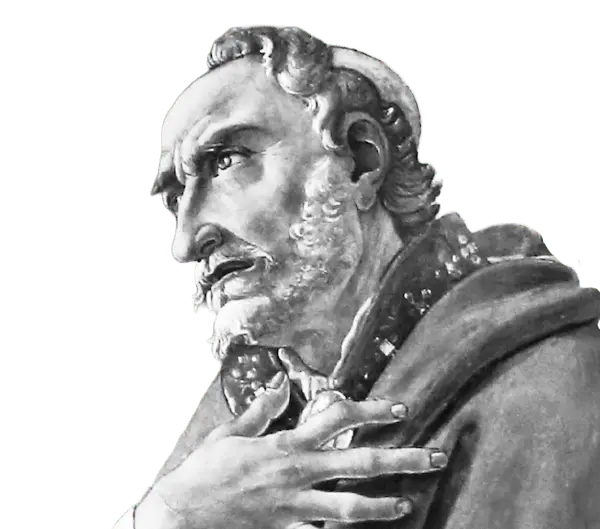
Augustine of Hippo Sermon
Explaining the Lord's Prayer
The Lord's Prayer for Baptismal Candidates
1. The order established for your instruction requires that you first learn what to believe, and afterward what to ask for. The Apostle says, "Whoever calls on the name of the Lord shall be saved" (Romans 10:13). Blessed Paul cited this testimony from the Prophet, who foretold the times when all people would call upon God: "Whoever calls on the name of the Lord shall be saved." Then Paul added, "How then shall they call on Him in whom they have not believed? And how shall they believe in Him of whom they have not heard? Or how shall they hear without a preacher? Or how shall they preach unless they are sent?" (Romans 10:14-15).
Therefore, preachers were sent. They proclaimed Christ. As they preached, people heard; by hearing they believed, and by believing they called upon Him. It was most correctly and truly said, "How shall they call on Him in whom they have not believed?" That's why you first learned what to believe, and today you have learned to call upon Him in whom you have believed.
2. The Son of God, our Lord Jesus Christ, has taught us a Prayer. Though He is the Lord Himself, as you have heard and confessed in the Creed, the Only Son of God, He would not remain alone. He is the Only Son, yet He chose not to be isolated. For to whom does He say, "Say, Our Father, who art in heaven" ? Who did He want us to call our Father, if not His own Father? Did He begrudge us this?
Human parents, after having one, two, or three children, sometimes fear to have more, lest they reduce the others to poverty. But since the inheritance Jesus promises us is one that many can possess without any reduction to each portion, He has called all nations into the fellowship of His brotherhood. The Only Son has countless brothers and sisters who say, "Our Father, who art in heaven."
So said those who came before us, and so will say those who come after us. See how many brothers and sisters the Only Son has obtained through His grace, sharing His inheritance with those for whom He suffered death. We had a father and mother on earth who gave us birth into a life of labor and death. But we have found other parents: God our Father and the Church our Mother, who give us birth into eternal life.
Let us consider, beloved, whose children we have become, and let us live in a way worthy of One who has condescended to be our Father. See how our Creator has lowered Himself to be our Father!
3. We have heard whom we should call upon, and with what hope of an eternal inheritance we have begun to have a Father in heaven. Now let us hear what we must ask of Him. What should we ask of such a Father? Don't we ask Him for rain today, and yesterday, and the day before? This isn't a great thing to ask of such a Father. Yet you see with what sighs and with what great desire we ask for rain when death is feared—when we dread what no one can escape.
Every person must die sooner or later, and yet we groan, pray, and labor in pain, crying out to God that we might die a little later. How much more earnestly should we cry out to Him that we may reach that place where we will never die!
4. Therefore we pray, "Hallowed be Your name." We ask Him that His name may be hallowed in us. His name is always holy in itself. How is His name hallowed in us, except by making us holy? Once we were not holy, and we are made holy through His name. But He is always holy, and His name is always holy. We pray for our own benefit, not for God's. We aren't wishing God well, since no harm can ever happen to Him. Rather, we wish what is good for ourselves—that His holy name may be hallowed in us, so that what is always holy may be hallowed in us.
5. "Your kingdom come." It will surely come whether we ask for it or not. Indeed, God has an eternal kingdom. When did He not reign? When did He begin to reign? His kingdom has no beginning and will have no end.
But so that we may understand that in this prayer too we are praying for ourselves and not for God (for we don't say, "Your kingdom come" as though we were asking God to reign), we shall be His kingdom if, believing in Him, we make progress in faith. All the faithful, redeemed by the blood of His only Son, will be His kingdom.
And this kingdom will come when the resurrection of the dead takes place. Then He will come Himself. And when the dead are raised, He will separate them, as He Himself says, "He will set some on the right hand, and some on the left" (Matthew 25:33). To those on the right hand He will say, "Come, you blessed of My Father, receive the kingdom" (Matthew 25:34).
This is what we desire and pray for when we say, "Your kingdom come" —that it may come to us. For if we are condemned, that kingdom will come to others, but not to us. But if we are among those who belong to the members of His only-begotten Son, His kingdom will come to us, and it will not be delayed.
Are there as many ages yet to come as have already passed? The Apostle John said, "My little children, it is the last hour" (1 John 2:18). But this is a long hour proportioned to this long day; see how many years this "last hour" lasts. Nevertheless, be like those who watch and sleep and rise again and reign. Let us watch now, let us sleep in death; at the end we shall rise again, and we shall reign without end.
6. "Your will be done on earth as it is in heaven." The third thing we pray for is that His will may be done on earth as it is in heaven. In this too, we wish for our own good. For the will of God must necessarily be done. It is God's will that the good should reign and the wicked be condemned. Is it possible that this will could not be done?
But what good do we desire for ourselves when we say, "Your will be done on earth as it is in heaven" ? Listen carefully. This petition can be understood in many ways, and many things should be considered when we pray, "Your will be done on earth as it is in heaven."
As Your angels do not offend You, may we also not offend You. Again, how do we understand "Your will be done on earth as it is in heaven" ? All the holy patriarchs, prophets, and apostles—all spiritual people—are like God's heaven, and we in comparison to them are earth. "Your will be done on earth as it is in heaven" means "as in them, so also in us."
Again, "Your will be done on earth as it is in heaven" : the Church of God is heaven, and His enemies are earth. So we wish well for our enemies, that they too may believe and become Christians, and that God's will may be done "on earth as it is in heaven."
Again, "Your will be done on earth as it is in heaven" : our spirit is heaven, and our flesh is earth. As our spirit is renewed by believing, may our flesh also be renewed by rising again, and may "the will of God be done on earth as it is in heaven."
Again, our mind, by which we see truth and delight in this truth, is heaven. As "I delight in the law of God according to the inward man" (Romans 7:22). What is earth? "I see another law in my members, warring against the law of my mind" (Romans 7:23). When this conflict has passed away and full harmony has been established between flesh and spirit, the will of God will be done on earth as it is in heaven.
When we repeat this petition, let us think of all these interpretations and ask them all of the Father. Now all three petitions we've mentioned, beloved, pertain to eternal life. For if God's name is hallowed in us, it will be for eternity. If His kingdom comes, where we will live forever, it will be for eternity. If His will is done on earth as it is in heaven, in all the ways I've explained, it will be for eternity.
7. Now come the petitions for this life of our pilgrimage. Therefore, the next part is: "Give us this day our daily bread." Give us eternal things, but also give us temporal things. You have promised a kingdom; don't deny us the means to survive. You will give everlasting glory with Yourself in the future; give us the support we need in this present world.
That's why we say "day by day" and "today" —in this present time. For when this life has passed away, will we still ask for daily bread? Then it won't be called "day by day" but only "today." Now it's called "day by day" because one day passes away and another follows. Will it be called "day by day" when there is only one eternal day?
This petition for daily bread should be understood in two ways: both as the necessary supply of bodily food and for our spiritual needs. There's a necessary supply of bodily food, without which we cannot live. This includes food and clothing, but the whole is understood through this part. When we ask for bread, we imply all our physical needs.
There is also spiritual food, which the faithful already know about—you too will know about it when you receive it at the altar of God. This too is "daily bread," necessary only for this life. Will we receive the Eucharist when we have come to Christ Himself and begun to reign with Him forever? So the Eucharist is our daily bread.
But let us receive it in such a way that we're nourished not only in body but also in spirit. The power conveyed there is unity. Being gathered into His body and made His members, we become what we receive. Then it will truly be our daily bread.
What I'm sharing with you now is also "daily bread." The daily lessons you hear in church are daily bread, and the hymns you hear and repeat are daily bread. These are all necessary in our state of pilgrimage.
But when we get to heaven, will we hear the word when we shall see the Word Himself? Will we read books when we see Him who is the Truth? In heaven, the angels don't need books, interpreters, or readers. They see the Truth directly. They drink abundantly from that fountain from which we receive only a few drops. Therefore, concerning our daily bread, this petition is necessary for us in this life.
8. "Forgive us our debts, as we forgive our debtors." Is this necessary except in this life? In the life to come, we'll have no debts. What are debts but sins?
Look, you're about to be baptized; then all your sins will be blotted out—none will remain. Whatever evil you've ever done, in deed, word, desire, or thought, all will be erased. Yet if in the life after baptism there were no risk of sin, we wouldn't need to learn to pray, "Forgive us our debts." But let's by all means do what follows: "As we forgive our debtors."
Therefore, you who are about to receive a complete and entire forgiveness of your debts must above all make sure you have nothing in your hearts against anyone else. Don't come out of baptism secure, seemingly free of all debts, and then start planning revenge against those who have wronged you in the past. Forgive as you are forgiven.
God can wrong no one, yet He forgives those who owe Him. How much more should we forgive—we who need forgiveness ourselves—when He who owes nothing forgives everything?
9. "Lead us not into temptation, but deliver us from evil." Will this also be necessary in the life to come? "Lead us not into temptation" won't be said except where temptation is possible. We read in the book of Job, "Is not the life of man on earth a temptation?" (Job 7:1). What, then, do we pray for?
Listen to what the Apostle James says: "Let no one say when he is tempted, 'I am tempted by God'" (James 1:13). He was speaking of the evil temptations by which people are deceived and brought under the devil's control. This is the kind of temptation he meant.
There is another kind of temptation called testing. About this kind it is written, "The Lord your God tests you to know whether you love Him" (Deuteronomy 13:3). What does "to know" mean? "To make you know," for He already knows. With the kind of temptation by which we are deceived and led astray, God tempts no one.
But undoubtedly, in His deep and hidden judgment, He abandons some people. And when He has abandoned them, the tempter finds his opportunity. The tempter finds no resistance against his power but immediately takes possession of the person God has abandoned. Therefore, so that God will not abandon us, we say, "Lead us not into temptation."
"For each person is tempted," says the Apostle James, "when he is drawn away by his own desires and enticed. Then, when desire has conceived, it gives birth to sin; and sin, when it is full-grown, brings forth death" (James 1:14-15).
What then has he taught us? To struggle against our own desires. For when you are baptized, you will put away your sins, but desires will still remain, and you'll need to fight against them after you are reborn. A conflict with your own self remains. Don't fear any external enemy—conquer yourself, and the whole world is conquered.
What can any outside tempter, whether the devil or the devil's agent, do against you? Those who try to seduce you with the prospect of gain can succeed only if they find greed in you. If they find no greed in you, what effect can the tempter's offers have? But if greed is found in you, you're inflamed at the sight of gain and captured by the bait of this corrupt food.
If the tempter displays a woman of extraordinary beauty, if chastity dwells within you, external temptation is overcome. To prevent being snared by the bait of a beautiful woman, fight against your internal desire. You don't see the devil, but you are aware of the object that entices you.
Conquer what you feel inside. Fight courageously, for He who has regenerated you is your Judge. He has arranged the contest and is preparing the prize. But since you will certainly be defeated if He doesn't help you, if He abandons you, pray as the prayer teaches: "Lead us not into temptation."
The Judge's wrath has given some people over to their own desires, and the Apostle says, "God gave them over to the desires of their hearts" (Romans 1:24). How did He give them over? Not by forcing, but by abandoning them.
10. "Deliver us from evil" may belong to the same sentence. So that you understand it as one complete thought, it runs like this: "Lead us not into temptation, but deliver us from evil." Therefore, He added "but" to show that all this belongs to one sentence: "Lead us not into temptation, but deliver us from evil."
How does this work? I'll present each part separately. "Lead us not into temptation, but deliver us from evil." By delivering us from evil, He leads us not into temptation; by not leading us into temptation, He delivers us from evil.
11. It's truly a great temptation in this life, dear brothers and sisters, when that very thing by which we gain pardon is itself the subject of temptation. It's a dangerous temptation when we lose the means by which we might be healed from the wounds of other temptations.
I know you haven't understood me yet. Listen carefully so you'll understand. Suppose greed tempts someone, and they succumb in some instance (for sometimes even a good wrestler can be thrown down): greed has overcome a person, despite their being a good fighter, and they have committed some greedy act.
Or there has been a passing lustful thought. It hasn't led to fornication or adultery—when that happens, the person has certainly fallen into grave sin. But suppose someone "has looked at a woman to lust after her" (Matthew 5:28). They've allowed their thoughts to dwell on her with more pleasure than they should. They've admitted the attack. Though being an excellent fighter, they've been wounded, but they haven't consented to it. They've pushed back the motion of lust, disciplined it with the bitterness of regret, fought it back, and prevailed.
Still, because they slipped, they have reason to say, "Forgive us our debts." And this applies to all other temptations: it's difficult not to find in them some reason to say, "Forgive us our debts."
What then is that dangerous temptation I mentioned? What is that serious, terrifying temptation that must be avoided with all our strength and determination? It's when we set out to avenge ourselves. Anger kindles, and a person burns with the desire for revenge. What a dangerous temptation! You're losing the very means by which you could obtain pardon for your other faults.
If you had committed any sin involving other senses and desires, you could still be healed by praying, "Forgive us our debts, as we also forgive our debtors." But whoever provokes you to take revenge will cause you to lose the power to say, "As we also forgive our debtors." When that power is lost, all sins will be retained; nothing at all is forgiven.
12. Our Lord and Master, knowing this dangerous temptation in life, taught us six or seven petitions in this prayer, but chose none of them to elaborate on and commend to us with greater earnestness than this one. Haven't we said, "Our Father in heaven" and the rest that follows? Why, after concluding the prayer, didn't He elaborate on what He had established at the beginning, or concluded with at the end, or placed in the middle?
Why didn't He say, "If you don't hallow God's name, or if you have no part in God's kingdom, or if God's will isn't done in you as it is in heaven, or if God doesn't protect you from entering temptation"? Why none of these? But what does He say? "Truly I say to you, that if you forgive others their trespasses" (Matthew 6:14)—referring to the petition, "Forgive us our debts, as we also forgive our debtors."
Having passed over all the other petitions He taught us, He emphasized this one with special force. There was no need to stress those other sins where if a person offends, they can find a way to be cured. But He stressed the sin where if you fail, there is no means to cure the rest.
For this you should always say, "Forgive us our debts." What debts? There's no shortage of them, since we are only human. I've spoken somewhat more than I should, said things I shouldn't, laughed more than appropriate, eaten more than I should, listened with pleasure to what I shouldn't, drunk more than I should, looked with pleasure at what I shouldn't, thought with pleasure about what I shouldn't. "Forgive us our debts, as we also forgive our debtors." If you've lost this, you are lost yourself.
13. Take heed, my brothers and sisters, children of God, take heed, I implore you, to what I am saying. Fight to the utmost against your own hearts. And if you see your anger holding firm against you, pray to God against it, that God may make you conqueror of yourself—that God may make you conqueror, I say, not of an enemy outside, but of your own inner spirit.
For God will be present to help you, and He will do it. He would rather have us ask this of Him than ask for rain. For consider, beloved, how many petitions the Lord Christ has taught us, and there's hardly one that speaks of daily bread. His goal is that all our thoughts may be directed toward the life to come.
For what can we fear He will not give us, when He has promised and said, "Seek first the kingdom of God and His righteousness, and all these things shall be added to you" ? "Your Father knows that you need these things before you ask Him. Seek first the kingdom of God and His righteousness, and all these things shall be added to you" (Matthew 6:32-33).
Many have been tested even with hunger, and have been found to be gold, and have not been forsaken by God. They would have perished from hunger if the daily inward bread had left their hearts. After this bread let us chiefly hunger. For "blessed are those who hunger and thirst for righteousness, for they shall be filled" (Matthew 5:6).
But God can in mercy look upon our weakness and see us, as Scripture says, "Remember that we are dust" (Psalm 103:14). He who from dust made and gave life to human beings, for the sake of His work of clay, gave His only Son to death. Who can explain, who can even adequately conceive, how much He loves us?