
Faith's Understanding of Divine Mystery
Augustine of Hippo Sermon
Faith's Understanding of Divine Mystery
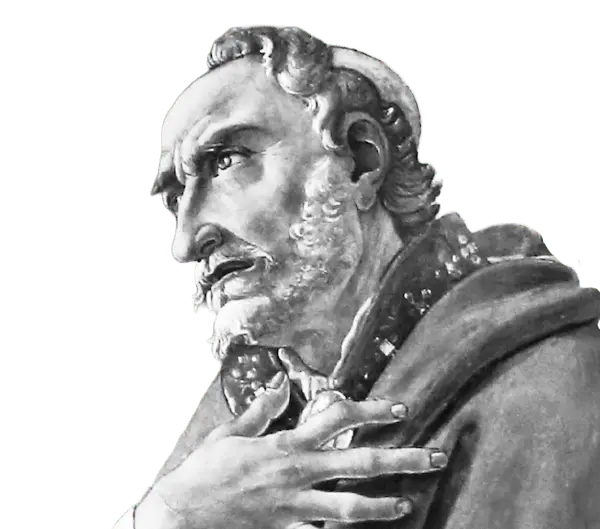
Augustine of Hippo Sermon
Faith's Understanding of Divine Mystery
Faith Precedes Understanding
1. The mysteries and secrets of God's kingdom first seek believing people, so that they may become understanding people. Faith is the first step toward understanding, and understanding is faith's achievement. The prophet explicitly says this to all who prematurely and out of order seek understanding while neglecting faith: "Unless you believe, you will not understand" (Isaiah 7:9). Faith itself has a certain light in the Scriptures, in prophecy, in the Gospel, and in the apostles' teachings. These things read to us now are lights in a dark place, nourishing us until the dawn. As the Apostle Peter says, "We have the prophetic word confirmed, which you do well to heed as a light that shines in a dark place, until the day dawns and the morning star rises in your hearts" (2 Peter 1:19).
2. You see then, brothers and sisters, how excessively hasty and disorderly are those who, like premature conceptions, seek an untimely birth. They say to us, "Why do you ask me to believe what I cannot see? Let me see something so I can believe. You tell me to believe while I cannot yet see; I want to see first, and believe by seeing, not by hearing." Let the prophet answer: "Unless you believe, you will not understand." You want to climb up, but you forget the steps. This is completely out of order. If I could already show you what you might see, I would not need to encourage you to believe.
3. Faith, as defined elsewhere, is "the substance of things hoped for, the evidence of things not seen" (Hebrews 11:1). If these things aren't seen, how are they evident? From what? From things you do see. You see something to believe something, and from what you see, you believe what you don't see.
Don't be ungrateful to the One who enables you to see, who gives you the capacity to believe what you cannot yet see. God has given you physical eyes and reason in your heart. Awaken your heart's reason, activate the inner observer who uses your eyes. There is someone inside who sees through the eyes. When your thoughts are on some other subject and your attention is elsewhere, you don't see what's in front of your eyes. Your windows are open, but the one looking through them is absent.
It's not the eyes that see, but someone sees through the eyes. Wake this observer, alert him. God did not make you merely a reasoning animal, set above cattle and formed in His image, just so you would use your faculties like animals do—only seeking what fills your stomach, not your soul.
Stir up your rational eye, use your eyes as a human should. Consider heaven and earth, the sky's ornaments, the earth's fruitfulness, birds in flight, fish swimming, seeds' power, and the changing seasons. Consider these works, and seek their Author. Look at what you see, and seek Him whom you don't see. Believe in Him whom you don't see because of the things you do see. And lest you think these are merely my words of encouragement, hear the Apostle: "For since the creation of the world, God's invisible qualities—His eternal power and divine nature—have been clearly seen, being understood from what has been made" (Romans 1:20).
4. You disregarded these things, looking not as a human but as an irrational animal. The prophet cried out to you in vain: "Do not be like the horse or the mule, which have no understanding" (Psalm 32:9). You saw these things but disregarded them. God's daily miracles were undervalued, not because they were simple, but because they happened constantly.
What is more difficult to understand than human birth—that someone who exists should depart into darkness through death, and someone who didn't exist should come into the light through birth? What could be more marvelous or harder to comprehend? Yet for God, this is easy to accomplish.
Marvel at these things; wake up! You can wonder at His unusual works, but are they greater than what you regularly see? People marveled that our Lord Jesus Christ fed thousands with five loaves, but they don't marvel that a few seeds produce crops covering the whole earth. When water became wine, people were amazed. What else happens when rain passes through a vine's roots? God did one miracle to feed your body, and the other to nourish your faith.
People see unusual things and wonder, but what about the person who wonders? Where was this person before? Where did they come from? How did they get their body's shape? How are their limbs distinguished? What gave them their beautiful form? From what beginnings? What humble origins? Yet they wonder at other things when they themselves are a great wonder.
Where do all these things you see come from, if not from Him whom you don't see? But since you disregarded these things, He Himself came to do unusual miracles so you might recognize your Creator even in the ordinary things of life. He came, the One to whom it is said, "Renew signs" (Ecclesiasticus 36:6). "Show forth Your marvelous mercies" (Psalm 17:7). He was always dispensing them, but no one marveled.
So He came as a little one to the little, as a physician to the sick. He could come when He wanted, return when He wanted, do whatever He wanted, and judge as He wanted. And His will is perfect righteousness. What He wills is righteous; what He doesn't will is unrighteous. He came to raise the dead, while people marveled that He restored a living person to light, He who daily brings to light those who didn't exist before.
5. He did these things, yet many despised Him, considering not how great His deeds were but how small He appeared to be. As if they said to themselves, "These works are divine, but He is just a man." You see two things: divine works and a man. If divine works can only be done by God, consider whether God might be hidden in this Man.
Pay attention to what you see; believe what you don't see. God hasn't abandoned you, who calls you to believe. Though He asks you to believe what you can't see, He hasn't left you without visible things to help you believe the invisible. Is creation itself a small sign, a minor indication of its Creator?
He also came and performed miracles. You couldn't see God, but you could see a human, so God became human. That way, you would have in one Person both something to see and something to believe. "In the beginning was the Word, and the Word was with God, and the Word was God" (John 1:1). You hear this but still don't see it.
But then He comes, He is born, He emerges from a woman—He who made both man and woman. The One who made man and woman was not made by man and woman. You might have been tempted to despise Him for being born, but you cannot despise the manner of His birth. He always existed before being born.
Now do you see? I ask about His flesh, but I'm pointing to something in that flesh—something you can see, and something you cannot see. But through what you can see, you may believe what you cannot see.
You had begun to despise Him for being born; believe what you don't see—that He was born of a virgin. "How unremarkable," someone says, "is this person who was born!" But how remarkable is He who was born of a virgin! He brought you a temporary miracle so you would seek and admire the Eternal One. He was born without a human father—without any man as His father, I mean—yet He was born of human flesh. But don't think it impossible that He was born of His mother alone, when He had made mankind before either father or mother existed.
6. He brought you, then, a temporal miracle, so you might seek and wonder at the Eternal One. For He "came forth as a bridegroom from His chamber" (Psalm 19:5)—that is, from the virgin's womb, where the holy union of the Word and flesh was celebrated. He brought a temporal miracle, but He Himself is eternal, co-eternal with the Father. He is the One who "in the beginning was the Word, and the Word was with God, and the Word was God" (John 1:1).
He performed miracles so you might be healed and eventually see what you couldn't see before. What you despise in Christ isn't yet the full vision granted to the healthy, but medicine for the sick. Don't rush to the vision of wholeness.
The angels see, the angels rejoice, the angels feast and live on Him. Their food never fails nor diminishes. In the thrones of glory, in the heavenly regions, above the heavens, the Word is seen by angels and is their joy and their food that endures. But for humans to eat angels' food, the Lord of angels became human. This is our salvation, medicine for the sick, and food for the healthy.
7. And He spoke to people and said what you just heard: "The Son can do nothing of Himself, but what He sees the Father do" (John 5:19). Is there anyone now who understands this? Is there anyone in whom the eye-salve of the flesh has its effect to discern in any way the brightness of divinity? He has spoken; let us speak too—He as the Word, we because of the Word. Why do we speak about the Word, however inadequately? Because we were made by the Word in the likeness of the Word.
As far as we're capable, as far as we can share in that ineffable reality, let us also speak, and not be contradicted. Our faith has gone before, so we can say, "I believed, therefore I spoke" (Psalm 116:10). I speak what I believe, whether or not I also see it, or however I see it. He sees better; you cannot see it at all. But when I've spoken, whether the one who sees what I'm talking about believes that I also see what I've spoken of, or doesn't believe it, what is that to me? Let him truly see, and believe what he will about me.
8. "The Son can do nothing of Himself, but what He sees the Father do." Here the Arian error rises up—but it rises only to fall, because it isn't humbled so it might rise properly. What has confused you? You want to say the Son is less than the Father. You've heard "The Son can do nothing of Himself, but what He sees the Father do," and from this you want to call the Son inferior.
I know this is what has confused you. Believe He is not less—you cannot yet see it. Believe; this is what I was just saying. "But how," you ask, "can I believe against His own words?" He Himself says, "The Son can do nothing of Himself, but what He sees the Father do."
Pay attention to what follows: "For whatever the Father does, the Son also does likewise." He didn't say "such things," beloved. Consider this a moment, so you don't create confusion for yourselves. A calm heart is needed, a godly and devout faith, a religious attention. Don't listen to me, the poor vessel, but to Him who puts bread in the vessel.
Listen carefully. In all I've said above to encourage faith—so the mind steeped in faith might be capable of understanding—those words had a pleasing sound, easily heard, and you've understood what I said. But what I'm about to say now—I hope some will understand, yet I fear not all will understand. Since God has proposed this subject to us in the Gospel, we can't avoid it. I fear that many who won't understand will think I've spoken to them in vain. Yet because of those who will understand, I don't speak in vain.
Let those who understand rejoice; let those who don't understand bear it patiently. What they don't understand, let them bear, and that they may understand, let them endure the delay.
9. He doesn't say, "Whatever things the Father does, the Son does similar things," as if the Father does one set of things and the Son another. It seemed He meant this when He said, "The Son can do nothing of Himself, but what He sees the Father do." Note: He didn't say, "But what He hears the Father command," but "what He sees the Father do."
If we consult our ordinary understanding, it seems He's presented two workers, the Father and the Son—the Father working without watching anyone else, the Son working by watching the Father. This is still a physical way of looking at it. Nevertheless, to understand higher things, let's not refuse these lower and humbler ones.
First, let's picture two craftsmen, father and son. The father has made a chest which the son couldn't make unless he saw his father making it. The son watches the chest his father has made and makes another like it—not the same one. For now I'll set aside the words that follow and ask the Arian: "Do you understand it in the way I've just described? Has the Father done something that the Son saw and then did something similar? Is that your interpretation of the words that confuse you?"
He doesn't say, "The Son can do nothing of Himself, but what He hears the Father command." Instead He says, "The Son can do nothing of Himself, but what He sees the Father do." Look, if you understand it this way: the Father has done something, and the Son watches so He can see what He has to do—some other thing similar to what the Father has done. This thing the Father has done—who did He do it through? If not through the Son, if not through the Word, you've committed blasphemy against the Gospel. "All things were made through Him" (John 1:3).
So what the Father had done, He had done through the Word. If through the Word, then through the Son. Who then is this other person who watches to do something else that he sees the Father do? You haven't been accustomed to saying the Father has two sons. There is One, the Only-Begotten from Him. But through His mercy, the Only Son isn't alone regarding His inheritance. The Father has made co-heirs with His Only Son—not begotten like Him from His own substance, but adopted by Him into His own family. For "we have been called," as Scripture testifies, "to the adoption of sons" (Ephesians 1:5).
10. What do you say? It's the Only Son Himself who speaks—the Only-Begotten speaks in the Gospel. The Word Himself has given us these words. We've heard Him saying, "The Son can do nothing of Himself, but what He sees the Father do." So the Father does something for the Son to see what to do, but nevertheless the Father does nothing except through the Son.
Certainly you're confused, you heretic, certainly you're confused. But your confusion is like taking medicine—it may make you sick, but it will heal you. You can't even understand yourself anymore; you condemn your own judgment and physical understanding. Put away the eyes of the flesh, raise up whatever eyes you have in your heart, see divine things.
You hear human words, it's true, and from a human, the Evangelist, from the Gospel you hear human words as a human. But you're hearing about the Word of God. To hear what is human, come to know what is divine. The Master has created a difficulty to instruct us; He has planted a puzzle to excite our careful attention. "The Son can do nothing of Himself, but what He sees the Father do."
He might have continued, "For whatever things the Father does, the like does the Son." But He doesn't say this. Instead: "Whatever things the Father does, the same does the Son likewise." The Father doesn't do some things and the Son other things, because all that the Father does, He does through the Son. The Son raised Lazarus; didn't the Father raise him? The Son gave sight to the blind man; didn't the Father give him sight? The Father through the Son, in the Holy Spirit.
It's the Trinity, but the Trinity's operation is one, the majesty one, the eternity one, the co-eternity one, and the works the same. The Father doesn't create some people, the Son others, and the Holy Spirit yet others. The Father and Son and Holy Spirit create one and the same person. The Father and Son and Holy Spirit, one God, creates that person.
11. You notice a plurality of Persons but acknowledge the unity of the Divinity. Because of the plurality of Persons it was said, "Let Us make man in Our image and likeness" (Genesis 1:26). God didn't say, "I will make man, and You attend when I'm making him, so You too can make another." "Let Us make," He says—I hear the plurality. "In Our image" —again I hear plurality. Where then is the singularity of the Divinity? Read what follows: "So God made man" (Genesis 1:27). It is said, "Let Us make man," not "The Gods made man." The unity is understood in the statement, "God made man."
12. Where, then, is that physical understanding? Let it be confused, hidden, brought to nothing. Let the Word of God speak to us. Now as godly people, already believing, already possessing faith and having gained some understanding, let's turn to the Word Himself, to the Source of light. Together let's say, "O Lord, the Father always does the same things as You; for whatever the Father does, He does through You. We've heard that You are the Word in the beginning; we haven't seen, but believed. There too we've heard what follows, that 'all things were made through You.' So everything the Father does, He does through You. Therefore, You do the same things as the Father. Why then did You say, 'The Son can do nothing of Himself'?
For I see a certain equality between You and the Father in that I hear, 'Whatever things the Father does, the same does the Son.' I recognize equality; by this I understand and comprehend as far as I'm able, 'I and My Father are one.' What does it mean that You can do nothing except what You see the Father do? What does this mean?"
13. Perhaps He would say to me, to all of us: "Regarding My statement, 'The Son can do nothing, but what He sees the Father do,' how do you understand My 'seeing'? What is My 'seeing'? Put aside for a while the servant's form I took for your sake. In that human form, our Lord had eyes and ears in the flesh, and that human form had the same features as a body like ours, the same arrangement of limbs. That flesh came from Adam, but He was not like Adam.
So the Lord walking on earth or sea, as He pleased, as He willed, doing whatever He wanted, looked at what He wanted. He fixed His eyes and saw; He turned away His eyes and didn't see. Anyone following Him was behind Him, whoever was visible was in front of Him. With His physical eyes, He saw only what was in front of Him. But from His divinity, nothing was hidden. Put aside, put aside for a while the servant's form.
Look at the Form of God in which He existed before the world was made, in which He was equal to the Father. Receive and understand what He says to you, 'Who, being in the form of God, did not consider equality with God something to be grasped' (Philippians 2:6). There see Him if you can, so you may understand what His 'seeing' means."
"In the beginning was the Word" (John 1:1). How does the Word see? Does the Word have eyes, or are our eyes found in Him—not eyes of flesh, but eyes of godly hearts? For "blessed are the pure in heart, for they shall see God" (Matthew 5:8).
14. You see Christ as both Man and God. He reveals the Man to you but reserves God for you. Now see how He reserves God for you, who reveals Himself to you as Man. "Whoever loves Me," He says, "keeps My commandments. Whoever loves Me will be loved by My Father, and I will love him" (John 14:21). And as if asked, "What will You give to the one You love?" He says, "I will manifest Myself to him" (John 14:21).
What does this mean, brothers and sisters? Those who already saw Him—He promised He would reveal Himself to them? To whom? Those who saw Him, or also those who hadn't seen Him? Speaking to a certain apostle who asked to see the Father, saying, "Show us the Father, and it is enough for us" (John 14:8), He stood before his eyes in the servant's form, reserving the Form of God for his eyes when they would be glorified. He said, "Have I been with you so long, and you have not known Me? He who has seen Me has seen the Father" (John 14:9).
You ask to see the Father; see Me—you see Me, yet you don't see Me. You see what I've taken on for your sake; you don't see what I've reserved for you. Listen to My commandments, purify your eyes. "Whoever loves Me keeps My commandments, and I will love him." To him who keeps My commandments and is made whole by them, I will reveal Myself.
15. If then, brothers and sisters, we're not able to see what the "seeing" of the Word is, where are we going? What vision are we too hastily seeking? Why do we wish to have shown to us what we're not able to see? These things are spoken of as what we desire to see, not as what we can already comprehend.
If you could see the "seeing" of the Word, perhaps in seeing the "seeing" of the Word, you would see the Word Himself. Then the Word wouldn't be one thing and the "seeing" of the Word another. There would be nothing joined, coupled, doubled, or compacted in Him. For He is something simple, of an ineffable simplicity.
He's not like a human, where the person is one thing and the person's seeing another. Sometimes a person's sight is extinguished, yet the person remains. This is what I meant when I said I would say something that not all could understand. May the Lord grant that some may have understood.
My brothers and sisters, to this end does He exhort us—that we may see that the "seeing" of the Word is beyond our powers, for they are small. Let them be nourished and perfected. How? By the commandments. What commandments? "Whoever loves Me keeps My commandments" (John 14:15). What commandments? We wish to grow, to be strengthened, to be perfected, that we may see the "seeing" of the Word. Tell us, Lord, what commandments? "A new commandment I give to you, that you love one another" (John 13:34).
This love, then, brothers and sisters, let us draw from the fullness of the Fountain. Let's receive it and be nourished by it. Receive that by which you can receive more. Let love give you birth, let love nourish you, let love bring you to perfection, let love strengthen you. Then you may see this "seeing" of the Word—that the Word is not one thing and His "seeing" another, but the "seeing" of the Word is the Word Himself.
Perhaps now you understand that when He said, "The Son can do nothing of Himself, but what He sees the Father do," it's as if He had said, "The Son would not exist if He had not been born of the Father." Let this suffice, brothers and sisters. I know I've said things that, if pondered, may develop further understanding for many, things that when expressed in words may sometimes seem obscure.