
Forgiveness Without Limits: Understanding "Seventy Times Seven"
Augustine of Hippo Sermon
Forgiveness Without Limits: Understanding "Seventy Times Seven"
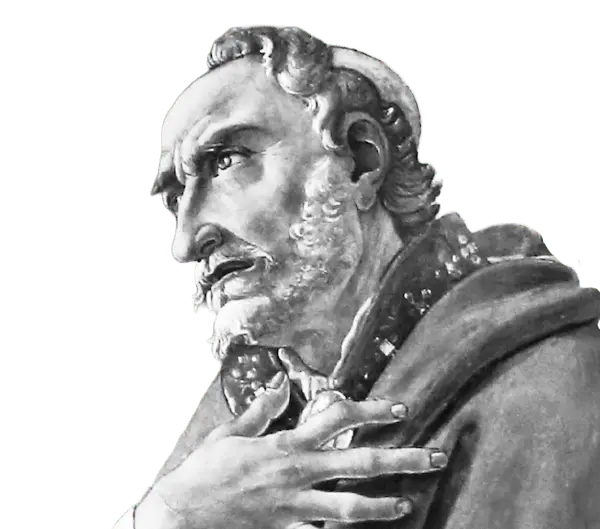
Augustine of Hippo Sermon
Forgiveness Without Limits: Understanding "Seventy Times Seven"
Forgiveness Without Limits
1. Yesterday the holy Gospel warned us not to neglect the sins of our brothers: "But if your brother sins against you, rebuke him between you and him alone. If he hears you, you have gained your brother. But if he refuses to hear you, take with you two or three more, that by the mouth of two or three witnesses every word may be established. And if he refuses to hear them too, tell it to the church. But if he refuses to hear the church, let him be to you like a pagan and a tax collector" (Matthew 18:15-17).
Today's reading continues the same subject. When the Lord Jesus had said this to Peter, Peter asked his Master how often he should forgive a brother who had sinned against him—whether seven times would be enough. "The Lord answered him, 'Not seven times, but seventy times seven'" (Matthew 18:22).
Then Jesus added a parable filled with warning: That the "kingdom of heaven is like a king who wanted to settle accounts with his servants. Among them he found one who owed him ten thousand talents. When he commanded that everything he had, including his family and himself, be sold to pay the debt, the servant fell down at his master's feet" and begged for time, but received complete forgiveness. For as we heard, "his master was moved with compassion, released him, and forgave him the entire debt."
Then that man, free from his debt but enslaved to wickedness, after leaving his master's presence, found in turn a fellow servant who owed him not ten thousand talents (the amount that had been forgiven him) but a hundred denarii. "He grabbed him by the throat and said, 'Pay me what you owe!'" His fellow servant begged him as he had begged his master, but he didn't find his fellow servant to be the kind of man his master had been. He not only refused to forgive the debt but wouldn't even grant a delay. He had his fellow servant thrown into prison with great violence to make him pay—he who had just been freed from his own debt to his master.
The other servants were upset and "went and told their master what had happened." The master summoned his servant and said, "You wicked servant! I forgave you all that debt because you begged me. Shouldn't you also have had compassion on your fellow servant, just as I had pity on you?" And he commanded that all the debt he had forgiven should be repaid.
2. Jesus told this parable to instruct us, and by this warning He wants to save us from perishing. "So," He said, "My heavenly Father will also do to you if each of you, from your hearts, does not forgive his brother his trespasses" (Matthew 18:35).
Look, brothers, the matter is clear. This useful warning requires our wholehearted obedience so that what has been commanded may be fulfilled. Every person is both God's debtor and has someone indebted to them. Who isn't God's debtor except the one in whom no sin can be found? And who has no one indebted to them except the one against whom no one has sinned? Do you think anyone can be found among humanity who is not bound to their brother by some sin? So everyone is a debtor, yet everyone has their own debtors too.
The righteous God, therefore, establishes a rule for you regarding your debtor—a rule He will also apply to His own. For there are two works of mercy that deliver us, which the Lord has briefly described in the Gospel: "Forgive, and you will be forgiven; give, and it will be given to you" (Luke 6:37-38). "Forgive, and you will be forgiven" refers to pardoning. "Give, and it will be given to you" refers to acts of kindness.
Concerning pardoning—you want your sin to be pardoned, and you have another whom you can pardon. Concerning acts of kindness—a beggar asks something of you, and you are God's beggar. We are all God's beggars when we pray. We stand, or rather fall prostrate, before the door of the Great Householder. We groan in prayer, wanting to receive something—and this something is God Himself. What does a beggar ask of you? Bread. And what do you ask of God but Christ, who says, "I am the living bread which came down from heaven" (John 6:51)? Do you want to be forgiven? Then forgive. "Forgive, and you will be forgiven." Do you want to receive? "Give, and it will be given to you."
3. But now hear what might cause a difficulty in such a straightforward command. Regarding forgiveness when pardon is requested—it's owed by the one who should grant it—this can present a difficulty for us as it did for Peter. "How many times should I forgive? Is up to seven times enough?" "It is not enough," says the Lord. "I do not say to you up to seven times, but up to seventy times seven."
Now, count how often your brother has sinned against you. If you can reach the seventy-eighth offense, going beyond the seventy times seven, then you can seek revenge. Is this really what He means? If he sins seventy times seven, you should forgive him, but if he sins seventy-eight times, it becomes lawful not to forgive? No! I dare say that if he sins seventy-eight times, you must forgive. Yes, as I've said, if he sins seventy-eight times, forgive. And if he sins a hundred times, forgive. Why need I list specific numbers? In one word: as often as he sins, forgive him.
Have I taken it upon myself to exceed my Lord's measure? He set the limit of forgiveness at seventy-seven; should I presume to go beyond this limit? It's not so—I haven't presumed to go beyond at all. I've heard the Lord Himself speaking through His Apostle where no measure or number is fixed. He says, "Forgiving one another if anyone has a complaint against another, just as God in Christ forgave you" (Colossians 3:13).
Here's your rule: If Christ has forgiven you only seventy-seven sins—if He has pardoned only up to this point and refused to pardon beyond it—then you too should set this limit and be unwilling to forgive beyond it. But if Christ has found thousands upon thousands of sins and forgiven them all, don't withhold your mercy. Ask instead for forgiveness of that great number.
The Lord didn't say "seventy times seven" without meaning. There is no sin whatever that you shouldn't forgive. Look at the servant in the parable who, being a debtor himself, had his own debtor. He owed ten thousand talents, and I suppose ten thousand talents represent at least ten thousand sins. I won't attempt to explain how just one talent might include all sins. But how much did the other servant owe him? A hundred denarii. Isn't this more than seventy-seven? Yes, and yet the master was angry because he didn't forgive the debt. Not only is a hundred more than seventy-seven, but a hundred denarii might be worth a thousand pennies. But what is this compared to ten thousand talents?
4. Let's be ready to forgive all trespasses committed against us if we want to be forgiven ourselves. If we consider our sins and count what we do in deed, through our eyes, through our ears, in our thoughts, through countless impulses—I'm not sure we could even sleep without incurring a debt of a talent. This is why we daily beg, daily knock at God's ears through prayer, daily prostrate ourselves and say, "Forgive us our debts, as we forgive our debtors" (Matthew 6:12).
Which debts of yours? All of them, or just some? You would answer "All." So then do the same with your debtor. This is the rule you establish, the condition you state. This is the agreement you mention when you pray, saying, "Forgive us our debts, as we forgive our debtors."
5. What then, brothers, is the meaning of "seventy times seven"? Listen, for it's a great mystery, a wonderful sacred symbol. When the Lord was baptized, the Evangelist Luke recorded His genealogy in the regular order, listing the generations in sequence down to the generation in which Christ was born. Matthew begins with Abraham and comes down to Joseph in descending order, while Luke begins to count in ascending order. Why does one count in descending order and the other in ascending order? Because Matthew presents Christ's genealogy showing how He came down to us, so he begins to count from Abraham when Christ was born, in a descending order. But since Luke begins to count when Christ was baptized—and baptism is the beginning of ascension—he starts to count in ascending order. In his counting, he has completed seventy-seven generations.
With whom did he begin his counting? Notice with whom: He began to count from Christ up to Adam himself, who was the first sinner and who brought us forth with the bond of sin. He counted up to Adam, and so there are counted seventy-seven generations—that is, from Christ up to Adam and from Adam up to Christ are the aforementioned seventy-seven generations.
Therefore, if no generation was omitted, there is no sin that shouldn't be forgiven. Luke recorded these seventy-seven generations, which is the number the Lord mentioned regarding forgiveness of sins. He begins to count from baptism, where all sins are remitted.
6. Brothers, observe in this a yet greater mystery. In the number seventy-seven lies a mystery of the forgiveness of sins. That many generations are found from Christ to Adam. Now then, ask with more careful diligence for the secret meaning of this number, and explore its hidden meaning. With more careful diligence, knock so that it may be opened to you.
Righteousness consists in observing God's Law—this is true. The Law is presented in ten commandments. That's why the servant in the parable "owed ten thousand talents." This refers to the memorable Ten Commandments written by God's finger and delivered to the people by Moses, God's servant. He "owed ten thousand talents," which signifies all sins with reference to the number of the Law. And the other servant "owed a hundred denarii," derived equally from the same number. For a hundred times a hundred makes ten thousand, and ten times ten makes a hundred. One "owed ten thousand talents," and the other ten times ten denarii. There was no departure from the number of the Law, and in both numbers you'll find every kind of sin included. Both were debtors, and both begged for pardon; but the wicked, ungrateful servant wouldn't repay what he had received, wouldn't grant the mercy that had been undeservedly given to him.
7. Consider then, brothers: everyone begins from baptism. They leave baptism free—the "ten thousand talents" are forgiven them. When they leave, they will soon find some fellow servant who is their debtor. Let them note then what sin itself is, for the number eleven represents transgression of the law. The law is represented by ten, sin by eleven. Why is sin represented by eleven? Because to reach eleven, one must transgress beyond ten. The proper limit is fixed in the law, and transgressing it is sin. Once you go beyond ten, you come to eleven.
This profound mystery was symbolized when the tabernacle was commanded to be built. Many things are mentioned there in numbers that contain great mysteries. Among other things, curtains of goat hair were ordered to be made—not ten, but eleven—because goat hair symbolizes the confession of sins. What more do you need to know? Would you like to understand how all sins are contained in this number "seventy-seven"?
Seven is usually used to represent completeness, because the cycle of time is completed in seven days. When the seventh day ends, we return to the first, continuing the same cycle. Entire ages pass in this way, yet there is no departure from the number seven. Jesus spoke of all sins when He said "seventy times seven," because if you multiply eleven by seven, you get seventy-seven. Therefore, He wants all sins to be forgiven, for He indicated them by the number seventy-seven.
Let no one retain unforgiveness against themselves by refusing to forgive, lest unforgiveness be retained against them when they pray. For God says, "Forgive, and you will be forgiven." I have forgiven you first; at least forgive after that. If you won't forgive, I will call you back and place upon you again all that I had taken away from you. The Truth doesn't speak falsely; Christ neither deceives nor is deceived, and He said at the end of the parable, "So likewise will your heavenly Father do to you." You have a Father—imitate your Father. If you won't imitate Him, you're planning to be disinherited. "So likewise will My heavenly Father do to you if you, from your hearts, do not forgive everyone his brother their trespasses." Don't say with your tongue, "I forgive," while delaying forgiveness in your heart; for by His threat of punishment, God shows you the consequences. God knows where you speak. People can hear your voice; God looks into your conscience. Better to be harsh in words but forgiving in the heart than to be gentle in words but unforgiving in the heart.
8. Now then, unruly children will beg and take it hard when we want to discipline them in this way. "I've sinned, but forgive me," they say. Well, I've forgiven, and they sin again. "Forgive me," they cry, and I've forgiven them. They sin a third time. "Forgive me," they cry, and a third time I've forgiven them. Now the fourth time they should be disciplined. And they will say, "What! Haven't I reached seventy-seven times yet?"
If discipline is suspended because of such pleading, wickedness will rage unchecked. What then should be done? Let's correct with words, and if necessary with punishments, but let's forgive the sin and remove its memory from our hearts. This is why the Lord added "from your hearts," so that even though discipline may be exercised out of concern, gentleness should never leave the heart.
What is more kind and gentle than a surgeon with a knife? The patient cries, yet the surgeon cuts; the patient cries, yet the surgeon cauterizes. This isn't cruelty—don't call the surgeon's treatment cruel. The surgeon is harsh toward the wounded area so the patient may be healed; if the wound were treated too gently, the person would be lost.
So I would advise, my brothers, that we love our brothers, however they may have sinned against us. Let's not let affection for them depart from our hearts, and when necessary, let's exercise discipline toward them. Otherwise, if discipline is relaxed, wickedness will increase, and we'll be held accountable before God. For we've read, "Those who sin, rebuke in the presence of all, that the rest also may fear" (1 Timothy 5:20).
Certainly, if one correctly distinguishes the appropriate times and thus resolves the issue, all is well. If the sin is private, rebuke it privately. If the sin is public and open, rebuke it publicly so the sinner may be reformed and "that the rest also may fear."