
"I and the Father Are One"
Augustine of Hippo Sermon
"I and the Father Are One"
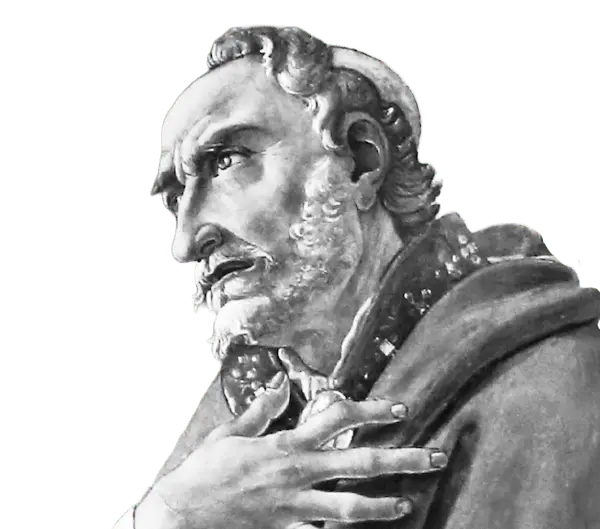
Augustine of Hippo Sermon
"I and the Father Are One"
The Father and Son: One in Substance
1. You have heard what the Lord God, Jesus Christ, the only Son of God, born of God the Father without any mother, and born of a Virgin mother without any human father, said: "I and My Father are one" (John 10:30). Receive this truth and believe it so that you may eventually understand it. Faith should precede understanding, so that understanding may be the reward of faith. As the prophet has clearly stated, "Unless you believe, you will not understand" (Isaiah 7:9).
What is simply proclaimed is to be believed; what is carefully discussed is to be understood. To initially establish faith in your minds, we preach to you Christ, the only Son of God the Father. Why do we add "the only Son"? Because God the Father, whose only Son Christ is, has many sons through grace. All the saints are sons of God by grace, but Christ alone is Son by nature. Those who are sons of God by grace are not what the Father is. No saint has ever dared to say what that only Son says: "I and My Father are one."
Isn't God our Father too? If He's not our Father, why do we say when we pray, "Our Father in heaven" (Matthew 6:9)? But we are sons whom He has made sons by His own will, not sons He has begotten of His own nature. In truth, He has begotten us too, but as adopted ones—begotten through the favor of His adoption, not by nature. This is what we are called, because "God has called us to adoption as sons" (Ephesians 1:5). Though adopted, we are still human. Christ is called the only Son, the only begotten, because He is what the Father is. We are human; the Father is God. Since Christ is what the Father is, He said—and said truly— "I and My Father are one." What does "are one" mean? They are of one nature. What does "are one" mean? They are of one substance.
2. Perhaps you don't fully understand what "of one substance" means. Let's work to help you understand it. May God assist both me who speaks and you who hear—me, that I may speak things that are true and suitable for you, and you, that above all you may believe, and then understand as best you can.
What then is "of one substance"? Let me use analogies to help clarify what is imperfectly understood. Suppose, for example, that God is gold. His Son is gold also. If we shouldn't use earthly analogies for heavenly things, why is it written, "Now the Rock was Christ" (1 Corinthians 10:4)? So then, whatever the Father is, the Son is also. As I've said, for example, "The Father is gold, the Son is gold."
Anyone who says, "The Son is not of the very substance that the Father is," is essentially saying, "The Father is gold, the Son is silver." If the Father is gold and the Son is silver, the only Son has degenerated from the Father. A human father begets a human child. Whatever substance the father who begets is, the same substance is the son who is begotten. What does "of the same substance" mean? The father is human, and the child is human; the father has a soul, so does the child; the father has a body, so does the child. What the father is, that is what the child is.
3. But the Arian heresy objects, saying to me, "Note what you've said." What have I said? "That a human son may be compared to the Son of God." Certainly this comparison may be made, but not as you suppose—not in strict equivalence, but as an analogy. But tell me now what you would make of this. "Don't you see," says the Arian, "that the father who begets is older, and the son who is begotten is younger? How then do you say that the Father and the Son, God and Christ, are equal, when you see that when a human begets a son, the son is lesser and the father greater?"
You who think yourself wise are looking for time distinctions in eternity! Where there are no times, you're looking for age differences! When a human father is older and the son younger, both exist in time—one grows because the other ages. By nature, as I said, the human father did not beget someone lesser by nature, but by age.
Do you want to know how the father did not beget someone lesser by nature? Wait until the son grows, and he will be equal to his father. Even a young child eventually grows to reach his father's full size. But you claim that the Son of God is born lesser in such a way that He can never grow to reach His Father's stature. According to your view, a human son is born in a better condition than the Son of God! How? Because the human son grows and reaches his father's size. But Christ, as you say, is born lesser and must remain lesser forever, with no growth in years to be expected. This means you're saying there is a fundamental difference in nature.
But why do you say this, except because you refuse to believe that the Son is of the same substance as the Father? Finally, first acknowledge that He is of the same substance, and then call Him lesser if you wish. Consider a human example: he is a human. What is his substance? He is human. What is the one he begets? Though smaller, he is still human. Their ages are unequal, but their nature is equal.
Do you then say, "What the Father is, that is the Son, but the Son is lesser"? Say so, take a step forward, say, "of the same substance, just lesser," and you'll move closer to acknowledging His equality. For it's no small step toward the truth to acknowledge Him equal if you acknowledge Him to be of the same substance, though lesser.
"But He is not of the same substance," you say. So then, what you're saying is like comparing gold and silver. What you're suggesting is as if a human were to give birth to a horse. A human is of one substance, a horse of another. If the Son is of a different substance than the Father, then the Father has begotten a monstrosity. When a creature, that is, a woman, gives birth to something that isn't human, it's called a monster. For it not to be a monster, what is born must be what the one who begot it is—a human gives birth to a human, a horse to a horse, a dove to a dove, a sparrow to a sparrow.
4. God has given His creatures the ability to produce offspring of the same nature as themselves. To His creatures—mortal, earthly creatures—God has given the power to beget what they themselves are. Do you think that God, who exists before all ages, could not reserve this same power for Himself? Would the One who has no beginning in time beget a Son different from what He Himself is, a degenerate Son?
Consider what a great blasphemy it is to say that the only Son of God is of a different substance. If He were, He would certainly be degenerate. If you were to say to any child, "You are degenerate," how deeply offensive that would be! Yet in what sense would any human child be called degenerate? Perhaps his father is brave, but he is a coward. If someone sees him and wants to rebuke him, thinking of his brave father, what does he say? "Get away from here, you degenerate one!" What does "degenerate one" mean? "Your father was brave, but you tremble with fear." The one to whom this is said is degenerate because of some personal failing, but by nature he is equal to his father. What does "by nature he is equal" mean? He is human, just as his father is. One is brave, the other a coward; one is bold, the other timid; yet both are human. So he is degenerate because of a personal fault, not by nature.
But when you say that the only Son, the one Son of the Father, is degenerate, you're saying nothing less than that He is not what the Father is. You're not saying that, having been born, He later became degenerate; you're saying He was begotten that way. Who can tolerate such blasphemy? If they could somehow see this blasphemy clearly, they would flee from it and become Catholics.
5. But what shall I say, brothers? Let's not be angry with them, but pray for them, that God may give them understanding. Perhaps they were born into this belief. What does "born into it" mean? They received these ideas from their parents. They value their family heritage above the truth. Let them become what they are not, so they can preserve what they are. That is, let them become Catholics so they can preserve their humanity. Let the creative work of God in them not perish; let the grace of God be added to them.
They imagine that by dishonoring the Son, they honor the Father. When you say to such a person, "You're blaspheming," he answers, "Why am I blaspheming?" "Because you say the Son is not what the Father is." And he responds, "No, you're the one who's blaspheming." "Why?" "Because you want to make the Son equal to the Father."
I do want to make the Son equal with the Father, but is this making a stranger equal to Him? The Father rejoices when I recognize His only Son as equal to Him. He rejoices because He is not envious. Because God is not envious of His only Son, He begot Him equal to Himself. You do wrong to both the Son and the Father Himself when you claim to honor the Father by dishonoring the Son.
In fact, this is why you say the Son is not of the same substance—because you think you'd be wronging the Father otherwise. I will soon show you that you wrong both. "How?" he asks. "If I say to any man's son, 'You are degenerate, you are not like your father; you are degenerate, you are not what your father is,' the son hears it and is angry, saying, 'Was I then born degenerate?' The father hears it and is even more angry. And in his anger what does he say? 'Have I then begotten a degenerate son? If I am one thing and have begotten something else, I have begotten a monster.'"
"What is it then, that while you wish to honor one by dishonoring the other, you dishonor both? You offend the Son, but you won't appease the Father. When you honor the Father by outraging the Son, you offend both the Son and the Father. From whom will you flee? To whom will you flee? When the Father is angry with you, do you flee to the Son? What does He say to you? 'To whom are you fleeing—to Me, whom you have called degenerate?' When the Son is offended, do you run to the Father? He too says to you, 'To whom are you fleeing—to Me, who you have said begot a degenerate Son?'"
Let this be enough for you; hold it fast, commit it to memory, inscribe it in your faith. But that you may understand it, pour out your prayers to God, the Father and the Son, who are One.