
Prayer, Faith, and Humility
Augustine of Hippo Sermon
Prayer, Faith, and Humility
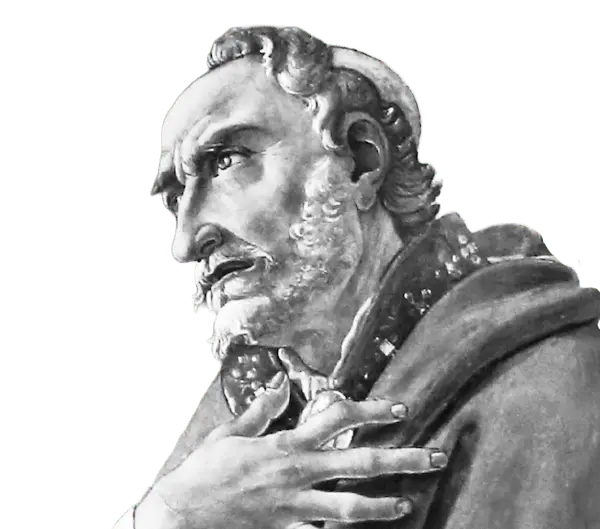
Augustine of Hippo Sermon
Prayer, Faith, and Humility
The Power of Persistent Prayer and True Humility
1. Today's Holy Gospel lesson builds us up in the duty of praying, believing, and not putting our trust in ourselves but in the Lord. What greater encouragement to prayer than the parable of the unjust judge? An unjust judge who neither feared God nor respected people still listened to a widow who kept asking him. He was overcome by her persistence, not by any kindness in his heart. If he heard her prayer though he hated being asked, how much more will God hear us when He encourages us to ask!
When the Lord had taught through this contrasting example that "people should always pray and not give up" (Luke 18:1), He added, "However, when the Son of Man comes, will He find faith on the earth?" (Luke 18:8). If faith fails, prayer dies. Who prays for something they don't believe in? This is why the blessed Apostle, when encouraging prayer, said, "Everyone who calls on the name of the Lord will be saved" (Romans 10:13). To show that faith is the foundation of prayer, he continued, "How then can they call on the one they have not believed in?" (Romans 10:14).
So to pray, we must believe; and for our faith not to fail, we must pray. Faith produces prayer, and the outpouring of prayer obtains the strengthening of faith. Faith, I say, produces prayer, and prayer in turn strengthens faith itself. To prevent faith from failing in temptations, the Lord said, "Watch and pray so that you will not fall into temptation" (Matthew 26:41). "Watch and pray," He says, "so that you will not fall into temptation."
What does it mean to "fall into temptation" but to depart from faith? Temptation advances as faith retreats, and temptation retreats as faith advances. To make this clearer, beloved, understand that when the Lord said, "Watch and pray so that you will not fall into temptation," He was concerned that faith might fail and perish. In the same Gospel passage He said, "Satan has asked to sift all of you as wheat. But I have prayed for you, Simon, that your faith may not fail" (Luke 22:31-32).
The Lord who defends us prays for us—shouldn't the person in danger pray too? When the Lord asked, "When the Son of Man comes, will He find faith on the earth?" He was speaking of the kind of faith that is complete. This kind of faith is rarely found on earth. Look! God's Church is full. Who would come here if there were no faith? But who would not move mountains if faith were complete? Consider the apostles themselves: they wouldn't have left everything they had, trampled the world's hopes underfoot, and followed the Lord without great faith. Yet if they had complete faith, they wouldn't have said to the Lord, "Increase our faith" (Luke 17:5).
Look again at that man who confessed both faith and incomplete faith. When he brought his son to the Lord to be cured of an evil spirit, and was asked whether he believed, he answered, "Lord, I believe; help my unbelief" (Mark 9:24). "Lord, I believe," he says—so there was faith. But "help my unbelief" —so his faith wasn't complete.
2. Since faith belongs not to the proud but to the humble, "Jesus told this parable to some who were confident of their own righteousness and looked down on everyone else" (Luke 18:9). "Two men went up to the temple to pray, one a Pharisee and the other a tax collector. The Pharisee stood and prayed: 'God, I thank You that I am not like other people'" (Luke 18:10-11).
He could at least have said, "like many people." What does "like other people" mean, except everyone except himself? "I," he says, "am righteous; everyone else is sinful." "I am not like other people—robbers, evildoers, adulterers" (Luke 18:11). And look, from your neighbor, the tax collector, you find an occasion for even greater pride. "Or even like this tax collector," he says. "I," he says, "stand alone; he belongs with the rest." "I am not," he declares, "like him, because of my righteous deeds, by which I have no unrighteousness." "I fast twice a week and give a tenth of all I get" (Luke 18:12).
Search through all his words and you'll find nothing that he asked from God. He went up to pray, but had no intention of praying to God—only of praising himself. It's not just that he didn't pray to God; worse than that, he praised himself. And even worse, he also mocked the man who was truly praying.
"But the tax collector stood at a distance" (Luke 18:13), yet he was actually close to God. His awareness of his own heart kept him at a distance, but his devotion brought him near. "The tax collector stood at a distance," but the Lord regarded him as near. "Though the Lord is exalted, He looks kindly on the lowly" (Psalm 138:6). But those who are proud, like this Pharisee, "He knows from afar" (Psalm 138:6). God recognizes the proud from a distance, but He doesn't pardon them.
Consider further the tax collector's humility. Standing at a distance was just the beginning; "he would not even look up to heaven" (Luke 18:13). He didn't look up, so that he might be looked upon with favor. His conscience weighed him down, but hope lifted him up. Listen to more: "he beat his breast" (Luke 18:13). He punished himself, which is why the Lord spared him for his confession. "He beat his breast and said, 'God, have mercy on me, a sinner'" (Luke 18:13).
See who it is that prays. Why are you surprised that God pardons when the man acknowledges his sin? You've heard the case of the Pharisee and the tax collector; now hear the verdict. You've heard the proud accuser; you've heard the humble defendant; now hear the Judge: "I tell you the truth" (Luke 18:14). The Truth speaks, God speaks, the Judge declares: "I tell you that this man, rather than the other, went home justified" (Luke 18:14).
Tell us why, Lord. Look, I see that the tax collector goes home justified rather than the Pharisee. I ask why. Do you ask why? Listen to why: "For all those who exalt themselves will be humbled, and those who humble themselves will be exalted" (Luke 18:14). You've heard the verdict; beware of the attitude that caused the Pharisee's downfall. In other words, you've heard the verdict; beware of pride.
3. Let those irreverent people, whoever they are, who presume on their own strength, hear and see these things. Let those hear who say, "God made me human; I make myself righteous." You're worse and more detestable than the Pharisee! The Pharisee in the Gospel did call himself righteous, but at least he thanked God for it. He called himself righteous but still gave thanks to God: "God, I thank You that I am not like other people" (Luke 18:11).
"I thank You, God." He thanks God that he's not like other people, yet he's still criticized for being proud and puffed up. Not because he thanked God, but because he seemed to desire nothing more to be added to him. "I thank You that I am not like other people—robbers, evildoers." So then, you're righteous? You ask for nothing more? You're already filled? You already have abundance? You have no reason to say, "Forgive us our debts" (Matthew 6:12)? How much worse must be the condition of someone who impiously attacks grace, if someone who gives thanks pridefully is condemned?
4. After the case had been presented and the verdict given, little children were brought forth—or rather, they were carried and presented to be touched. To be touched by whom? By the Physician. Someone will surely say, "They must be healthy." To whom are these infants presented to be touched? To whom? To the Savior. If to the Savior, they're brought to be saved. To whom, if not to Him "who came to seek and to save the lost" (Luke 19:10)?
How were they lost? As far as their personal actions are concerned, I see they're without fault. I'm searching for the source of their guilt. Where is it? Listen to the Apostle: "Sin entered the world through one man, and death through sin, and in this way death came to all people, because all sinned" (Romans 5:12). Let the little children come then, let them come. Let the Lord be heard: "Let the little children come to me" (Luke 18:16).
Let the little ones come, let the sick come to the Physician, the lost to their Redeemer. Let them come; let no one hinder them. In their own actions they've not yet done any evil, but they're corrupted at their root. "May the Lord bless both small and great" (Psalm 115:13). Let the Physician touch both small and great.
We entrust the cause of these little ones to their elders. Speak for those who cannot speak; pray for those who can only weep. If you're truly their elders, be their guardians. Defend those who can't yet manage their own cause. Our loss was shared by all; let our recovery in Christ also be shared. We were all lost together; together let us be found in Christ.
The degree of guilt varies, but grace is common to all. These children have no evil except what they've inherited from the source—what they've derived from our first origin. Let those not keep them from salvation who have added much more evil to what they inherited. The elder in age is also elder in iniquity. But God's grace erases both what you've inherited and what you've added. For "where sin increased, grace increased all the more" (Romans 5:20).