
Searching the Scriptures: The Unity of Christ and His Church
Augustine of Hippo Sermon
Searching the Scriptures: The Unity of Christ and His Church
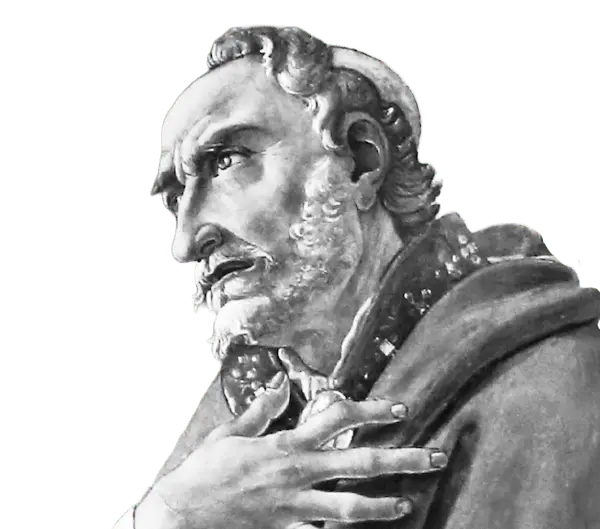
Augustine of Hippo Sermon
Searching the Scriptures: The Unity of Christ and His Church
Searching the Scriptures
1. Pay attention, beloved, to the Gospel lesson that has just sounded in our ears, while I speak a few words as God enables me. The Lord Jesus was speaking to the Jews and said to them, "You search the Scriptures because you think that in them you have eternal life; yet they testify about me" (John 5:39). A little later He said, "I have come in my Father's name, and you do not receive me; if another comes in his own name, you will receive him" (John 5:43). And further on: "How can you believe when you receive glory from one another and do not seek the glory that comes from the only God?" (John 5:44).
Finally He says, "Do not think that I will accuse you to the Father. There is one who accuses you: Moses, on whom you have set your hope. For if you believed Moses, you would believe me, for he wrote of me. But if you do not believe his writings, how will you believe my words?" (John 5:45-47). Listen to a few words about these divine statements—words not to be counted by their number but to be weighed for their importance.
2. All these statements are easy to understand as they apply to the Jews. But we must be careful that in focusing too much on them, we don't take our eyes off ourselves. The Lord was speaking to His disciples, and what He spoke to them, He certainly spoke to us as well, their descendants. What He said doesn't apply only to them but to all Christians who would come after them and succeed them until the end of the world.
Speaking to them He said, "Behold, I am with you always, to the end of the age" (Matthew 28:20). He also said to them, "Beware of the leaven of the Pharisees" (Matthew 16:6). At that time, they thought the Lord said this because they had brought no bread. They didn't understand that "Beware of the leaven of the Pharisees" meant "beware of the teaching of the Pharisees."
What was the teaching of the Pharisees but what you've just heard? "Seeking glory from one another, looking for glory from one another, and not seeking the glory that comes from God alone." The Apostle Paul speaks of them this way: "I bear them witness that they have a zeal for God, but not according to knowledge" (Romans 10:2). He says, "They have a zeal for God"—I know it, I'm certain of it; I was once one of them, I was just like them. "They have a zeal for God, but not according to knowledge."
What does this mean, Apostle, "not according to knowledge"? Explain to us what knowledge you're referring to, which you regret they don't have and which you want us to have. He continued and explained what he had mentioned briefly: "Being ignorant of God's righteousness, and seeking to establish their own, they did not submit to God's righteousness" (Romans 10:3).
To be ignorant of God's righteousness and seek to establish your own—this is to "look for glory from one another and not seek the glory that comes from God alone." This is the leaven of the Pharisees. The Lord warns us to beware of this. If it's servants He's warning, and the Lord who warns, let us take heed. Otherwise, we might hear, "Why do you call me 'Lord, Lord,' and not do what I tell you?" (Luke 6:46).
3. Let's set aside for now the Jews to whom the Lord was speaking. They're outside our fellowship; they don't listen to us; they hate the Gospel itself. They arranged false testimony against the Lord to condemn Him while He was alive, and they bought different false testimony against Him when He was dead. When we say to them, "Believe in Jesus," they answer, "Are we to believe in a dead man?" But when we add, "He rose again," they reply, "Not at all—His disciples stole Him away from the tomb." They love lies and despise the truth of the Lord, their Redeemer.
What you're saying, O Jew, your ancestors bought with money, and this purchased falsehood has been handed down to you. Pay attention instead to the One who bought you, not to the one who bought a lie for you.
4. But as I've said, let's leave these people aside and focus on our brothers with whom we must deal. Christ is the Head of the Body. The Head is in heaven, the Body is on earth. The Head is the Lord; the Body is His Church. Remember what is said: "The two shall become one flesh" (Genesis 2:24). "This mystery is profound, and I am saying that it refers to Christ and the church" (Ephesians 5:32). If they are two in one flesh, they also speak with one voice.
Our Head, the Lord Christ, spoke these words that we just heard when the Gospel was read. The Head spoke to His enemies; now let the Body—that is, the Church—speak to its enemies. You know who these enemies are. I'm not speaking on my own authority when I say that the voice is one, because the flesh is one, and so the voice is one.
Let us then say this to them; I am speaking with the voice of the Church: "O brothers, dispersed children, wandering sheep, branches cut off—why do you criticize me? Why do you refuse to recognize me? 'Search the Scriptures, in which you think you have eternal life; they testify of me' (John 5:39). What our Head says to the Jews, the Body says to you: 'You will search for me and will not find me' (John 7:36). Why? Because you don't search the Scriptures, which testify of me."
5. Here's a testimony about the Head: "To Abraham and his offspring were the promises made. It does not say, 'And to offsprings,' referring to many, but referring to one, 'And to your offspring,' who is Christ" (Galatians 3:16). And here's a testimony for the Body, given to Abraham, which the Apostle cited: "To Abraham the promises were made. 'By myself I have sworn, declares the LORD, because you have done this and have not withheld your son, your only son, I will surely bless you, and I will surely multiply your offspring as the stars of heaven and as the sand on the seashore. And in your offspring shall all the nations of the earth be blessed'" (Genesis 22:16-18).
You have here a testimony for the Head and one for the Body. Listen to another that briefly, almost in a single sentence, includes testimony for both the Head and the Body. The Psalm speaks of Christ's resurrection: "Be exalted, O God, above the heavens!" (Psalm 57:5). And immediately for the Body: "Let your glory be over all the earth" (Psalm 57:5).
Hear a testimony for the Head: "They pierced my hands and feet; they counted all my bones. They stared and gloated over me; they divided my garments among them, and for my clothing they cast lots" (Psalm 22:16-18). Then immediately hear testimony for the Body: "All the ends of the earth shall remember and turn to the LORD, and all the families of the nations shall worship before him. For kingship belongs to the LORD, and he rules over the nations" (Psalm 22:27-28).
Hear another for the Head: "He is like a bridegroom coming out of his chamber" (Psalm 19:5). And in this same Psalm, hear for the Body: "Their voice goes out through all the earth, and their words to the end of the world" (Psalm 19:4).
6. These passages apply both to the Jews and to our separated brothers. Why? Because both accept the Old Testament Scriptures. But what about Christ Himself, whom the Jews don't accept? Let's see if our separated brothers accept Him.
Let Him speak Himself—speak for Himself as the Head and for His Body, the Church. For in us, too, the head speaks for the body. Listen to what He says for the Head: After rising from the dead, He found the disciples hesitating, doubting, and not believing because of joy. "He opened their minds to understand the Scriptures, and said to them, 'Thus it is written, that the Christ should suffer and on the third day rise from the dead'" (Luke 24:45-46). That was for the Head.
Now let Him speak for the Body: "And that repentance for the forgiveness of sins should be proclaimed in his name to all nations, beginning from Jerusalem" (Luke 24:47). Let the Church speak to her enemies; let her speak plainly. She isn't silent; just let them listen.
Brothers, you've heard the testimonies; now recognize me. "Search the Scriptures, in which you hope to have eternal life; they testify of me" (John 5:39). What I've said isn't my own invention but my Lord's teaching. Yet you still turn away, still turn your backs.
"How can you believe, when you receive glory from one another and do not seek the glory that comes from the only God? For being ignorant of God's righteousness and seeking to establish your own, you have not submitted to God's righteousness" (John 5:44, Romans 10:3). What else does it mean to be ignorant of God's righteousness and seek to establish your own, except to say, "It is I who sanctify, I who justify; what I give is holy"?
Leave to God what belongs to God. Recognize, O human, what belongs to humanity. You're ignorant of God's righteousness and want to establish your own. You want to justify me? It's enough that you be justified with me.
7. Scripture speaks of the Antichrist, and everyone understands what the Lord meant when He said, "I have come in my Father's name, and you do not receive me. If another comes in his own name, you will receive him" (John 5:43). But let's also hear what John says: "You have heard that the antichrist is coming, and now many antichrists have come" (1 John 2:18).
What do we find horrifying about the Antichrist except that he exalts his own name and despises the name of the Lord? What else does someone do who says, "I am the one who justifies"? We answer such a person: "I came to Christ, not with my feet but with my heart. Where I heard the Gospel, there I believed, there I was baptized. I believed in Christ; I believed in God."
Yet this person says, "You are not cleansed." "Why?" "Because I wasn't present." "Tell me why I'm not cleansed—I who was baptized in Jerusalem, or who was baptized, for instance, among the Ephesians, to whom an epistle you read was written, and whose peace you reject?"
"Look, the Apostle wrote to the Ephesians. A church was founded there and remains to this day—remains with greater fruitfulness, with larger numbers. It holds fast to what it received from the Apostle: 'If anyone preaches to you a gospel contrary to the one you received, let him be accursed' (Galatians 1:9). What do you say to me? Am I not cleansed? I was baptized there—am I not clean?"
"No, even you are not clean." "Why?" "Because I wasn't there." "But He who is everywhere was there—He in whose name I believed. You, coming from I don't know where—or rather, not coming but wanting me to come to you—fixed in your place, you say to me, 'You weren't validly baptized because I wasn't there.' Consider who was there. What was said to John? 'He on whom you see the Spirit descend and remain, this is he who baptizes' (John 1:33). You're looking for yourself; because you've been jealous of me who was baptized by Him, you've lost Him instead."
8. Understand then, my brothers, our position and theirs, and choose which you prefer. This is what we say: "Whether we're holy, God knows; whether we're unrighteous, He knows better. Don't place your hope in us, whatever we might be. If we're good, do as Scripture says: 'Be imitators of me, as I am of Christ' (1 Corinthians 11:1). But if we're bad, you're still not abandoned or left without guidance: listen to Christ saying, 'Do what they tell you, but not what they do' (Matthew 23:3)."
They, on the contrary, say, "If we weren't good, you would be lost." Look, here is "another who comes in his own name" (John 5:43). Must my life depend on you? Must my salvation be tied to you? Have I so forgotten my foundation? Isn't Christ the Rock? Isn't it true that whoever builds on this rock will not be overthrown by wind or flood? (Matthew 7:24-25). Come then, if you will, with me upon the Rock, and don't try to be my rock.
9. Let the Church also say these final words: "If you believed Moses, you would believe me also, for he wrote of me" (John 5:46)—because I am His Body, about which he wrote. I've already quoted Moses' words: "In your offspring shall all the nations of the earth be blessed" (Genesis 22:18). Moses wrote this in his first book.
If you believed Moses, you would also believe Christ. Because you despise Moses' words, you inevitably despise Christ's words. "They have Moses and the Prophets," He says, "let them hear them." "No, father Abraham, but if someone goes to them from the dead, they will listen." He said to him, "If they do not hear Moses and the Prophets, neither will they be convinced if someone should rise from the dead" (Luke 16:29-31).
This was said of the Jews—was it not also said of heretics? Christ had risen from the dead when He said, "It was necessary that the Christ should suffer and rise from the dead on the third day" (Luke 24:46). "I believe this," you say. You believe? Then why don't you believe what follows? Since you believe "It was necessary that the Christ should suffer and rise from the dead on the third day" —this was spoken about the Head—then believe also what follows concerning the Church: "And that repentance for the forgiveness of sins should be proclaimed in his name to all nations" (Luke 24:47).
Why do you believe what concerns the Head but not what concerns the Body? What has the Church done to you that you would, so to speak, behead her? You want to remove the Church's Head, believe in the Head, but abandon the Body as a lifeless trunk. Your devoted affection for the Head is pointless. Anyone who would cut off the Head is really trying to kill both Head and Body.
They're ashamed to deny Christ, yet not ashamed to deny Christ's words. Neither we nor you have seen Christ with our eyes. The Jews saw Him and killed Him. We haven't seen Him, yet we believe. His words are with us. Compare yourselves with the Jews: they despised Him hanging on the cross; you despise Him seated in heaven. Because of their suggestion, Christ's title was displayed; because of your presumption, Christ's baptism is being erased.
What remains, brothers, except to pray even for the proud, to pray even for the arrogant who exalt themselves so highly? Let us say to God on their behalf, "Let them know that the LORD is your name—that you alone, O Most High, are over all the earth" (Psalm 83:18).