
The Barren Fig Tree and the Bent Woman
Augustine of Hippo Sermon
The Barren Fig Tree and the Bent Woman
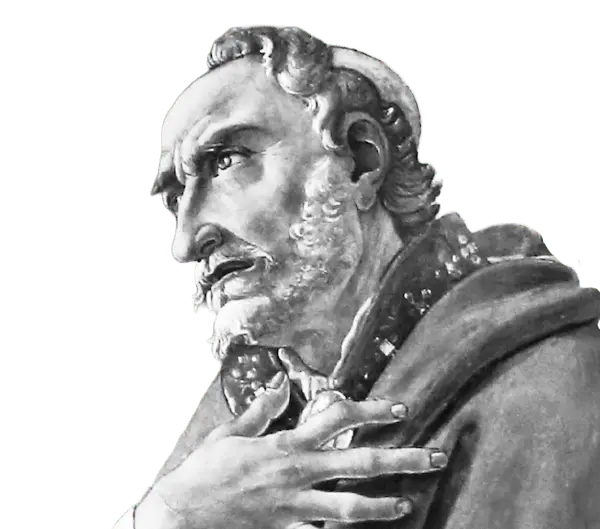
Augustine of Hippo Sermon
The Barren Fig Tree and the Bent Woman
God's Patience and Healing Power
1. Concerning "the fig tree" that was given a three-year trial and bore no fruit, and "the woman who had an infirmity for eighteen years," listen to what the Lord grants me to say. The fig tree represents the human race. The three years represent three time periods: before the Law, under the Law, and under grace.
It's entirely fitting to understand the "fig tree" as representing humanity. When the first man sinned, he covered his nakedness with fig leaves (Genesis 3:7). He covered those parts from which we derive our birth. What before his sin should have been his glory became his shame after sin. Before that, "they were naked and were not ashamed" (Genesis 2:25). They had no reason to blush, when no sin had preceded their condition. They couldn't be ashamed of their Creator's work because they hadn't yet mixed any evil deeds of their own with the good works of their Creator.
They hadn't yet eaten from the tree of knowledge of good and evil, which they had been forbidden to eat. After they ate and sinned, the human race sprang from them—person from person, debtor from debtor, mortal from mortal, sinner from sinner.
In this "tree," then, the Lord describes those who throughout all time would not bear fruit. For this reason, the ax was hanging over the unfruitful tree. The gardener intercedes for it, punishment is delayed, and help is offered.
The gardener who intercedes represents every saint who, within the Church, prays for those outside the Church. And what does he pray? "Lord, let it alone this year also" (Luke 13:8)—that is, in this time of grace, spare the sinners, spare the unbelievers, spare the barren, spare the unfruitful. "I will dig around it and fertilize it. If it bears fruit, well; but if not, you will cut it down" (Luke 13:8-9).
"You will come." When? You will come in judgment, when you come to judge the living and the dead. Meanwhile, sinners are spared. But what is the "digging"? What does "digging around it" mean, except teaching humility and repentance? A ditch is low ground. The fertilizer should be understood by its good effects. It's unpleasant, but it produces fruit. The gardener's fertilizer represents the sinner's sorrows. Those who repent do so in soiled clothing, if they truly understand and repent sincerely. To this tree, then, it's said, "Repent, for the kingdom of heaven is at hand" (Matthew 3:2).
2. What about that "woman who had an infirmity for eighteen years"? In six days God finished His works. Three times six equals eighteen. What the "three years" signified in the fig tree, the "eighteen years" represent in this woman. She was bent over and couldn't look up. She heard "Lift up your hearts" in vain. But the Lord made her straight.
There is hope, then, for humanity until the day of judgment arrives. People attribute much to themselves. Yet what is a human being? A righteous person is certainly something significant. But even a righteous person is righteous only by God's grace. "What is man that You are mindful of him?" (Psalm 8:4). Would you like to see what humanity is? "All men are liars" (Psalm 116:11).
We have chanted, "Arise, O Lord! Do not let man prevail" (Psalm 9:19). What does "do not let man prevail" mean? Weren't the Apostles human? Weren't the martyrs human? The Lord Jesus Himself, without ceasing to be God, chose to become human. What then does "Arise, O Lord; do not let man prevail" mean?
If "all people are liars," then "arise," Truth, "do not let" falsehood "prevail." If a person wants to be something good, it must not come from anything of their own. If they want to rely on their own resources, they will be "a liar." If they want to be truthful, they must draw from what comes from God, not from anything of their own.
3. Therefore, "Arise, O Lord! Do not let man prevail." Falsehood prevailed so much before the flood that only eight people remained afterward. Through them, the earth was again filled with lying people, and from among them God's people were chosen.
Many miracles were performed and divine benefits granted. They were led through to the promised land, delivered from Egyptian bondage. Prophets were raised up among them. They received the temple, the priesthood, the anointing, and the Law. Yet of these very people it was later said, "Foreign children have lied to me" (Psalm 18:44).
At last, the One who had been promised beforehand by the prophets was sent. "Let not man prevail" all the more because God became human. But even though He performed divine works, He was despised. Though He showed so much mercy, He was arrested, scourged, and crucified.
So far "did man prevail": to arrest the Son of God, to scourge the Son of God, to crown the Son of God with thorns, to hang the Son of God on a tree. "Man prevailed" that far—but only until Jesus, having been taken down from the tree, was laid in the tomb. If He had remained there, humanity would have truly "prevailed."
But this prophecy addresses the Lord Jesus Himself: "Arise, O Lord, do not let man prevail." O Lord, You have chosen to come in the flesh, the Word made flesh. The Word above us, the flesh among us, the Word-flesh between God and humanity. You chose a virgin to be born from according to the flesh. When You were conceived, You found a virgin; when You were born, You left her still a virgin.
But You weren't recognized. You were seen yet remained hidden. Your weakness was visible, but Your power was concealed. All this happened so You could shed the blood that is our redemption price. You performed such great miracles, gave health to the sick, showed so much mercy, and received evil in return for good.
They mocked You as You hung on the tree. The ungodly shook their heads before You and said, "If You are the Son of God, come down from the cross" (Matthew 27:40). Had You lost Your power, or were You demonstrating Your patience? Yet they mocked You, they ridiculed You, and when You were killed, they went away as if victorious.
Now You are laid in the tomb: "Arise, O Lord, do not let man prevail." Don't let the ungodly enemy prevail. Don't let the blind Jew prevail. When You were crucified, the Jew in his blindness thought he had prevailed. "Arise, O Lord, do not let man prevail." It is done! It is accomplished! And now what remains except that "the nations be judged in Your sight" ? For He has risen again, as you know, and ascended into heaven. From there, He will come to judge the living and the dead.
4. Ah, unfruitful tree! Don't mock because you're still being spared. The ax has been delayed, but don't feel secure. He will come, and you will be cut down. Believe that He will come. All these things that you now see once did not exist. They were read about in prophecies but not seen on earth. Now they are both read about and seen.
This is how the Church itself has been established. It wasn't said to her, "See, O daughter, and hear," but "Hear and see" (Psalm 45:10). Hear the predictions, then see their fulfillment.
So, my beloved brothers and sisters, Christ had once not been born of a virgin, but His birth was promised, and He was born. He had not yet performed His miracles; they were promised, and He did them. He had not yet suffered; it was promised, and it came to pass. He had not risen again; it was foretold, and fulfilled. His name wasn't known throughout the world; it was foretold, and fulfilled. The idols weren't yet destroyed and broken down; it was foretold, and fulfilled. Heretics hadn't yet attacked the Church; it was foretold, and fulfilled.
Similarly, the Day of Judgment hasn't yet arrived, but since it has been foretold, it will be fulfilled. Could it be that He who has proven Himself true in so many things would be false concerning the Day of Judgment? He has given us a guarantee of His promises. God has made Himself a debtor—not by owing anything or borrowing, but by promising.
We cannot therefore say to Him, "Give back what You have received," since "who has first given to Him, and it shall be repaid to him?" (Romans 11:35). We cannot say to Him, "Give what You have received," but we can say without hesitation, "Give what You have promised."
5. This is why we're bold enough to say, day by day, "Your kingdom come" (Matthew 6:10)—so that when His kingdom comes, we too may reign with Him. This has been promised to us in these words: "Then I will say to them, 'Come, you blessed of My Father, inherit the kingdom prepared for you from the foundation of the world'" (Matthew 25:34).
But this will happen only if we do what follows in that passage: "For I was hungry and you gave Me food," and so on (Matthew 25:35). He made these promises to our ancestors, but He has given us a written guarantee that we too can read.
If He who has graciously provided this guarantee were to settle accounts with us and say, "Read my debts—the debts of my promises—and calculate what I've already paid and what I still owe. See how many I've already paid, and what little remains. For that small remainder, will you consider Me an untrustworthy promiser?" What could we answer against such evident truth?
Therefore, let those who are barren repent and "bear fruits worthy of repentance" (Matthew 3:8). Let the person who is bent down—who looks only at the earth, rejoices in earthly happiness, who considers this the only happy life where temporary happiness is possible, and who believes no other happiness exists—let such a person be straightened up. If they cannot do it by themselves, let them call upon God. For could that woman have straightened herself? How terrible it would have been for her if He had not stretched out His hand!