
The Beatitudes and the Pure in Heart
Augustine of Hippo Sermon
The Beatitudes and the Pure in Heart
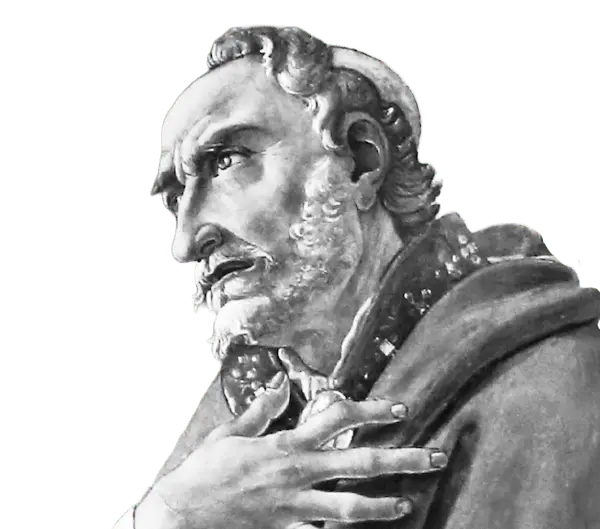
Augustine of Hippo Sermon
The Beatitudes and the Pure in Heart
Blessed Are the Pure in Heart
1. The commemoration of a holy virgin who gave her testimony to Christ and was found worthy of His testimony—who was openly put to death but invisibly crowned—reminds me to speak to you, beloved, about that exhortation the Lord has just now uttered from the Gospel. He assures us there are many sources of a blessed life, which everyone desires. Surely no one can be found who doesn't want to be blessed! But how I wish people were as eager for the work that leads to blessing as they are for the reward!
Who wouldn't run with enthusiasm if told, "You will be blessed"? Let each person then listen gladly and readily when told, "Blessed are you if you do this." Don't refuse the contest if you love the reward. Let the mind be sparked to eager action by the promise of the reward. What we desire and seek will come later, but what we're commanded to do for the sake of what will come later must be done now.
Begin now to recall the divine sayings, the precepts and rewards of the Gospel. "Blessed are the poor in spirit, for theirs is the kingdom of heaven" (Matthew 5:3). The kingdom of heaven will be yours in the future if you are poor in spirit now. Do you want the kingdom of heaven to be yours in the future? Consider whose you are now. Be poor in spirit.
You may ask, "What does it mean to be poor in spirit?" Anyone who is puffed up is not poor in spirit; therefore, whoever is humble is poor in spirit. The kingdom of heaven is exalted, but "whoever humbles himself will be exalted" (Matthew 23:12).
2. Notice what follows: "Blessed are the meek, for they shall inherit the earth" (Matthew 5:5). You want to possess the earth now? Be careful lest the earth possesses you! If you are meek, you will possess it; if harsh, you will be possessed by it. When you hear of the promised reward, don't unfold the cloak of greed, through which you would possess the earth now, even excluding your neighbor by whatever means. Don't let such an imagination deceive you.
You will truly possess the earth when you hold fast to Him who made heaven and earth. To be meek means not to resist your God, so that in your good deeds, He is pleasing to you, not you to yourself. And in your just sufferings, He is not displeasing to you, but you to yourself. It's no small thing to please Him when you are displeased with yourself. But if you are pleased with yourself, you will displease Him.
3. Consider the third lesson: "Blessed are those who mourn, for they shall be comforted" (Matthew 5:4). The work is to mourn; the reward is consolation. What consolation do those who mourn in a worldly way receive? Miserable consolations, things that cause more fear. The mourner is comforted by things that make him afraid of mourning again.
For instance, a father is sorrowful because of his son's death but joyful because of another son's birth. He has carried one to burial; he has brought another into the world. In the first is cause for sadness, in the second cause for fear—and in neither is there consolation. True consolation will come only when something is given that cannot be lost, so that those may rejoice in their future comfort who mourn that they are now in exile.
4. Let's move to the fourth work and its reward: "Blessed are those who hunger and thirst for righteousness, for they shall be filled" (Matthew 5:6). You want to be filled? Consider what will truly satisfy you. If your body longs for fullness, after digestion you will hunger again. As Jesus says, "Whoever drinks of this water will thirst again" (John 4:13).
When a remedy is applied to a wound and heals it, there is no more pain. But the remedy applied against hunger—food—only provides relief for a short while. When fullness passes, hunger returns. This remedy for fullness is applied daily, yet the wound of weakness is not healed.
Therefore, let us hunger and thirst for righteousness, that we may be filled with that righteousness for which we now hunger and thirst. Our inner self should hunger and thirst, for it has its own proper food and drink. "I am the bread which came down from heaven," Jesus says (John 6:41). Here is bread for the hungry. Long also for the drink of the thirsty: "For with You is the fountain of life" (Psalm 36:9).
5. Note what comes next: "Blessed are the merciful, for they shall obtain mercy" (Matthew 5:7). Do this, and it will be done to you. Deal with others as you want God to deal with you. You are simultaneously in abundance and in want—in abundance of temporal things, in want of eternal things. The person you hear begging from you is a beggar, and you yourself are God's beggar. Someone petitions you, and you make your petition to God. As you deal with your petitioner, so will God deal with His. You are both full and empty; fill the empty with your fullness, so that your emptiness may be filled with God's fullness.
6. Consider what follows: "Blessed are the pure in heart, for they shall see God" (Matthew 5:8). This is the goal of our love—an end by which we are perfected, not consumed. Food has an end when it is consumed in eating; a garment has an end when its weaving is completed. The first is an end that destroys; the second is an end that perfects.
Whatever we do now, whatever we do well, whatever we strive for or properly desire—when we come to the vision of God, we will need nothing more. What more could someone seek when God is present? What could satisfy someone whom God doesn't satisfy? We want to see God. We seek Him and burn with desire to see Him. Who doesn't? But note what is said: "Blessed are the pure in heart, for they shall see God."
Prepare yourself, then, with that which enables you to see God. Speaking in human terms, how could someone with weak eyes desire to see the rising sun? Let the eye be healthy, and that light will bring joy. If the eye is unhealthy, that same light will only bring torment. A heart that is impure cannot be permitted to see what only the pure in heart can see. You will be pushed back, driven away, and will not see it. "Blessed are the pure in heart, for they shall see God."
How many times have the blessed and their causes of blessedness been enumerated along with their works and rewards, their merits and compensations! But nowhere else has it been said, "They shall see God." "Blessed are the poor in spirit, for theirs is the kingdom of heaven. Blessed are the meek, for they shall inherit the earth. Blessed are those who mourn, for they shall be comforted. Blessed are those who hunger and thirst for righteousness, for they shall be filled. Blessed are the merciful, for they shall obtain mercy." In none of these is it said, "They shall see God." Only when we come to "the pure in heart" is the vision of God promised.
This is not without reason, for the eyes by which God is seen are in the heart. As the Apostle Paul says, "The eyes of your heart being enlightened" (Ephesians 1:18). At present, these eyes are enlightened according to their capacity by faith; later, according to their strength, they will be enlightened by sight. For "as long as we are in the body, we are absent from the Lord; for we walk by faith, not by sight" (2 Corinthians 5:6-7). While we're in this state of faith, what is said of us? "We see now through a glass, darkly; but then face to face" (1 Corinthians 13:12).
7. Don't entertain any thought here of a physical face. If, motivated by the desire to see God, you've prepared your physical face to see Him, you'll be looking for a similar face in God. But if your conception of God is at least spiritual enough not to imagine Him as having a body (which I discussed at length yesterday, hopefully not in vain), if I've succeeded in breaking down in your heart, as in God's temple, that image of human form—if the words expressing the Apostle's disgust for those "who, professing to be wise, became fools, and changed the glory of the incorruptible God into an image made like corruptible man" (Romans 1:22-23) have penetrated your minds and taken root in your hearts—if you now detest such impiety, if you keep God's temple clean for the Creator, if you want Him to come and make His dwelling with you, then "think of the Lord with goodness, and seek Him in simplicity of heart" (Wisdom 1:1).
Take note of who it is to whom you say, if indeed you say it sincerely, "My heart has said to You, I will seek Your face." Let your heart also say, and add, "Your face, Lord, I will seek" (Psalm 27:8). For this is how you will seek it well—by seeking with your heart.
Scripture speaks of the face of God, the arm of God, the hands of God, the feet of God, God's throne and His footstool. But don't imagine human body parts in all this. If you want to be a temple of truth, break down the idol of falsehood. The hand of God is His power. The face of God is the knowledge of God. The feet of God are His presence. The throne of God, if you are so inclined, is your own self. But perhaps you might question whether Christ is God? "Not so," you say. Do you also accept that Christ is the power of God and the wisdom of God? "I grant it," you say. Hear then, "The soul of the righteous is the seat of wisdom." "Yes." For where does God have His seat but where He dwells? And where does He dwell except in His temple? "For the temple of God is holy, which temple you are" (1 Corinthians 3:17).
Be careful, then, how you receive God. "God is Spirit, and those who worship Him must worship in spirit and truth" (John 4:24). Let the ark of testimony now enter your heart, if you are so minded, and let Dagon fall (1 Samuel 5:3-4). Listen now and learn to yearn for God; learn to prepare that by which you may see God. "Blessed are the pure in heart, for they shall see God." Why are you preparing the eyes of your body? If He could be seen by them, what you would see would be contained in space. But He who is wholly everywhere is not contained in space. Cleanse that by which He may be seen.
8. Hear and understand, if perhaps through His help I can explain it. May He help us understand all the works and rewards mentioned above, and how suitable rewards are matched to their corresponding duties. Is there anything mentioned as a reward that doesn't fit harmoniously with its work?
Since the humble seem far removed from a kingdom, He says, "Blessed are the poor in spirit, for theirs is the kingdom of heaven." Because meek people are easily deprived of their land, He says, "Blessed are the meek, for they shall inherit the earth."
The rest are clear and self-explanatory, needing no lengthy treatment but only mention. "Blessed are those who mourn." What mourner doesn't desire comfort? "They shall be comforted." "Blessed are those who hunger and thirst for righteousness." What hungry and thirsty person doesn't seek to be filled? "They shall be filled." "Blessed are the merciful." What merciful person doesn't wish that God would return to them what they have done, treating them as they have treated the poor? "Blessed are the merciful, for they shall obtain mercy."
Notice how each duty has its appropriate reward, and nothing is introduced in the reward that doesn't match the command! The command is to be "poor in spirit"; the reward is "the kingdom of heaven." The command is to be "meek"; the reward is to "inherit the earth." The command is to "mourn"; the reward is to be "comforted." The command is to "hunger and thirst after righteousness"; the reward is to be "filled." The command is to be "merciful"; the reward is to "obtain mercy." And so the command is to "cleanse the heart"; the reward is to "see God."
9. But don't think of these commands and rewards as if only the pure in heart will see God, while the poor in spirit, the meek, those who mourn, those who hunger and thirst after righteousness, and the merciful will not see Him. Don't think that only the pure in heart will see God while others are excluded. All these qualities describe the same persons. They will all see God, but not because they are poor in spirit, or meek, or mourning, or hungering and thirsting after righteousness, or merciful—but because they are pure in heart.
It's like assigning different bodily works to different body parts: the feet walk, the hands work, the voice speaks, the mouth speaks, the eyes see. If someone said, "Blessed are those who have feet, for they shall walk; blessed are those who have hands, for they shall work; blessed are those who have a voice, for they shall speak; blessed are those who have a mouth and tongue, for they shall speak; blessed are those who have eyes, for they shall see"—this would make sense because each body part has its function.
Similarly, our Lord has arranged in order the parts, as it were, of the soul, teaching what is proper to each. Humility qualifies one for possessing the kingdom of heaven; meekness for inheriting the earth; mourning for consolation; hunger and thirst after righteousness for being filled; mercy for obtaining mercy; a pure heart for seeing God.
10. If, then, we desire to see God, how shall our eye be purified? Who wouldn't care about and diligently seek the means of purifying the eye by which they might see the One they long for with complete devotion? Scripture explicitly mentions this when it says, "purifying their hearts by faith" (Acts 15:9). Faith in God purifies the heart; the pure heart sees God.
But sometimes faith is defined by self-deceiving people as though merely believing were enough. Some promise themselves the vision of God and the kingdom of heaven, though they believe yet live wickedly. Against these, the Apostle James, inflamed and indignant with holy love, says in his Epistle, "You believe that there is one God" (James 2:19). You congratulate yourself on your faith. You notice how many ungodly people think there are many gods, and you rejoice because you believe there is only one God. "You do well. The demons also believe—and tremble." Will they also see God? Only those who are pure in heart will see God. But who can say that unclean spirits are pure in heart? Yet they too "believe and tremble."
11. Our faith, then, must be different from the faith of demons. Our faith purifies the heart; their faith makes them guilty. They do wickedly, which is why they say to the Lord, "What have we to do with You?" (Matthew 8:29). When you hear demons say this, do you think they don't acknowledge Him? "We know who You are: You are the Son of God" (Mark 3:11). Peter says this and is commended; the demon says it and is condemned. Why? Because though the words are the same, the heart is different.
Let us distinguish our faith, then, and not be content merely to believe. This alone is not the faith that purifies the heart. "Purifying their hearts by faith," Scripture says. But by what faith? What kind of faith? The faith the Apostle Paul defines when he says, "Faith working through love" (Galatians 5:6). This faith distinguishes us from the faith of demons and from the behavior of wicked people. "Faith," he says. What faith? "That which works through love." Nothing is more precise or perfect than this definition.
Faith has these three components: The person who has the faith that works through love must necessarily hope for what God promises. Hope, therefore, accompanies faith. Hope is necessary as long as we don't see what we believe, lest by not seeing and by despairing of seeing, we fail. The fact that we don't see makes us sad, but the hope that we will see comforts us. So hope is present, accompanying faith.
And then charity is also present, by which we desire, strive, and ardently long for the promised good. For how can there be no charity where charity is nothing other than love? This faith itself is defined as "working through love." Take away faith, and all you believe perishes; take away charity, and all you do perishes. It is faith's role to believe, charity's role to act. If you believe without love, you won't apply yourself to good works; or if you do, it's as a servant, not as a child—through fear of punishment, not through love of righteousness. Therefore, I say that faith purifies the heart when it works through love.
12. And what does this faith accomplish now? What does it achieve through so many testimonies of Scripture, through its many lessons, its various and abundant exhortations? It enables us to "see now in a mirror, dimly, but then face to face" (1 Corinthians 13:12). But don't turn your thoughts again to your physical face. Think only of the face of the heart. Force, compel, press your heart to think of divine things. Whatever comes to your mind that resembles a body, reject it. If you cannot yet say, "It is this," at least say, "It is not this." For when will you be able to say, "This is God"? Not even when you see Him, for what you will see is beyond words.
The Apostle says that he "was caught up into the third heaven and heard inexpressible words" (2 Corinthians 12:2, 4). If the words are inexpressible, what about the One whose words they are? So as you think about God, perhaps there comes to mind some extraordinary human figure of marvelous greatness, and you set it before your mind's eye as something grand and vast. But somewhere you must set boundaries to it. If you have, it is not God. If you haven't set boundaries to it, where can the face be?
You're imagining some huge body, and to distinguish its parts, you need to set boundaries to it. Only by setting bounds to this large body can you distinguish its members. But what are you doing, foolish, fleshly imagination? You've created a large, bulky body, and the more you've tried to honor God, the larger you've made it. Someone else adds a cubit to it, making it even larger than before.
13. "But I've read," you'll say. What have you read, when you've understood nothing? Yet tell me, what have you read? Let's not push away the child in understanding with his play. Tell me, what have you read? "Heaven is My throne, and earth is My footstool" (Isaiah 66:1). I hear you; I've read it too. But perhaps you think you have an advantage because you've both read and believed it. I also believe what you've just said. Let's believe it together. But what am I saying? Let's search it out together.
Hold fast what you've read and believed: "Heaven is My throne" (that is, "My seat," for "throne" in Greek is "seat" in Latin), "and earth is My footstool." But haven't you also read these words: "Who has measured heaven with the span of His hand?" (Isaiah 40:12). I conclude that you've read them; you acknowledge them and confess that you believe them, for in that book we read both passages and believe both. But now think a while and teach me. I'll make you my teacher and myself the student. Teach me, I pray: who is the one "who sits on the span of His hand"?
14. You see, you've drawn the physical features and outline of God's body parts from a human body. And perhaps it's occurred to you to think that we were made in God's image according to our bodies. I'll allow this idea to be considered, discussed, examined, and thoroughly sifted through debate.
Now then, if you please, hear me out, since I've heard what you were pleased to say. God sits in heaven and measures heaven with His palm. What! Does heaven become wide when it's God's seat, and narrow when He measures it? Or is God limited to the measure of His palm when sitting? If so, God didn't make us in His likeness, because the palm of our hand is much narrower than the part of our body on which we sit. But if God is as wide in His palm as when sitting, He has made our body parts quite unlike His. There's no resemblance here. So let the Christian blush to set up such an idol in his heart.
Therefore, understand "heaven" as referring to all the saints. The earth is also spoken of as all who dwell on earth: "Let all the earth worship You" (Psalm 66:4). If we can properly say of those who live on earth, "Let all the earth worship You," we can likewise say of those who dwell in heaven, "Let all heaven bear You." For even the saints who live on earth, though they walk on the earth in body, in heart dwell in heaven.
It's not without reason that they're reminded to "lift up their hearts," and when reminded, they respond "that they lift them up." Nor is it without reason that we're told, "If then you were raised with Christ, seek those things which are above, where Christ is, sitting at the right hand of God. Set your mind on things above, not on things on the earth" (Colossians 3:1-2). To the extent that they have their conversation there, they bear God and are heaven, because they are God's seat. When they declare God's words, "The heavens declare the glory of God" (Psalm 19:1).
15. Return with me to the face of the heart and make it ready. That to which God speaks is within. The ears, eyes, and all the visible members are either the dwelling place or the instrument of something within. It's the inner person where Christ dwells now by faith, and later He will dwell by the presence of His divinity when we've understood "what is the width, length, depth, and height" and have known "the love of Christ which passes knowledge, that we may be filled with all the fullness of God" (Ephesians 3:18-19).
If you want to understand these words, summon all your powers to comprehend the width, length, height, and depth. Don't wander in your imagination through the spaces of the world and the vast expanse of this enormous body. Look for what I'm speaking of within yourself. The "width" is in good works; the "length" is in perseverance in well-doing; the "height" is in the expectation of rewards above, for which you're instructed to "lift up your heart." Do good, persevere in doing good, because of God's reward.
Consider earthly things as nothing, so that when this earth is struck by any punishment from the Wise One, you won't say you've worshiped God in vain, done good works in vain, or persevered in good works in vain. By doing good works, you have the "width"; by persevering in them, you have the "length"; but by seeking earthly things, you haven't attained the "height." Now consider the "depth": it is God's grace in the secret dispensation of His will. "For who has known the mind of the Lord? Or who has become His counselor?" (Romans 11:34). And, "Your judgments are a great deep" (Psalm 36:6).
16. This life of doing good, persevering in good, hoping for heavenly rewards, and recognizing the secret dispensation of God's grace—in wisdom not foolishness, not finding fault because one person is like this and another like that, because "there is no injustice with God"—apply this, if you wish, also to the Cross of your Lord.
It wasn't meaningless that He chose this kind of death, when it was in His power either to die or not to die. If it was in His power to die or not, why wasn't it in His power to die in one way or another? He didn't select the Cross without meaning; by it He crucified you to this world.
For the "width" is the crossbeam where the hands are fastened, symbolizing good works. The "length" is the part of the wood that extends from this crossbeam to the ground. There the body is crucified and stands upright, signifying perseverance. The "height" is the part that projects upward from the crossbeam to the head, representing the expectation of things above. And where is the "depth" but in the part fixed in the ground? There is the hidden dispensation of grace, not seen itself but from which all that is seen emerges.
After you've comprehended all these dimensions—not just in understanding but in action (for "all who practice them have good understanding" )—then, if you can, stretch yourself to attain "the knowledge of the love of Christ which passes knowledge" (Ephesians 3:19). When you've attained to it, you'll "be filled with all the fullness of God." Then will be fulfilled the promise of seeing God "face to face." You will be filled with all God's fullness—not as if God would be full of you, but so that you will be full of God.
Look there, if you can, for any physical face. Away with such childish notions from the mind's eye! Let the child put away his toys and learn to handle more serious matters. In many things we are still children, and when we were even more so than we are now, we were tolerated by our elders. "Pursue peace with all people, and holiness, without which no one will see the Lord" (Hebrews 12:14). For by this the heart is purified; for in it is that faith "which works through love." Hence, "Blessed are the pure in heart, for they shall see God" (Matthew 5:8).