
The Canaanite Woman: A Model of Humility
Augustine of Hippo Sermon
The Canaanite Woman: A Model of Humility
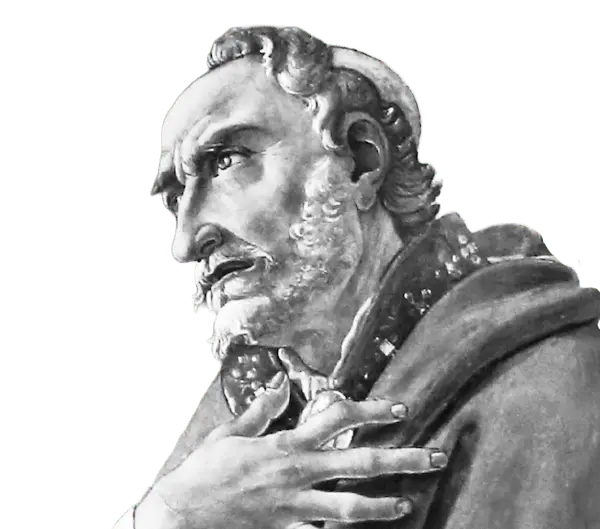
Augustine of Hippo Sermon
The Canaanite Woman: A Model of Humility
The Power of Humble Faith
1. This Canaanite woman who has just been presented to us in the Gospel reading shows us an example of humility and the way of godliness. She shows us how to rise from humility to exaltation. As it appears, she was not from the people of Israel, from whom came the patriarchs, prophets, and the parents of our Lord Jesus Christ according to the flesh—from whom the Virgin Mary herself came, who was Christ's mother. This woman was not from this people, but from the Gentiles.
For as we've heard, the Lord "went to the region of Tyre and Sidon. And behold, a Canaanite woman came from that region" (Matthew 15:21-22), and with the greatest earnestness begged Him for mercy to heal her daughter, "who was severely demon-possessed." Tyre and Sidon were not cities of the Israelite people but of the Gentiles, though they bordered that people.
She cried out eagerly to obtain mercy and boldly knocked at the door of grace. Jesus acted as though He didn't hear her—not to deny her mercy, but to inflame her desire, and not only to inflame her desire but, as I said before, to showcase her humility. Therefore she cried out while the Lord seemed not to hear her, but He was silently preparing what He was about to do. The disciples asked the Lord on her behalf, saying, "Send her away, for she cries after us." And He said, "I was not sent except to the lost sheep of the house of Israel" (Matthew 15:24).
2. A question arises from these words: "If He was sent only to the lost sheep of the house of Israel, how did we from among the Gentiles come into Christ's fold? What is the meaning of this profound mystery—that although the Lord knew the purpose of His coming, that He would have a Church in all nations, He said that He 'was not sent except to the lost sheep of the house of Israel'?"
We understand from this that it was necessary for Him to manifest His physical presence, His birth, the display of His miracles, and the power of His resurrection among that people. That's how it had been ordained, established from the beginning, predicted, and fulfilled—that Christ Jesus would come to the nation of the Jews, to be seen and slain, and to gain from among them those whom He foreknew.
For that nation wasn't wholly condemned but sifted. There was among them a great quantity of chaff, but there was also the hidden value of the grain. Among them was that which was to be burned, but among them was also that with which the barn was to be filled. For where did the apostles come from? Where did Peter come from? Where did the rest come from?
3. Where did Paul himself come from, who was first called Saul, first proud, afterward humble? For when he was Saul, his name derived from Saul, a proud king who in his reign persecuted the humble David. So when he who later became Paul was first Saul, he was proud, a persecutor of the innocent, a destroyer of the Church.
He had received letters from the chief priests (burning as he was with zeal for the synagogue and persecuting Christians) so he could identify any Christians he found and have them punished. While on his way, while breathing out threats of slaughter, while thirsting for blood, he was thrown to the ground by the voice of Christ from heaven. The persecutor was knocked down; the preacher was raised up. In him was fulfilled what is written in the prophet: "I will wound and I will heal" (Deuteronomy 32:39). For God only wounds in humanity that which lifts itself up against God.
God is no unkind physician who opens a swelling, who cuts or cauterizes the diseased part. He gives pain, it's true, but He only gives pain to bring the patient to health. He gives pain, but without it He would do no good. Christ then with one word laid Saul low and raised up Paul—that is, He laid low the proud and raised up the humble. For what was the reason for his change of name, that whereas before he was called Saul, he afterward chose to be called Paul, except that he acknowledged his name of Saul had been a name of pride when he was a persecutor?
He chose, therefore, a humble name, to be called Paul, which means "the least." Paul is nothing else but "little." Now glorying in this name and giving us a lesson of humility, he says, "I am the least of the apostles" (1 Corinthians 15:9). From where, then, was he if not from the people of the Jews? The other apostles were also from them. Paul was from them, as were those whom Paul mentions as having seen the Lord after His resurrection. "For He was seen by over five hundred brethren at once, of whom the greater part remain to the present, but some have fallen asleep" (1 Corinthians 15:6).
4. From this people too, from the people of the Jews, were those who, when Peter was speaking and setting forth the Passion, Resurrection, and divinity of Christ (after the Holy Spirit had been received, when all those on whom the Holy Spirit had come spoke in the languages of all nations), were cut to the heart as they heard him. They sought advice for their salvation, understanding that they were guilty of Christ's blood, for they had crucified and slain Him in whose name they saw such great miracles performed and witnessed the presence of the Holy Spirit.
Seeking advice, they received this answer: "Repent, and let every one of you be baptized in the name of Jesus Christ for the remission of sins" (Acts 2:38). Who should despair of the forgiveness of sins when even the crime of killing Christ was forgiven those who were guilty of it? They were converted from among this people of the Jews; they were converted and baptized. They came to the Lord's table and in faith drank that Blood which in their fury they had shed.
The Acts of the Apostles show how decidedly and perfectly they were converted: "They sold all that they possessed and laid the prices of their things at the apostles' feet; and distribution was made to each as anyone had need; and no one said that any of the things he possessed was his own, but they had all things in common" (Acts 4:32-35). And, "They were," as it is written, "of one heart and one soul."
See here the sheep of whom He said, "I was not sent except to the lost sheep of the house of Israel." For to them He showed His presence, for them in the midst of their violence against Him He prayed as He was being crucified, "Father, forgive them, for they do not know what they do" (Luke 23:34). The Physician understood how those frenzied people were in their madness putting the Physician to death, and in putting their Physician to death, though they didn't know it, were preparing a medicine for themselves.
For by the Lord so put to death, we are all cured; by His blood we are redeemed, by the bread of His Body delivered from famine. This presence, then, Christ showed to the Jews. And so He said, "I was not sent except to the lost sheep of the house of Israel," to show them the presence of His body—not that He might disregard and pass over the sheep He had among the Gentiles.
5. For to the Gentiles He didn't go personally, but sent His disciples. And in this was fulfilled what the prophet said: "A people I have not known shall serve Me" (Psalm 18:43). See how deep, how clear, how explicit the prophecy is: "A people whom I have not known," that is, to whom I have not shown My presence, "has served Me." How? It continues, "By the hearing of the ear they have obeyed Me" (Psalm 18:44). That is, they have believed, not by seeing, but by hearing.
Therefore, the Gentiles deserve greater praise. For the others saw and killed Him; the Gentiles heard and believed. It was to call and gather together the Gentiles—so that what we've just heard chanted might be fulfilled, "Gather us from among the Gentiles, that we may give thanks to Your name and glory in Your praise" (Psalm 106:47)—that the Apostle Paul was sent. He, the least, was made great, not by himself but by Him whom he once persecuted. He was sent to the Gentiles, transformed from robber to shepherd, from wolf to sheep. He, the least apostle, was sent to the Gentiles, labored much among the Gentiles, and through him the Gentiles believed. His epistles are the evidence.
6. For this you have a very sacred figure in the Gospel also. A daughter of a ruler of the synagogue had died, and her father asked the Lord to go to her. He had left her sick and in extreme danger. The Lord set out to visit and heal the sick; meanwhile it was announced that she was dead. And the father was told, "Your daughter is dead. Why trouble the Teacher any further?" (Mark 5:35).
But the Lord, who knew He could raise the dead, didn't deprive the despairing father of hope. He said to him, "Do not be afraid; only believe" (Mark 5:36). So He set out for the girl.
On the way, a certain woman who had suffered from a flow of blood for many years and in her long illness had spent all she had on physicians to no purpose, pressed herself in among the crowds as best she could. When she touched the border of His garment, she was healed. And the Lord said, "Who touched Me?" (Luke 8:45-46).
The disciples, who didn't know what had happened and saw that He was surrounded by the multitudes—and that He was concerned about one single woman who had touched Him gently—answered in astonishment, "The multitudes press You, and You say, 'Who touched Me?'" And He said, "Somebody touched Me." The crowds press, but she touches. Many press rudely against Christ's body, but few touch it in a healing way. "Somebody," He says, "has touched Me, for I perceive that power has gone out from Me."
"And when the woman saw that she was not hidden, she fell down at His feet" and confessed what had happened. After this, He continued on His way and arrived where He was going, and raised to life the young daughter of the ruler of the synagogue who was found to be dead.
7. This was a literal event and happened as described. Nevertheless, these things that the Lord did had some further significance, being, so to speak, visible and symbolic words. This is especially clear in the incident where He sought fruit on the tree out of season, and because He found none, cursed the tree so it withered (Mark 11:12-14, 20-21).
Unless this action is understood as symbolic, there's no good meaning in it. First, to have sought fruit on a tree when it wasn't the season for fruit on any tree; and second, even if it had been the time for fruit, what fault was it in the tree to have none? But because this signified that He seeks not only for leaves but also for fruit—that is, not just for the words but also for the deeds of people—by withering that tree on which He found only leaves, He signified the punishment of those who can speak good things but refuse to do them.
The same is true in this case. Surely there's a mystery when He who knows all things says, "Who touched Me?" The Creator makes Himself seem ignorant, and He asks, though He not only knew this but foreknew all other things. Certainly there's something Christ would speak to us through this significant mystery.
8. That daughter of the ruler of the synagogue was a figure of the people of the Jews, for whose sake Christ had come, who said, "I was not sent except to the lost sheep of the house of Israel." But the woman suffering from the flow of blood symbolized the Church from among the Gentiles, to which Christ was not sent in His bodily presence.
He was going to the Jewish girl; He was intent on her recovery. Meanwhile, the Gentile woman runs to meet Him, touches His border as though He doesn't know it—that is, she is healed by Him who is in some sense absent. He says, "Who touched Me?" as though He would say, "I don't know this people." "A people whom I have not known has served Me. Someone has touched Me, for I perceive that power has gone out from Me" —that is, that My Gospel has gone out and filled the whole world.
Now it's the border that's touched, a small and outside part of the garment. Consider the apostles as the garment of Christ. Among them, Paul was the border—that is, the last and least. For he said of himself that he was both, "I am the least of the apostles." He was called after them all, believed after them all, healed more than they all. The Lord was sent only "to the lost sheep of the house of Israel."
But because a "people whom He had not known was also to serve Him and obey Him by the hearing of the ear," He made mention of them too when He was among the others. For the same Lord said in a certain place, "Other sheep I have which are not of this fold; them also I must bring, and they will hear My voice; and there will be one flock and one shepherd" (John 10:16).
9. Of these was this woman. Therefore, she wasn't refused but only delayed. "I am not sent," He says, "except to the lost sheep of the house of Israel." And she was persistent in her cries; she persevered, she knocked, as if she had already heard, "Ask, and you will receive; seek, and you will find; knock, and it will be opened to you" (Matthew 7:7). She kept on; she knocked.
For when the Lord spoke these words, "Ask, and you will receive; seek, and you will find; knock, and it will be opened to you," He had also said before, "Do not give what is holy to the dogs, nor cast your pearls before swine, lest they trample them under their feet, and turn and tear you in pieces" (Matthew 7:6)—that is, lest after despising your pearls, they also mistreat you. Don't cast before them what they despise.
10. And how can we distinguish (someone might ask) who are the "swine" and who are the "dogs"? This has been shown in the case of this woman. For He only answered to her pleas, "It is not good to take the children's bread and throw it to the little dogs" (Matthew 15:26). You are a dog, you are one of the Gentiles, you worship idols. But what is more appropriate for dogs than to lick stones? "It is not good" therefore "to take the children's bread and throw it to the little dogs."
Had she gone away after these words, she would have gone as she came—a dog. But by knocking, she was transformed from a dog into a human being. For she persevered in asking, and from that reproach she displayed her humility and obtained mercy. For she wasn't upset or angered at being called a dog as she asked for this blessing and prayed for mercy, but said, "Yes, Lord" (Matthew 15:27). "You have called me a dog, and truly a dog I am. I acknowledge my name; it's the Truth who speaks. But I shouldn't on that account be refused this blessing. Truly I am a dog; 'yet even the little dogs eat the crumbs which fall from their masters' table.'" It's but a moderate and small blessing I desire; I don't press to the table, I only seek for the crumbs.
11. See, brothers, how the value of humility is set before us! The Lord had called her a dog, and she didn't say, "I am not," but said, "I am." And because she acknowledged herself to be a dog, the Lord immediately said, "O woman, great is your faith! Let it be to you as you desire" (Matthew 15:28). You have acknowledged yourself to be a dog; I now acknowledge you to be a human being. "O woman, great is your faith" ; you have asked, and sought, and knocked; receive, find, be it opened to you.
See, brothers, how in this woman who was a Canaanite—that is, who came from among the Gentiles and was a symbol, a figure, of the Church—the grace of humility has been prominently set before us. For the Jewish nation, in order that it might be deprived of the grace of the Gospel, was puffed up with pride because to them it had been granted to receive the Law, because from this nation the patriarchs had proceeded, the prophets had sprung, Moses, the servant of God, had done the great miracles in Egypt which we have heard about in the Psalm, had led the people through the Red Sea when the waters parted, and had received the Law, which he gave to this people.
This was what the Jewish nation was so proud of, and through this very pride it happened that they were not willing to humble themselves to Christ the author of humility and the restrainer of proud swelling, to God the Physician. Being God, He became man for this purpose: that man might know himself to be but man. O mighty remedy! If this remedy doesn't cure pride, I don't know what can cure it.
He is God and becomes man; He sets aside His divinity—that is, in a manner He hides, so to speak, what was His own and appears only in what He had taken on. Being God, He is made man; and man will not acknowledge himself to be man—that is, will not acknowledge himself to be mortal, frail, a sinner, sick. Man will not acknowledge this so that, as a sick person, he may seek the physician. What's more dangerous still, he imagines himself to be in good health.
12. So for this reason that people didn't come to Him—because of pride. The natural branches are said to be broken off from the olive tree—that is, from that people founded by the patriarchs. In other words, the Jews are, for their punishment, justly barren through the spirit of pride, and the wild olive tree is grafted into that olive tree.
The wild olive tree is the people of the Gentiles. So says the Apostle, "that the wild olive tree is grafted into the good olive tree, but the natural branches are broken off" (Romans 11:17, 19). Because of pride they were broken off, and the wild olive grafted in because of humility.
This humility the woman showed when she said, "Yes, Lord, yet even the little dogs eat the crumbs which fall from their masters' table." Because of this humility, she heard, "O woman, great is your faith."
In this humility the centurion also pleased Him, who, when he wanted his servant to be healed by the Lord and the Lord said, "I will come and heal him," answered, "Lord, I am not worthy that You should come under my roof, but only speak a word, and my servant will be healed. I am not worthy that You should come under my roof" (Matthew 8:7-8). He didn't receive Him into his house, but he had received Him already in his heart. The more humble, the more capacious, and the more full. For the hills drive back the water, but the valleys are filled by it.
And what then, what did the Lord say to those who followed Him after the centurion had said, "I am not worthy that You should come under my roof" ? "Assuredly, I say to you, I have not found such great faith, not even in Israel" (Matthew 8:10)—that is, in that people to whom I came. "I have not found such great faith." And from where was it great? Great from being the least—that is, great from humility. "I have not found such great faith," like a grain of mustard seed, which by how much smaller it is, by so much the more burning it is.
Therefore, the Lord at once grafted the wild olive into the good olive tree. He did it then when He said, "Assuredly, I say to you, I have not found such great faith, not even in Israel."
13. Lastly, notice what follows. "Therefore" —that is, because "I have not found such great faith in Israel," that is, such great humility with faith— "I say to you that many will come from east and west, and sit down with Abraham, Isaac, and Jacob in the kingdom of heaven" (Matthew 8:11). "Will sit down," that is, "will rest."
For we must not imagine carnal banquets there, or desire any such thing in that kingdom, as to exchange not vices for virtues, but only to make an exchange of vices. For it's one thing to desire the kingdom of heaven for the sake of wisdom and eternal life; another, for the sake of earthly happiness, as though there we should have it in more abundant and greater measure.
If you think to be rich in that kingdom, you don't cut off desire but only change it. Yet rich you will truly be, and in no other place but there. For here your want accumulates the abundance of things. Why do rich people have much? Because they want much. A greater want accumulates greater means; there, want itself will die. Then you'll be truly rich, when you'll be in want of nothing.
You're not surely rich now, while an angel is poor—one who has no horses, carriages, and servants. Why? Because he doesn't need any of these; because in proportion to his greater strength, his want is less. Therefore, there, there are riches, and the true riches.
Don't imagine banquets of this earth in that place. For the banquets of this world are daily medicines; they're necessary for a kind of sickness we have, with which we're born. Everyone feels this sickness when the time for refreshment has passed. Would you see how great a sickness this is, which would be fatal in seven days as an acute fever? Don't imagine yourself to be in health. Immortality will be health. For this present life is only one long sickness.
Because you support your disease by daily medicines, you imagine yourself in health. Take away the medicines, and then see what you can do.
14. For from the moment we're born, we begin to die. This disease must inevitably bring us to death. This is what physicians say when they examine their patients: "This man has dropsy; he is dying. This disease cannot be cured. This man has leprosy; this disease too cannot be cured. He has consumption. Who can cure this? He must die; he must perish."
See, the physician has now pronounced that he has consumption; that he cannot but die; and yet sometimes the patient with dropsy doesn't die of his disease, nor the leper of his, nor the consumptive of his. But now it's absolutely necessary that everyone who is born should die of this disease of mortality. We die of it; we cannot do otherwise. This both the physician and the unskilled can diagnose; and though a person may die somewhat more slowly, does that mean they don't die at all?
Where then is there true health, except where there is true immortality? But if it's true immortality with no corruption, no wasting, what need will there be there of nourishment? Therefore, when you hear it said, "They will sit down with Abraham, Isaac, and Jacob," don't focus on your body but your soul. There you will be filled, and this inner self has its proper food. In relation to it, it is said, "Blessed are those who hunger and thirst for righteousness, for they shall be filled" (Matthew 5:6). And so truly filled will they be that they will never hunger again.
15. Therefore, the Lord grafted in the wild olive tree right away when He said, "Many will come from east and west, and sit down with Abraham, Isaac, and Jacob in the kingdom of heaven" —that is, they will be grafted into the good olive tree. For Abraham, Isaac, and Jacob are the roots of this olive tree. "But the sons of the kingdom," that is, the unbelieving Jews, "will be cast out into outer darkness" (Matthew 8:12). The "natural branches will be broken off" so that the "wild olive tree may be grafted in."
Now why did the natural branches deserve to be cut off, except for pride? Why did the wild olive tree deserve to be grafted in, except for humility? This is why that woman said, "Yes, Lord, yet even the little dogs eat the crumbs which fall from their masters' table." And because of this she hears, "O woman, great is your faith." And so again, that centurion: "I am not worthy that You should come under my roof." "Assuredly, I say to you, I have not found such great faith, not even in Israel."
Let us then learn, or let us hold fast, humility. If we don't have it yet, let's learn it. If we have it already, let's not lose it. If we don't have it yet, let's have it, so that we may be grafted in. If we have it already, let's hold it fast, so that we may not be cut off.