
The Church Amid Life's Storms
Augustine of Hippo Sermon
The Church Amid Life's Storms
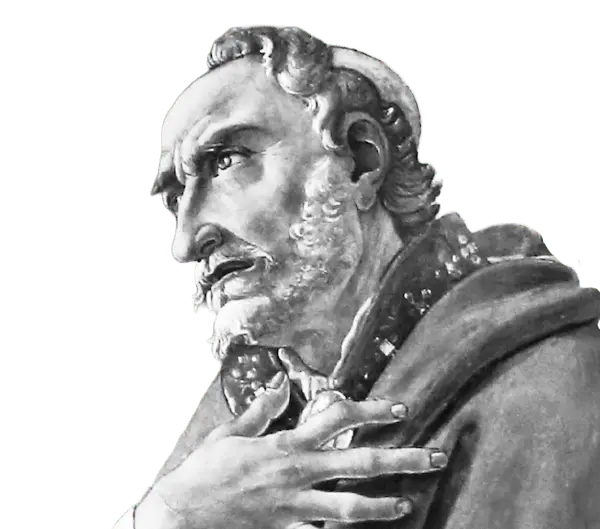
Augustine of Hippo Sermon
The Church Amid Life's Storms
The Ship in the Storm
1. The Gospel lesson we have just heard teaches all of us humility, so we may see and understand where we are and where we must hasten toward. The ship carrying the disciples, tossed in the waves by a contrary wind, has deep meaning. Nor is it without significance that the Lord, after leaving the crowds, went up on a mountain to pray alone. Then, coming to His disciples, He found them in danger, walked on the sea, got into the ship, and calmed them and the waves. What wonder if He can make all things peaceful, since He created all things? Nevertheless, after He had come into the ship, those being carried in it exclaimed, "Truly You are the Son of God" (Matthew 14:33). But before this clear revelation of Himself, they were troubled, saying, "It is a ghost" (Matthew 14:26). When He came into the ship, He removed the uncertainty from their hearts, as they were now in greater danger in their souls from doubting than before in their bodies from the waves.
2. In all this that the Lord did, He teaches us about the nature of our life here. In this world, everyone is a traveler; though not everyone desires to return to their true home. On this journey we are exposed to waves and storms, but we must at least remain in the ship. Though there are dangers in the ship, without the ship there is certain destruction. However strong a swimmer's arms may be in the open sea, eventually they will be carried away and sink, overcome by the power of the waves.
We must be in the ship—that is, we must be carried on the wood so we can cross this sea. This Wood that carries our weakness is the Cross of the Lord, by which we are marked and delivered from this world's dangerous storms. We are exposed to the violence of the waves, but our helper is God.
3. When the Lord left the crowds and "went up on the mountain by Himself to pray" (Matthew 14:23), this mountain symbolizes the heights of heaven. For after leaving the crowds, the Lord, following His resurrection, ascended alone into heaven, and there, as the Apostle says, "He makes intercession for us" (Romans 8:34). There is deep meaning in His "leaving the crowds and going up on a mountain to pray alone." For He alone is the firstborn from the dead who has ascended in His resurrected body to the Father's right hand—the High Priest and Advocate of our prayers. The Head of the Church is above, so the rest of the members may follow at the end. If then "He makes intercession for us" above the height of all creation, as if on a mountaintop, "He prays alone."
4. Meanwhile, the ship carrying the disciples—that is, the Church—is tossed and shaken by storms of temptation. The contrary wind, which is the devil our adversary, never rests and tries to prevent the Church from reaching safe harbor. But "greater is He who intercedes for us." In this turmoil where we struggle, Christ gives us confidence by coming to us and strengthening us. We must only ensure that in our trouble we don't throw ourselves out of the ship into the sea.
Though the ship is in trouble, it is still the ship. Only it carries the disciples and receives Christ. There is danger in the sea, true, but outside the ship there is immediate destruction. Stay in the ship, therefore, and pray to God. When all human plans fail, when even the rudder is useless and spreading the sails is more dangerous than helpful, when all human strength is gone, sailors can only earnestly cry out and pour forth prayers to God. If God allows sailors to reach the harbor, will He abandon His own Church and not bring it to rest?
5. Yet, brothers and sisters, this extreme trouble exists in the ship only when the Lord is absent. Can someone in the Church have the Lord absent from them? When is the Lord absent? When that person is overcome by any sinful desire. As Scripture says figuratively, "Do not let the sun go down on your anger, nor give place to the devil" (Ephesians 4:26-27). This isn't about the visible sun that holds the highest place among visible creation and can be seen by both humans and animals. It refers to that Light which only pure hearts of the faithful can see, as it is written, "That was the true Light, which gives light to every person coming into the world" (John 1:9).
The light of the visible sun illuminates even the smallest creatures. Righteousness and wisdom are that true Light, which the mind stops seeing when overcome by anger's disorder as if by a cloud. Then, in a sense, the sun goes down on a person's anger. Similarly, in this ship, when Christ is absent, everyone is shaken by their own storms, wickedness, and evil desires.
For example, the law tells you, "You shall not bear false witness" (Exodus 20:16). If you maintain truthful testimony, you have light in your soul. But if, overcome by the desire for shameful gain, you decide to give false testimony, you will immediately—through Christ's absence—be troubled by the storm. You'll be tossed by waves of greed, endangered by the violent storm of your desires, and, as if through Christ's absence, be nearly sunk.
6. What causes fear is the possibility that the ship might be turned from its course and go backward. This happens when, abandoning hope of heavenly rewards, desire turns the rudder, and a person turns toward visible things that pass away. Anyone disturbed by the temptations of desires who nevertheless still considers inner spiritual realities is not in a completely desperate state, if they ask forgiveness for their faults and strive to overcome the fury of the raging sea.
But someone who has turned so far from their original course that they say in their heart, "God doesn't see me; He doesn't think of me or care whether I sin"—that person has turned the rudder, been carried away by the storm, and driven back to where they came from. For there are many thoughts in human hearts, and when Christ is absent, the ship is tossed by this world's waves and by many storms.
7. The fourth watch of the night is the end of the night, since each watch consists of three hours. This signifies that now, in the world's end, the Lord has come to help and is seen walking on the waters. Though this ship is tossed about by storms of temptation, it sees its glorified God walking above all the sea's swelling waves—that is, above all this world's authorities.
Earlier, during His Passion, He showed an example of humility according to the flesh, when the sea's waves raged against Him—waves to which He voluntarily yielded for our sake, fulfilling the prophecy: "I have come into deep waters, and the floods overflow me" (Psalm 69:2). He did not reject the false witnesses or the savage shout of those saying, "Crucify Him!" (Mark 15:13). He did not use His power to restrain the savage hearts and words of those furious people, but patiently endured them all. They did to Him whatever they wanted, because He "became obedient to death, even death on the cross" (Philippians 2:8).
But after His resurrection, when He ascended to pray alone for His disciples placed in the Church as in a ship—carried along in the faith of His Cross as on wood, and in peril through this world's temptations as through the sea's waves—His Name began to be honored in this same world where He was despised, accused, and killed. Thus, He who in His fleshly suffering "had come into deep waters, and the floods had overwhelmed Him," now through the glory of His Name treads upon the necks of the proud as upon foaming waters. We now see the Lord walking, as it were, on the sea, with this world's entire madness subjected under His feet.
8. But in addition to the dangers of storms, there are also the errors of heretics. There are people who test the minds of those in the ship by saying that Christ was not born of a Virgin, did not have a real body, but appeared to be what He was not. These heretical opinions have arisen now, when Christ's Name is already glorified among all nations—when Christ is, as it were, now walking on the sea.
The disciples in their trial said, "It is a ghost." But Christ strengthens us against these harmful opinions with His own voice: "Be of good cheer! It is I; do not be afraid" (Matthew 14:27). People have conceived these false ideas about Christ out of misplaced reverence for His honor and majesty. They think He couldn't have been born as Scripture describes, considering how greatly He has been glorified. They fear Him, as it were, "walking on the sea." This action symbolizes the excellence of His honor, so they think He must have been a ghost.
But when He says, "It is I," what does He mean except that everything about Him is real? If He shows His flesh, it is flesh; if bones, they are bones; if scars, they are scars. For "there was not Yes and No in Him, but in Him was Yes," as the Apostle says (2 Corinthians 1:19). Hence that expression, "Be of good cheer! It is I; do not be afraid." That is, don't be so awed by My Majesty that you deny the reality of My Being. Though I walk on the sea, though I have under My feet this world's pride and arrogance like raging waves, I have appeared as a true human. My Gospel proclaims the truth about Me: that I was born of a Virgin, that I am the Word made flesh, that I said truly, "Handle Me and see, for a spirit does not have flesh and bones as you see I have" (Luke 24:39). The doubtful Apostle's hands touched real wounds. Therefore, "It is I; do not be afraid."
9. The disciples' thought that Jesus was a ghost represents not only those who deny that the Lord had human flesh—who sometimes by their blind perversity even disturb those in the ship—but also those who think the Lord has spoken falsely in anything and don't believe His threats against the ungodly will come to pass. They treat Him as partly true and partly false, appearing like a ghost in His words, as though He were something that is "Yes and No."
But those who correctly understand His voice saying, "It is I; do not be afraid," believe all the Lord's words. Just as they hope for the rewards He promises, they also fear the punishments He threatens. For as His words to those on His right hand are true— "Come, you blessed of My Father, inherit the kingdom prepared for you from the foundation of the world" (Matthew 25:34)—so are His words to those on the left hand— "Depart from Me into the everlasting fire prepared for the devil and his angels" (Matthew 25:41).
The belief that Christ's threats against the unrighteous and abandoned are not true has arisen because people see many nations and countless multitudes subject to His Name. Christ appears to them as a ghost because He walked on the sea—that is, He seems to speak falsely in His threats of punishment, as if He cannot destroy so many people who are subject to His Name and honor. But let them hear Him saying, "It is I." Let them not "be afraid" who, believing Christ is true in all things, not only seek what He has promised but also avoid what He has threatened. Though He walks on the sea—though all the world's nations are subject to Him—He is no ghost and therefore does not speak falsely when He says, "Not everyone who says to Me, 'Lord, Lord,' shall enter the kingdom of heaven" (Matthew 7:21).
10. What does Peter's boldness in coming to Jesus on the water signify? Peter generally represents the Church. What else do we think is meant by "Lord, if it is You, command me to come to You on the water" (Matthew 14:28), except: Lord, if You are truthful and never speak falsely, let Your Church also be glorified in this world, as prophecy has declared about You. Let her walk on the waters and come to You, to whom it is said, "The rich among the people will seek Your favor" (Psalm 45:12).
But since human praise is no temptation for the Lord, while people in the Church are often unsettled by human praise and honors and nearly sunk by them, Peter trembled in the sea, terrified by the storm's violence. For who doesn't fear these words: "Those who call you blessed lead you astray and disturb the paths of your feet" (Isaiah 3:12)? Because the soul struggles intensely against the desire for human praise, it's good in such danger to turn to prayer and earnest entreaty. Otherwise, someone charmed by praise might be overwhelmed and sunk by blame.
Let Peter cry out as he wavers in the water: "Lord, save me!" (Matthew 14:30). The Lord will extend His hand, and though He might rebuke, saying, "O you of little faith, why did you doubt?" (Matthew 14:31)—why didn't you look directly at Him toward whom you were heading, glorying only in the Lord?—nevertheless, He will rescue him from the waves. He will not let someone perish who confesses their own weakness and asks for His help.
When they received the Lord into the ship, their faith was strengthened, all doubt removed, and the sea's storms calmed, so they arrived at a firm and secure landing. Then they all worshiped Him, saying, "Truly You are the Son of God" (Matthew 14:33). This is that everlasting joy where Truth is made manifest, where the Word of God and the Wisdom by which all things were made, and the exceeding greatness of His Mercy, are both known and loved.