
The Easy Yoke and Light Burden of Christ
Augustine of Hippo Sermon
The Easy Yoke and Light Burden of Christ
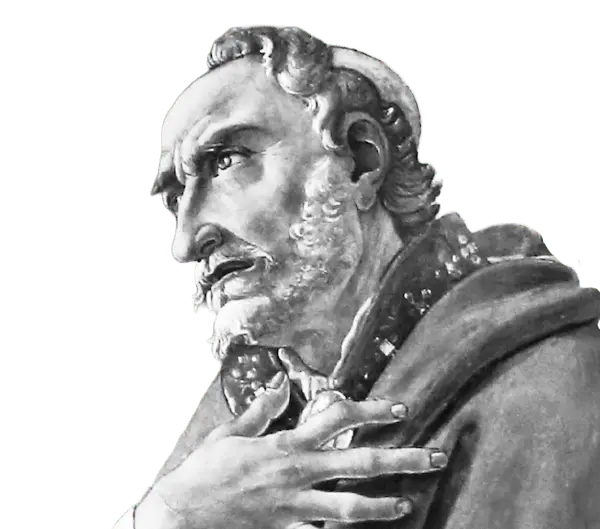
Augustine of Hippo Sermon
The Easy Yoke and Light Burden of Christ
How Christ's Burden Can Be Light in a World of Suffering
1. Some people find it strange, brothers, when they hear the Lord say, "Come to Me, all you who labor and are heavy laden, and I will give you rest. Take My yoke upon you and learn from Me, for I am gentle and lowly in heart, and you will find rest for your souls. For My yoke is easy and My burden is light" (Matthew 11:28-30).
These people consider that those who have fearlessly bowed their necks to this yoke and have humbly taken this burden upon their shoulders are tossed about and tested by such great difficulties in the world that they seem not to be called from labor to rest, but from rest to labor. They point to what the Apostle says: "All who desire to live godly in Christ Jesus will suffer persecution" (2 Timothy 3:12).
So someone will ask, "How is the yoke easy and the burden light when bearing this yoke and burden means nothing less than living godly in Christ? And how can Jesus say, 'Come to Me, all you who labor and are heavy laden, and I will give you rest,' rather than saying, 'Come, you who are at ease and idle, that you may labor'?" For Jesus found the laborers in the vineyard idle when He hired them to bear the heat of the day.
And we hear the Apostle Paul, under that supposedly easy yoke and light burden, say, "In all things we commend ourselves as ministers of God: in much patience, in tribulations, in needs, in distresses, in stripes" (2 Corinthians 6:4-5). And in another place in the same letter: "From the Jews five times I received forty stripes minus one. Three times I was beaten with rods; once I was stoned; three times I was shipwrecked; a night and a day I have been in the deep" (2 Corinthians 11:24-25), and the rest of the dangers, which can be enumerated but cannot be endured without the help of the Holy Spirit.
2. Paul frequently and abundantly sustained all these grievous and heavy trials he mentioned. But truly, the Holy Spirit was with him as his outward body was being worn down, renewing his inner being day by day. Through the taste of spiritual rest in the abundance of God's delights, the Holy Spirit softened all present hardships by the hope of future blessedness and lightened all heavy trials.
See how sweet a yoke of Christ Paul bore, and how light a burden! He could say that all those hard and grievous sufferings—which make every listener shudder just hearing about them—were a "light affliction" (2 Corinthians 4:17). With the inward eyes of faith, he saw what a great price must be paid in temporary things to purchase the life to come, to escape the everlasting punishment of the ungodly, and to fully enjoy, free from all anxiety, the eternal happiness of the righteous.
People allow themselves to be cut and burned so that the pains—not of eternity but of some more lasting and severe wound than usual—might be treated with even more severe pain. For a weak and uncertain period of brief rest, even that coming only at the end of life, the soldier is worn down by all the harsh trials of war, perhaps restless for more years in his labors than he will have to enjoy his rest in comfort.
To what storms and tempests, to what fearful and tremendous raging of sky and sea, do busy merchants expose themselves to acquire riches as changeable as the wind and full of perils and tempests—perils even greater than those through which these riches were acquired!
What heat and cold, what dangers from horses, ditches, cliffs, rivers, and wild animals do hunters endure! What hunger pains and thirst, what restricted portions of the cheapest and lowest quality food and drink, all so they may catch a beast! And sometimes after all this, the flesh of the animal they endured all this for is of no use for the table. And if a boar or a deer is caught, it brings more satisfaction to the hunter's mind because it was caught than to the eater's palate when it is served.
By what sharp corrections of almost daily beatings is the tender age of boys brought under control! By what great pains of watching and abstinence in schools are they disciplined—not to learn true wisdom, but for the sake of riches and the honors of an empty show, so they may learn arithmetic and other subjects, and the tricks of eloquence!
How Love Makes All Burdens Light
3. Now in all these cases, those who don't love these pursuits feel them as great hardships, whereas those who love them endure the same things but don't seem to find them difficult. Love makes even the hardest and most distressing things altogether easy and almost nothing.
How much more surely and easily will divine love accomplish, with a view to true happiness, what mere human desire does imperfectly, with a view to what is often only misery! How easily is any temporary adversity endured if it means that eternal punishment may be avoided and eternal rest secured!
Not without good reason did that chosen vessel, Paul, say with exceeding joy, "The sufferings of this present time are not worthy to be compared with the glory which shall be revealed in us" (Romans 8:18). See then how it is that Christ's "yoke is easy and His burden is light." And if the path seems narrow to the few who choose it, yet it is easy to all who love it.
The Psalmist says, "Because of the words of Your lips, I have kept difficult paths" (Psalm 17:4). But the things that are difficult for those who labor become easy for those same people when they love.
Therefore, it has been arranged by the dispensation of divine goodness that for "the inner person who is renewed day by day" (2 Corinthians 4:16)—who is no longer under the Law but under grace, and freed from the burdens of countless observances that were indeed a heavy yoke, though appropriately imposed on a stubborn people—every grievous trouble that the cast-out prince of this world might inflict from outside on the outward person should become light through the joy within, because of the simplicity of faith, a good hope, and a holy love. For to a good will, nothing is so easy as this good will itself, and this is enough for God.
No matter how much this world may rage, the angels spoke most truly when the Lord was born in the flesh: "Glory to God in the highest, and on earth peace, goodwill toward men!" (Luke 2:14). For "His yoke," who was then born, "is easy and His burden is light."
And as the Apostle says, "God is faithful, who will not allow you to be tempted beyond what you are able, but with the temptation will also make the way of escape, that you may be able to bear it" (1 Corinthians 10:13).