
The Eternal Word: Equal and Coeternal with the Father
Augustine of Hippo Sermon
The Eternal Word: Equal and Coeternal with the Father
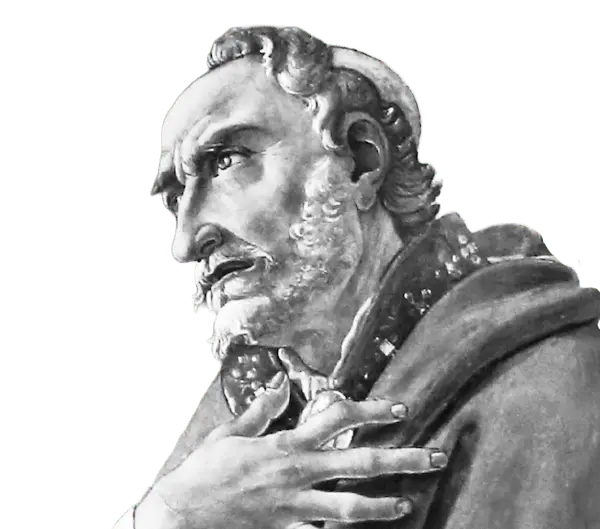
Augustine of Hippo Sermon
The Eternal Word: Equal and Coeternal with the Father
The Divine Word and Human Understanding
1. The Gospel passage we have just read, dearly beloved, requires a pure heart to understand it. Through John's Gospel, we have understood our Lord Jesus Christ according to His divinity as the creator of the whole creation, and according to His humanity as the restorer of fallen creation. In this same Gospel, we discover what kind of man John was, so that from the dignity of the messenger we may understand the value of the message he delivered—or rather, how beyond all price is that Word which such a man was able to proclaim.
Any purchasable thing is either equal to its price, below it, or above it. When someone buys something for what it's worth, the price equals the thing purchased. When they buy for less, the price is below the value. When they pay more, the price exceeds the value. But nothing can equal the Word of God, nor can anything be exchanged for it that is either less or more valuable. All things are below the Word of God, because "all things were made by Him" (John 1:3). Yet they are not so far below as to be a price for the Word, as if someone could give something to receive the Word.
If we may speak this way (if our normal way of speaking permits this expression), the price for obtaining the Word is the person who obtains it, who gives themselves for themselves to this Word. Accordingly, when we buy something, we look for something to give so that for the price we pay, we may have what we want to buy. What we give is external to us; even if it was once ours, what we give becomes separated from us so that what we purchase may become ours. But whoever would obtain this Word, whoever would possess it, shouldn't look for anything outside themselves to give. They should give themselves. And when they do this, they don't lose themselves, as someone loses the price when buying something else.
2. The Word of God is presented to all people. Those who can, should obtain it—and they can if they have a godly will. For in that Word is peace, and "peace on earth is for people of good will" (Luke 2:14). So whoever wants to obtain it should give themselves. This is, as it were, the price of the Word—if we can even call it that—when the giver doesn't lose themselves but gains the Word for which they give themselves, and also gains themselves in the Word to whom they give themselves.
And what do they give to the Word? Not anything that belongs to someone else other than the Word, but what was made by the same Word. "All things were made by Him." If all things, then certainly humanity too. If the heavens, earth, sea, and all that is in them—if the whole creation was made by Him, then more obviously the person who was made in God's image was made by the Word.
3. I'm not going to discuss now, brothers, how to understand these words: "In the beginning was the Word, and the Word was with God, and the Word was God" (John 1:1). They can be understood in a way that transcends human speech. I'm focusing on the Word of God and explaining why It is not understood. I'm not trying to make It understood now, but I'm telling you what prevents It from being understood.
For the Word is a certain Form—a Form not formed but the Form of all things formed; a Form unchangeable, without failure, without decay, without time, without place, surpassing all things, yet being in all things. It is, in a way, the foundation on which things rest and the capstone under which they find shelter. If you say that all things are in Him, you're not mistaken. For this Word is called the Wisdom of God, and Scripture says, "In Wisdom you have made all things" (Psalm 104:24). So all things are in Him.
Yet insofar as He is God, all things are under Him. I am showing how incomprehensible is what has been read. Yet it has been read, not so that it should be fully grasped by humans, but so that they might regret their inability to comprehend it, discover what prevents them from understanding, remove those hindrances, and, being changed from worse to better, aspire to perceive the unchangeable Word. For the Word doesn't advance or increase when more people know It; It remains whole whether you stay, whole if you depart, whole when you return—abiding in Itself while renewing all things.
The Word is the Form of all things—a Form not fashioned, without time and without space. For whatever is contained in space is limited by boundaries. Every form is limited by bounds—it has limits where it begins and ends. Whatever is contained in a place and has extension in a kind of bulk and space is smaller in its parts than in the whole. God grant that you may understand this.
4. From the physical bodies we see daily—which we see, touch, and among which we live—we know that every body has a form that occupies space. Everything occupying space is smaller in its parts than in its whole. For instance, the arm is part of the human body, and of course, the arm is smaller than the entire body. It occupies a smaller space. The head, being part of the body, is contained in a smaller space and is less than the whole body to which it belongs. So are all things in space—they are less in their individual parts than in the whole.
Let's have no such idea, no such thought, about that Word. Let's not try to understand spiritual things by drawing analogies from physical things. That Word, that God, is not less in part than in the whole.
5. But you can't conceive of any such thing. Such ignorance is more reverent than presumptuous knowledge. For we are speaking of God. Scripture says, "And the Word was God" (John 1:1). What wonder is it if you don't comprehend? For if you were to comprehend, He would not be God. It is better to have a devout confession of ignorance than a rash claim to knowledge.
To reach God in any measure with the mind is a great blessing. But to fully comprehend Him is completely impossible. God is an object for the mind to contemplate, to be understood; a body is for the eyes to see. But do you think you fully comprehend a body with your eyes? Not at all. For whatever you look at, you don't see the whole. If you see a person's face, you don't see their back at the same time. When you see their back, you don't at that moment see their face.
You don't really see a complete object; you comprehend it by memory, remembering what you saw earlier. Even on the surface of a body, you can only see parts in sequence, not the whole at once. And as long as you move around to see it all, you're only seeing parts; by remembering what you've seen of other parts, you imagine you're seeing the whole. But this isn't true vision like the eyes see; it's the work of memory.
What can be said, brothers, about that Word? Our physical eyes can't comprehend even the bodies that are right in front of us; what eye of the heart can comprehend God? It's enough if the eye reaches Him, provided it's pure. And if it does reach Him, it's by a kind of incorporeal and spiritual touch, yet it doesn't comprehend Him. And this touch happens only if the eye is pure.
A person becomes blessed by touching with the heart That which is eternally blessed. This is that Everlasting Blessedness, Everlasting Life by which humans are made to live, that Perfect Wisdom by which they are made wise, that Everlasting Light by which they are enlightened. See how by this touch you are changed into what you were not, yet you don't cause what you touch to become what it was not before. God doesn't increase from those who know Him; rather, those who know Him increase from knowing God.
Let's not think we confer any benefit on God when I said we give Him a kind of price. We don't give Him anything that could increase Him. When you turn away from Him, He remains whole; when you turn back to Him, He still remains whole—ready to make Himself seen by those who turn to Him and to blind those who turn away. For by this blindness, as the first stage of punishment, He executes judgment on the soul that turns away from Him. Whoever turns away from the True Light, which is God, is immediately made blind. They may not yet feel their punishment, but they already have it.
6. Accordingly, dear brothers, let's understand that the Word of God exists in a way that is incorporeal, inviolable, unchangeable, with no temporal beginning, yet born of God. Do we think we can convince certain unbelievers that what we profess according to Catholic faith—which opposes the Arians who have often tried to trouble the Church of God—isn't inconsistent with truth? The problem is that physical people more easily accept what they've been accustomed to see.
Some have dared to say, "The Father is greater than the Son and comes before Him in time." In other words, "the Father is greater than the Son, and the Son is less than the Father, and is preceded by the Father in time." And they reason this way: "If He was born, of course the Father existed before His Son was born to Him." Listen carefully; may God be with me while your prayers assist me. May you prayerfully and earnestly desire to receive what He might give me and suggest to me. May He be with me, that I may be able to explain in some way what I have begun.
But brothers, I tell you before I begin: if I can't explain it sufficiently, don't assume it's because the truth is flawed, but because I am merely human. Therefore, I urge and entreat you to pray that God's mercy may be with me and help me explain this as you should hear it and as I should speak it. They say: "If He is the Son of God, He was born." We acknowledge this. For He would not be a Son if He were not born. This is clear; faith accepts it, the Catholic Church approves it, it is the truth.
They then continue: "If the Son was born to the Father, the Father existed before the Son was born to Him." The faith rejects this; Catholic ears reject it; it is denounced; whoever holds this opinion is outside the Church, not part of the fellowship and community of the saints. Then they ask: "Give me an explanation of how the Son could be born to the Father, and yet be coeval with Him of whom He was born."
7. What can we do, brothers, when we're trying to convey spiritual truths to people focused on physical things? Even if we ourselves aren't bound by physical thinking, when we try to explain spiritual matters to those accustomed to physical births, who see the natural order where succession and death separate those who beget from those who are begotten—what can we do?
With humans, after the father comes the son, succeeding a father who will eventually die. This is what we find in people and animals: parents come first, children later in time. Through this familiar pattern, they try to transfer physical concepts to spiritual realities. By focusing so much on physical things, they easily fall into error. Their reasoning doesn't follow the truth that's being proclaimed; rather, they're entangled by their customary way of seeing things, which leads them to promote these misunderstandings.
What shall we do? Shall we keep silent? If only we could! Perhaps through silence, people might conceive some thought worthy of the ineffable reality. For whatever cannot be expressed in speech is, by definition, ineffable. And God is ineffable. If the Apostle Paul says that he "was caught up to the third heaven and heard inexpressible words" (2 Corinthians 12:2, 4), how much more inexpressible is God, who showed Paul things too profound for human words?
Therefore, brothers, it would be better if we could remain silent and say, "This is what the faith contains; this is what we believe. You aren't yet able to receive it because you're still bound by physical thinking. You must patiently wait until your spiritual wings are developed. Otherwise, if you try to fly without wings, it won't be a free soaring of liberty but a dangerous fall of rashness."
What do they say in response? "If he had anything to say, he would say it to me. This is the excuse of someone who is at fault. He's overcome by the truth, so he doesn't want to answer." If one makes no answer to such accusations, though he is not defeated in his own mind, he might seem defeated in the eyes of weaker brothers. For the weak brethren who hear such claims might think there really is nothing that can be said, and perhaps they're right to think so. Yet it's not that there's nothing to be felt, even if it can't be expressed. A person can't express what they can't feel, but they might feel something they can't express.
8. Nevertheless, while acknowledging the unspeakable nature of the Divine Majesty, let me offer some analogies against their arguments. Let no one think that through these comparisons we have fully captured what cannot be expressed or conceived by those still spiritually immature (and even if the more advanced can grasp something of it, it's only partial, only a "riddle" as seen "through a glass," not yet "face to face" as Paul says).
Let me produce some analogies to refute their claims, though not to fully comprehend the divine reality. When we say it's possible that something can be born yet be coeternal with the one who bore it, they try to refute this by bringing up examples from created things. They say: "Every person exists before they beget a child; they are older than their child. Similarly, a horse exists before it produces a foal, a sheep before its lamb, and so with all animals." This is how they draw analogies from created things.
9. Must I also labor to find resemblances for the truths I'm trying to establish? And what if I can't find any? Wouldn't I be justified in saying, "Perhaps the birth of the Creator has no exact parallel among created things? For just as the Creator far surpasses created things in His being, so His birth far surpasses the births that happen here."
All things here have their being from God, yet what can be compared to God? Likewise, all things born here are born by His power, so perhaps no exact parallel to His birth can be found, just as there's no exact parallel to His substance, unchangeableness, divinity, and majesty. What here can be compared to these? If, then, no perfect resemblance to His birth can be found, am I to be overwhelmed just because I can't find created parallels to the Creator of all things?
10. And truly, brothers, I'm unlikely to find any temporal analogies that I can compare to eternity. But even the analogies they've found—what are they? They've discovered that a father is greater in time than his son. Therefore, they want the Son of God to be less in time than the eternal Father, because they've found that in the created order, a son is born later than a father.
Find me an eternal father here on earth, and you'll have found a valid comparison. You find a son younger than a father in time—a temporal son younger than a temporal father. Have you found me a temporal son younger than an eternal father? Since eternity involves stability while time involves change, in eternity all things stand still, but in time one thing comes and another follows. You can find a son of lesser age succeeding his father within the variability of time, because the son himself succeeds his father who will one day pass away. But you can't find a son born in time to an eternal father.
How then, brothers, can we find anything coeternal in creation when we can't even find anything eternal in creation? If you can find an eternal father in creation, I'll find you a coeternal son. But if you can't find an eternal father, and one precedes the other in time, it's enough that for a resemblance I find something coeval. What is coeternal is one thing, what is coeval another.
We call people "coeval" who have the same measure of time—one doesn't precede the other in time, yet both had a beginning. If I can discover something that is born coeval with that from which it is born—if two coeval things can be found, one that begets and one that is begotten—then we have discovered coeval things in the created order. From this we can understand that in the divine, the Son of God didn't begin to exist after the Father began to exist.
11. I believe your holiness has already grasped what I'm saying—that temporal things can't be directly compared to eternal things, but that by some slight resemblance, coeval things may hint at coeternal things. Let's find two coeval things and learn from Scripture about such resemblances.
We read in Scripture about Wisdom: "For she is the brightness of the everlasting light" (Wisdom 7:26). Again we read, "The unspotted mirror of the majesty of God." Wisdom herself is called "the brightness of the everlasting light" and "the image of the Father." From this, let's find a resemblance to discover two coeval things, which may help us understand coeternal things.
O Arian, if I can show that something that begets doesn't precede in time that which it begot—that something begotten isn't later in time than that which begot it—then it's only fair that you concede that we can find coeternal beings in the Creator when we can find coeval beings in creation.
I think some brothers have already anticipated where I'm going with this. As soon as I quoted, "For she is the brightness of the everlasting light," you understood. Fire produces light, and light comes from fire. If we ask which comes from which, every day when we light a lamp, we're reminded of something invisible and indescribable, like lighting the candle of our understanding in this world's darkness.
Watch someone lighting a lamp. Before the lamp is lit, there is no fire and no brightness from the fire. But I ask, "Does the brightness come from the fire, or the fire from the brightness?" Every thinking person (for God has planted the beginnings of understanding and wisdom in every soul) answers me without hesitation that the brightness comes from the fire, not the fire from the brightness.
Let's look at the fire as the father of that brightness. As I said before, we're looking for things that are coeval, not coeternal. If I want to light a lamp, there's not yet any fire or brightness; but as soon as I light it, along with the fire comes the brightness too. Give me a fire without brightness, and I'll believe your claim that the Father existed without the Son.
12. The matter has been explained as well as such a great subject can be, with the Lord's help, through your earnest prayers and the readiness of your hearts. You have received as much as you were able. Yet these things are beyond words. Don't suppose that anything fully worthy of the subject has been said, even if it's only to point out that temporal things can be compared with coeternal things, created things with immortal things.
But since the Son is also called the Image of the Father, let's take another analogy, though still from very different things as I've said. When someone looks in a mirror, an image is cast back from the glass. But this comparison doesn't fully help us, for someone says to me, "A person who looks in a mirror already existed and was already born before approaching the mirror. The image only appeared when the person looked at the mirror. The person existed before coming to the mirror."
What else can we find that might provide a better analogy? Let's consider something born beside water, like a shrub or plant. When it's born alongside the water, isn't its reflection born simultaneously with it? As soon as the plant begins to exist, its reflection begins to exist with it. The reflection doesn't appear later; the plant doesn't appear first without its reflection. Yet the reflection comes from the plant, not the plant from the reflection. The plant and its reflection begin to exist together.
Do you not confess that the reflection is generated by the plant, not the plant by the reflection? Yes, you agree. So there are things that are born together with those that give them birth. If the plant had always existed, the reflection from the plant would have always existed too.
Now, what's born from something else is of course begotten by it. It's possible, then, that something that begets might always exist, together with what is born from it. This is where we were struggling: how can we understand the eternal birth? The Son of God is called "Son" because He has One from whom He derives His being—not because the Father came first in time and the Son later.
The Father always existed, the Son always came from the Father. And because whatever comes from another is born, therefore the Son was always born. The Father always existed, and the image from Him always existed—just as that image of the plant was born from the plant. If the plant had always existed, the image would always have been born from the plant. You couldn't find begotten things coeternal with eternal begetters, but you have found things born coeval with those that begot them in time.
I understand the Son to be coeternal with the eternal Father who begot Him. For what in the realm of time is coeval, in the realm of eternity is coeternal.
13. Here is something for you to consider, brothers, as a protection against blasphemies. People often say, "Look, you've produced certain analogies, but the brightness that comes from fire shines less brightly than the fire itself, and the reflection of the plant has less real substance than the plant which casts the reflection. These analogies show resemblance but not complete equality, so they don't seem to be of the same substance."
What shall we say if someone concludes, "The Father then is to the Son as the fire is to its brightness, or as the plant is to its reflection?" No, because I understand the Father to be eternal and the Son to be coeternal with Him. But do we say the Son is like the brightness which is less brilliant than the fire, or like the reflection which has less substance than the plant? No, there is perfect equality.
"I don't believe it," they might say, "because you haven't found a perfect analogy." Well then, believe the Apostle, for he was able to see what I have tried to explain. He says of Christ that "He did not consider it robbery to be equal with God" (Philippians 2:6). Equality is perfect likeness in every way. And what else does "not robbery" mean? Because robbery takes what belongs to another. But Christ's equality with God was not robbery, because it was His by nature, not taken from another.
14. From these two kinds of comparisons, let's try to find in creation a resemblance that might help us understand how the Son is both coeternal with the Father and in no way less than He. But we can't find this in one kind of comparison alone; let's join both kinds together.
How are both kinds related? They themselves give examples of resemblances from things born in time that are preceded in time by those from whom they are born, like a person begetting another person. The one who begets comes first in time, but both are of the same substance. We praise the equality of nature here, but we find a difference in time.
In the other kind of analogies, which we gave from the brightness of fire and the reflection in water, we find an equality of timing but not an equality of nature. So each comparison has something we praise and something that's lacking. In created things, something is always lacking compared to what we praise in the Creator, because nothing created is perfect.
So in created things, what do we praise in coeval relationships? The equality of timing. And what is lacking? The equality of nature. But in the Creator, nothing can be lacking. What you praise in created things should be attributed to God, but what is lacking should not be attributed to that sovereign Majesty in which there is no defect.
So from one kind of resemblances, you attribute to God not mere contemporaneousness but coeternity, so that the Son may be coeternal with Him from whom He was born. But from the other kind of resemblances, attribute equality, and the birth of the same substance is complete. For what would be more absurd, brothers, than for me to praise something in creation that doesn't exist in the Creator? If I praise equality of nature in humans, shall I not believe it exists in Him who made humans? Whatever is born of a human is human; shall not what is born of God be what God is, from whom it was born?
I have no dealings with works that God has not made. Let all the Creator's works praise Him. In one case I find contemporaneousness, in the other I find knowledge of coeternity. In the first I find equality of nature, in the other I understand equality of substance.
So what is found separately in created things is found wholly together in the Creator—and in a much higher way, because one is visible and the other invisible, one temporal and the other eternal, one changeable and the other unchangeable, one corruptible and the other incorruptible. Finally, even in the case of humans, what we find—a person and another person—are two people; but here the Father and the Son are one God.
15. I give unspeakable thanks to our Lord God that He has been pleased, in response to your prayers, to deliver me from this very complicated and difficult discussion. Above all, remember this: the Creator transcends indescribably whatever we could gather from creation, whether through bodily senses or mental understanding.
But would you reach Him with your mind? Purify your mind, purify your heart. Make clean the eye by which That, whatever It may be, can be perceived. For "blessed are the pure in heart, for they shall see God" (Matthew 5:8). But while the heart remains unclean, what could be more merciful than God's provision that the Word, about whom we've spoken so much yet said nothing worthy of Him, the Word "by whom all things were made" should become what we are, so that we might be able to attain to what we are not?
For we are not God, but with the mind or the inner eye of the heart, we can see God. Our eyes, dulled by sins, blinded and weakened by our weaknesses, desire to see; but we are in hope, not yet in possession. We are God's children. John, who says, "In the beginning was the Word, and the Word was with God, and the Word was God" (John 1:1)—the one who reclined on the Lord's breast and drew these secrets from His heart—he says, "Beloved, we are children of God, and it has not yet been revealed what we shall be; we know that when He is revealed, we shall be like Him, for we shall see Him as He is" (1 John 3:2). This is what is promised to us.
16. But in order that we may attain this vision, if we cannot yet see God the Word, let us hear the Word made flesh. Since we are flesh, let us hear the incarnate Word. He came for this purpose; He took on our weakness, so that you might be able to receive the strong words of God bearing your frailty.
He is truly called "milk." He gives milk to infants, so that He may later give solid food to those who are mature. Be patient now in receiving milk, so that you may eventually be fed according to your heart's deepest desire. Consider how even natural milk for infants is made. Wasn't it once solid food on the table? But the infant isn't strong enough to eat the meat on the table. What does the mother do? She transforms the meat through her body and makes it into milk. The mother makes something the child can consume.
In the same way, "the Word became flesh" (John 1:14), so that we, who were like infants unable to receive solid food, might be nourished by milk. But there's a difference. When a mother makes food into milk, the food is transformed into milk. But the Word, while remaining unchangeably what He is, took on flesh so that there would be, as it were, a joining of the two. What He is, He did not corrupt or change, so that in your manner He might speak to you, not by being transformed and changed into man. Remaining unalterable, unchangeable, and completely inviolable, He became what you are for your sake, while remaining what He is in Himself for the Father's sake.
17. What does He say to the weak, so that by recovering their sight, they may somehow reach the Word through whom all things were made? "Come to Me, all you who labor and are heavy laden, and I will give you rest. Take My yoke upon you and learn from Me, for I am gentle and lowly in heart" (Matthew 11:28-29). What does the Master, the Son of God, the Wisdom of God by whom all things were made, proclaim? He calls the human race and says, "Come to Me, all you who labor, and learn from Me."
You might have expected the Wisdom of God to say, "Learn how I made the heavens and the stars, how all things were formed in Me before they were made, how by virtue of unchangeable principles your very hairs were numbered." Did Wisdom say these things? No. First He said, "That I am gentle and lowly in heart."
Look, here is something you can understand, brothers; it is surely a small thing. We are on our way to great things, but let us receive the small things, and we will be great. Do you want to comprehend the height of God? First comprehend the lowliness of God. Humble yourself for your own sake, since God humbled Himself for your sake—not for His own. Understand Christ's lowliness, learn to be humble, don't be proud.
Confess your weakness, wait patiently before the Divine Physician. When you understand His lowliness, you rise with Him, not because He rises (for in Himself, as the Word, He doesn't change), but because you make progress, and He seems to rise up with you. It's not that He increases, but that you do, and as you grow, He appears to rise with you.
So it is, brothers. Believe God's commandments and obey them, and He will give you strength of understanding. Don't put the last first, preferring knowledge to God's commandments, or you will be lower rather than higher, and less firmly rooted. Consider a tree: first it grows downward to establish its roots, then upward toward the sky. It anchors its root system low in the ground so that its top can reach toward heaven. Does it grow except from humility?
Would you comprehend the heights without charity? Would you soar toward heaven without a root? That would bring ruin, not growth. With "Christ dwelling in your hearts through faith, be rooted and grounded in love, that you may be filled with all the fullness of God" (Ephesians 3:17, 19).