
The Great Banquet and Those Who Refuse It
Augustine of Hippo Sermon
The Great Banquet and Those Who Refuse It
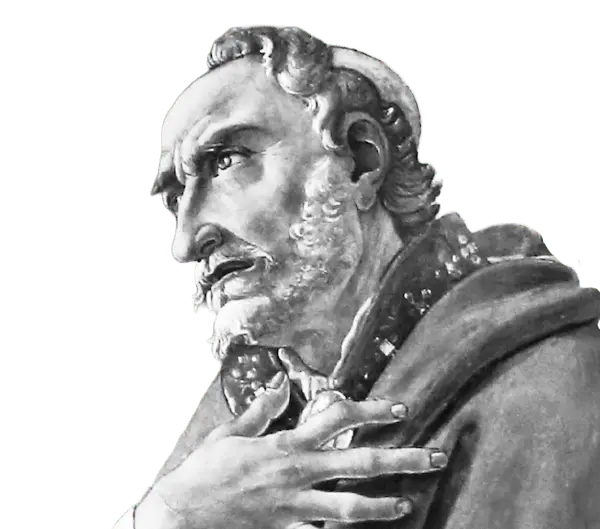
Augustine of Hippo Sermon
The Great Banquet and Those Who Refuse It
The Invitations to the Great Supper
1. Holy Scripture readings have been presented to us. We should both listen to them and reflect on them with the Lord's help. In the Apostolic reading, thanks are given to the Lord for the faith of the Gentiles—of course, because it was His work. In the Psalm we said, "O God of hosts, turn us, and show us Your face, and we shall be saved" (Psalm 80:7). In the Gospel, we've been called to a supper. Actually, others were called; we weren't called but led—not just led, but compelled to come.
We heard that "a certain man made a great supper" (Luke 14:16). Who is this man but "the Mediator between God and humanity, the Man Christ Jesus" (1 Timothy 2:5)? He sent word that those invited should come, for the hour had arrived. Who are those who had been invited but those called earlier by the prophets? When? Long ago, ever since prophets were sent, they invited people to Christ's supper.
They were sent to the people of Israel. They were sent often and called many to come at the supper hour. But those who received the messengers refused the supper. What does it mean that "they received the messengers but refused the supper"? It means they read the prophets but killed Christ. But when they killed Him, though they didn't realize it, they prepared a supper for us.
When the supper was ready—when Christ had been offered up, when the Lord's Supper (which the faithful understand) had been established after Christ's resurrection and confirmed by His own hands and words—the apostles were sent to the same people to whom the prophets had been sent before. "Come to the supper," they said.
2. Those who wouldn't come made excuses. There were three excuses: "One said, 'I've bought a farm and must go see it; please excuse me.' Another said, 'I've bought five pairs of oxen and am going to test them; please excuse me.' A third said, 'I've married a wife; excuse me, I cannot come'" (Luke 14:18-20).
Don't we think these excuses represent the very hindrances that keep all people from coming to this supper? Let's examine them, discuss them, identify them—but only so we can avoid them.
In the purchase of the farm, we see the spirit of domination represented. Pride is being rebuked here. People delight in owning a farm, in possessing it, in having people under them, in exercising dominion. This is an evil vice, the primary vice. The first human desired dominion—he refused to have anyone rule over him. What is dominion but taking pleasure in one's own power? There is a greater power; let's submit to it so we can be safe. "I've bought a farm; excuse me." Having discovered this pride, the man wouldn't come.
3. "Another said, 'I've bought five pairs of oxen.'" Would it not have been enough to say, "I've bought oxen"? There's undoubtedly something here which, through its very obscurity, challenges us to investigate and understand. Because it's hidden, He encourages us to knock.
The five pairs of oxen represent the senses of our body. Five bodily senses are well known to everyone. Even those who might not think about it will certainly recognize it when reminded. These five senses are: sight in the eyes, hearing in the ears, smell in the nose, taste in the mouth, and touch throughout the body.
Through sight, we perceive things that are white or black, light or dark, and various colors. Through hearing, we perceive harsh and musical sounds. Through smell, we detect pleasant and offensive odors. Through taste, we recognize sweet and bitter flavors. Through touch, we feel things that are hard or soft, smooth or rough, warm or cold, heavy or light.
They are five in number, and they are pairs. That they come in pairs is most obvious in the first three senses. There are two eyes, two ears, two nostrils—three pairs. For taste, a certain doubling is found in the mouth, because nothing affects taste unless it contacts both the tongue and the palate. The physical pleasure related to touch has a less obvious doubling, but it too has both an outer and inner aspect. So it's also paired.
Why are they called pairs of oxen? Because these bodily senses seek earthly things. Oxen turn up the earth. Some people are far from faith, devoted to earthly matters, preoccupied with physical things. They refuse to believe anything except what they perceive through their five bodily senses. They establish the rules for their entire will based on these five senses.
"I won't believe," someone says, "anything I can't see. Here's what I know and am certain of: something is white or black, round or square, colored in a particular way. I know this; I sense it; I grasp it. Nature itself teaches me this. I'm not forced to believe what you can't show me. Or it's a voice: I recognize it's a voice; it sings well or poorly; it's pleasant or harsh. I know this; it has reached me. There's a good or bad smell: I know it; I detect it. This is sweet; this is bitter; this is salty; this is bland. I know these things. This is hard; this is soft; this is smooth; this is rough; this is warm; this is cold. What more would you show me?"
4. Our apostle Thomas was held back by this very impediment. Regarding the Lord Christ—that is, Christ's resurrection—he wouldn't believe even his own eyes alone. "Unless I put my fingers in the place of the nails and wounds, and unless I put my hand into His side, I will not believe" (John 20:25). The Lord, who could have risen without any trace of wounds, kept the scars so they could be touched by the doubting apostle, healing the wounds in his heart.
Yet, as He intended to call others to His supper, Jesus countered the excuse of the "five pairs of oxen" by saying, "Blessed are those who do not see and yet believe" (John 20:29). We, my brothers, who have been called to this supper, haven't been held back by "these five pairs." In this age, we haven't desired to see the face of the Lord in bodily form, nor have we longed to hear the voice from His physical mouth.
We haven't sought any passing fragrance from Him. A certain woman anointed Him with precious ointment, and "the house was filled with the fragrance" (John 12:3), but we weren't there. We didn't smell it, yet we believe. He gave His disciples the Supper consecrated by His own hands, but we didn't sit at that feast. Yet we eat this same Supper daily by faith.
Don't think it strange that at that Supper which He gave with His own hand, someone was present without faith. The faith that later appeared more than compensated for that faithlessness then. Paul, who believed, wasn't there; Judas, who betrayed Him, was. How many now, too, in this same Supper—though they never saw that table nor beheld with their eyes the bread the Lord took in His hands—yet because it's the same as what is now prepared, how many now also "eat and drink judgment on themselves" (1 Corinthians 11:29)!
5. What gave the Lord an opportunity to speak of this supper? One of those at the meal with Him (for He was at a feast where He had been invited) had said, "Blessed are those who eat bread in the kingdom of God" (Luke 14:15). He sighed as though longing for distant things, while the Bread Himself was sitting before him. Who is the Bread of God's kingdom but He who says, "I am the living bread which came down from heaven" (John 6:51)? Don't prepare your mouth, but your heart.
It was on this occasion that the parable of this supper was presented. We believe in Christ; we receive Him with faith. In receiving Him, we know what to consider. We receive little, yet our hearts are nourished. It's not what is seen but what is believed that feeds us.
We haven't sought outward sensory experience. We haven't said, "Let those believe who saw with their eyes and touched the Lord Himself after His resurrection, if what is said is true. We don't touch Him—why should we believe?" If we thought this way, we'd be held back from the supper by those "five pairs of oxen."
You should understand, brothers, that it wasn't the gratification of these five senses—which provides comfort and pleasure—but a kind of curiosity that was indicated. He didn't say, "I've bought five pairs of oxen, and I'm going to feed them," but "I'm going to test them." Someone who wants to "test" with "pairs of oxen" doesn't want to be uncertain, just as Thomas with these "pairs" didn't want to doubt.
"Let me see; let me touch; let me put in my fingers." "Look," says the Lord, "put your fingers on my side, and don't be unbelieving" (John 20:27). For your sake I was slain; at the place you want to touch, I shed my blood to redeem you. Do you still doubt me unless you touch me? Look, I grant this too; I show you this too. Touch and believe. Discover the place of my wound; heal the wound of your doubt."
6. "The third said, 'I've married a wife'" (Luke 14:20). This represents physical pleasure, which hinders many people. I wish it were only outside of us and not within! There are people who say, "A person can't be happy without physical pleasures." These are the ones the Apostle criticizes, saying, "Let us eat and drink, for tomorrow we die" (1 Corinthians 15:32). Who has returned to this life from the other? Who has ever told us what happens there? We take with us what makes us happy in the present."
Someone who speaks like this "has married a wife"—they're attached to the flesh and find delight in physical pleasures. They excuse themselves from the supper. They should beware of dying from inner starvation.
Listen to the holy Apostle and Evangelist John: "Do not love the world or the things in the world" (1 John 2:15). You who come to the Lord's Supper, "do not love the world or the things in the world." He didn't say, "Don't possess them," but "Don't love them." You've had, possessed, and loved these things. The love of earthly things is like glue that stops the spirit's wings from flying. You've desired something and become stuck to it. Who will give you wings like a dove to fly away? When will you fly to where you truly belong, since you've perversely chosen to rest here, where you've harmfully become stuck?
"Do not love the world" —this is God's trumpet call. By this trumpet's voice, it's continually proclaimed to the whole earth and the entire world: "Do not love the world or the things in the world. Whoever loves the world, the love of the Father is not in him. For all that is in the world—the desire of the flesh, the desire of the eyes, and the pride of life—is not from the Father" (1 John 2:15-16).
John begins with the last excuse mentioned in the Gospel. The Gospel ends with "the desire of the flesh: I've married a wife. The desire of the eyes: I've bought five pairs of oxen. The pride of life: I've bought a farm."
7. All five senses are represented by mentioning only the eyes—the whole by a part—because the eyes have prominence among the five senses. Although sight belongs specifically to the eyes, we commonly use the word "seeing" for all five senses.
How? First, regarding the eyes themselves, we say: "See how white it is; look and see how white it is." This relates to the eyes. "Hear and see how musical it is!" Could we say conversely, "Hear and see how white it is"? This expression "see" extends through all the senses, whereas the distinctive expressions of other senses don't work the same way.
"Notice and see how musical it is; smell and see how pleasant it is; taste and see how sweet it is; touch and see how soft it is." Yet since they are senses, we might rather say: "Hear and sense how musical it is; smell and sense how pleasant it is; taste and sense how sweet it is; touch and sense how hot it is; handle and sense how smooth it is; handle and sense how soft it is." But we don't say any of these.
The Lord Himself, after His resurrection when He appeared to His disciples—who saw Him but still wavered in faith, thinking they were seeing a spirit—said, "Why do you doubt, and why do thoughts arise in your hearts? See My hands and My feet" (Luke 24:38-39). It's not enough to say "See"; He says, "Touch and handle and see." "Look with your eyes, and see with all your senses." He was looking for the inner sense of faith, so He offered Himself to the outward bodily senses.
We've made no progress toward the Lord through these outward senses. We've heard with our ears and believed with our hearts—hearing not from His mouth, but from the mouths of His preachers, from those who were already at the supper and who, by sharing what they drank there, invited us too.
8. Let's abandon empty and harmful excuses, then, and come to the supper that will nourish us inwardly. Don't let the puffing up of pride hold us back, or lift us up. Don't let improper curiosity frighten us and turn us away from God. Don't let physical pleasure keep us from experiencing the heart's delight.
Let's come and be filled. And who came except the beggars, the maimed, the lame, and the blind? (Luke 14:21). The rich didn't come, nor did those who thought they were whole, who believed they walked well and saw clearly, who had great confidence in themselves and were therefore in a more desperate condition, the more proud they were.
Let the beggars come, for He invites them— "who, though He was rich, yet for your sakes became poor, that you through His poverty might become rich" (2 Corinthians 8:9). Let the maimed come, for "those who are well have no need of a physician, but those who are sick" (Matthew 9:12). Let the lame come who can say to Him, "Direct my steps in Your paths" (Psalm 17:5). Let the blind come who can say, "Enlighten my eyes, lest I sleep the sleep of death" (Psalm 13:3).
Such as these came at the hour when those first invited had been rejected for their excuses. They came at the scheduled time. They entered from the streets and lanes of the city. The servant who had been sent returned with the message, "Lord, it is done as You commanded, and still there is room" (Luke 14:22).
"Go out," the Lord says, "into the highways and hedges, and compel those you find to come in" (Luke 14:23). Don't wait for them to decide to come—compel them to come in. I've prepared a great supper and a great house. I can't allow any place in it to remain empty.
The Gentiles came from the streets and lanes. Let the heretics come from the hedges; here they'll find peace. Those who make hedges aim to create divisions. Let them be drawn away from the hedges, uprooted from among the thorns. They're stuck in the hedges; they don't want to be compelled. "Let us come in," they say, "of our own free will." But this isn't the Lord's command. "Compel them," He says, "to come in." Let the compulsion be found outside; the will shall arise within.