
The Holy Spirit's Conviction of the World
Augustine of Hippo Sermon
The Holy Spirit's Conviction of the World
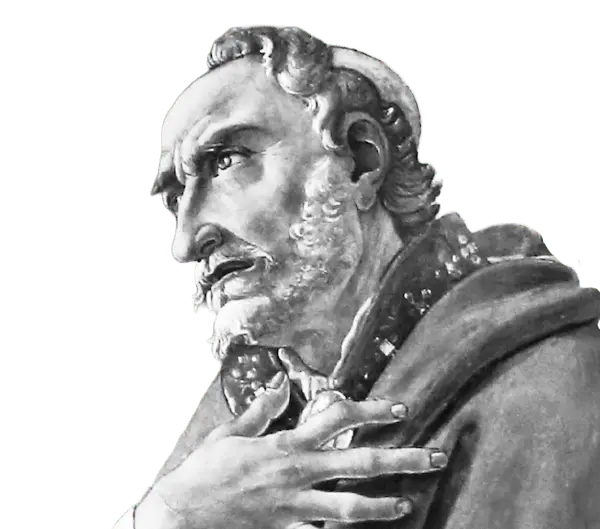
Augustine of Hippo Sermon
The Holy Spirit's Conviction of the World
The Holy Spirit Convicts the World
1. When our Lord and Savior Jesus Christ was speaking at length about the coming of the Holy Spirit, He said, "He will convict the world of sin, and of righteousness, and of judgment" (John 16:8). After saying this, He didn't move on to another subject, but graciously gave a more detailed explanation of this truth. "Of sin," He said, "because they did not believe in Me. Of righteousness, because I go to the Father. Of judgment, because the ruler of this world has already been judged" (John 16:9-11).
This naturally raises a question for us: why did Jesus speak as if unbelief were humanity's only sin, saying the Holy Spirit would convict the world of this alone? If it's obvious that besides unbelief people commit countless other sins, why would the Holy Spirit convict the world of only this one?
Is it because all sins are retained through unbelief but forgiven through faith? Does God consider this sin above all others because it prevents the rest from being released, as long as proud people refuse to believe in a humble God? For Scripture says, "God resists the proud, but gives grace to the humble" (James 4:6). Now this grace of God is God's gift. And the greatest gift is the Holy Spirit Himself; that's why it's called grace.
Since "all have sinned and fall short of the glory of God" (Romans 3:23), and "through one man sin entered the world, and death through sin, and thus death spread to all because all sinned" (Romans 5:12), it is grace because it's given freely. It's given freely because it isn't given as payment after a strict examination of our merits, but as a gift after the forgiveness of sins.
2. Therefore, it's about sin that unbelievers—that is, those who love the world—are convicted. They're called "the world." When Jesus says, "He will convict the world of sin," He means specifically the sin of not believing in Christ. If this sin didn't exist, no other sins would remain, because "the just shall live by faith" (Romans 1:17), and when we live by faith, all sins are released.
There's a significant difference between believing that Jesus is the Christ and believing in Christ. Even the demons believed that Jesus is the Christ (James 2:19), yet the demons didn't believe in Christ. Someone believes in Christ when they both hope in Christ and love Christ.
If a person has faith without hope and love, they believe that Christ exists, but they don't believe in Christ. Whoever believes in Christ, by believing in Him, receives Christ. Christ unites Himself to them, and they become a member of His body. This can't happen without the addition of hope and love.
3. What does Jesus mean by His words, "Of righteousness, because I go to the Father" ? First we must ask, if the world is convicted of sin, why is it also convicted of righteousness? Who can properly be convicted of righteousness?
Is it that the world is convicted of its own sin but of Christ's righteousness? I can't see any other interpretation, since He says, "Of sin, because they didn't believe in Me. Of righteousness, because I go to the Father." They didn't believe, but He goes to the Father. So it's their sin, but His righteousness.
But why would He define righteousness only as going to the Father? Isn't it also righteousness that He came here from the Father? Or is His coming from the Father to us better described as mercy, while His going to the Father is righteousness?
4. Brothers, when dealing with such profound depths of Scripture—words that may contain hidden truths waiting to be revealed at the right time—I think we should inquire together faithfully, so we can find the answers in a beneficial way.
Why does He call it righteousness when He goes to the Father, but not when He came from the Father? Is it because His coming was mercy, and therefore His going is righteousness? If so, we can learn from this that righteousness cannot be fulfilled in us if we don't first make room for mercy, "not looking out for our own interests, but also for the interests of others" (Philippians 2:4).
After giving this advice, the Apostle immediately added our Lord's example: "Do nothing from selfish ambition or conceit, but in humility regard others as better than yourselves. Let each of you look not to your own interests, but to the interests of others" (Philippians 2:3-4).
Then he immediately added, "Let the same mind be in you that was in Christ Jesus, who, though He was in the form of God, did not regard equality with God as something to be exploited, but emptied Himself, taking the form of a servant, being born in human likeness. And being found in human form, He humbled Himself and became obedient to the point of death—even death on a cross" (Philippians 2:5-8). This is the mercy by which He came from the Father.
What then is the righteousness by which He goes to the Father? Paul continues: "Therefore God also highly exalted Him and gave Him the name that is above every name, so that at the name of Jesus every knee should bend, in heaven and on earth and under the earth, and every tongue should confess that Jesus Christ is Lord, to the glory of God the Father" (Philippians 2:9-11). This is the righteousness by which He goes to the Father.
5. But if He alone goes to the Father, how does this benefit us? Why is the world convicted by the Holy Spirit of this righteousness? Yet if He didn't go alone to the Father, He wouldn't say elsewhere, "No one has ascended to heaven except He who came down from heaven, the Son of Man who is in heaven" (John 3:13).
But the apostle Paul also says, "Our citizenship is in heaven" (Philippians 3:20). Why is this? Because he also says, "If then you were raised with Christ, seek those things which are above, where Christ is, sitting at the right hand of God. Set your mind on things above, not on things on the earth. For you died, and your life is hidden with Christ in God" (Colossians 3:1-3).
Why then is He alone? It's because Christ with all His members is one, as the Head with His Body. What is His Body if not the Church? As the same teacher says, "Now you are the body of Christ, and individually members of it" (1 Corinthians 12:27).
Since we have fallen and He descended for our sake, what does "No one has ascended except He who descended" mean? It means no one ascends except as someone made one with Him, as a member joined to the Body of Him who descended. This is why He says to His disciples, "Without Me you can do nothing" (John 15:5).
In one way, He is one with the Father, and in another way, one with us. He is one with the Father in that the substance of the Father and Son is one. He is one with the Father in that "being in the form of God, He did not consider it robbery to be equal with God" (Philippians 2:6).
But He was made one with us in that "He emptied Himself, taking the form of a servant" (Philippians 2:7). He was made one with us according to the seed of Abraham, "in whom all the nations shall be blessed" (Genesis 22:18). The Apostle cited this passage and said, "He does not say, 'And to seeds,' as of many, but as of one, 'And to your Seed,' who is Christ" (Galatians 3:16).
And because we also belong to what is Christ—by being incorporated and joined to that Head—it is one Christ. And He also says to us, "Therefore you are Abraham's seed, and heirs according to the promise" (Galatians 3:29). If the seed of Abraham is one, and that one seed of Abraham can only be understood as Christ, and we too are that seed, then this whole—that is, the Head and the Body—is one Christ.
6. Therefore, we shouldn't consider ourselves separated from that righteousness which the Lord mentions: "Of righteousness, because I go to the Father." For we too have risen with Christ, and we are with Christ our Head, now temporarily by faith and hope. But our hope will be fulfilled in the final resurrection of the dead.
When our hope is fulfilled, our justification will also be complete. The Lord, who was to complete it, showed us in His own flesh (that is, in our Head), when He rose again and ascended to the Father, what we should hope for. For it is written, "He was delivered up because of our offenses, and was raised because of our justification" (Romans 4:25).
The world, then, is convicted "of sin" in those who don't believe in Christ, "and of righteousness" in those who rise again as members of Christ. That's why it says, "That we might become the righteousness of God in Him" (2 Corinthians 5:21). If not in Him, then in no way righteousness. But if in Him, He goes to the Father with us as a complete whole, and this perfect righteousness will be fulfilled in us.
That's also why the world is convicted "of judgment, because the ruler of this world has already been judged" (John 16:11). That is, the devil, the ruler of the unrighteous whose hearts only dwell in this world which they love. Therefore they're called "the world," just as our citizenship is in heaven if we've risen with Christ.
So just as Christ together with us—that is, His Body—is one, so the devil with all the ungodly whose head he is, with what we might call his own body, is one. Therefore, just as we're not separated from the righteousness about which the Lord said, "Because I go to the Father," so the ungodly are not separated from that judgment about which He said, "Because the ruler of this world has already been judged."