
The Miracle of the Loaves and the Wedding Garment
Augustine of Hippo Sermon
The Miracle of the Loaves and the Wedding Garment
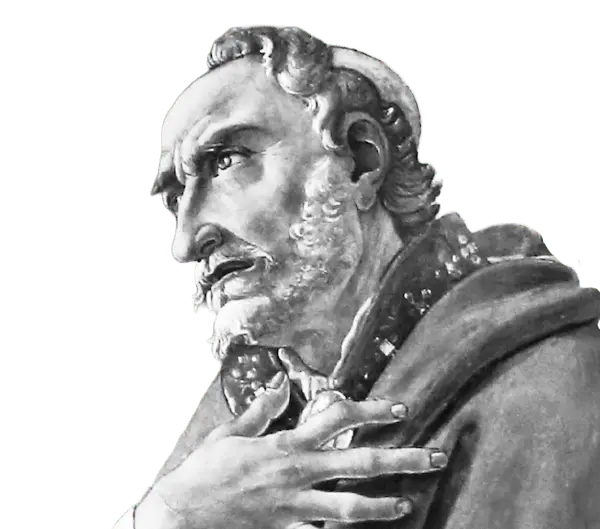
Augustine of Hippo Sermon
The Miracle of the Loaves and the Wedding Garment
Symbols of God's Abundance and Our Preparation
1. In explaining the Holy Scriptures to you, I am, as it were, breaking bread for you. Receive it with hunger, and overflow with fullness of expression from your hearts. You who are enriched by this feast, don't be stingy in good works and deeds. What I distribute to you is not my own. What you eat, I eat too; what you live on, I live on as well. We have a common storehouse in heaven, for from there comes the Word of God.
2. The "seven loaves" signify the sevenfold operation of the Holy Spirit; the "four thousand men" represent the Church established on the four Gospels; the "seven baskets of fragments" symbolize the perfection of the Church. For this number seven consistently represents perfection. Why else would it be said, "Seven times a day I praise You" (Psalm 119:164)? Does someone sin who doesn't praise the Lord that often? What then does "seven times I will praise" mean but "I will never cease from praise" ?
The one who says "seven times" indicates all time. That's why in this world we have continuous cycles of seven days. So what is "seven times a day I will praise You" but what is said elsewhere, "His praise shall always be in my mouth" (Psalm 34:1)? With reference to this perfection, John writes to seven churches in the book of Revelation. Be hungry; claim these baskets as your own. For those fragments were not lost; and since you too belong to the Church, they have surely benefited you.
When I explain this to you, I am serving Christ; and when you listen peacefully, you "sit down." My body sits, but my heart stands, serving you with concern—not that the food might offend any of you, but perhaps the vessel through which it's served. You know that God's feast is for the heart, not for the stomach—you've often heard this.
3. Truly, four thousand men were filled by seven loaves. What could be more wonderful than this! Yet even this wouldn't be enough if seven baskets hadn't also been filled with the remaining fragments. What great mysteries! These were actions, but the actions spoke. If you understand these events, they become words to you.
You too belong to the four thousand because you live under the fourfold Gospel. The children and women were not counted in this number. For so it says, "Those who ate were four thousand men, besides women and children" (Matthew 15:38). It's as though those without understanding and the weak were countless. Yet even these should eat. Let them eat: perhaps the children will grow and no longer be children; perhaps the weak will be strengthened and become strong. Let them eat; we distribute, we share with them. But whoever these people are, God examines His feast, and if they don't amend themselves, the One who knew how to invite them also knows how to separate them from the rest.
4. You know, dearly beloved, the Gospel parable where the Lord came to inspect His guests at a certain feast. The master of the house who had invited them, as it is written, "found there a man who didn't have on a wedding garment" (Matthew 22:11). For that Bridegroom who is "more beautiful than the sons of men" (Psalm 45:2) had invited them to the marriage feast. That Bridegroom became disfigured because of His disfigured bride, so that He might make her beautiful.
How did the Beautiful One become disfigured? If I can't prove it, I'm blaspheming. One prophet testifies to His beautiful appearance, saying, "You are more beautiful than the sons of men." But another prophet contradicts this, saying, "We saw Him, and He had no form or comeliness; His appearance was marred, and His form disfigured" (Isaiah 53:2-3).
O prophet who said, "You are more beautiful than the sons of men," you are contradicted! Another prophet comes against you and says, "You speak falsely. We have seen Him. What is this that you say, 'You are more beautiful than the sons of men'? We have seen Him, and He had no form or comeliness."
Are these two prophets in disagreement, even as they speak of the Cornerstone of peace? Both spoke of Christ, both spoke of the Cornerstone. In a corner, walls unite. If they don't unite, it's not a building but a ruin. No, the prophets agree—let's not leave them in conflict. Rather, let's understand their harmony, for they themselves don't know how to disagree.
O prophet who said, "You are more beautiful than the sons of men," where did you see Him? Answer me—where did you see Him? "Being in the form of God, He did not consider it robbery to be equal with God" (Philippians 2:6). There I saw Him. Do you doubt that He who is "equal with God" is "more beautiful than the sons of men"?
You have answered. Now let the one who said, "We saw Him, and He had no form or comeliness" answer. He begins where the other ended. Where did the first prophet end? "Being in the form of God, He did not consider it robbery to be equal with God." That's where he saw Him who was "more beautiful than the sons of men." Now tell us where you saw that "He had no form or comeliness."
"But He emptied Himself, taking the form of a servant, being made in the likeness of men, and found in appearance as a man" (Philippians 2:7). Speaking further of His disfigurement, he says, "He humbled Himself, becoming obedient to the point of death, even death on a cross" (Philippians 2:8). Now I see where you saw Him. Therefore, both prophets are in peaceful agreement. What is more beautiful than God? What more disfigured than the Crucified One?
5. So this Bridegroom, "more beautiful than the sons of men," became disfigured so that He might make His Bride beautiful—the one of whom it is said, "O most beautiful among women" (Song of Solomon 1:8), and of whom it is also said, "Who is this coming up, radiant" (Song of Solomon 8:5) with the brightness of light, not with the color of deception!
The One who called them to the wedding found a man who didn't have a wedding garment and said to him, "Friend, how did you come in here without a wedding garment?" (Matthew 22:12). And he was speechless. He couldn't find any answer. Then the master of the house who had invited him said, "Bind him hand and foot, and cast him into the outer darkness. There will be weeping and gnashing of teeth" (Matthew 22:13).
For such a small fault, such a severe punishment? Yes, it's severe. You might call it a small fault not to have "the wedding garment," but those who say this don't understand the seriousness of it. Why would the master have been so angered? Why would he have judged so harshly as to cast someone out just for not having "the wedding garment," bound hand and foot into outer darkness where there was weeping and gnashing of teeth? It must have been a very serious fault not to have "the wedding garment."
I say this because you have been invited through me. Though He invited you, He did so through my ministry. You are all at the feast; have the wedding garment. I will explain what it is so that you may all have it. And if anyone now hears me who doesn't have it, let that person change for the better before the master of the house comes to inspect His guests. Let them receive "the wedding garment" and then sit down with confidence.
6. Indeed, dearly beloved, the one who was cast out from the feast doesn't represent just one person—far from it! They are many. The Lord Himself who presented this parable, the Bridegroom Himself who calls people to the feast and gives life to those He calls—He Himself has explained to us that this man doesn't represent one person but many, right there in that same parable.
I don't need to look far for this explanation; I find it there, in the same place. There I break the bread and set it before you to eat. For He said, when the one without "the wedding garment was cast out into outer darkness," He added immediately, "For many are called, but few are chosen" (Matthew 22:14).
You have cast out one man from here, and You say, "For many are called, but few are chosen" ? Without doubt, the chosen are not cast out; they were the few guests who remained. And the "many" were represented in that one, because that one person who doesn't have "the wedding garment" represents the body of the wicked.
7. What is "the wedding garment"? Let's search for it in the Holy Scriptures. What is "the wedding garment"? Without doubt, it's something that the bad and good don't have in common. Let's discover this, and we'll discover "the wedding garment."
Among God's gifts, what don't the good and bad have in common? That we are humans and not animals is a gift from God, but this is common to both good and bad. That the light from heaven rises upon us, that the rain falls from the clouds, that springs flow, that fields yield their fruit—these are gifts, but they're common to both the good and bad.
Let's go to the wedding feast and leave outside those who, though called, didn't come. Let's consider the guests themselves—that is, Christians. Baptism is a gift from God, but both the good and bad receive it. The Sacraments of the Altar are received together by the good and bad. Saul, despite all his wickedness, prophesied; even in his rage against a holy and righteous man, even while persecuting him, he prophesied.
Are only the good said to believe? "The devils also believe and tremble" (James 2:19). What shall I do? I've sifted through everything and haven't yet identified "the wedding garment." I've unfolded all my wrappings, I've considered all, or almost all, and haven't yet come to that garment.
The Apostle Paul, in a certain passage, has presented me with a great collection of excellent things. He has laid them before me, and I've said to him, "Show me if you've found among these things that 'wedding garment.'" He begins to unfold them one by one, saying, "Though I speak with the tongues of men and of angels, though I have all knowledge and the gift of prophecy and all faith so that I could move mountains, though I distribute all my goods to the poor and give my body to be burned" (1 Corinthians 13:1-3). Precious garments! Nevertheless, there is not yet here that "wedding garment."
Now bring out to us "the wedding garment." Why do you keep us in suspense, O Apostle? Perhaps prophecy is a gift of God that both good and bad don't have in common? "If," he says, "I don't have love, it profits me nothing" (1 Corinthians 13:3). See "the wedding garment"! Put it on, you guests, so that you may sit down securely.
Don't say, "We're too poor to have that garment." Clothe others, and you will be clothed yourselves. It's winter; clothe the naked. Christ is naked, and He will give you that "wedding garment," whoever doesn't have it. Run to Him, beseech Him; He knows how to sanctify His faithful ones, He knows how to clothe His naked ones.
So that you may be free from the fear of outer darkness and the binding of your hands and feet, don't let your works fail. If they fail, with hands bound, what can you do? With feet bound, where will you flee? Keep that "wedding garment," put it on, and sit down in security when He comes to inspect. The Day of Judgment will come; He is now giving a long period of time. Let anyone who was naked before now be clothed.