
The One Thing Necessary
Augustine of Hippo Sermon
The One Thing Necessary
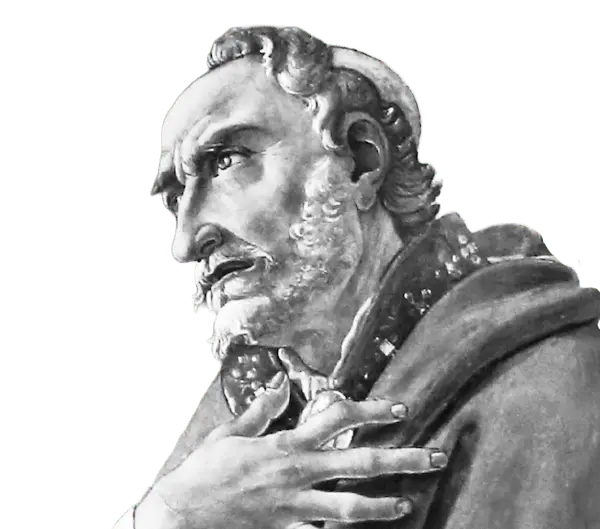
Augustine of Hippo Sermon
The One Thing Necessary
The One Essential Thing
1. The words of our Lord Jesus Christ which we have just heard from the Gospel teach us that in the midst of our many activities in this life, there is one goal we should be pursuing. We pursue this goal while still on pilgrimage, not yet in our permanent home—still on the road, not yet in our country—still longing, not yet enjoying. Yet we should pursue it without laziness or interruption, so that we may eventually reach it.
2. Martha and Mary were two sisters, related not only by blood but also by their faith. Both were devoted to the Lord, both served the Lord when He was present in the flesh. Martha welcomed Him as strangers are usually welcomed. Yet it was the servant who received her Lord, the sick who received her Healer, the creature who received her Creator. She welcomed Him to feed His body, while she herself would be fed in spirit.
The Lord chose to take "the form of a servant" (Philippians 2:7), and in that form to be fed by servants—by His gracious condescension, not because of His nature. This truly was condescension—to allow Himself to be fed by others. He had a body that could experience hunger and thirst, but remember that when He was hungry in the wilderness, angels ministered to Him. So when He allowed Himself to be fed, He was showing favor to those feeding Him.
Isn't this the same favor He showed to the widow regarding the holy Elijah, whom He had previously fed through a raven? Did God lack the power to feed Elijah when He sent him to the widow? Not at all. He didn't lack the power to feed him, but He wanted to bless the devout widow through the service she would offer to His servant.
So the Lord was received as a guest—He "who came to His own, and His own did not receive Him. But as many as received Him, to them He gave the right to become children of God" (John 1:11-12). He adopted servants and made them family; He redeemed captives and made them co-heirs.
Don't let any of you say, "How blessed were those who had the opportunity to welcome Christ into their homes!" Don't feel sad or complain that you were born in times when you can no longer see the Lord in the flesh. He hasn't taken this blessing from you. As He said, "Inasmuch as you did it to one of the least of these My brethren, you did it to Me" (Matthew 25:40).
3. I've spoken briefly, as time allowed, about the Lord who was pleased to be physically fed while He feeds us spiritually. Now let's discuss the theme I proposed regarding unity.
Martha was busy arranging and preparing to feed the Lord, occupied with much serving. Mary, her sister, chose rather to be fed by the Lord. In a way, she left her sister who was working so hard with all the serving, and she sat at the Lord's feet, quietly listening to His word. Her faithful ear had already heard: "Be still, and know that I am God" (Psalm 46:10).
Martha was troubled, while Mary was feasting. One was handling many things; the other focused on just one thing. Both activities were good, but which was better? Let's listen to the One we can ask. We've heard the answer when the passage was read, but let me repeat it.
Martha appeals to her Guest, bringing her righteous complaint before the Judge—that her sister had abandoned her and wasn't helping with all the serving. Without Mary offering any reply, yet in her presence, the Lord gives His judgment. Mary preferred to entrust her case to the Judge while she remained at rest, and didn't want to interrupt her attentive listening to prepare a response. If she had started formulating an answer, she would have had to reduce her intense focus on listening. So the Lord answered—the Word Himself had no trouble finding words. What did He say?
"Martha, Martha." This repetition of her name shows His affection, or perhaps it was to get her full attention. He calls her twice so she would listen more carefully. "Martha, Martha, listen: You are worried and troubled about many things. But one thing is needed" (Luke 10:41-42). The Latin here is unum opus est , which doesn't mean "one work" (a single task), but "one thing is needed"—it's beneficial, necessary. And Mary had chosen this one thing.
4. Consider, brothers and sisters, this "one thing" and see if even in large numbers, anything pleases except this oneness. Look how many of you there are, by God's mercy. Who could handle you if you weren't focused on "one thing"? What creates quiet among so many? Give them unity, and you have a people; take away unity, and you have just a crowd. For what is a crowd but a disorganized multitude?
Listen to the Apostle. He was speaking to a multitude, but he wanted to make them all "one." "Now I plead with you, brethren, that you all speak the same thing, and that there be no divisions among you, but that you be perfectly joined together in the same mind and in the same judgment" (1 Corinthians 1:10). And elsewhere: "Be of the same mind toward one another... being of one mind... doing nothing through selfish ambition or conceit" (Romans 12:16, Philippians 2:2-3).
The Lord prays to the Father concerning His followers: "That they all may be one, as We are one" (John 17:22). And in the Acts of the Apostles: "Now the multitude of those who believed were of one heart and one soul" (Acts 4:32). Therefore, "Oh, magnify the LORD with me, and let us exalt His name together" (Psalm 34:3).
For one thing is necessary—that heavenly Unity, the Unity in which the Father, Son, and Holy Spirit are One. See how the value of unity is emphasized to us. Our God is certainly Trinity. The Father is not the Son, the Son is not the Father, the Holy Spirit is neither the Father nor the Son, but the Spirit of both. Yet these Three are not three Gods or three Almighties, but One God, One Almighty. The whole Trinity is one God because "one thing is necessary." Nothing brings us to this one thing except that, though we are many, we have one heart.
5. Service to the poor is good, especially the proper care and religious service shown to God's saints. This is repayment, not mere giving, as the Apostle says, "If we have sown spiritual things for you, is it a great thing if we reap your material things?" (1 Corinthians 9:11). These things are good, and we encourage you to do them. By the word of the Lord we exhort you: "Don't neglect to show hospitality to strangers" (Hebrews 13:2). Sometimes, those who didn't realize it have welcomed angels by hosting people they didn't know. These things are good, but what Mary has chosen is better.
The "many things" involve various stresses out of necessity; the "one thing" has sweetness from love. When serving, a person wants everything to go well, and sometimes it doesn't—what is lacking must be found, what is available must be prepared—and the mind becomes distracted. If Martha had been able to handle it all, she wouldn't have asked for her sister's help. These activities are many and diverse because they involve physical, temporary matters. Though good, they are transitory.
But what did the Lord say to Martha? "Mary has chosen that good part." Not that yours is bad, but hers is better. Listen to why it's better: "which will not be taken away from her." Someday the burden of these necessary duties will be lifted from you, but the sweetness of truth is eternal. "What she has chosen will not be taken away from her." It isn't taken away, but it will increase. In this life it increases; in the next life it will be perfected, never to be taken away.
6. Yes, Martha, blessed in your good service, even you (if I may say so) are seeking this reward for all your work—rest. You're now occupied with much serving; you enjoy feeding mortal bodies, even those of saints. But when you reach that heavenly country, will you find any stranger to welcome into your home? Will you find anyone hungry to whom you can offer bread? Anyone thirsty to whom you can hold out your cup? Anyone sick to visit? Anyone arguing whom you can reconcile? Anyone dying whom you can bury?
None of these things will be there. What will be there? What Mary has chosen. There we will be fed; we won't feed others. Therefore, what Mary has chosen here will be there in fullness and perfection. From that rich table, from the Lord's word, she was gathering up some crumbs.
Would you like to know what it will be like there? The Lord Himself says about His servants: "Truly I say to you that He will have them recline at the table, and will come and serve them" (Luke 12:37). What does it mean to "recline at the table" if not to rest? What is "reclining at the table" if not being at ease? What does it mean when He says "He will come and serve them" ? First He passes by, and then He serves.
Where will this happen? At that heavenly banquet, of which He says, "I say to you that many will come from east and west, and sit down with Abraham, Isaac, and Jacob in the kingdom of heaven" (Matthew 8:11). There the Lord will feed us, but first He must pass over from this world. As you should know, Passover ( Pascha ) means "passing over." The Lord came, did divine things, suffered human things. Is He still spat on? Is He still struck? Is He still crowned with thorns? Is He still scourged? Is He still crucified? Is He still wounded with a spear? "He has passed over."
The Gospel tells us this when He celebrated the Passover feast with His disciples. What does it say? "When the hour had come for Him to pass from this world to the Father" (John 13:1). Therefore He passed over, so that He might feed us. Let us follow Him, so that we may be fed.