
The Trinity: Distinct Yet Inseparable
Augustine of Hippo Sermon
The Trinity: Distinct Yet Inseparable
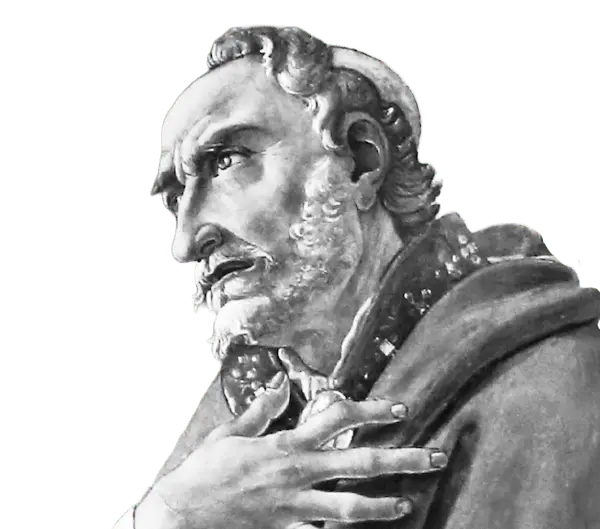
Augustine of Hippo Sermon
The Trinity: Distinct Yet Inseparable
Understanding the Mystery of the Trinity
1. The Gospel lesson has set before me a subject to speak to you about, beloved, as though by the Lord's command—and by His command indeed. For my heart has waited for an order, as it were, from Him to speak, that I might understand it is His wish that I speak on what He has also willed should be read to you. Let your zeal and devotion listen, and may the Lord our God Himself help my efforts.
We behold and observe, as in a divine spectacle presented to us, the revelation of our God in Trinity conveyed to us at the Jordan River. For when Jesus came and was baptized by John—the Lord by His servant (and He did this as an example of humility, for He shows that in this humility righteousness is fulfilled, when John said to Him, "I need to be baptized by You, and are You coming to me?" He answered, "Permit it to be so now, for thus it is fitting for us to fulfill all righteousness" )—when He was baptized, the heavens were opened, and the Holy Spirit descended upon Him in the form of a dove. Then a voice from heaven followed: "This is My beloved Son, in whom I am well pleased" (Matthew 3:14-17).
Here we have the Trinity distinguished in a certain way. The Father in the Voice, the Son in the Man, the Holy Spirit in the Dove. It's only necessary to mention this, for it's obvious to see. The revelation of the Trinity is conveyed to us plainly here, without leaving room for doubt or hesitation. For the Lord Christ Himself, coming in the form of a servant to John, is undoubtedly the Son. It cannot be said that it was the Father or the Holy Spirit. "Jesus comes," it says—that is, the Son of God. And who doubts about the Dove? Or who asks, "What is the Dove?" when the Gospel itself clearly testifies, "The Holy Spirit descended upon Him in the form of a dove." Similarly, there can be no doubt that the voice is the Father's when He says, "You are My Son." Thus we have the Trinity distinguished.
2. If we consider the locations, I say with confidence (though I say it with caution) that the Trinity appears in a way to be separable. When Jesus came to the river, He came from one place to another. The Dove descended from heaven to earth, from one place to another. And the Voice of the Father sounded neither from the earth nor from the water, but from heaven. These three appear to be separated in places, in roles, and in actions.
But someone may say to me, "Show instead how the Trinity is inseparable. Remember that you who are speaking are a Catholic, and you are speaking to Catholics." For our faith teaches—that is, the true, authentic Catholic faith, gathered not by the opinion of private judgment but by the witness of the Scriptures, not subject to the fluctuations of reckless heresy but grounded in Apostolic truth—this we know and believe. This, though we don't see it with our eyes, nor yet with our hearts as long as they're being purified by faith, we most firmly and vigorously maintain: That the Father, Son, and Holy Spirit are a Trinity inseparable—One God, not three Gods. Yet One God in such a way that the Son is not the Father, and the Father is not the Son, and the Holy Spirit is neither the Father nor the Son, but the Spirit of the Father and the Son.
This ineffable Divinity, abiding ever in itself, making all things new, creating, creating anew, sending, recalling, judging, delivering—this Trinity, I say, we know to be at once ineffable and inseparable.
3. What am I trying to explain? Consider: The Son came separately in human form; the Holy Spirit descended separately from heaven in the form of a Dove; the Voice of the Father sounded separately from heaven, "This is My Son." Where then is this inseparable Trinity?
God has made you attentive through my words. Pray for me, and open the chambers of your hearts, so to speak. May He grant that your opened hearts may be filled with what I'm trying to convey. Share my effort with me. For you see what I've undertaken, and not only what, but who I am that has undertaken it, and what I wish to speak about, and where and what my position is, even in "this body which is corruptible and weighs down the soul, and the earthly dwelling that burdens the mind that thinks upon many things" (Wisdom 9:15).
When, therefore, I draw my mind away from the multiplicity of things and gather it up into the One God, the inseparable Trinity, so that I might see something I can speak of—do you think that in this "body which weighs down the soul," I'll be able to say, in a way worthy of the subject, "O Lord, I have lifted up my soul to You" (Psalm 86:4)? May He assist me; may He lift it up with me. For I am too weak in relation to Him, and He is too mighty in relation to me.
4. This is a question often proposed by the most earnest believers and often discussed among those who love God's word: "Does the Father do anything which the Son doesn't do? Or does the Son do anything which the Father doesn't do?"
Let's first speak of the Father and the Son. And when He to whom we say, "Be my helper; don't leave me" (Psalm 27:9), has given good success to this attempt of ours, then we'll understand how the Holy Spirit is also in no way separated from the operation of the Father and the Son.
Concerning the Father and the Son, then, brothers and sisters, give ear. Does the Father do anything without the Son? We answer: No. Do you doubt it? For what does He do without Him "by whom all things were made? All things," says Scripture, "were made through Him" (John 1:3). And to drive the point home to the slow, hard, and argumentative, it added, "And without Him nothing was made."
5. What then, brothers and sisters? "All things were made through Him." We understand from this that the whole creation was made by the Son, whom the Father made as His Word and Power and Wisdom. Shall we say, "All things" indeed when they were created "were made through Him," but now the Father doesn't work through Him? God forbid! Let such a thought be far from the hearts of believers; let it be driven away from the minds of the devout, from the understanding of the godly!
It cannot be that He created through Him but doesn't govern through Him. God forbid that what exists should be governed without Him, when through Him it was made to exist! But let's demonstrate by the testimony of the same Scripture that not only were all things created and made through Him, as we've quoted from the Gospel, "All things were made through Him, and without Him nothing was made," but also that the things which were made are governed and ordered by Him.
You acknowledge Christ, then, to be the Power and Wisdom of God. Recognize what is said of Wisdom: "She reaches from one end to another mightily and sweetly arranges all things" (Wisdom 8:1). Let's not doubt, then, that all things are ruled through Him, by whom all things were made. So the Father does nothing without the Son, nor the Son without the Father.
6. But a difficulty arises, which we've undertaken to solve in the Name of the Lord and by His will. If the Father does nothing without the Son, nor the Son without the Father, won't it follow that we must say the Father was also born of the Virgin Mary, the Father suffered under Pontius Pilate, the Father rose again and ascended into heaven? God forbid! We don't say this because we don't believe it. "For I believed, therefore I spoke; we also believe, and therefore speak" (2 Corinthians 4:13).
What does the Creed say? That the Son was born of a Virgin, not the Father. What does the Creed say? That the Son suffered under Pontius Pilate and was dead, not the Father. Have we forgotten that some, misunderstanding this, are called "Patripassians," who say the Father Himself was born of a woman, that the Father Himself suffered, that the Father is the same as the Son—that they are two names, not two distinct persons? And the Catholic Church has separated these from the communion of saints, so they wouldn't deceive anyone, forcing them to dispute in separation from the Church.
7. Let's recall the difficulty of the question to your minds. Someone may say to me, "You've said that the Father does nothing without the Son, nor the Son without the Father, and you've cited testimonies from the Scriptures that the Father does nothing without the Son, because 'all things were made through Him,' and again, that what was made is not governed without the Son, because He is the Wisdom of the Father, 'reaching from one end to another mightily and sweetly arranging all things.'"
"And now you tell me, as if contradicting yourself, that the Son was born of a Virgin, not the Father; the Son suffered, not the Father; the Son rose again, not the Father. See then, here I see the Son doing something that the Father doesn't do. You should therefore either confess that the Son does something without the Father, or else that the Father was also born and suffered and rose again."
I will choose neither; I will say neither the one nor the other. I will neither say the Son does anything without the Father, for I would lie if I said so; nor that the Father was born, suffered, and rose again, for I would equally lie if I said this. "How then," you ask, "will you escape from these constraints?"
8. Your posing of the question pleases me. May God grant His help, that its solution may please you too. See, what I'm asking Him is that He would free both me and you. For we stand in one faith in the Name of Christ; we live in one house under one Lord, in one body as members under One Head, and are quickened by One Spirit.
That the Lord may set both me who speak and you who hear free from the difficulty of this most perplexing question, I say: The Son indeed and not the Father was born of the Virgin Mary, but this very birth of the Son, not of the Father, was the work of both the Father and the Son. The Father indeed did not suffer, but the Son, yet the suffering of the Son was the work of the Father and the Son. The Father did not rise again, but the Son, yet the resurrection of the Son was the work of the Father and the Son.
We seem to have already resolved this question, but perhaps only with words of my own. Let me prove it by testimonies from the sacred books, showing that the birth, suffering, and resurrection of the Son were works of the Father and the Son in such a way that although these three things belong to the Son only, yet none of them was accomplished by the Father alone or by the Son alone, but by the Father and the Son together.
Let's present each point. You will hear as judges; the case has been stated; now let the witnesses come forth. Let your judgment say to me, as is customary with those presenting a case, "Establish what you promise." I will do so with the Lord's help, and will cite the books of heavenly law. You have listened attentively while I presented the question; listen even more attentively while I prove my case.
9. I must first teach you concerning the birth of Christ—how it is the work of the Father and the Son, though what the Father and the Son did work belongs only to the Son. I'll quote Paul, who was well-versed in the divine law. Paul, I say, I'll quote, who prescribes the laws of peace, not of litigation. Let the holy Apostle show us, then, how the birth of the Son was the work of the Father. "But when the fullness of the time had come, God sent forth His Son, born of a woman, born under the law, to redeem those who were under the law" (Galatians 4:4-5).
This is plain and explicit, and since it's clearly stated, you've understood it. See, the Father caused the Son to be born of a Virgin. For "when the fullness of the time had come, God sent His Son" —the Father sent His Christ. How did He send Him? "Born of a woman, born under the law." The Father, then, made Him to be born of a woman under the law.
10. Perhaps this perplexes you, that I said "of a virgin," but Paul says "of a woman." Let this not trouble you; let's not dwell on it, for I'm not speaking to people without education. Scripture says both "of a virgin" and "of a woman." Where does it say, "of a virgin"? "Behold, the virgin shall conceive and bear a Son" (Isaiah 7:14). And "of a woman," as you've just heard. There's no contradiction here.
The peculiarity of the Hebrew language gives the name of "women" not only to those who have lost their virginity but to females generally. You have a clear passage in Genesis, when Eve herself was first created: "He made her a woman" (Genesis 2:22). Scripture also says in another place that God ordered "the women" to be separated "who had not known a man by lying with him" (Numbers 31:17-18). This should now be well established and shouldn't delay us so that we can explain, with the Lord's help, what will deservedly hold our attention.
11. We have proved that the birth of the Son was the work of the Father. Now let's prove that it was the work of the Son also. What is the birth of the Son from the Virgin Mary? Surely it is His taking the form of a servant in the Virgin's womb. Is the birth of the Son anything else but the taking of the form of a servant in the womb of the Virgin? Now hear how this was the work of the Son also: "Who, being in the form of God, did not consider it robbery to be equal with God, but emptied Himself, taking the form of a servant" (Philippians 2:6-7).
"When the fullness of the time had come, God sent forth His Son, made of a woman," who was "made of the seed of David according to the flesh" (Romans 1:3). In this we see that the birth of the Son was the work of the Father. But in that the Son Himself "emptied Himself, taking the form of a servant," we see that the birth of the Son was the work of the Son Himself. This has been proved, so let's move on from this point and carefully receive what comes next.
12. Let's prove that the Passion of the Son was also the work of the Father and the Son. We can see that the Passion of the Son is the work of the Father since it is written, "He who did not spare His own Son, but delivered Him up for us all" (Romans 8:32). And that the Passion of the Son was His own work also: "Who loved me and gave Himself for me" (Galatians 2:20). The Father delivered up the Son, and the Son delivered up Himself. This Passion was accomplished for one, but by both. Just as the birth, so the Passion of Christ was not the work of the Son without the Father, nor of the Father without the Son. The Father delivered up the Son, and the Son delivered up Himself. What did Judas do in it but his own sin? Let's move on from this point too and come to the resurrection.
13. Let's see the Son, indeed, and not the Father, rising again, but both the Father and the Son working the resurrection of the Son. The resurrection of the Son is the work of the Father, for it is written, "Therefore God also has highly exalted Him and given Him the name which is above every name" (Philippians 2:9). The Father therefore raised the Son to life again by exalting Him and awakening Him from the dead.
And did the Son also raise Himself? Certainly He did, for He said of the temple as a figure of His own body, "Destroy this temple, and in three days I will raise it up" (John 2:19). Finally, since laying down life relates to the Passion, taking it up again relates to the resurrection. Let's see, then, if the Son laid down His life indeed, and the Father restored His life to Him, and not the Son to Himself.
That the Father restored it is clear, for so says the Psalm, "Raise me up, and I will repay them" (Psalm 41:10). But why do you wait for me to prove that the Son also restored life to Himself? Let Him speak Himself: "I have power to lay down My life" (John 10:18). I haven't yet said what I promised. I've said, "to lay it down," and you're already exclaiming, for you're rushing ahead of me. Being well-instructed in the school of your heavenly teacher, as attentive listeners to and in reverent affection for what is read, you aren't ignorant of what comes next. "I have power," He says, "to lay down My life, and I have power to take it again. No one takes it from Me, but I lay it down of Myself and take it again" (John 10:18).
14. I've fulfilled what I promised; I've established my propositions with what I think are the strongest proofs and testimonies. Hold fast, then, what you've heard. I'll summarize it briefly and entrust it to be stored in your minds as something, in my opinion, of the greatest usefulness.
The Father wasn't born of the Virgin, yet this birth of the Son from the Virgin was the work of both the Father and the Son. The Father didn't suffer on the Cross, yet the Passion of the Son was the work of both the Father and the Son. The Father didn't rise again from the dead, yet the resurrection of the Son was the work of both the Father and the Son.
You see, then, a distinction of Persons and an inseparability of operation. Let's not say, therefore, that the Father does anything without the Son, or the Son anything without the Father. But perhaps you have a difficulty with the miracles Jesus did—wondering if perhaps He did some that the Father didn't do! Where then is that saying, "The Father who dwells in Me does the works" (John 14:10)?
All that I've said so far was straightforward; it needed only to be mentioned, not laboriously explained. It required no great effort to make it understood, but only attention to ensure it would be remembered.
15. I wish to speak of something more profound, and here I ask sincerely both for your more earnest attention and your devotion to God. For no bodies are held or contained in places suited to the nature of bodies. The Divinity is beyond all such places. Don't seek for it as though it were in space. It is everywhere, invisible and inseparably present, not greater in one part and smaller in another, but whole everywhere and nowhere divided.
Who can see this? Who can comprehend it? Let's restrain ourselves. Let's remember who we are and of whom we speak. Let whatever pertains to the nature of God be embraced with reverent faith, approached with holy respect, and understood as far as is permitted us, as far as is possible for us, in an ineffable way. Let words be silent, let the tongue be still, let the heart be aroused, let the heart be lifted up there. For God's nature isn't such that it can ascend into the human heart; rather, the human heart must ascend to it.
Let's consider the creatures ( "For since the creation of the world His invisible attributes are clearly seen, being understood by the things that are made" [Romans 1:20]) to see if perhaps in the things God has made, with which we have some familiarity, we can find some resemblance whereby we may prove that there are three things which can be exhibited separately, yet whose operation is inseparable.
16. Brothers and sisters, give me your full attention. But first consider what I'm promising: if perhaps I can find any resemblance in created things, for the Creator is far above us. And perhaps one of us, whose mind the brightness of truth has, as it were, struck with sparks of its light, can say those words, "I said in my alarm" (Psalm 31:22).
What did you say in your alarm? "I am cast away from the sight of Your eyes." For it seems to me that whoever said this had lifted up his soul to God and had been carried beyond himself, while people were saying daily to him, "Where is your God?" (Psalm 42:3). He had reached by a kind of spiritual contact that unchangeable Light and through the weakness of his sight had been unable to endure it, and so had fallen back again to his own, as it were, sick and weak state, and had compared himself with that Light, and had felt that the eye of his mind could not yet be adjusted to the light of God's wisdom.
And because he had done this in a state of ecstasy, transported from his bodily senses and taken up into God, when he was, so to speak, called back from God to humanity, he said, "I said in my alarm." For I saw in ecstasy I know not what, which I could not long endure, and being restored to my mortal condition and the many thoughts of mortal things from the body which weighs down the soul, I said, "I am cast away from the sight of Your eyes" (Psalm 31:22). You are far above, and I am far below.
What then, brothers and sisters, shall we say of God? For if you have been able to comprehend what you would say, it is not God. If you have been able to comprehend it, you have comprehended something else instead of God. If you think you have been able to comprehend Him, you have deceived yourself by your thinking. If this then is not God—if you have comprehended it—but if it is God, you have not comprehended it. How then would you speak of what you cannot comprehend?
17. Let's see, then, if perhaps we can find something in creation whereby we can prove that some three things are exhibited separately whose operation is yet inseparable. But where shall we go? To the heaven, to discuss the sun, moon, and stars? To the earth, to discuss plants, trees, and animals which fill the earth? Or to the heaven and the earth themselves, which contain all the things that are in heaven and earth?
How long, mankind, will you wander through creation? Return to yourself, see, consider, examine your own self. You're searching among created things for three things that are separately exhibited whose operation is yet inseparable. If you're searching for this among created things, search for it first in yourself, for you yourself are nothing other than a created being.
It's a resemblance you're searching for. Would you search for it among animals? You were speaking of God when you were looking for this resemblance. You were speaking of the Trinity of Ineffable Majesty, and because you failed in contemplating the Divine Nature and with proper humility confessed your weakness, you came down to human nature. Continue your search there.
Will you make your search among animals, in the sun, or the stars? What of these was made after the image and likeness of God? You may search in yourself for something more familiar to you and more excellent than all these. For God made man after His own image and likeness. Search then in your own self, if perhaps the image of the Trinity bears some trace of the Trinity. And what is this image? It's very different from its model; yet different as it is, it is still an image and likeness, though not in the same way that the Son is the Image, being the Same in essence as the Father is.
An image exists in one way in a son and in another way in a mirror. There's a great difference between them. Your image in your son is yourself, for the son is by nature what you are—the same in substance as you, although a different person. Man, then, is not an image in the same sense as the Only-begotten Son is, but is made after a kind of image and likeness.
Let him search for something in himself, if he can perhaps find three things that are exhibited separately, whose operation is yet inseparable. I will search, and you search with me. I will not search in you, but you search in yourselves, and I in myself. Let us search together, and together discuss our common nature and substance.
18. Think, O man, and consider whether what I'm saying is true. Do you have a body and flesh? "I do," you say. For how could I be in this place I now occupy, and how could I move from place to place, except by means of my body? How could I hear the words of someone speaking if not through my body's ears? How could I see the mouth of the speaker if not through my body's eyes? It's clear, then, that you have a body; there's no need to belabor such an obvious point.
Consider another aspect: What is it that works through this body? For you hear by means of the ear, but it isn't the ear itself that hears. There's something else inside that hears through the ear. You see by means of the eye—examine this eye. What! Have you acknowledged the house but paid no regard to the one who lives in it? Does the eye see by itself? Isn't there someone else who sees through the eye?
I won't say that the eye of a dead person, from whose body the occupant has clearly departed, cannot see, but any person's eye who is thinking of something else doesn't see the form of the object that's before them. Look, then, into your inner self. For it's there rather that a resemblance must be sought for these three things which are exhibited separately, yet whose operation is inseparable.
What then is in your mind? Perhaps if I search, I'll find many things there, but there's something very close at hand that's more easily understood. What's in your soul? Call it to mind, reflect upon it. I don't require you to believe me in what I'm about to say; if you don't find it in yourself, don't accept it. Look inward then.
But first, let's address what I had overlooked, whether human beings are the image not just of the Son or of the Father only, but of the Father and the Son, and consequently, of course, of the Holy Spirit too. The words in Genesis are, "Let Us make mankind in Our image, after Our likeness" (Genesis 1:26). So the Father doesn't act without the Son, nor the Son without the Father. "Let Us make mankind in Our image and likeness." "Let Us make," not "I will make" or "You make" or "Let him make," but "Let Us make after," not "Your image" or "My image," but "after Our image."
19. I'm asking—I'm speaking, remember, of a distant resemblance. So let no one say, "See what he has compared to God!" I've warned you about this in advance, and have both put you on your guard and guarded myself. The two are indeed very far removed from each other, as the lowest from the Highest, as the changeable from the Unchangeable, the created from the Creator, human nature from the Divine.
I alert you to this at the beginning, so that no one may criticize me because there's such a great difference between the things I'm about to discuss. Don't get your teeth ready to attack while I'm asking for your ears. Remember, I've simply undertaken to show that there are three things which are separately exhibited, whose operation is yet inseparable. How like or unlike these things are to the Almighty Trinity isn't my concern at present.
But in the lowest order of creation, which is subject to change, we do find three things which may be separately exhibited whose operation is yet inseparable. O fleshly imagination! Stubborn, unbelieving conscience! Why do you doubt concerning that ineffable Majesty something that you can discover in your own self?
For I ask you, O human being, do you have memory? If not, how have you retained what I've said? But perhaps you've already forgotten what I said just a little while ago. Yet these very words, "I said"—these two syllables—you couldn't retain except by memory. For how would you know they were two, if as the second sounded, you had forgotten the first? But why do I dwell longer on this? Why am I so insistent? Why do I press so hard for conviction? For you do have memory; this is obvious. I'm searching, then, for something else.
Do you have understanding? "I do," you'll say. For if you didn't have memory, you couldn't retain what I said; and if you didn't have understanding, you couldn't comprehend what you've retained. So you have this as well as memory. You turn your understanding to what you retain within, and so you see it, and by seeing, you're formed into a state where you're said to know. But I'm searching for a third thing. Memory you have, by which to retain what is said; and understanding you have, by which to understand what is retained; but regarding these two, I ask you again: Do you not retain and understand by an act of your will? "Undoubtedly by my will," you'll say. So then, you have will.
These are the three things which I promised to bring to your attention. These three are in you, which you can count, but which you cannot separate. These three, then—memory, understanding, and will—consider how they are separately exhibited, yet their operation is inseparable.
20. The Lord will be my present help, and I see that He is present to help me. By your understanding what I say, I see that He is helping me. For I perceive from your responses that you've understood me, and I trust that He will continue to assist us, that you may comprehend it all.
I promised to show you three things that are separately exhibited whose operation is yet inseparable. See, I didn't know what was in your mind, and you showed me by saying, "Memory." This word, this sound, this term came from your mind to my ears. Before that, you had the silent idea of memory, but you hadn't expressed it. It was in you, but it hadn't yet come to me. But to convey what was in you to me, you expressed the very word "Memory."
I heard it, I heard these three syllables in the word "Memory." It's a noun, a word of three syllables. It sounded and came to my ear and impressed a certain idea on my mind. The sound has passed away, but the word by which the idea was conveyed, and the idea itself, remains.
But I ask, when you pronounced this word "Memory," you see certainly that it refers only to memory. For the other two things have their own proper names. One is called "understanding," and the other "will," not "memory." That one alone is called "memory." Nevertheless, how did you work to express this, to produce these three syllables? This word, which refers to memory only—it took memory to produce it so you could retain what you said, and understanding so you could know what you retained, and will so you could express what you knew.
Thanks be to the Lord our God! He has helped us, both you and me. For I tell you the truth, beloved, that I undertook the examination and explanation of this subject with great apprehension. I was afraid I might gladden the spirits of those with broader minds while inflicting tiresome weariness on those with slower understanding. But now I see both by the attention with which you've listened and the quickness with which you've understood me that you've not only caught what I've said but that you've anticipated my words. Thanks be to the Lord!
21. Now, therefore, I speak with confidence about that which you've already understood. I'm not teaching anything new but only conveying to you by recapitulation what you've already received. Of these three things, only one has been named and expressed so far. "Memory" is the name of only one of the three, yet all three worked together to produce the name of this single one of the three.
The single word "memory" couldn't be expressed without the operation of the will, the understanding, and the memory. The single word "understanding" couldn't be expressed without the operation of the memory, the will, and the understanding. And the single word "will" couldn't be expressed without the operation of the memory, the understanding, and the will.
What I promised, then, I think has been explained: that which I've pronounced separately, I conceived inseparably. The three together have produced each of these words, but the word produced refers to only one of them. The three together produced the word "memory," but this word applies to memory only. The three together produced the word "understanding," but it applies to understanding only. The three together produced the word "will," but it applies to will only.
So the Trinity cooperated in the formation of the Body of Christ, but it belongs to Christ alone. The Trinity cooperated in the formation of the Dove from heaven, but it belongs to the Holy Spirit alone. The Trinity formed the Voice from heaven, but this Voice belongs to the Father alone.
22. Let no one, then, say to me—let no one with unfair criticism try to press upon my weakness, saying, "Which of these three that you've shown to be in our mind or soul corresponds to the Father—that is, to the likeness of the Father? Which corresponds to that of the Son, and which to that of the Holy Spirit?"
I cannot say—I cannot explain this. Let's leave something to meditation and to silence. Enter into yourself; separate yourself from all noise. Look into your inner self; see if you have there some sweet private place of conscience, where there's no noise, no disputation, no strife or quarrels—where there's not a thought of dissensions and obstinate contention. Be meek to hear the word, so that you may understand.
Perhaps you'll soon have reason to say, "You will make me hear joy and gladness, and my bones which were humbled shall rejoice" (Psalm 51:8)—the bones, that is, which are humbled, not those that are lifted up in pride.
23. It's enough, then, that I've shown there are three things which are exhibited separately, whose operation is yet inseparable. If you've discovered this in yourself, if you've discovered it in a being who walks on the earth and carries about a frail body which weighs down the soul, believe that the Father, Son, and Holy Spirit may be exhibited separately by certain visible symbols, by certain forms borrowed from creation, while still their operation is inseparable.
This is sufficient. I don't say that "memory" is the Father, "understanding" the Son, and "will" the Holy Spirit. I don't say this. Let people understand it however they wish. I don't venture to say this. Let's reserve the greater truths for those who are capable of them. But infirm as I am myself, I convey to the similarly infirm only what is proportionate to our capacities.
I don't say that these things are in any way to be equaled with the Holy Trinity or to be compared according to an exact rule of analogy. This I don't say. But what do I say? See, I've discovered in you three things which are exhibited separately, whose operation is inseparable; and of these three, every single name is produced by the three together, yet this name doesn't belong to the three but to only one of the three.
Believe, then, in the Trinity what you cannot see, if in yourself you have observed, and seen, and retained it. For what is in your own self you can know. But what is in Him who made you, whatever it may be, how can you know? And if someday you will be able, you are not able now. And even when you are able, will you be able to know God as He knows Himself?
Let this, then, be enough for you, beloved. I've said all I could. I've kept my promise as you required. For the rest, which must be added so that your understanding may progress, ask this from the Lord.