
The Two Lives: Martha and Mary
Augustine of Hippo Sermon
The Two Lives: Martha and Mary
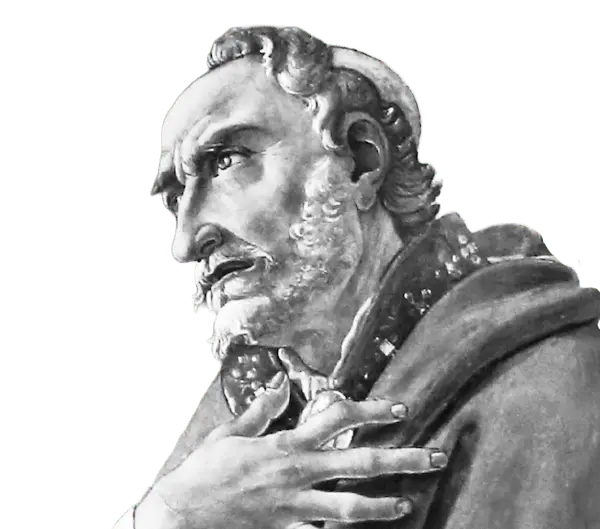
Augustine of Hippo Sermon
The Two Lives: Martha and Mary
Martha's Activity and Mary's Contemplation
1. When the holy Gospel was being read, we heard that the Lord was welcomed into the home of a devout woman named Martha. While she was busy with serving, her sister Mary sat at the Lord's feet, listening to His word. One was active, the other was still; one was giving, the other was receiving. Yet Martha, busy with all her work and effort of serving, approached the Lord and complained about her sister, saying she wasn't helping with the work.
The Lord answered Martha on Mary's behalf. He became her advocate, though Martha had appealed to Him as judge. "Martha," He says, "you are worried and troubled about many things, when only one thing is needed. Mary has chosen the better part, which will not be taken away from her" (Luke 10:41-42). We have heard both the complaint of the appellant and the verdict of the Judge. His decision both answered Martha's complaint and defended Mary's choice.
Mary was absorbed in the sweetness of the Lord's word. Martha was focused on how she might feed the Lord; Mary was focused on how she might be fed by the Lord. Martha was preparing a feast for the Lord, while Mary was already delighting in His feast. As Mary listened with sweet pleasure to His most nourishing word, feeding on it with deep affection, consider how she must have feared when her sister appealed to the Lord. Did she worry He might say, "Get up and help your sister"? But by a wonderful sweetness she was held captive—a sweetness of the mind far greater than any physical pleasure. She was excused, and continued sitting with greater confidence. Let's consider why—let's examine and investigate it thoroughly so that we too may be fed.
2. Are we to think that Martha's service was being criticized? She had devoted herself to hospitality, welcoming the Lord Himself into her home. How could she be rightly criticized when she was made glad by such a guest?
If this were true, then people should abandon their service to those in need. They should choose for themselves "the better part, which will not be taken away." They should devote themselves entirely to the word, longing for the sweetness of teaching, and focusing on the knowledge that saves. They shouldn't care about strangers in the street, or those needing bread or clothing, those needing visits, redemption, or burial. Let works of mercy cease, and attention be given only to knowledge.
If this is truly "the better part," why doesn't everyone pursue it, since we have the Lord Himself defending this position? We need not fear offending His justice when we have the support of His judgment.
3. But that's not what the Lord meant. It is not as you understand it, but as you ought to understand it. Notice what He said: "You are worried about many things, when one thing is needed. Mary has chosen the better part." You haven't chosen a bad part, but she has chosen a better one. And why is it better? Because you are concerned with "many things," while she focuses on "one thing." One is preferable to many. For one doesn't come from many, but many come from one.
Created things are many, but the One who made them is One. The heavens, the earth, the sea, and everything in them—how numerous they are! Who could count them? Who could grasp their vast number? Who made all these? God made them all. Behold, "they are very good" (Genesis 1:31). Very good are the things He made; how much better is the One who made them!
Let's consider, then, our "concern with many things." Much service is necessary for refreshing our bodies. Why? Because we hunger and thirst. Mercy is necessary for the suffering. You break bread for the hungry because you've found someone hungry. But remove hunger—to whom would you break bread? Remove homelessness—to whom would you show hospitality? Remove nakedness—whom would you clothe? Remove sickness—whom would you visit? Remove captivity—whom would you redeem? Remove conflict—whom would you reconcile? Remove death—whom would you bury?
In the world to come, these evils will not exist; therefore, these services will not exist either. Martha admirably served the Lord's bodily needs—or shall I say desires? She ministered to His mortal flesh. But who was dwelling in that mortal flesh? "In the beginning was the Word, and the Word was with God, and the Word was God" (John 1:1). See what Mary was listening to! "The Word became flesh and dwelt among us" (John 1:14). See whom Martha was serving!
Therefore, "Mary has chosen the better part, which will not be taken from her." She chose what will endure forever; "it will not be taken from her." She wanted to focus on "one thing." She already understood that "it is good for me to cling to God" (Psalm 73:28). She sat at the feet of our Head. The more humbly she sat, the more abundantly she received. Water flows to the low hollows of the valley, running down from the heights of the hill.
The Lord didn't criticize Martha's work; He distinguished between their services. "You are worried about many things; yet one thing is needed." Mary has already chosen this for herself. The labor of multiplicity passes away, but the love of unity remains. Therefore, what she has chosen "will not be taken from her." But from you, what you have chosen will be taken away—not to your detriment but for your blessing, so that something better may be given. Your labor will be taken away so that rest may be given. You are still at sea; she is already in the harbor.
4. You see then, beloved, and I believe you already understand, that in these two women—both pleasing to the Lord, both loved by Him, both His disciples—you see (and it's important that whoever understands this should grasp it, and those who don't yet understand should desire to know it) that in these two women, two kinds of lives are symbolized: the present life and the life to come, the life of labor and the life of rest, the life of sorrow and the life of happiness, the temporal life and the eternal life.
These are the two lives. Think about them more deeply. I'm not speaking of an evil life—a life of wickedness, injustice, or self-indulgence—but of a life of labor that's full of sorrows, controlled by fears, and disturbed by temptations. I mean the innocent life, the kind Martha lived. Examine this life as best you can, and think about it more deeply than I can express.
A wicked life was far from that household; it was found neither with Martha nor with Mary. If it had ever been there, it fled when the Lord entered. In that house which had received the Lord, the two women represented two lives, both innocent, both praiseworthy: one of labor, the other of leisure. Neither was corrupt, neither was lazy. Both were innocent, both, I say, praiseworthy: one of labor, which must guard against becoming corrupt; the other of leisure, which must guard against becoming lazy.
These two lives existed in that house, and with them, the Fountain of life Himself. Martha represented the image of present things; Mary, of things to come. What Martha was doing, we do now; what Mary was doing, we hope for. Let us do the first well, so that we may fully have the second. For how much of the second do we have now? To what extent do we possess it while we're here?
We engage in it to some degree now, and you too when you set aside your business and household cares to gather together, to stand and listen. To that extent, you resemble Mary. And you can do what Mary did more easily than I can, since I must distribute the word. Yet if I share anything, it is Christ's teaching. Therefore it nourishes you because it is Christ's. For the Bread is common to us all, and I live by it just as you do. "But now we live, if you, brothers and sisters, stand firm in the Lord" (1 Thessalonians 3:8). I don't want you to stand firm in us, but in the Lord. "For neither the one who plants nor the one who waters is anything, but only God who gives the growth" (1 Corinthians 3:7).