
The Two Sides of Confession: Self-Accusation and Divine Praise
Augustine of Hippo Sermon
The Two Sides of Confession: Self-Accusation and Divine Praise
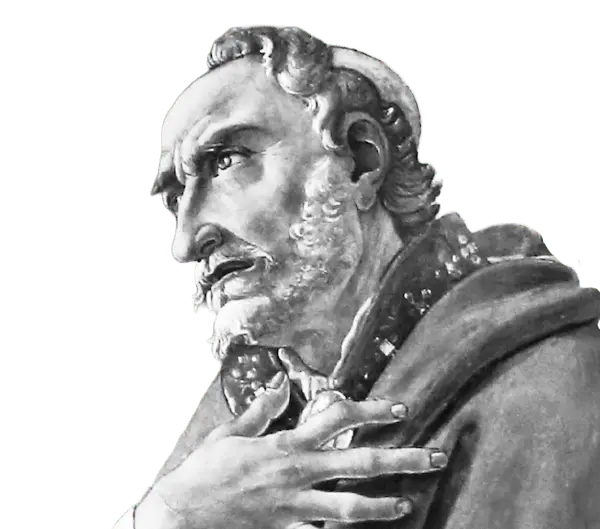
Augustine of Hippo Sermon
The Two Sides of Confession: Self-Accusation and Divine Praise
Understanding True Confession
1. When the Holy Gospel was being read, we heard that the Lord Jesus exulted in Spirit and said, "I thank You, Father, Lord of heaven and earth, because You have hidden these things from the wise and prudent and have revealed them to babes" (Matthew 11:25). Before we go further, if we attentively consider the Lord's words with diligence and above all with reverence, we should understand that "confession" in Scripture doesn't always mean the confession of a sinner.
There's a special need to point this out, beloved, because as soon as the reader's voice uttered the words, "I confess to You, Father," the sound of you beating your breasts followed. When you heard the Lord say, "I confess to You, Father," you beat your breasts. What does this beating of the breast signify but showing what lies hidden within and punishing by visible beating the secret sin? You did this because you heard the words "I confess," but you didn't consider who it is that confesses.
Now consider this: if Christ, from whom all sin is far removed, said, "I confess," then confession doesn't belong only to the sinner, but sometimes also to one who praises God. We confess, then, whether in praising God or in accusing ourselves. In either case, it is a godly confession, whether you blame yourself, since you are not without sin, or you praise God, who can have no sin.
2. If we consider it carefully, your self-blame is actually His praise. Why do you now confess in accusing yourself for your sin? Why do you confess at all? Because you have come alive from the dead. For Scripture says, "Confession perishes from the dead, as from one who is not" (Sirach 17:28). If confession perishes from the dead, whoever confesses must be alive. And if they confess sin, they have undoubtedly risen from death.
Now if the one who confesses sin has risen from the dead, who has raised them? No dead person can raise themselves. Only He was able to raise Himself who, though His Body was dead, was not dead. He raised up that which was dead. He raised Himself—that is, His Body—while in Himself He was alive. For not the Father only raised the Son, of whom the Apostle said, "Therefore God also has highly exalted Him" (Philippians 2:9), but the Lord also raised Himself, that is, His Body. As He said, "Destroy this temple, and in three days I will raise it again" (John 2:19).
But the sinner is dead, especially one pressed down by the weight of sinful habit, who is buried like Lazarus. He was not merely dead; he was buried also. Whoever is oppressed by the weight of evil habit or a wicked life of earthly desires is like the one described pitifully in a certain Psalm: "The fool has said in his heart, 'There is no God'" (Psalm 14:1). Of such a person it is said, "Confession perishes from the dead, as from one who is not."
Who shall raise such a person, except He who, when the stone was removed, cried out, "Lazarus, come forth!" (John 11:43)? What does "come forth" mean but to bring out what was hidden? One who confesses "comes forth." He could not "come forth" unless he were alive, and he could not be alive if he had not been raised again. Therefore, in confession, the accusing of oneself is the praise of God.
The Role of the Church in Forgiveness
3. One might ask, "What benefit, then, is the Church if he who confesses comes forth, immediately raised to life by the Lord's voice?" What benefit to the one who confesses is the Church, to which the Lord said, "Whatever you bind on earth will be bound in heaven" (Matthew 16:19)?
Consider the case of Lazarus: he came forth, but with his burial clothes still on. He was alive already through confession, but he was not yet walking freely, being entangled in his wrappings. What then does the Church do, to which was said, "Whatever you loose will be loosed" ? It does what the Lord immediately said to His disciples: "Loose him, and let him go" (John 11:44).
4. Whether we accuse ourselves or directly praise God, in both ways we praise God. If with reverent intention we accuse ourselves, by doing so we praise God. When we praise God directly, we celebrate His holiness, who is without sin. But when we accuse ourselves, we give Him glory, by whom we have risen again.
If you do this, the enemy will find no opportunity to overreach you before the judge. For when you are your own accuser and the Lord your deliverer, what will the enemy be but a mere false accuser? The Christian has wisely protected himself against his enemies—not those visible ones of flesh and blood, who are to be pitied rather than feared, but against those against whom the Apostle warns us to arm ourselves: "We do not wrestle against flesh and blood" (Ephesians 6:12)—that is, against people whom you see raging against you.
They are only vessels used by another; they are instruments handled by another. "The devil," says Scripture, "entered into the heart of Judas, that he should betray the Lord" (John 13:2). Someone might say, "What have I done?" Hear the Apostle: "Do not give place to the devil" (Ephesians 4:27). You have given him place by an evil will; he entered, possessed, and now uses you. He would not have possessed you had you not given him place.
Our Invisible Enemies
5. Therefore the Apostle warns us: "We do not wrestle against flesh and blood, but against principalities and powers" (Ephesians 6:12). Someone might think this meant against kings of the earth or powers of this world. How could that be? Aren't they flesh and blood? It is clearly stated, "not against flesh and blood." Turn your attention away from all human beings. What enemies remain? "Against principalities and powers of spiritual wickedness, the rulers of the world."
It might seem as though Paul gave the devil and his angels more than they have. Indeed, he has called them the "rulers of the world." But to prevent misunderstanding, he explains what world they rule: "The rulers of the world, of this darkness." What does he mean by "of the world, of this darkness"? The world is full of those who love it and of unbelievers, over whom the devil rules. The Apostle calls these people "darkness."
The devil and his angels are the rulers of this darkness. This is not the natural and unchangeable darkness. This darkness changes and becomes light; it believes, and through believing is enlightened. When this happens, it will hear the words, "For you were once darkness, but now you are light in the Lord" (Ephesians 5:8). When you were darkness, you were not in the Lord. And when you become light, you are light not in yourself but in the Lord. "For what do you have that you did not receive?" (1 Corinthians 4:7).
Since they are invisible enemies, they must be subdued by invisible means. You may overcome a visible enemy with blows, but you conquer an invisible enemy by belief. A person is a visible enemy; striking a blow is visible too. The devil is an invisible enemy; believing is also invisible. Against invisible enemies, then, there is an invisible battle.
6. From these enemies, how can anyone claim to be safe? Let's see how to defend ourselves against them. "In praising I will call upon the Lord, so shall I be safe from my enemies" (Psalm 18:3). You see what you must do. "In praising call" —that is, "in praising the Lord, call." You will not be safe from your enemies if you praise yourself.
"In praising call upon the Lord, and you shall be safe from your enemies." For what does the Lord Himself say? "The sacrifice of praise will glorify Me, and there is the way in which I will show him My salvation" (Psalm 50:23). Where is the way? In the sacrifice of praise. Let your foot not wander from this way. Keep to the way; do not depart from it. From the praise of the Lord, do not depart even a foot, not even a nail's breadth.
If you deviate from this way and praise yourself instead of the Lord, you will not be safe from your enemies. For it is said of them, "They have laid snares for me by the way" (Psalm 140:5). Therefore, to whatever extent you think you have good in yourself, you have deviated from the praise of God. Why do you marvel then if your enemy deceives you, when you are your own deceiver? Hear the Apostle: "For if anyone thinks himself to be something, when he is nothing, he deceives himself" (Galatians 6:3).
Humility and Divine Revelation
7. Pay attention, then, to the Lord's confession: "I thank You, Father, Lord of heaven and earth." I thank You—that is, I praise You. I praise You, not accuse myself. Now as far as Christ's humanity is concerned, all is grace, singular and perfect grace. What merit did that man who is Christ have, if you remove grace—even that pre-eminent grace whereby there should be one Christ, whom we acknowledge? Take away this grace, and what is Christ but a mere man? What but the same as you are yourself?
He took a Soul, He took a Body, He took a complete Man; He united him to Himself; the Lord made one Person with the servant. What pre-eminent grace is this! Christ in heaven, Christ on earth; Christ at once both in heaven and earth; not two Christs, but the same Christ, both in heaven and earth. Christ with the Father, Christ in the Virgin's womb; Christ on the Cross, Christ helping some souls in hell; and on the same day Christ in paradise with the repentant thief.
How did the thief attain this blessedness except by staying on that way in which "He shows His salvation" ? He stayed on that way by accusing himself and praising God, making his own life blessed. He looked in hope for this from the Lord and said, "Lord, remember me when You come into Your kingdom" (Luke 23:42). He considered his own wicked deeds and thought it would be much if mercy were shown him even at the last. But the Lord, immediately after he had said, "Remember me" —when? "When You come into Your kingdom," says, "Assuredly, I say to you, today you will be with Me in Paradise" (Luke 23:43). Mercy offered at once what misery delayed.
8. Hear then the Lord confessing: "I thank You, Father, Lord of heaven and earth." What do I thank You for? What do I praise You for? "Because You have hidden these things from the wise and prudent and have revealed them to babes." What does this mean, brothers? Understand by what is contrasted with them.
"You have hidden these things," He says, "from the wise and prudent," and He did not say, "You have revealed them to the foolish and imprudent," but "You have hidden these things from the wise and prudent and have revealed them to babes." To these wise and prudent who are really objects of derision—to the arrogant who falsely pretend to be great yet in truth are merely swollen with pride—He opposed not the foolish or the imprudent, but babes. Who are these babes? The humble.
Therefore, "You have hidden these things from the wise and prudent." Under the name of "wise and prudent," He Himself explained that the proud are meant when He said, "You have revealed them to babes." Therefore, from those who are not babes, You have hidden them. What does "from those who are not babes" mean? From those who are not humble. And who are they but the proud?
O way of the Lord! Either there was no way, or it lay hidden, until it was revealed to us. Why did the Lord rejoice? "Because it was revealed to babes." We must be little children. If we wish to be great—wise and prudent, as it were—these things are not revealed to us. Who are these great ones? The wise and prudent. "Professing to be wise, they became fools" (Romans 1:22).
Here, then, you have a remedy suggested from its opposite. If by professing yourself wise, you have become a fool, then profess yourself a fool, and you will be wise. But profess it in truth, profess it from the heart, for it is really as you profess. If you profess it, don't just profess it before others while hiding it from God. Regarding yourself and all that is yours, you are altogether in darkness. For what else is it to be a fool but to be darkened in heart?
He says of them at last, "Professing to be wise, they became fools." Before they professed this, what do we find? "Their foolish heart was darkened" (Romans 1:21). Acknowledge then that you are not a light to yourself. At best, you are only an eye, not the light. And what good is even an open and sound eye if light is lacking?
Acknowledge therefore that by yourself, you are no light to yourself, and cry out as it is written, "You, O Lord, will light my lamp; You, O Lord, will enlighten my darkness with Your Light" (Psalm 18:28). By myself, I was all darkness, but You are the Light that scatters the darkness and enlightens me. Of myself, I am no light to myself; indeed, I have no portion of light except in You.
9. Even John, the friend of the Bridegroom, was thought to be the Christ, was thought to be the Light. "He was not that Light, but was sent to bear witness of that Light" (John 1:8). But what was the Light? "That was the true Light which gives light to every man" (John 1:9). If that is the true Light which enlightens every person, then it enlightened John also, who professed and confessed rightly, "Of His fullness we have all received" (John 1:16). See if he said anything else but "You, O Lord, will light my lamp."
Finally, being now enlightened, he gave his testimony. For the benefit of the blind, the lamp gave witness to the Day. See how he is a lamp: "You sent to John, and you were willing for a time to rejoice in his light. He was a burning and shining lamp" (John 5:33-35). John was a lamp—that is, something enlightened, not the source of light. The lamp was lit so it might shine. What can be lit can also be extinguished. But that it might not be extinguished, it must not expose itself to the wind of pride.
Therefore, "I thank You, Father, Lord of heaven and earth, because You have hidden these things from the wise and prudent" —from those who thought themselves to be light and were darkness, and who, because they were darkness yet thought themselves to be light, could not even be enlightened. But those who were darkness and confessed they were darkness were little children, not great; they were humble, not proud. Rightly therefore did they say, "O Lord, You will light my lamp." They knew themselves; they praised the Lord. They did not stray from the way of salvation. "In praise they called upon the Lord, and they were saved from their enemies."
10. Turning then to the Lord our God, the Father Almighty, with pure hearts, let us render to Him, as our frailty best can, our highest and abundant thanks, with our whole mind praying His singular goodness that in His good pleasure He would hear our prayers, that by His Power He would drive out the enemy from our deeds and thoughts, would enlarge our faith, direct our minds, grant us spiritual thoughts, and bring us safely to His endless blessedness, through His Son Jesus Christ. Amen.