
The Unforgivable Sin: Understanding Blasphemy Against the Holy Spirit
Augustine of Hippo Sermon
The Unforgivable Sin: Understanding Blasphemy Against the Holy Spirit
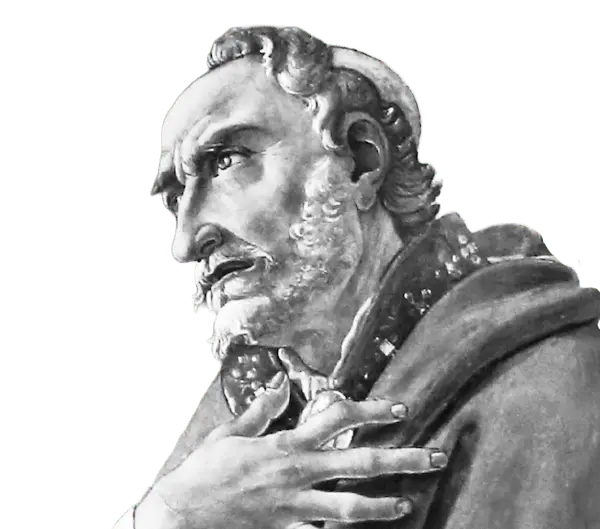
Augustine of Hippo Sermon
The Unforgivable Sin: Understanding Blasphemy Against the Holy Spirit
The Nature of Blasphemy Against the Holy Spirit
1. A great question has been raised from our recent Gospel reading—one I'm unequal to solving by my own power. But "our sufficiency is from God" (2 Corinthians 3:5), to whatever degree we're capable of receiving His help. First, consider the weight of this question. When you see it laid on my shoulders, pray to support my efforts, and find in the assistance given to me edification for your own souls.
When "someone possessed with a demon was brought to the Lord, blind and mute, and He had healed him so he could speak and see, all the people were amazed and said, 'Could this be the Son of David?' But the Pharisees, hearing this, said, 'This fellow does not cast out demons except by Beelzebub, the ruler of the demons.' But Jesus knew their thoughts and said to them, 'Every kingdom divided against itself will be brought to desolation, and every city or house divided against itself will not stand. And if Satan casts out Satan, he is divided against himself. How then will his kingdom stand?'" (Matthew 12:22-26).
In these words, Jesus wanted the Pharisees to understand from their own admission that by not believing in Him, they had chosen to belong to the kingdom of the devil, which being divided against itself could not stand. Let the Pharisees choose which they will. If Satan cannot cast out Satan, they can find nothing to say against the Lord. But if Satan can cast out Satan, then they should be even more concerned about themselves and depart from his kingdom, which being divided against itself cannot stand.
2. Now, so they wouldn't think that the Lord Jesus Christ casts out demons by the ruler of demons, they should listen to what follows: "And if I," He says, "by Beelzebub cast out demons, by whom do your sons cast them out? Therefore they will be your judges" (Matthew 12:27).
He undoubtedly spoke this about His disciples, the "sons" of that people, who as the Lord Jesus Christ's disciples were well aware they had learned no evil arts from their Good Master that would enable them to cast out demons through the ruler of demons. "Therefore," He says, "they will be your judges." They—the simple, humble people of this world, in whom none of this deceitful skill but only the holy simplicity of My power is seen—they will be My witnesses and your judges.
Then He adds, "But if I cast out demons by the Spirit of God, surely the kingdom of God has come upon you" (Matthew 12:28). What does this mean? "If I cast out demons by the Spirit of God," He says, and your children, to whom I've given no harmful or deceptive teaching but only simple faith, can cast them out in no other way, certainly the kingdom of God has come to you. Through this, the devil's kingdom is overthrown, and you are overthrown with it.
3. After He had said, "By whom do your sons cast them out?" to show that it was His grace at work in them, not their own merit, He says, "Or how can one enter a strong man's house and plunder his goods, unless he first binds the strong man? And then he will plunder his house" (Matthew 12:29).
Your children, He says, who have either already believed in Me, or who will yet believe and cast out demons—not through the ruler of demons but through the simplicity of holiness—were once what you still are: sinners and ungodly. They were in the house of the devil and were his vessels. How could they be rescued from the one who held them so firmly through the sin that reigned over them, unless he was bound by the chains of My justice? Only then could I take away from him his vessels, which once were vessels of wrath, and make them vessels of mercy.
This is what the blessed Apostle also says when he rebukes the proud and those who boast of their own merits: "For who makes you differ from another?" (1 Corinthians 4:7). That is, who makes you different from the mass of perdition derived from Adam and from the vessels of wrath? And so no one would say, "My own righteousness," he says, "What do you have that you did not receive?" (1 Corinthians 4:7).
And on this point he says of himself, "We also once were by nature children of wrath, just as the others" (Ephesians 2:3). So he himself was a vessel in the house of that strong one, strong in evil, when he was a persecutor of the Church, a "blasphemer, violent man, living in malice and envy," as he confesses (1 Timothy 1:13). But He who bound the strong one took away this vessel of destruction and made it a vessel of election.
4. Later, so that unbelievers and enemies of the Christian name wouldn't think, because of the various heresies and schisms of those who gather lost flocks under the Christian name, that Christ's kingdom is also divided against itself, He adds, "He who is not with Me is against Me, and he who does not gather with Me scatters abroad" (Matthew 12:30).
He doesn't say, "He who doesn't profess My name outwardly" or "doesn't participate in My sacrament," but "He who is not with Me is against Me." Nor does He say, "He who doesn't gather under My name," but "He who does not gather with Me scatters abroad."
Christ's kingdom, then, is not divided against itself. Rather, people try to divide what was bought with the price of Christ's blood. "The Lord knows those who are His. Let everyone who names the name of Christ depart from iniquity" (2 Timothy 2:19). For if they don't depart from iniquity, they don't belong to Christ's kingdom, even if they name Christ's name.
To give some illustrations: The spirit of greed and the spirit of extravagance are divided against each other, since one hoards and the other wastes, yet both belong to the devil's kingdom. Among idolaters, the spirit of Juno and the spirit of Hercules are divided against each other, and both belong to the devil's kingdom. The pagan who is Christ's enemy and the Jew who is Christ's enemy are divided against each other, and both belong to the devil's kingdom.
All people's vices and errors that oppose each other are divided against themselves, and all belong to the devil's kingdom. Therefore, his kingdom will not stand. But the righteous and the ungodly, the believer and the unbeliever, the Catholic and the heretic, though divided against each other, don't all belong to Christ's kingdom. "The Lord knows those who are His." Let no one flatter themselves based on a mere name. If they want the Lord's name to benefit them, "let everyone who names the name of the Lord depart from iniquity."
The Unforgivable Sin Explained
5. These Gospel words, though somewhat unclear (which I think I've explained with the Lord's help), weren't as difficult as what follows: "Therefore I say to you, every sin and blasphemy will be forgiven men, but the blasphemy against the Spirit will not be forgiven men. Anyone who speaks a word against the Son of Man, it will be forgiven him; but whoever speaks against the Holy Spirit, it will not be forgiven him, either in this age or in the age to come" (Matthew 12:31-32).
What then will become of those the Church wishes to gain? When they've been reformed and come into the Church from whatever error, is the hope of forgiveness for all sins that's promised them a false hope? For who hasn't spoken a word against the Holy Spirit before becoming a Christian or Catholic?
First, aren't those called pagans, who worship many false gods and adore idols, guilty of speaking against the Holy Spirit when they say that Christ performed miracles through magical arts? Aren't they like those who said He cast out demons through the ruler of demons? And again, when day by day they blaspheme our sanctification, what else do they blaspheme but the Holy Spirit?
What about the Jews—those who prompted this very discussion—don't they even today speak a word against the Holy Spirit by denying that He is now in Christians, just as the others denied He was in Christ? The Pharisees didn't revile the Holy Spirit by asserting that He didn't exist or wasn't God, or had no power to cast out demons. They didn't speak so unworthily of the Holy Spirit. The Sadducees indeed denied the Holy Spirit, but the Pharisees maintained His existence against their heresy. They denied, however, that He was in the Lord Jesus Christ, who they thought cast out demons through the ruler of demons, whereas He cast them out through the Holy Spirit.
So both Jews and all heretics who confess the Holy Spirit, but deny that He is in the Body of Christ (which is His only Church, none other than the one Catholic Church), are without doubt like those Pharisees. Although they confessed the existence of the Holy Spirit, they denied He was in Christ and attributed His works in casting out demons to the ruler of demons.
I say nothing of the fact that some heretics either boldly maintain that the Holy Spirit is not the Creator but a creature, such as the Arians, Eunomians, and Macedonians, or so completely deny His existence as to deny that God is Trinity, asserting that He is God the Father only, sometimes called the Son, sometimes the Holy Spirit. This is what the Sabellians do, whom some call Patripassians, because they hold that the Father suffered, and since they deny that He has any Son, they certainly deny His Holy Spirit as well. The Photinians, who say that the Father alone is God and the Son a mere man, deny that there is any third Person of the Holy Spirit.
6. It's clear, then, that the Holy Spirit is blasphemed by pagans, Jews, and heretics. Are they to be left without hope, since the sentence is fixed: "Whoever speaks a word against the Holy Spirit, it will not be forgiven him, either in this age or in the age to come"? Are only those who've been Catholics from infancy considered free from this most serious sin?
All those who've believed God's word to become Catholics came into Christ's grace and peace from among pagans, Jews, or heretics. If there's no pardon for the word they've spoken against the Holy Spirit, we preach and promise in vain for people to turn to God and receive peace and forgiveness of sins, whether in baptism or in the Church. For it isn't said, "It won't be forgiven except in baptism," but "it will not be forgiven, either in this age or in the age to come."
7. Some think that only those sin against the Holy Spirit who, having been washed in the Church's baptism and having received the Holy Spirit, later plunge into some deadly sin—such as adultery, murder, absolute apostasy, either completely from the Christian name or from the Catholic Church. But I don't know how this interpretation can be proven, since the place of repentance isn't denied in the Church for any sins whatever.
The Apostle says that even heretics should be corrected with this purpose: "If perhaps God will grant them repentance to acknowledge the truth, and they may escape the snare of the devil, who are taken captive by him to do his will" (2 Timothy 2:25-26). What's the benefit of amendment without any hope of forgiveness?
Finally, the Lord didn't say, "The baptized Catholic who shall speak a word against the Holy Spirit," but "whoever"—that is, anyone at all—"speaks, it will not be forgiven him, either in this age or in the age to come." Whether pagan, Jew, Christian, or heretic, or whatever other title of error they may have, He doesn't specify this person or that but says, "whoever speaks a word against the Holy Spirit," meaning whoever blasphemes the Holy Spirit, "it will not be forgiven him, either in this age or in the age to come."
But if every error contrary to truth and opposed to Christian peace, as we've shown before, speaks a word against the Holy Spirit, and yet the Church doesn't stop reforming and gathering from every error those who will receive forgiveness of sins and the Holy Spirit Himself, whom they have blasphemed—I think I've discovered an important insight for clarifying this great question. Let's seek from the Lord the light of explanation.
8. Brothers, lift up your ears to me, and your hearts to the Lord. I tell you, my beloved, perhaps there's no more important or difficult question in all of Scripture. I've always avoided this difficult and complex question in my sermons to the people—not because I had no ideas about it, for in a matter of such importance, I wouldn't neglect to "ask," "seek," and "knock"—but because I didn't think I could do justice to the understanding of it that was somewhat opened to me, with words that came to mind at the moment.
But as I listened to today's lesson, on which it was my duty to speak to you, as the Gospel was being read, there was such a beating in my heart that I believed God wanted you to hear something on the subject through my ministry.
9. First, please note that the Lord didn't say, "No blasphemy of the Spirit will be forgiven," or "whoever speaks any word whatsoever against the Holy Spirit will not be forgiven," but "whoever speaks a word" (Matthew 12:32). Had He said the former, we would have no subject for discussion at all. If no blasphemy and no word spoken against the Holy Spirit were ever to be forgiven, the Church couldn't gain anyone from all the classes of ungodly sinners who oppose Christ's gift and the sanctification of the Church, whether Jews, pagans, or heretics of any kind, or even some with little knowledge in the Catholic Church itself.
But God forbid that the Lord should say this! God forbid, I say, that the Truth should say that every blasphemy and every word spoken against the Holy Spirit has no forgiveness, either in this age or in the age to come.
10. His intention was to test us with the difficulty of the question, not to deceive us with a false answer. Therefore, we shouldn't think that every blasphemy or every word spoken against the Holy Spirit has no forgiveness. But it's clearly necessary that there be some specific blasphemy and some word which, if spoken against the Holy Spirit, can never receive pardon and forgiveness.
If we take it to mean "every word," who then can be saved? But if again we think there is no such "word," we contradict the Savior. There is, without doubt, some specific blasphemy and some word which, if spoken against the Holy Spirit, will not be forgiven. Now, what this word is, the Lord wants us to investigate; that's why He hasn't expressed it.
His will, I say, was that we should investigate it, not deny it. The style of Scripture is often such that when something isn't limited to either a universal or particular meaning, it's not necessary to understand it universally, but it may be understood particularly.
This statement would be expressed in its full extent, that is, universally, if it were said, "All blasphemy of the Spirit shall not be forgiven," or "Whoever speaks any word whatsoever against the Holy Spirit, it shall not be forgiven him, either in this age or in the age to come." But it would be expressed particularly if it said, "Some specific blasphemy of the Spirit shall not be forgiven."
But because this statement is made neither universally nor particularly (for it isn't said, "Every blasphemy" or "some specific blasphemy of the Spirit," but indefinitely, "blasphemy of the Spirit shall not be forgiven"; and it isn't said, "Whoever speaks any word whatever" or "whoever speaks some specific word," but indefinitely, "whoever speaks a word"), we aren't forced to understand "every blasphemy and every word." But it's clearly necessary that the Lord meant some kind of blasphemy and some word to be understood, though He chose not to express it. This way, if we receive any correct understanding of it by asking, seeking, and knocking, we won't take it lightly.
Understanding What Blasphemy of the Spirit Means
11. To see this more clearly, consider what the Lord also says about the Jews: "If I had not come and spoken to them, they would have no sin" (John 15:22). This wasn't said to mean that the Jews would have been without any sin at all if He hadn't come and spoken to them. Indeed, He found them full of and weighed down with sins. That's why He says, "Come to Me, all you who labor and are heavy laden" (Matthew 11:28). Heavy laden with what, but with the burdens of sins and violations of the Law? "For the law entered that sin might abound" (Romans 5:20).
Since He Himself says elsewhere, "I did not come to call the righteous, but sinners to repentance" (Matthew 9:13), how would they "not have had sin if He had not come"? Unless it means that there was some particular sin they wouldn't have had if He hadn't come and spoken to them, we would have to say the statement was false, which God forbid.
He doesn't say, "If I had not come and spoken to them, they would have had no sin," lest the Truth should lie. Nor did He specify, "If I had not come and spoken to them, they would not have had some specific sin," lest our earnest seeking should not be exercised.
In the abundance of the Holy Scriptures, we feed upon the plain parts, and we are exercised by the obscure ones. The first drives away hunger, and the second prevents disdain. Since it isn't said, "they would have had no sin," we needn't be disturbed, though we acknowledge that the Jews would have been sinners even if the Lord hadn't come. But because it is said, "If I had not come, they would not have had sin," we must understand that they incurred, though not all, yet some sin which they didn't have before, from the Lord's coming.
And this sin is clearly that they didn't believe in Him who was present with and spoke to them. Counting Him as an enemy because He spoke the truth, they even put Him to death. This sin, so great and terrible, they clearly wouldn't have had if He hadn't come and spoken to them.
So, just as when we hear the words, "They would not have had sin," we don't understand all sins, but some specific sin, when we hear in today's lesson, "Blasphemy of the Spirit shall not be forgiven," we shouldn't understand all blasphemy, but a certain kind of blasphemy. And when we hear, "Whoever speaks a word against the Holy Spirit, it will not be forgiven him," we shouldn't understand every word, but some specific word.
12. For when He says, "But blasphemy of the Spirit shall not be forgiven," surely we must understand not blasphemy of every spirit, but of the Holy Spirit. And though He didn't express this more plainly elsewhere, who would be so foolish as to understand it any other way? According to the same rule of speech, we understand the expression, "Unless one is born of water and the Spirit" (John 3:5). He doesn't say "of water and of the Holy Spirit" in that place, yet this is understood. And just because He said "of water and of the Spirit," no one is forced to understand it as "of every spirit." When you hear, "But the blasphemy of the Spirit shall not be forgiven," just as you shouldn't understand it as referring to every spirit, you also shouldn't understand it as referring to every blasphemy against the Spirit.
13. I see that you now wish to hear, since it's not every blasphemy of the Spirit, what that blasphemy is which shall not be forgiven, and what that word is which, if spoken against the Holy Spirit, shall not be forgiven, either in this age or in the age to come. For my part, I would be willing to tell you at once what you're so intently waiting to hear. But bear for a while the delay that more careful diligence requires, until, with the Lord's help, I unfold the whole meaning of the passage before us.
The other two Evangelists, Mark and Luke, when they spoke of the same thing, didn't say "blasphemy" or "a word," so we might understand it as not referring to every blasphemy, but to some kind of blasphemy; not to every word, but to some specific word. What did they say?
In Mark it's written: "Assuredly, I say to you, all sins will be forgiven the sons of men, and blasphemies with which they may blaspheme. But he who blasphemes against the Holy Spirit never has forgiveness, but is subject to eternal condemnation" (Mark 3:28-29).
In Luke it's written: "And anyone who speaks a word against the Son of Man, it will be forgiven him; but to him who blasphemes against the Holy Spirit, it will not be forgiven" (Luke 12:10).
Is there any departure from the truth of the same statement because of some diversity in the expression? The Evangelists don't relate exactly the same things in the same way, but this teaches us to prefer substance to words, not words to substance, and to seek nothing else in the speaker except his intention, which the words are only used to convey.
What real difference is there between saying, "Blasphemy of the Spirit shall not be forgiven," and "he who blasphemes against the Holy Spirit, it shall not be forgiven him"? Except perhaps that the same thing is stated more clearly in this last form than in the other. In fact, one Evangelist doesn't contradict but explains the other.
"Blasphemy of the Spirit" is an unclear expression because it doesn't directly state which spirit; every spirit isn't the Holy Spirit. Thus, it might be called "blasphemy of the spirit" when someone blasphemes with the spirit, as "prayer of the spirit" might describe praying with the spirit. The Apostle says, "I will pray with the spirit, and I will also pray with the understanding" (1 Corinthians 14:15). But when it's said, "he who shall blaspheme against the Holy Spirit," these ambiguities are removed.
Similarly, the expression "never has forgiveness, but is subject to eternal condemnation" is the same as "it will not be forgiven him, either in this age or in the age to come." The very same idea is expressed in different words and forms of speech. And what's stated in Matthew, "Whoever speaks a word against the Holy Spirit," so we wouldn't understand it as anything but blasphemy, others have more clearly expressed: "He who shall blaspheme against the Holy Spirit." Yet the same thing is said by all, and none of them departed from the intention of the Speaker, for the sake of understanding which words are spoken, written, read, and heard.
The Root of the Unforgivable Sin
14. The world is convicted "of sin" in those who don't believe in Christ, "and of righteousness" in those who rise again in the members of Christ. Therefore, "of judgment" too is the world convicted, "because the ruler of this world has been judged already" (John 16:11); that is, the devil, the ruler of the unrighteous, who in heart live only in this world which they love and are therefore called "the world." Just as our citizenship is in heaven if we've risen with Christ.
Therefore, as Christ together with us, that is, His Body, is one, so the devil with all the ungodly whose head he is, with what we might call his own body, is one. Thus, just as we aren't separated from the righteousness about which the Lord said, "Because I go to the Father," so the ungodly aren't separated from that judgment about which He said, "Because the ruler of this world has been judged already."
15. I must frankly confess, dear brothers, that this is a dangerous question that has caused me great difficulty. In my previous discussions with people, I've always avoided this challenging topic because I lacked confidence that I could explain it well. However, I believe the Holy Spirit has stirred my heart today as I heard the Gospel reading, giving me both the desire and the duty to address it with you now.
After careful reflection, I believe I've discovered the answer. The unforgivable blasphemy against the Holy Spirit is not any single verbal statement but rather a hardened state of impenitence—a persistent, final resistance to God's grace. This isn't merely a verbal insult but a complete, ongoing rejection of the Holy Spirit's work in offering forgiveness.
Notice how both Mark and Luke describe this sin differently from Matthew. When we combine their accounts, we see that the unforgivable sin is not a momentary statement but a persistent attitude of heart that refuses reconciliation with God through the Holy Spirit.
16. When our Lord says, "Every sin and blasphemy will be forgiven men," but singles out blasphemy against the Holy Spirit as unforgivable, He isn't saying that the Holy Spirit is greater than the Son. Rather, He's pointing to the Holy Spirit's special role in the forgiveness of sins.
Remember that after His resurrection, Jesus breathed on the disciples and said, "Receive the Holy Spirit. If you forgive the sins of any, they are forgiven them; if you retain the sins of any, they are retained" (John 20:22-23). The Holy Spirit is the bond of communion between the Father and the Son, and it's through Him that we receive forgiveness. When someone permanently rejects this forgiveness—when they refuse to repent and return to God—they have no path to salvation.
This impenitence is the blasphemy that cannot be forgiven—not because God is unwilling to forgive, but because the person refuses to accept forgiveness. Just as a gift cannot be received by someone who refuses to take it, God's forgiveness cannot be given to someone who persists in impenitence until death.
17. Therefore, this sin against the Holy Spirit is not a momentary lapse or a single verbal statement, but rather a persistent state of heart that rejects God's offer of forgiveness until the end of life. As long as someone lives, we should never despair of them, for "the patience of God leads to repentance" (Romans 2:4). God "does not desire the death of the sinner, but rather that he should turn from his way and live" (Ezekiel 33:11).
A person may be a pagan today—but how do you know they won't be a Christian tomorrow? They may be a heretic today—but what if tomorrow they follow the Catholic truth? They may be a schismatic today—but what if tomorrow they embrace Catholic peace? Those whom you now see in any kind of error and consider beyond hope—what if before they end this life, they repent and find true life?
Therefore, brothers, let the Apostle's words urge you: "Judge nothing before the time" (1 Corinthians 4:5). This blasphemy of the Spirit, for which there is no forgiveness (which I've understood not as every kind of blasphemy, but a particular sort—the persevering hardness of an impenitent heart), cannot be identified in anyone while they still live in this world.
18. One refuge exists against unpardonable blasphemy: that we avoid an impenitent heart. We shouldn't think that repentance can accomplish anything unless the Church is maintained, in which forgiveness of sins is given and the fellowship of the Spirit is preserved in the bond of peace.
19. I have, through the Lord's mercy and help, handled this extremely difficult question as best I could. If I've been unable to grasp certain aspects of it, let this not be attributed to the truth itself, which is a healthy exercise for the godly even when hidden, but to my own limitations. Perhaps I couldn't see what others might understand, or couldn't explain what I did understand.
But for what I've been able to discover through meditation and express in words, thanks must be given to Him from whom I've sought, asked, and knocked, that I might have something to nourish myself in meditation and to share with you in speaking.